


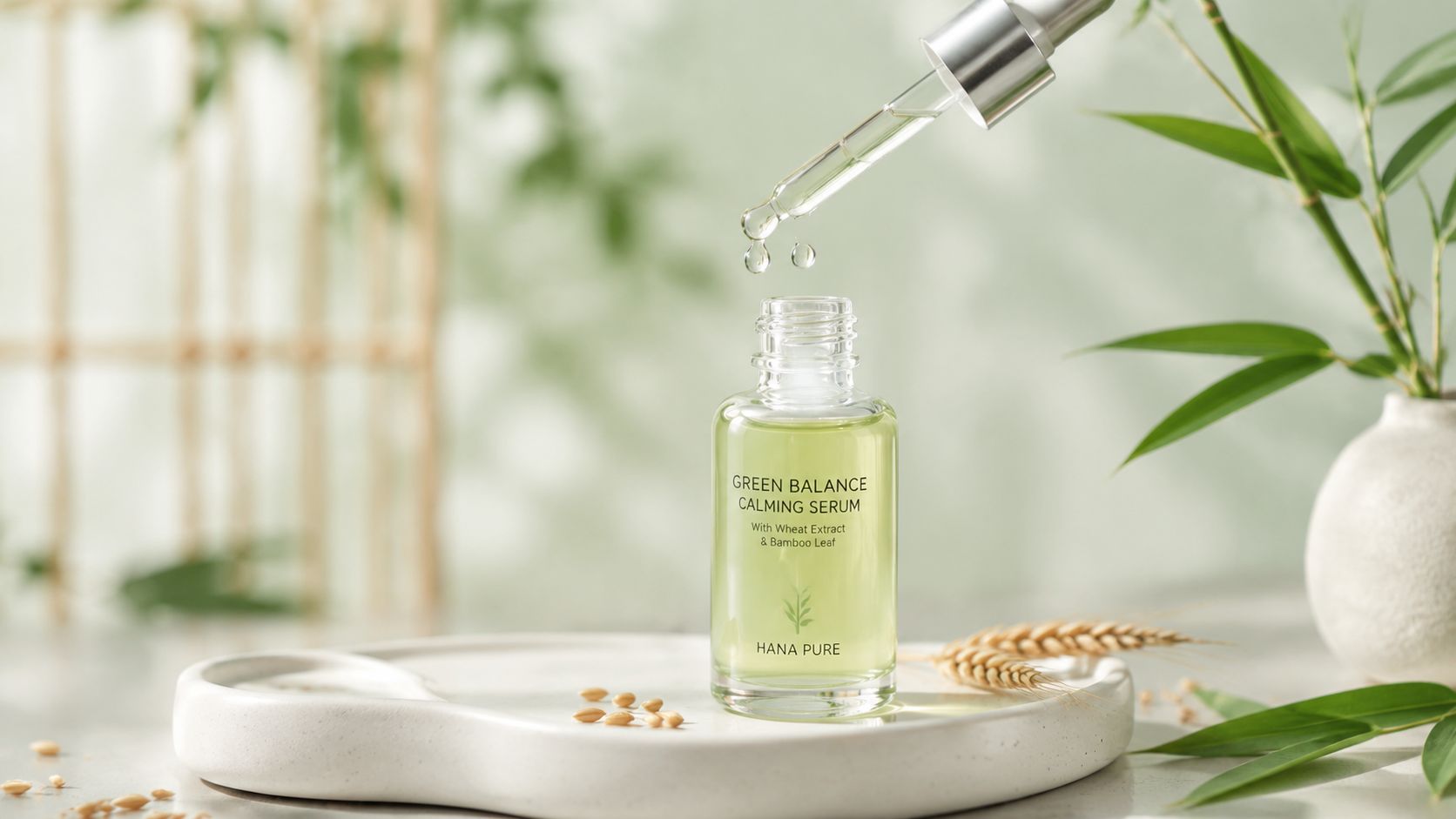
You've probably been here already. Your skin is breaking out, the red marks hang around long after the spot is gone, and every “strong” product that promises fast results seems to leave your face more irritated than before.
That's why azelaic acid gets so much attention from people who want clearer skin without the harsh cycle of over-exfoliating, peeling, and starting over. It sits in a very useful middle ground. It helps with acne, visible redness, and uneven tone, but it's often easier to fit into a real routine than more aggressive actives.
Japanese skincare makes this topic even more interesting. Many Japanese formulas are designed to feel elegant, layer well, and support daily consistency. If you're trying to find the best azelaic acid serum, or a Japanese alternative that targets the same concerns, the details that matter most aren't just the ingredient name on the label. Texture, concentration, layering, and skin feel matter just as much. If you want a broader foundation for choosing effective skincare, that guide is also helpful for understanding how to match products to your skin rather than chasing hype.
Your Search for Clear Gentle Skincare Ends Here
The reason azelaic acid confuses so many shoppers is simple. It doesn't fit neatly into one box.
Some ingredients are mainly for acne. Others are mostly for dark spots. Others are chosen for redness. Azelaic acid overlaps all three, which is why people searching for the best azelaic acid serum often feel torn between products marketed as brightening, calming, or blemish care.
That overlap is also why it suits Japanese skincare thinking so well. Many Japanese beauty products focus on steady daily improvement, comfortable wear, and formulas people will keep using. That matters because irritated skin rarely does well with a routine that feels like a punishment.
Why people end up looking for it
Most readers aren't starting from perfect skin. They're usually dealing with one of these patterns:
- Post-breakout marks that linger: The acne is smaller than it used to be, but the marks stay.
- Redness that flares easily: Skin reacts to weather, cleansing, friction, or stronger actives.
- Texture and congestion: Tiny bumps, clogged areas, or rough patches keep returning.
- Sensitive skin with acne: You want active treatment, but your skin barrier says no.
Why formulation matters more than most ranking lists admit
A lot of “best” roundups treat every azelaic acid product as if they work the same way. They don't.
A lightweight serum, a silicone-heavy suspension, a cream, and a gel can feel completely different on skin even when they aim at the same concern. That difference often decides whether you keep using the product long enough to see results.
The best azelaic acid serum for you isn't always the strongest-looking one. It's the one your skin can tolerate consistently.
That's where Japanese products and Japanese-style routines can be especially appealing. Many are built around thin, layerable textures that don't feel heavy, greasy, or chalky under sunscreen and makeup.
What Azelaic Acid Actually Does for Your Skin
Azelaic acid earns so much attention because it tackles several common skin problems at once, without pushing sensitive skin as hard as many classic acne actives. If your face seems to swing between breakouts, leftover marks, and easy redness, that matters.

It helps calm visible redness
Redness can come from different triggers. A fresh breakout, lingering irritation, heat, friction, or a stressed skin barrier can all leave skin looking flushed. Azelaic acid is useful here because it has a reputation for reducing the kind of visible inflammation that makes skin look unsettled.
For readers trying to achieve clearer skin without relying only on strong exfoliation, that makes azelaic acid a smart ingredient to understand.
It can help skin look less reactive and more even from day to day.
It helps keep pores from getting blocked
Breakouts do not start only with oil. They also start when dead skin cells and debris collect in the pore opening and create a traffic jam. Azelaic acid helps normalize that process, so pores are less likely to clog in the first place.
That difference is easy to miss. Some acids work by forcing faster shedding and can leave sensitive skin feeling scraped thin. Azelaic acid tends to be more measured. It supports clearer pores in a way many acne-prone people find easier to live with over time.
A practical way to think about it is this. Salicylic acid often feels like a direct pore-cleaning treatment. Azelaic acid feels more like a traffic controller, helping the buildup process stay calmer and less chaotic.
It helps fade post-acne marks
This is one of its most useful strengths. Once the breakout shrinks, the mark often stays behind. For many people, that discoloration lasts longer than the pimple itself.
Azelaic acid helps by slowing tyrosinase, an enzyme involved in melanin production. Less excess pigment activity can mean post-acne marks fade more gradually instead of getting stuck for months. If fading leftover spots is your main goal, that mechanism is a big reason the ingredient shows up so often in routines focused on uneven tone.
For more on mark-fading routines, Buy Me Japan's guide on how to fade dark spots gives useful context.
Why Japanese serum formulas often feel easier to use
The ingredient matters, but the vehicle matters too. Azelaic acid has a long record in creams and thicker suspensions, yet those textures can feel heavy, gritty, or suffocating on skin that clogs easily. That is one reason Japanese-style serums stand out.
Many Japanese formulas are built to spread in thin layers, sit comfortably under sunscreen, and avoid the chalky finish that makes some azelaic products hard to use every day. For sensitive or acne-prone skin, that trade-off can be the difference between a product that sounds good on paper and one you keep reaching for consistently.
Consistency is what gives azelaic acid a chance to work.
Choosing the Right Concentration and Formula
When people ask for the best azelaic acid serum, they're usually asking two questions at once. How strong should it be, and what texture will work in daily life?
Those are different questions, and they should be answered separately.

The concentration most shoppers actually need
Over-the-counter serums are typically formulated at 10% azelaic acid, which is treated as the standard for balancing daily efficacy with tolerability, while prescription products often move to 15% to 20% for more stubborn concerns, as noted in independent skincare coverage at Derm Approved.
That split explains a lot.
If you've wondered why so many retail products stop at 10%, it's because that concentration is widely seen as the practical benchmark for regular use. It's not “weak.” It's the level many people can use consistently without turning their routine into a battle.
Why texture can matter more than the headline percentage
A product can have a good concentration and still be the wrong fit. Consequently, formulation trade-offs become more important than most shopping lists admit.
Here's a simple comparison:
| Formula type | Usually feels like | Often suits | Main trade-off |
|---|---|---|---|
| Serum | Light, fluid, easy to layer | Combination, oily, routine-focused users | May need a moisturizer on top |
| Gel | Fresh, light, slightly cushiony | Acne-prone, warmer climates, daytime use | Some gels can pill with other steps |
| Cream | Richer, more buffered | Dry, reactive, compromised skin | Can feel heavy on oily skin |
| Suspension | More coating, sometimes silicone-like | Users who want a more sealed finish | Can feel gritty, thick, or less elegant |
A lot of Japanese skincare wins people over right here. The appeal isn't only ingredients. It's wearability. Lightweight, cosmetically elegant formulas are easier to apply under sunscreen, easier to re-use daily, and often less frustrating for sensitive or acne-prone skin that hates heavy residue.
For more help matching texture to reactivity, this guide to Japanese skincare for sensitive skin is worth reading.
A useful way to choose by skin type
- If your skin is oily or acne-prone: Start with a light serum or gel texture.
- If your skin is dry and reactive: A creamier base may feel more comfortable.
- If you wear makeup daily: Look for formulas that absorb cleanly and don't roll.
- If you're easily irritated: The most cosmetically elegant formula is often the better long-term choice, even if it looks less dramatic on paper.
This walkthrough can help you think through the formula side in a more visual way:
If a product feels unpleasant, many people use it less often. In skincare, comfort often decides results.
How to Use Azelaic Acid in Your Skincare Routine
A good azelaic acid product can still disappoint if you place it in the wrong part of your routine. Most problems people run into come from layering too much, starting too fast, or mixing it with too many strong actives at once.
The easiest order to remember
Use azelaic acid after cleansing. If you use a hydrating toner or essence, apply that first if it's watery and simple. Then apply your azelaic acid step before heavier creams, oils, or sunscreen.
That order matters because the formulation matrix affects how well the active sits on skin. Guidance discussed in expert content notes that layering a water-based azelaic serum first, before anhydrous or oil-based products, helps maximize penetration while preserving the skin's moisture barrier, as explained in this azelaic acid layering discussion.
A simple beginner routine
- Cleanse gently: Don't start with an aggressive foaming cleanser if your skin is already reactive.
- Apply a light hydrating step if needed: This can make active skincare feel less harsh.
- Use azelaic acid on dry skin: A thin, even layer is enough.
- Seal with moisturizer: This helps reduce the dry, tight feeling some people notice at first.
- Use sunscreen in the daytime: Especially if you're trying to improve visible marks and uneven tone.
If you want a more detailed sequence for combining watery layers, ampoules, and treatment serums, see Buy Me Japan's guide on how to layer serums.
What pairs well with it
Azelaic acid usually works nicely with supportive ingredients rather than harsh ones.
- Hyaluronic acid: Helpful if your skin feels dehydrated.
- Niacinamide: Often a good partner for barrier support and tone concerns.
- Simple moisturizers: Useful for reducing dryness and helping you stay consistent.
- Sunscreen: Essential if discoloration is one of your main concerns.
What to be careful with
You don't need to fear every active ingredient, but you do need to be realistic about irritation.
If you also use retinoids, strong AHA or BHA exfoliants, or benzoyl peroxide, it often makes sense to separate them rather than stacking everything in one session. Many people do better when they alternate nights or use one active in the morning and another later in the day, depending on tolerance.
Start slower than your ambition. Skin usually rewards consistency more than intensity.
What early use often feels like
Some people notice a little tingling or mild dryness early on. That doesn't automatically mean the product is wrong for you.
What matters is the pattern. Mild adjustment can be normal. Ongoing stinging, visible irritation, or a damaged barrier means your routine needs simplifying. Usually that means reducing frequency, using more moisturizer, and avoiding other strong actives until your skin settles.
Discover Top Japanese Serums on Buy Me Japan
You may search for an azelaic acid serum and then hit a common Japanese skincare puzzle. The ingredient is not always presented as the headline. Instead, many Japanese products are built around the skin problem you are trying to fix. Lingering post-acne marks, uneven tone, excess oil, visible redness, or recurring congestion.
That can make shopping easier once you know what you are looking at. If azelaic acid appeals to you because it can address several concerns at once, Japanese skincare often approaches the same real-life problems through lighter, more wearable formulas. As noted earlier, azelaic acid has a wide reputation for being a multi-concern ingredient. Japanese brands often answer that need with watery essences, light lotions, and easy-to-layer serums that feel more comfortable on sensitive or acne-prone skin than heavier creams or grainy suspensions.

For dark marks and uneven tone
A strong starting point is Rohto Mentholatum Melano CC Intensive Anti-Spot Essence. International shoppers often choose it when the main goal is fading the marks that stick around after a breakout has healed.
Here the formulation trade-off matters. Many brightening treatments sold outside Japan come in richer textures that can feel occlusive or sit heavily under sunscreen. Melano CC takes a different route. It is designed more like a targeted essence, so the experience is usually lighter and easier to keep using day after day. That daily wearability is often what makes the difference between a product that sounds promising and one that is fully used.
If you want to compare more lines built around tone correction and daily comfort, Buy Me Japan's guide to Japanese skincare brands known for different skin concerns is useful.
For blemish-prone skin and oilier routines
If breakouts, clogged texture, and midday shine are your main frustrations, Meishoku Bigansui Medicated Skin Lotion is a classic option people often consider in acne-prone routines.
Japanese skincare often handles this category with a lighter hand. Instead of pushing one thick treatment to do everything, many routines split the job into smaller steps that feel easier on the skin. A blemish-focused lotion, a simple hydrating layer, and a sunscreen with a light finish can be more comfortable than one dense product that leaves residue. For acne-prone skin, that texture difference is not minor. It changes how consistently you use the routine and how well makeup or sunscreen sits on top.
For sensitive or redness-prone skin support
Sensitive skin usually needs less friction, not more. If your skin reacts quickly, the closest Japanese match to an azelaic-acid-style routine may be a calm, barrier-conscious system that lowers background irritation.
Lines like d Program, Minon, Curél, and Hada Labo are often helpful because they focus on simple textures and gentle layering. That matters because reactive skin can misread “more treatment” as “more stress.” A lighter serum or lotion in a thoughtful routine often gives you better odds than piling multiple strong actives into one session.
Why buying from Japan changes the experience
This is the part many shoppers notice only after they switch. Japanese formulas often feel easier to live with.
That sounds cosmetic, but it is practical. If a product is gritty, sticky, or heavy, you start skipping it. Japanese serums and essences are often developed with daily layering in mind, so they tend to sit better under moisturizer and sunscreen. For someone with acne-prone or sensitive skin, that can be a real advantage. You get a treatment-focused routine without the thick finish that can make skin feel smothered.
Buy Me Japan lists Japanese skincare products for international shoppers and ships from Japan, which makes it easier to compare concern-based options from established brands in one place.
The smartest purchase is the one that addresses your actual skin concern in a formula your skin will tolerate, and that you will still want to use a month from now.
Your Final Guide to Buying Japanese Skincare
You are standing on a product page with three tabs open. One says serum, one says cream, one says suspension. All mention azelaic acid, but they will not feel the same on your skin, and that difference often decides whether a product becomes part of your routine or ends up forgotten in a drawer.
The better buying question is simple. Which formula fits your skin's pattern and your routine? Redness, breakouts, clogged texture, and post-acne marks can overlap, so the goal is not to chase the strongest label. The goal is to choose a product your skin can tolerate often enough to show results.
For over-the-counter shopping, 10% azelaic acid is a familiar reference point. But strength is only one part of the story. Formula design matters just as much, especially if your skin is acne-prone or easily irritated.

What to remember before you buy
- Match texture to behavior, not just skin type: A lightweight serum or gel often suits oily or congestion-prone skin because it adds less weight during layering. A cream can feel more protective on dry skin, but if it is too rich, it may feel stuffy on skin that breaks out easily.
- Treat the whole routine like a system: Azelaic acid has to live beside cleanser, moisturizer, and sunscreen. If every step is heavy or highly active, even a good serum can become hard to use consistently.
- Comfort predicts consistency: A gritty suspension can be effective on paper but frustrating in practice. Japanese treatment products often stand out here because many are designed to sit neatly under other layers without rubbing, pilling, or leaving a thick film.
- Search by concern as well as ingredient: On Japanese beauty sites, useful categories often reflect the skin problem you are trying to solve, such as acne care, brightening, redness, or sensitive skin support.
A better way to shop Japanese products online
Start with the problem your skin shows most clearly. If clogged pores and active breakouts are the main issue, look at acne-focused lines first. If the spots left behind bother you more than the breakout itself, brightening ranges make more sense. If your skin gets hot, tight, or stingy with new products, begin with gentler categories and build from there.
This is also why buying from Japan can feel different with an ingredient like azelaic acid. Many Western options lean toward thicker creams or grainier suspensions. Japanese serums and essences are often built for light layering, more like adding thin sheets of support than covering skin with a heavy blanket. For sensitive or acne-prone skin, that trade-off can be the deciding factor. You still want a formula that does the work, but you also want one that feels calm, easy, and realistic to use every day.
If you want extra shopping context, this guide to the best online Japanese skincare stores for international shoppers can help you compare options with more confidence.
As noted earlier, Buy Me Japan makes it easier for international shoppers to compare Japanese skincare in one place and build a routine around skin concerns rather than marketing claims alone. The best purchase is usually the one that fits your skin, layers well, and still feels worth using a month later.
Share:
Where Can I Get Miso Paste? Your 2026 Buying Guide
Unique Gifts for Men from Japan: Shop 2026 Collection