


It’s a familiar, frustrating sight: those tell-tale white flakes dusting the shoulders of your favorite dark shirt. You’ve tried different shampoos, but nothing seems to work for long. The itch and flakes always find their way back.
Finding the best scalp treatment for dandruff is about moving beyond temporary fixes and getting to the real root of the problem. This is a philosophy that Japanese hair care has perfected, focusing on restoring long-term scalp health. This guide will show you how to find the right Japanese products, shipped directly from Japan, to finally achieve a healthy, flake-free scalp.
Why Your Dandruff Keeps Coming Back
If you feel like you’re in a losing battle with your scalp, you’re not alone. What most people think causes dandruff—like poor hygiene—is usually a misunderstanding of a complex issue happening on your scalp.

We're going to look at this problem through a different lens, one shaped by the Japanese ideal of treating the cause, not just the symptom. We’ll break down why your current routine might be failing and show you why focusing on overall scalp health is the only true path to beautiful hair.
Moving Beyond Temporary Fixes
The real reason your dandruff is so stubborn goes deeper than the flakes you can see. The culprits are often invisible things like an imbalanced scalp microbiome or out-of-control oil production. These issues create the perfect storm for dandruff to thrive. Simply using a harsh shampoo only clears the debris for a day or two before the cycle starts all over again.
The Japanese approach is different. It prioritizes restoring the scalp's natural balance. Instead of just fighting flakes, the goal is to create an environment where dandruff is less likely to develop in the first place. This philosophy translates to gentle, powerful formulas designed to soothe irritation, regulate oil, and deeply nourish the skin on your head. Healthy hair can only grow from a healthy scalp—a core principle that also teaches you how to strengthen hair follicles.
In this guide, we’ll explore how iconic Japanese brands have mastered this balanced approach. You’ll get a clear plan to find the best scalp treatment for your dandruff, with authentic and effective options you can get straight from Japan at Buy Me Japan.
Figuring Out What Your Scalp Is Trying To Tell You
Before you can get rid of those frustrating flakes, you first have to figure out what's causing them. Is your scalp oily or dry? Getting this part right is the key to finding a treatment that actually works.
Think of your scalp as a delicate ecosystem. When something disrupts its balance, like too much oil, things can get out of whack, leading to the dreaded flakes on your shoulders.

The main culprit behind most dandruff is a tiny, yeast-like fungus called Malassezia globosa. This microbe lives on most people's scalps without causing any trouble. It feeds on the natural oils, or sebum, that your skin produces. The problem starts when your scalp produces too much oil, allowing the Malassezia to multiply rapidly. Your scalp sees this as an attack, triggering inflammation and causing skin cells to shed as visible flakes.
Oily Dandruff: The Most Common Scenario
When most people talk about dandruff, this is what they mean. It happens on an oily scalp, which creates the perfect environment for Malassezia to thrive. The signs are pretty distinct. The flakes are often larger and stick together in clumps. They can look yellowish and feel a bit greasy. Instead of falling off, they tend to cling to your hair and scalp.
In more persistent cases, this kind of dandruff is a hallmark of seborrheic dermatitis, a common skin condition that causes inflamed, flaky patches on oily areas. This isn't just dandruff; it's a chronic inflammatory issue that needs a targeted approach to manage both the oil and the fungus.
Dry Dandruff: An Issue of Moisture, Not Oil
On the other end of the spectrum is dry-scalp dandruff. This looks like dandruff, but it’s caused by a different problem: a lack of hydration. Your skin is simply parched and flaking off. You'll know it's dry scalp if you see small, white, and powdery-looking flakes. Your scalp may feel tight, dry, and itchy, especially after shampooing.
Here, the goal isn't to fight a fungus but to restore moisture. This type of flaking often gets worse in cold, dry weather or if you're using shampoos that are too harsh and strip away your scalp's natural protective oils.
Dry Dandruff vs Oily Dandruff: What's On Your Scalp?
| Characteristic | Dry Dandruff | Oily Dandruff |
|---|---|---|
| Flake Appearance | Small, white, powdery flakes | Larger, yellowish, clumpy flakes |
| Scalp Condition | Feels tight, dry, and itchy | Feels greasy, oily, and may be red or inflamed |
| How Flakes Behave | Fall loosely from scalp and hair | Stick to the scalp and hair strands |
| Primary Cause | Lack of moisture, harsh products | Overproduction of oil and overgrowth of fungus |
Understanding whether your flakes stem from an oily or dry scalp is the most critical step. Using an oil-control shampoo on a dry, flaky scalp will only make it more irritated, while a heavy moisturizing treatment will do nothing for an oily, fungal issue.
Don't Forget About Lifestyle Factors
Your scalp's health is often a mirror of your overall well-being. Things like stress can interfere with your hormones, which can ramp up oil production and make your scalp more reactive. What you eat matters, too. A diet low in nutrients like zinc and B vitamins can compromise your skin's health. Building a solid scalp care strategy is a key part of any good hair regimen, as explained in our guide to the complete Japanese hair care routine.
The Powerhouse Ingredients in Japanese Scalp Care
The secret to why Japanese scalp treatments are so celebrated is their ingredient philosophy. It’s a masterful balance of effective science and time-honored natural remedies. Instead of relying on harsh, stripping chemicals, these formulas are packed with ingredients that target dandruff while keeping your scalp’s delicate ecosystem happy.

Getting to know these key players helps you read labels with confidence and appreciate what makes Japan’s top brands so effective. This is where Japanese brands truly excel, moving beyond basic anti-flake formulas to deliver both clinical results and deep nourishment.
The Medicated Actives That Get the Job Done
When fighting dandruff, some ingredients have the clinical data to back them up. Japanese formulations use these workhorses in gentle but effective concentrations to bring your scalp back into balance without causing more irritation.
Zinc Pyrithione is one of the most common anti-dandruff actives. It’s both antifungal and antibacterial, so it directly takes on the Malassezia fungus. It also helps normalize how quickly your skin cells turn over, slowing the shedding that creates flakes.
Salicylic Acid acts as a targeted exfoliator for your scalp. It is a keratolytic, meaning it works by softening and breaking down the protein "glue" holding dead skin cells together. This allows flakes to be washed away easily. It's particularly great for oily dandruff, where stubborn buildup is often the main problem.
The Soothing Naturals Japan Loves
What really makes Japanese scalp care different is the seamless inclusion of powerful natural extracts. These botanicals work in harmony with medicated actives to soothe, cool, and deeply nourish the scalp. In Japanese beauty, the approach is always holistic. It’s not enough to just get rid of the flakes. The real goal is to create a healthy, calm, and balanced scalp.
This philosophy comes to life through botanicals that have been part of Japanese wellness rituals for centuries.
Menthol provides that amazing cooling tingle. It does more than just feel refreshing; it gives immediate relief from the itch and irritation that come with dandruff.
Tea Tree Oil is a natural force to be reckoned with. It's known for its powerful antimicrobial and anti-inflammatory properties, helping to reduce the Malassezia fungus while calming redness and inflammation.
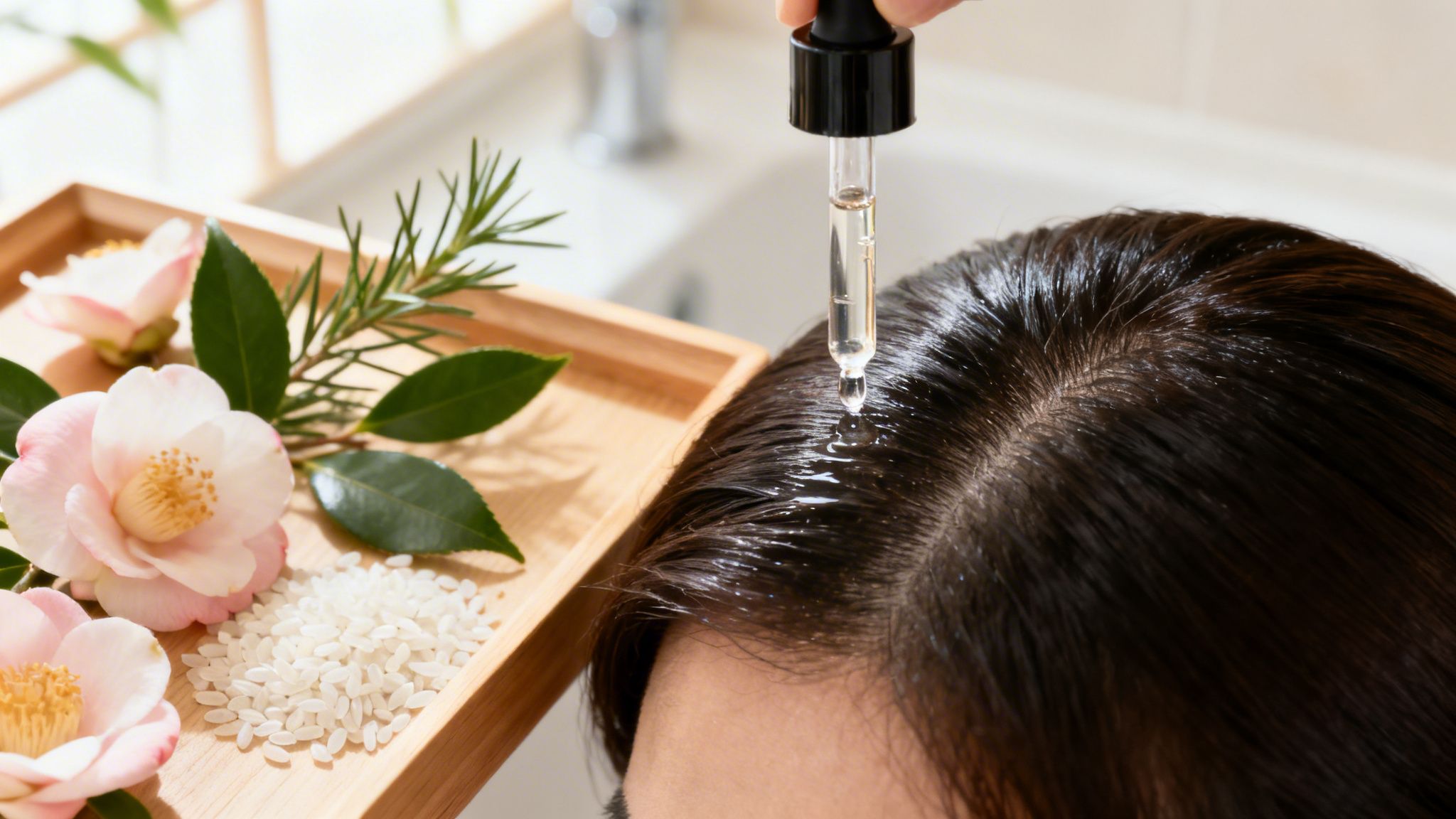
Camellia (Tsubaki) Oil is a true superstar in Japanese beauty, loaded with oleic acid and vitamins that deliver incredible moisture. While medicated ingredients tackle the flakes, Tsubaki oil ensures your scalp and hair stay soft and hydrated. Dive deeper into its benefits in our guide to the wonders of Camellia oil for hair growth.
Rice Bran Extract is another classic J-beauty ingredient, brimming with antioxidants and nourishing compounds. It helps to gently cleanse and purify the scalp while feeding it the nutrients it needs to maintain a strong skin barrier. This blend of proven science and nurturing tradition is why you can have a product that’s tough on dandruff but kind to your scalp and hair.
Choosing Your Tools: Shampoos, Serums, and Scrubs
Now that we've pinpointed your dandruff type and the ingredients that knock it out, let's talk about building your arsenal. An effective anti-dandruff routine isn't about finding one magic bullet; it's about using a few different products that each do their job perfectly.
We'll walk through the main types of treatments you'll find in Japanese hair care and figure out where each one fits. By matching each product to your dandruff profile, you'll have a clear game plan for getting your scalp back to its happy place.

Medicated Shampoos: The Frontline Defense
Medicated shampoos are the cornerstone of any serious plan to tackle dandruff. They are specialized treatments loaded with active ingredients like Zinc Pyrithione or Salicylic Acid, designed to get the fungus under control. Whether your dandruff is oily or dry, a good medicated shampoo is non-negotiable. When you use one, let it sit on your scalp for at least a few minutes. That contact time is what gives the active ingredients a chance to really work.
Scalp Scrubs: The Deep-Clean Solution
If you're dealing with stubborn, oily dandruff and feel like you have a lot of buildup, a scalp scrub can be a total game-changer. These products use gentle exfoliants to physically break down and lift away greasy flakes, excess oil, and product residue that a normal shampoo can't handle. Using a scrub just once or twice a week effectively "resets" your scalp, clearing the way for your medicated treatments to penetrate better.
Scalp Serums and Tonics: The Leave-In Specialists
Japanese hair care has a deep appreciation for leave-in treatments that offer continuous care. Scalp serums and tonics are the perfect example. These are lightweight, concentrated formulas you apply directly to the scalp and simply leave in. They work to balance your scalp’s environment between washes. For oily scalps, look for serums that manage sebum. For dry scalps, focus on tonics that deliver hydration. Incorporating one of these is a fantastic strategy for long-term scalp health. Dive deeper into the best formulas Japan has to offer in our guide to the 12 best Japanese hair products for gorgeous locks in 2025.
Hydrating Hair Masks: The Essential Finisher
While medicated shampoos are brilliant for your scalp, their powerful ingredients can sometimes leave hair feeling parched. That’s why a deep-conditioning hair mask is a critical part of the routine. After you’ve rinsed out your anti-dandruff shampoo, work a rich, hydrating mask through the mid-lengths and ends of your hair. This simple step replenishes lost moisture and keeps your hair feeling soft. The Shiseido Fino Premium Touch Hair Mask is an excellent choice for this, providing an intense dose of hydration and repair.
Your Weekly Anti-Dandruff Ritual
Having the right products is a great start, but you need a smart, consistent routine. By rotating your treatments, you keep the Malassezia fungus from getting used to any one ingredient, which is key for long-term success.
This strategy also lets you address the different needs of your scalp and your hair. You can use a medicated shampoo to tackle flakes while using gentle cleansers and conditioners to keep your hair healthy.
The Weekly Plan for Oily Dandruff
If you’re dealing with oily dandruff, your mission is to manage oil, clear out buildup, and calm things down without stripping your scalp.
Day 1 (Treatment Day): Start with a scalp scrub to loosen buildup. Follow with your medicated shampoo, letting it sit on your scalp for 3-5 minutes before rinsing.
Days 2 & 4 (Maintenance Days): Switch to a gentle, balancing shampoo. Japanese brands like Minon make fantastic mild formulas that cleanse well without irritating your scalp.
Day 5 (Second Treatment Day): Use your medicated shampoo again. Consistency keeps the fungal overgrowth under control.
Days 3, 6, & 7 (Rest Days): Take a break. If your scalp doesn’t feel oily, don't feel pressured to wash it. When you shampoo, always use the pads of your fingers—never your nails.
The Weekly Plan for Dry Dandruff
If you have dry dandruff, your game plan is to gently treat flakes while providing hydration. The goal is to restore the moisture barrier your scalp is missing.
Day 1 (Treatment & Hydration Day): Start with your medicated shampoo, letting it sit. Immediately after rinsing, apply a rich hair mask to the mid-lengths and ends. A product like the Tsubaki Premium Moist & Repair Hair Mask is perfect here. Explore more options in our guide to finding the right Japanese hair mask.
Days 3 & 5 (Gentle Cleansing Days): Wash with a hydrating, sulfate-free shampoo to gently cleanse without stripping natural oils.
Days 2, 4, 6, & 7 (Rest Days): If you can, skip washing. Letting your scalp's natural oils recover is a huge part of healing a dry, irritated scalp.
No matter which routine you follow, rinsing thoroughly is absolutely essential. Leftover product residue can build up and cause irritation. By sticking to a personalized ritual, you're not just fighting flakes—you're building the foundation for true scalp health.
Beyond Products: A Holistic Approach to Scalp Health
While the right shampoo is a game-changer, the Japanese approach to beauty teaches us that lasting scalp health goes deeper. It's about looking at the whole picture—your diet, stress levels, and daily routines all play a part in flare-ups.
The Diet and Scalp Connection
Your scalp is skin. Just as a poor diet can lead to breakouts on your face, it can throw your scalp out of whack. To build a stronger foundation for your scalp, focus on nutrients like Zinc, B Vitamins, and Omega-3 Fatty Acids, which help regulate cell turnover and reduce inflammation.
Managing Stress for a Calmer Scalp
Stress causes a spike in the hormone cortisol, which can kick your scalp's oil production into overdrive. All that extra oil is a feast for the Malassezia fungus. This makes stress management a surprisingly effective tool in your anti-dandruff arsenal. Integrating stress-reduction habits into your week—whether it's meditation, yoga, or a quiet walk—can help lower cortisol.
Simple Habits for a Healthier Head
Finally, don't overlook the small stuff. Your hairbrushes, hats, and pillowcases can become collection sites for oil, dead skin, and product buildup. Washing these items regularly prevents you from reintroducing gunk back onto your clean scalp. It’s also worth considering environmental factors. If you live in an area with hard water, mineral deposits can build up on your scalp. Sometimes, a simple shower filter can make a world of difference.
Your Dandruff Questions Answered
Trying to figure out the right dandruff treatment can bring up a lot of questions. Let's clear up some of the most common ones so you can find a healthier, happier scalp with confidence.
How Long Does a Scalp Treatment Take to Work?
Patience and consistency are your best friends. Most medicated treatments will start to show a real difference within two to four weeks of regular use. You might even notice fewer flakes after just a couple of washes. If you’ve been using a product consistently for a month and see no improvement, it might be time to try a different formula.
Can I Use Regular Conditioner with an Anti-Dandruff Shampoo?
Yes, and you definitely should. Some anti-dandruff shampoos can be tough on your hair, leaving it feeling dry. After you’ve rinsed the shampoo out completely, work your favorite nourishing conditioner through the mid-lengths and ends. This will keep your hair soft without interfering with the treatment on your scalp.
Are Japanese Scalp Treatments Safe for Color-Treated Hair?
While many Japanese formulas are known for being gentle, it’s always wise to be careful with color-treated hair. Look for products specifically marked as "color-safe." If you're worried, start with gentler active ingredients like zinc pyrithione. When in doubt, always do a patch test on a small section of your hair to see how it reacts.
When Should I See a Dermatologist?
Over-the-counter products work for most mild to moderate dandruff. But sometimes, you need a professional. A common concern is whether the issue can escalate; for instance, Can Dandruff Cause Hair Loss? While dandruff itself isn’t the direct cause, constant, intense scratching can damage hair follicles. It’s time to book an appointment if your scalp is extremely painful, red, and inflamed, or if the flaking doesn’t get better after 4-6 weeks of consistent at-home treatment.
At Buy Me Japan, we bring Japan's most effective and authentic scalp care directly to your door, with fast international shipping. Browse our curated collection of hair care to find the perfect products for your routine and finally get the comfortable, flake-free scalp you deserve.

Share:
How to Treat Dehydrated Skin with a Japanese Beauty Routine
How to Get Porcelain Skin with Japanese Skincare