


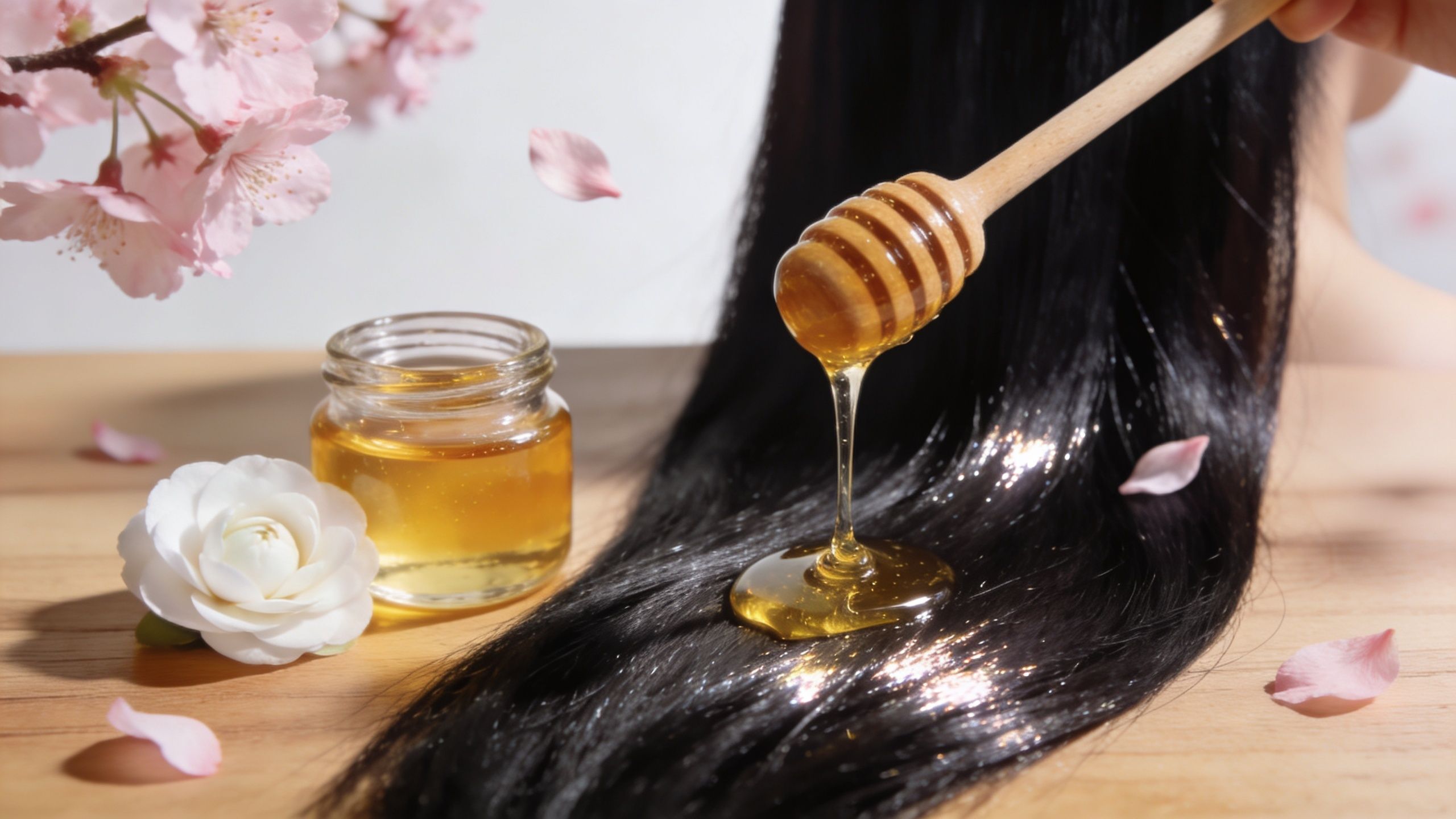
Dry, frizzy hair often sends people into a cycle of trying heavier masks, stronger serums, and anything labeled “repair,” only to end up with strands that still feel rough by evening. That's usually the moment honey oil hair products start to look appealing. They promise softness, shine, and a smoother finish without turning the routine into a salon project.
In Japanese hair care, honey-infused formulas are especially interesting because they're rarely just plain honey poured into oil. Brands such as &honey build the idea into a complete texture experience, aiming for moisture retention, slip, and polish in a format that feels refined rather than sticky. If you're comparing Japanese routines for dry or damaged hair, it also helps to pair oils with the right cleanser, and this guide to the best Japanese shampoo and conditioner is a useful place to anchor the rest of your routine.
The important part is knowing what honey oil can do, what it can't do, and how to use it without weighing your hair down. That's where many articles become too vague. Practical results depend on hair type, dosage, and formulation quality, especially with Japanese products designed for different finish preferences.
Introduction Revive Your Hair with a Japanese Beauty Secret
A common pattern shows up in the salon chair and at the vanity. Hair looks dry, feels puffy through the mid-lengths, and gets shinier only for a few minutes after styling. Then the ends separate again, and the surface frizz returns.
That's where honey oil hair earns its place. In Japanese beauty, honey-infused hair oils are valued less as a novelty and more as a moisture-supporting finishing step. The appeal isn't only the ingredient story. It's the way a well-made formula can soften roughness, calm flyaways, and leave hair looking more polished without a greasy film.
Why Japanese honey oils stand out
Japanese hair care tends to approach oils with more restraint and more texture control. Instead of crafting a formula that offers a superficial richness, the better products aim for easy spreadability, cleaner absorption, and a finish that suits daily use.
That matters with honey. Used carelessly, it can become messy and heavy. Formulated properly, it becomes elegant.
Some of the most satisfying honey oil products don't make hair look coated. They make it look calmer, smoother, and more expensive.
There's also a cultural fit here. Japanese beauty routines often favor repeatable rituals over dramatic one-time fixes. Honey oil works best in exactly that kind of system. A little on damp ends, a little more before heat styling, or a rinse-out treatment when the hair starts to feel depleted.
What this guide will help you do
You don't need another promise that one product will fix everything. You need a clear way to judge where honey oil belongs in your routine.
This guide focuses on:
- What honey contributes: moisture retention, slip, and surface softness
- What's mostly hype: broad regrowth claims and dramatic repair language
- How to apply it well: as a mask, a leave-in, or a richer treatment
- Who should be cautious: especially if your hair is fine, oily, or easily flattened
That's the secret behind Japanese honey hair care. It isn't just using honey. It's using it with discipline.
The Sweet Science Behind Honey Oil for Hair
Honey's role in hair care makes more sense when you separate texture science from marketing language. The ingredient is often described as both an emollient and a humectant. Emollients help smooth the hair cuticle and improve gloss, while humectants bind water molecules and help dry hair retain moisture, as explained in Healthline's review of honey for hair.

That pairing is why honey-infused oils can feel so satisfying on dull hair. They don't just coat the strand. They also support a more moisturized feel, which usually shows up as better softness, less roughness, and more visible shine.
What honey may support on the scalp
There's also a scalp angle that often gets simplified too much. The same Healthline review notes that a 2013 review found honey can promote the growth of epithelial, or skin, cells. That matters because the scalp is made up of epithelial tissue surrounding follicles and ducts.
This doesn't mean honey oil is a proven hair-regrowth treatment. It means the ingredient has a reasonable scalp-supporting story, especially in formulas positioned for moisture and comfort rather than dramatic transformation.
If you're trying to separate cosmetic dryness from shedding concerns, it helps to read about treating dry hair versus hair loss, because these are often confused but require different expectations.
What's supported and what's overstated
The strongest case for honey oil hair products is practical, not dramatic.
Well-supported benefits include:
- Improved softness: especially on dry or rough mid-lengths
- Better shine: because smoother cuticles reflect light more evenly
- Frizz control: when the formula adds slip without excessive buildup
- Manageability: hair tangles less and feels easier to style
Weaker claims need more caution:
- Hair regrowth
- Waking dormant follicles
- Stopping hair loss
- Repairing severe structural damage in a dramatic way
Practical rule: Use honey oil for moisture, gloss, and control. Don't buy it as a miracle growth product.
What “honey oil” means in Japanese products
In Japanese beauty, honey oil usually means a blended formula rather than literal honey mixed into plain oil at home. Products in the category often combine honey-inspired moisture positioning with lightweight oils, silicones, conditioning agents, and scent design to create a polished finish.
That's part of why Japanese oils feel different from heavy DIY mixtures. The aim is less “natural at all costs” and more “beautiful performance with daily usability.” If you're curious how another classic Japanese oil compares in finish and ritual, this guide to tsubaki oil for radiant healthy hair is worth reading alongside honey-based options.
How to Use Honey Oil Three Effective Methods
A good honey oil routine often starts the same way. Hair feels dry at the ends, slightly puffy through the surface, and rougher after washing than it did the night before. In that moment, technique matters more than marketing.
Japanese honey-based oils perform well because they are built for controlled application. You are not working with raw honey alone. You are usually working with a balanced cosmetic formula designed to spread thinly, reduce drag, and leave a cleaner finish than a homemade mixture. The trade-off is simple. A leave-in formula gives convenience and polish, while a heavier treatment method gives more softness but can flatten the hair if you use too much.
A practical mask method is to dilute honey with water or a carrier oil before applying and rinsing, as discussed in this formulation discussion on diluting honey for hair masks. Dilution helps with slip and makes removal easier.
Choosing Your Honey Oil Application Method
| Method | Best For | Frequency | Key Benefit |
|---|---|---|---|
| Pre-wash mask | Dry, rough, overstyled hair | As needed | Softness without a heavy finish after shampooing |
| Leave-in on ends | Daily frizz control and shine | Light regular use | Surface smoothing and easier styling |
| Warm oil ritual | Coarse, thirsty, high-volume hair | Occasional intensive care | Extra suppleness for hair that stays dry |
Method one pre-wash mask
Use this method when hair feels stiff, tangled, or depleted from heat styling. It gives you more contact time than a quick leave-in, but you still rinse away the excess before the hair can go limp.
A simple routine:
- Dilute first: mix honey with water or combine it with a small amount of carrier oil.
- Apply where needed: use it on mid-lengths and ends first. Only bring it near the scalp if the scalp itself feels dry.
- Wait briefly: leave it on for a short treatment period.
- Shampoo well: rinse fully, then cleanse so the result stays soft instead of sticky.
This method suits people who want moisture but dislike residue. It is also the easiest way to test whether honey-based care agrees with your hair before you commit to regular leave-in use.
Method two leave-in treatment
This is the method I recommend most often because it fits real life. A small amount worked through damp lengths can reduce puffiness, add slip, and make blow-drying easier without turning the routine into a project.
Placement matters. Start around ear level and work downward. Press the oil into the hair rather than coating the outer layer only. If the top becomes shiny before the ends feel smooth, the distribution is off.
Use less than you expect. Fine strands usually need only a trace on the ends. Thicker hair can handle a little more through the lower half.
Apply leave-in honey oil to damp hair first. Then check the ends again once the hair is partly dry.
That habit prevents the most common mistake, which is overloading dry hair in search of quick shine.
Method three warm oil ritual
Warm oil application is useful for hair that keeps feeling hard or thirsty even after conditioner. The goal is better flexibility and a calmer surface, not a greasy coating.
Rub the oil between your palms until it feels slightly warmed by body heat. Smooth it through the lengths, concentrate on the driest sections, then leave it on briefly or wash it out later if the finish feels too rich for daytime wear. This method is especially helpful in dry weather or after repeated coloring sessions, when the hair loses softness and starts catching at the ends.
For a more traditional moisture-focused routine, a guide on how to use rice water for hair in a Japanese haircare ritual pairs well with occasional oil treatments.
The best method is the one your hair still likes on the second and third use. If it looks glossy on day one but heavy by the end of the week, reduce the amount or switch the method. That is how experienced Japanese haircare routines stay consistent. They adjust the ritual, not just the product.
Tailoring Honey Oil to Your Hair Type
Honey oil is not one of those ingredients that works the same way on everyone. That's exactly why some people adore it and others think it makes their hair limp by lunchtime.
A useful caution comes from practical hair advice noting that honey can make hair too soft or weighed down if overused, especially on fine or oily hair, and it can leave sticky buildup if it isn't rinsed properly. The guidance is simple. Dosage and application method should match hair type, not a one-size-fits-all routine, as noted in this discussion of honey on hair side effects.

Fine hair needs restraint
If your hair collapses easily, use honey oil almost like a finishing serum rather than a treatment. Keep it on the ends, avoid the scalp, and use the smallest workable amount.
What usually goes wrong with fine hair is not the ingredient itself. It's over-application. Once the hair loses movement, the whole routine feels like a mistake.
Good practice for fine hair:
- Use ends only: especially on dry hair days
- Prefer rinse-out use first: pre-wash treatments are safer than leave-in overload
- Watch softness levels: if hair starts feeling too silky and flat, reduce frequency
Thick, coarse, curly, or porous hair can take more
This hair type usually benefits most visibly from honey oil hair products. The extra body in the strand can handle richer textures, and the smoothing effect often shows up immediately as less expansion and better definition.
For these hair types, honey oil works well:
- Before blow-drying: to control roughness
- As a richer overnight pre-wash step: if the formula suits your scalp tolerance
- On dry ends between washes: to maintain shape and softness
Hair that drinks up moisture can handle more contact time. Hair that sits on top of product usually needs less and lighter placement.
Oily scalp and low-porosity hair need more caution
These are the users most likely to dislike honey-heavy products. Low-porosity hair often resists absorption and can feel coated quickly. Oily scalps can interpret richer products as heaviness rather than nourishment.
That doesn't mean you must avoid honey oil. It means you should change the format.
Try this instead:
- Use pre-shampoo only: so excess doesn't remain after washing
- Stay off the roots: keep application from mid-lengths downward
- Choose lighter oils over dense blends: especially for regular use
People who already do well with camellia-based textures often understand this balance quickly. This practical guide on how to use camellia oil for hair is a good reference if you're deciding between richer and lighter Japanese oil rituals.
Who should patch test or skip
Anyone with known ingredient sensitivity should be cautious with fragranced hair oils or botanical blends. If your scalp is reactive, start with a small test area and use a rinse-out method first.
Honey oil is most rewarding when it solves a real need. It's less useful when used only because the ingredient sounds comforting.
Discover Authentic Japanese Honey Hair Oils
A good Japanese honey hair oil does not announce itself with stickiness or perfume first. You notice it later, when blow-dried hair stays smoother, the ends look less thirsty, and the finish still feels clean by evening. That balance is what separates a well-made formula from a product that sells the honey story harder than the actual performance.

Safety also matters. The Cosmetic Ingredient Review panel assessed honey-derived cosmetic ingredients and reported current use levels as safe, including patch-test data in its safety assessment of honey-derived ingredients. That does not mean every honey oil will suit every scalp. It does mean honey in hair care belongs in a regulated cosmetic context, not only in soft marketing language.
What to look for in a Japanese honey oil
Japanese formulas tend to stand out in the way they control feel. The better ones give slip without a greasy film, soften rough cuticles without collapsing the style, and keep fragrance from overpowering the routine. In salon terms, these are finishing oils that respect the haircut.
Three signs usually separate the stronger products from the weaker ones:
- Thin, even spread: a small amount coats the hair without patchy heaviness
- Controlled gloss: shine looks polished, not wet
- Layering sense: the oil still behaves well with leave-ins, blow-drying, and heat tools
&honey is a clear example of the honey-moisture style. These formulas usually suit dry, frizz-prone lengths that need a softer finish. Tsubaki comes from a different Japanese tradition, with more emphasis on repair feel, slip, and a sleeker result. Neither approach is automatically better. The right choice depends on whether your hair needs cushioning or a lighter polished finish.
Buy Me Japan is one retailer readers often use to compare Japanese beauty lines from the same source, including honey-based oils and more classic oil-care formulas.
A few product directions that make sense
Readers who want a sweeter, softer daily finish often do well with & Honey Melty Moist Repair Hair Oil. I would place it with hair that frizzes easily, feels a little rough by midday, or benefits from a more padded finish on the ends.
Tsubaki Premium Repair Hair Oil makes more sense for people who want a cleaner salon-style gloss and general dryness support without pushing too far into the honey identity. It fits the reader who likes Japanese repair oils but is not specifically chasing a dessert-like scent profile.
If you are comparing categories rather than shopping by brand name, this guide to top Japanese hair products for building a full routine gives useful context for where honey oils sit beside masks, shampoos, and repair serums.
Salon professionals also think in treatment categories, not just hero ingredients. For that reason, Twizzlo's profitable salon offerings is a useful industry-side reference for how services are grouped around real hair concerns.
Here's a closer look at the category in action.
Why authenticity matters
Japanese hair oils are copied, repackaged, and resold through mixed channels often enough that source quality affects the result. A formula that should feel light can arrive oxidized, old, or poorly stored. Packaging can also change by market and season, which makes casual verification harder for shoppers outside Japan.
That is why I treat authenticity as part of performance, not a separate concern. If you are paying for Japanese formulation quality, you want the version the brand released, with the texture, scent, and finish intact.
Authentic Japanese hair care is less about trend names and more about getting the formula the brand actually intended you to use.
Conclusion Your Journey to Healthier Hair
Honey oil hair products deserve their popularity, but only when used with realistic expectations. Their strongest value is in moisture support, softness, shine, and a more controlled finish. That's where Japanese formulations often excel. They tend to make the routine feel refined, not messy.
The biggest mistake is treating honey oil as universally suitable in the same amount for everyone. Fine hair usually needs a lighter hand. Oily or low-porosity hair often does better with pre-wash use or very limited placement. Thick, coarse, or dryness-prone hair usually gets the most visible payoff from richer formulas and more intentional rituals.
The second mistake is expecting too much from the ingredient story alone. Honey can support a good hair routine, but it doesn't replace healthy scalp habits, gentle cleansing, and realistic styling practices. If broader thinning concerns are part of your hair picture, not just dryness or frizz, ProMD Health's natural hair guide offers a helpful general read on natural-support strategies.
A simple way to think about it
Choose honey oil based on function, not romance.
- For rough ends: use a small leave-in amount
- For depleted hair: use a pre-wash or warm treatment
- For easy flattening: keep it light and away from roots
- For daily elegance: choose a Japanese formula with a cleaner finish
A final practical tip matters more than people think. Pair honey oil with a gentle Japanese shampoo that doesn't leave heavy residue behind. When the cleanser is too harsh, hair chases moisture. When it's too coating, oil sits on top. The most beautiful results come from balance.
Japanese beauty gets this right. It blends ingredient comfort with formulation discipline. That's why honey-infused oils can feel so satisfying when you choose the right one and use it with intention.
If you're ready to try honey oil hair products with a more informed eye, explore the Japanese hair-care range at Buy Me Japan and choose a formula that matches your texture, finish preference, and routine.


Share:
Jade Leaf Matcha Review: Is It Worth It in 2026?
Best Toothpaste in Japan: A Buyer's Guide (2026)