


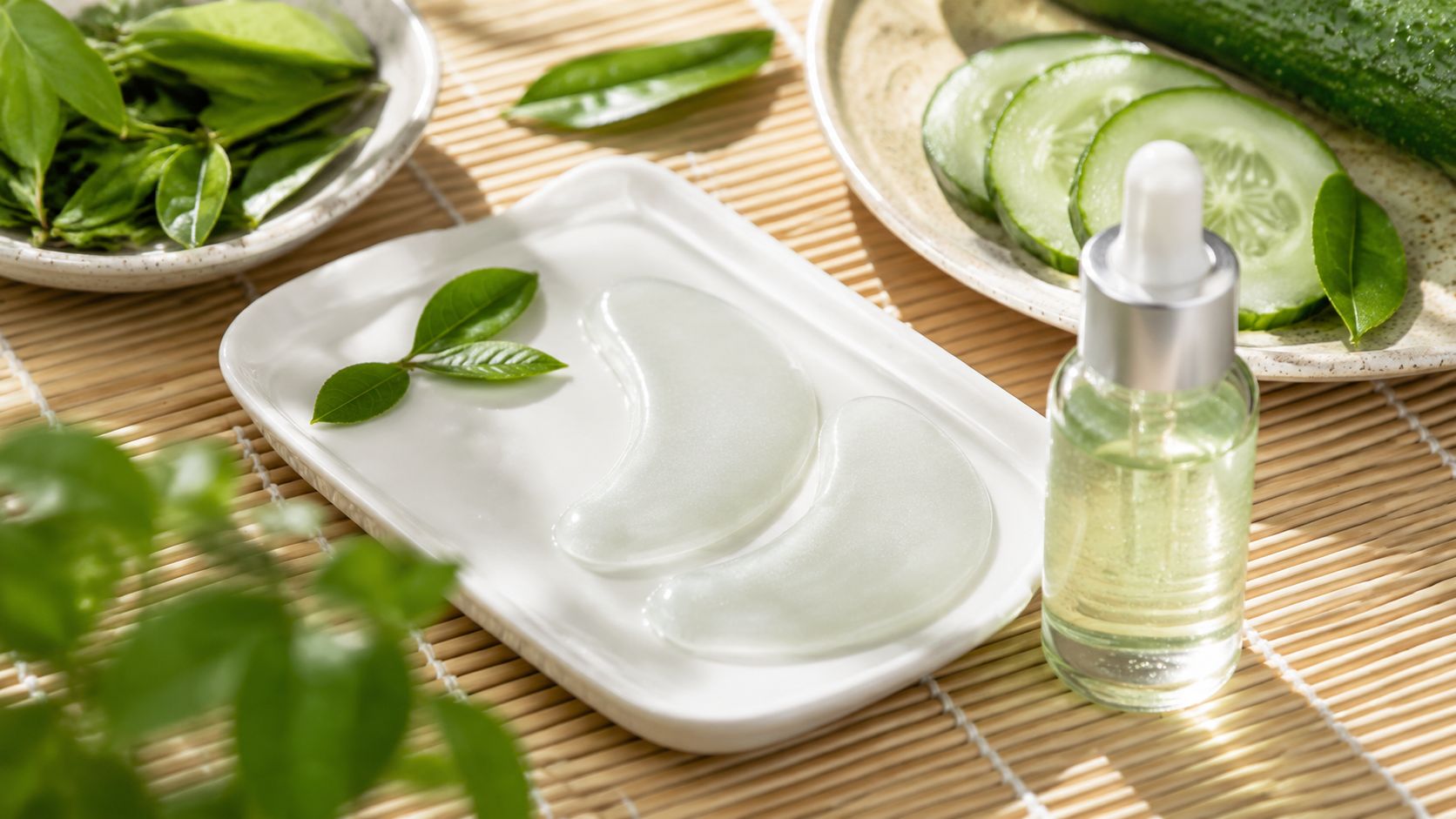
You wake up, look in the mirror, and your eye area tells the whole story before you do. Late-night scrolling. Too much laptop time. Not enough sleep. Maybe a salty dinner, stress, or a long flight. The result is familiar. Puffiness, dryness, shadows, and those tiny lines that seem sharper when your skin feels tired.
That's exactly why the Japanese eye patch category is so interesting. In Japan, eye care often feels more precise and more thoughtfully designed than the quick-fix products you see everywhere else. Instead of treating the under-eye area like an afterthought, many Japanese products treat it as a zone with different needs, different skin behavior, and different delivery challenges.
I've always loved how J-beauty approaches this. The philosophy isn't just “add more serum.” It's about format, fit, comfort, and how ingredients stay on the skin long enough to matter. If you've been wondering whether a Japanese eye patch is worth adding to your routine, the answer depends on one thing. You need to understand what kind of patch you're buying and what job it's designed to do.
Introduction The Secret to Refreshed Eyes
A lot of people buy under-eye products hoping one item will fix everything. They want less puffiness, fewer visible lines, more brightness, and a fresher look by tomorrow morning. Then they try a random patch once, don't see a miracle, and give up. I get it. The eye area is small, delicate, and frustratingly easy to overpromise to.
What stood out to me in Japan was how clearly many beauty shoppers separate function from fantasy. A cooling hydrogel patch isn't the same as a heat patch. A microneedle patch isn't the same as a serum-soaked sheet. A patch for comfort during screen fatigue isn't automatically a treatment-focused patch for dehydration lines. Once you understand that, the category makes much more sense.
That's where Japanese design often shines. The products tend to feel intentional. The fit is better. The formats are smarter. The focus is usually on helping the formula stay where it needs to stay, especially on a part of the face that loses moisture easily.
A good eye patch doesn't just contain ingredients. It controls how those ingredients sit on the skin.
If you're shopping from outside Japan, that matters even more. The phrase “eye patch” can describe several completely different products online. Some are skincare masks. Some are thermal comfort patches. Some are advanced treatment patches with a much more technical design.
By the end, you'll know how Japanese eye patches work, what ingredients are worth your attention, how to choose the right format for your concern, and how to shop more confidently for authentic Japanese skincare.
Why Japanese Eye Patches Are a Skincare Game Changer
The biggest difference between a Japanese eye patch and tapping on eye cream is occlusion. That sounds technical, but the idea is simple. The patch sits over the product and creates a more sealed environment, so the formula doesn't evaporate as quickly.

Why the patch material matters
Japanese eye patches are often engineered as occlusive delivery systems. The hydrogel or biocellulose base creates a sealed microenvironment that reduces evaporation and can raise local skin temperature by about 1–2°C, which is reported to improve penetration of actives like hyaluronic acid and peptides, as explained in this overview of Japanese patch technology and substrate design.
That small shift matters because the under-eye area is prone to moisture loss. The skin there is delicate, and products applied without any covering can dry down fast. A well-made patch helps keep the formula in place instead of letting it disappear into the air or slide across your face.
Similar to covering a freshly watered plant bed with a clear dome, the environment stays more humid. Moisture escapes less quickly. The ingredients get a better chance to sit where you want them.
Hydrogel and biocellulose feel different on skin
Not all patch bases behave the same way.
Hydrogel often feels cooler and grippier. That makes it popular when you want a refreshing, depuffing feel first thing in the morning.
Biocellulose usually conforms more closely to the skin's surface. That close fit can help reduce slipping during a typical 15–20 minute wear window, especially if you're moving around a little while wearing them. If you enjoy learning how format affects performance across Japanese skincare, this guide to J-beauty essentials and core product types is a helpful companion read.
Why this feels different from eye cream alone
Eye cream can absolutely be useful. But a patch changes the delivery experience.
A patch can help by:
- Holding the formula in place so it stays concentrated on the under-eye zone
- Improving contact time because the serum remains on the skin instead of thinning out quickly
- Adding comfort through cooling or close adherence, which makes the routine feel more targeted
- Reducing mess because you're not dealing with product migration as easily
Practical rule: If your main problem is that eye creams seem to vanish or pill under makeup, a patch format may fit your routine better than simply layering more product.
That's the game changer. Japanese eye patches often treat delivery as seriously as ingredients.
Decoding the Powerful Ingredients in J-Beauty Eye Patches
The ingredient list matters, but only if you know what you're looking at. A Japanese eye patch can be beautifully made and still be the wrong choice for your concern if the formula doesn't match your goal.
Hydration first with hyaluronic acid and collagen
If your under-eye area looks crepey, feels tight, or gets makeup-catchy during the day, hydration is usually the first place to start.
Hyaluronic acid is popular because it supports a plumper, more comfortable look. It's the kind of ingredient many people notice quickly when their skin is dehydrated rather than prominently lined.
Collagen in eye patch formulas is usually chosen for a cushioning, softening feel. People often expect collagen to work like an instant structural rebuild, but in skincare, it's more useful to think of it as part of a moisture-supporting, smoothing formula profile. If you want a clearer primer on how collagen-based ingredients are discussed in beauty and wellness, this explainer on collagen peptides and what they are helps separate marketing language from practical understanding.
Brightening support with vitamin C and tranexamic acid
Dark circles are tricky because they don't all come from the same cause. Some are shadow-based. Some are linked to pigmentation. Some just look worse when the skin is dry and tired.
That's why ingredient choice matters.
- Vitamin C is often chosen when dullness is part of the problem.
- Tranexamic acid is especially interesting in Japanese skincare because it's often associated with tone-focused formulas and products aimed at discoloration concerns.
- Niacinamide, when included in eye-area products, is often selected for overall barrier support and a more even-looking appearance.
A shopper looking at brands such as Transino will often notice this Japanese preference for targeted brightening logic rather than vague “radiance” language.
If your dark circles are mostly caused by structure, deep-set anatomy, or lack of sleep, even a very good patch may help the area look fresher without fully “correcting” the darkness.
Smoother-looking texture with retinol and peptides
For fine lines, the conversation changes.
Retinol is the ingredient people usually seek when they want a more active approach to visible lines. Around the eyes, that means being realistic and gentle. Not everyone wants that level of intensity, and not every patch uses it.
Peptides are often easier for people who want a maintenance-focused routine. They're commonly included in eye patches designed for firmness, softness, and a more rested look rather than an aggressive treatment feel.
A useful shopping habit is to match the ingredient story to your real complaint.
- Dry and papery. Look for hyaluronic acid
- Tired and dull. Look for vitamin C or tranexamic acid
- Fine lines you notice most under concealer. Look for peptides or a more treatment-focused format
- Sensitive and easily overwhelmed. Start with hydration-first formulas before chasing stronger actives
That one shift saves a lot of money and disappointment.
Exploring the Different Types of Japanese Eye Patches
The term Japanese eye patch sounds simple, but it covers several different product families. This variety often confuses shoppers. The patch that feels amazing during a bath isn't necessarily the one you'd choose for dehydration lines before an event.

Serum-soaked patches for hydration and comfort
These are the most familiar type. They're usually made from hydrogel or biocellulose and are soaked in a serum-style formula.
They work well for people who want:
- A cooling feel in the morning
- A quick prep step before makeup
- Extra hydration when the under-eye area looks dry
- A more spa-like routine without much effort
These are usually the easiest entry point into J-beauty eye care because they're intuitive and pleasant to use.
Dissolving microneedle patches for targeted delivery
A particularly interesting aspect of Japanese skincare involves advanced eye-patch formats. These use dissolving microneedles made from hyaluronic acid, reported to be about 50 microns long and 20 microns wide. They dissolve after entering the stratum corneum, bypassing the main diffusion bottleneck of conventional patches to deliver actives more directly for concerns like fine lines, according to Shiseido's research presentation on dissolving microneedle technology.
That sounds intense, but the practical takeaway is straightforward. These patches are designed for more direct superficial delivery rather than relying only on a soaked sheet sitting on top of the skin.
They're most relevant if you care about:
- Fine dehydration lines
- Short-contact treatments
- Less slipping or leakage than a wet patch format
- A more technical treatment experience
Reusable thermal patches for soothing, not infusion
This is the category that gets mixed up with skincare patches all the time.
A reusable thermal eye patch is usually about warmth, relaxation, and temporary comfort. One product listing for a reusable Japanese patch markets a “thermal effect” for dark circles, while many other products under the same broad search term focus on hydration or moisturizing instead. That mismatch is exactly why shoppers get confused, and it's highlighted in this example of a reusable thermal eye patch listing.
So the question isn't which one is better. It's which one is solving your actual problem.
| Patch type | Best for | What it mainly does |
|---|---|---|
| Hydrogel | Puffiness, dryness, quick refresh | Holds serum on skin and gives a cooling feel |
| Biocellulose | Close fit, hydration, less slip | Adheres closely and keeps product in contact |
| Microneedle | Fine lines, focused treatment | Delivers actives more directly into the surface layer |
| Reusable thermal patch | Eye fatigue, comfort, relaxation | Provides warmth and soothing, not serum infusion |
That distinction changes everything when you shop.
How to Choose the Perfect Japanese Eye Patch for You
Start with your real concern, not the packaging claim. Most frustration comes from buying a patch for “dark circles” when what you really have is morning puffiness, makeup dryness, or fine lines from dehydration.
Match the patch to the problem
Here's a practical shortcut.
| Choosing Your Japanese Eye Patch | ||
|---|---|---|
| Skin Concern | Key Ingredients to Look For | Recommended Patch Type |
| Puffiness | Hyaluronic acid, peptides | Hydrogel patch |
| Dryness and makeup creasing | Hyaluronic acid, collagen | Hydrogel or biocellulose patch |
| Fine lines | Peptides, retinol, hyaluronic acid | Microneedle or treatment-focused patch |
| Dull-looking under-eye area | Vitamin C, tranexamic acid, niacinamide | Serum-soaked patch |
| Eye fatigue and comfort needs | Not ingredient-led | Reusable thermal patch |
A few buying rules that actually help
- If you want a morning product, choose hydrogel. It usually gives the most satisfying fresh, cooled feeling.
- If patches slide on your face, try biocellulose. The closer fit often feels more controlled.
- If your concern is mainly relaxation, don't buy a skincare patch expecting a heat-mask experience.
- If your concern is visible lines, look at the format first, then the ingredient list.
A lot of people shopping for discoloration also benefit from reading more broadly around eye-area care, not just patch formats. This guide to the best eye cream options for dark circles in Japan can help you compare whether a patch or a leave-on product makes more sense for your routine.
Don't ask, “What's the best Japanese eye patch?” Ask, “What does my under-eye area need today?”
Who should buy which type
If you're a frequent traveler, screen-heavy worker, or someone who gets puffy in the morning, a simple hydrogel patch is often enough.
If you're detail-oriented and want a more technical format, microneedle patches are the category to watch.
If you care more about winding down than skincare delivery, choose a heat-based or reusable comfort patch and judge it by soothing performance, not anti-aging promises.
Master Your At-Home Japanese Eye Patch Ritual
The best patch still needs decent application. A lot of under-eye products underperform because people apply them onto oily skin, leave them on too long, or stack too many products underneath.

The simple routine that works
Start with clean skin. If you've just done a full routine, make sure the under-eye area isn't overly slippery with cream or oil.
Then follow this order:
- Cleanse gently so the patch can grip properly.
- Apply toner or light lotion first if that's already part of your routine.
- Place the patch carefully without dragging the skin.
- Press lightly so the full surface makes contact.
- Remove after the recommended wear time on the pack.
- Pat in the remaining essence instead of rinsing it away.
If you're building a fuller regimen, this overview of Japanese skincare steps in the right order is useful because patches usually work best as one part of a consistent routine, not a random last-minute add-on.
Should eye cream go before or after
Usually, a thick eye cream goes better after the patch, not before. If you apply a rich cream first, the patch may slip and the skin-contact benefit drops.
A lighter prep layer can be fine. A heavy occlusive cream under a patch usually isn't.
One good habit: Use the patch as your treatment step, then seal in comfort afterward with a small amount of eye cream if you need it.
For hydrogel patches, some people also like to chill them before use. That won't transform the formula, but it can make the experience more refreshing, especially when puffiness is the main complaint.
A lot of readers also enjoy pairing this with a broader wind-down routine. If you're trying to make your evening skincare feel less rushed, these self-care tips for ultimate relaxation are a nice complement.
Small mistakes to avoid
- Don't stretch the skin while placing the patch.
- Don't wear a serum patch endlessly just because it still feels damp.
- Don't expect a thermal patch to behave like a treatment mask.
- Don't judge results after one random use if your concern is long-term dryness or texture.
If you want to see the application process in motion, this video gives a helpful visual reference.
Where to Buy Authentic Japanese Eye Patches
You find a product labeled "Japanese eye patch," but the photos show a steam mask, the title mentions brightening, and the seller page uses a translated name that does not match the box. That is where many shoppers get stuck. With J-beauty, the formula philosophy matters so much that a mislabeled product can change what you are buying.

Japanese eye-area products are often designed with a very specific job in mind. One patch may focus on holding water close to the skin with hydrogel or serum-soaked fabric. Another may be built for comfort and warmth rather than skincare delivery. If the retailer does not make that distinction clear, you cannot judge the product by the science behind it. You are left judging by packaging alone.
A good retailer should make four things easy to confirm:
- Whether it is a skincare patch, sheet-style eye mask, or thermal comfort mask
- Whether the brand is an established Japanese skincare or wellness brand
- Whether the product is shipped from Japan
- Whether the product photos and naming match the original Japanese packaging
If you want a stronger filter for spotting reliable shops, this guide on how to evaluate online Japanese stores is a useful place to start.
It also helps to read product language like a formulator. "Eye zone mask" usually points to hydration and skin-softening care. "Whitening" or "brightening" usually signals a tone-focused formula direction in Japanese skincare language. "Steam" or "hot eye mask" usually means rest, heat, and comfort rather than active treatment. That difference matters because Japanese brands tend to formulate with purpose. The format is part of the technology, not just the packaging.
If you already shop J-beauty regularly, Buy Me Japan is one retail option that carries a broad mix of Japanese beauty brands shipped from Japan. That can make comparison easier, especially if you want to check how different brands classify eye-area products instead of relying on a single vague listing.
Brand context helps too. Hadabisei often reflects the Japanese approach to targeted mask care, where fit, material, and serum balance all support a specific skin goal. Transino is useful to watch if you are interested in tone-focused skincare logic. Even outside dedicated eye patches, these brands often apply the same careful formulation mindset to nearby categories such as sheet masks, essences, and creams.
The smartest buy is usually the product whose format matches your concern and whose listing gives enough detail to verify what the patch is designed to do. That is how you shop Japanese eye patches with confidence, based on design logic rather than hype.
Conclusion Elevate Your Skincare with J-Beauty
A Japanese eye patch reflects a very specific skincare philosophy. The goal is not to make the eye area feel coated for a few minutes. The goal is to match material, serum texture, adhesion, and ingredients to a clear job.
That formulation mindset is what makes J-beauty eye care so satisfying to use. A softer patch can act like a well-fitted compress that helps hold hydration close to the skin. A gel format can give a cooler, denser feel for skin that looks tired. A steam-style mask serves a different role altogether, supporting comfort and rest rather than chasing the same result as a treatment patch. Once you see those differences, the category stops feeling crowded and starts making sense.
The smartest purchase is usually the one that fits your real concern.
If your under-eye area is dry, look for moisture-focused formulas and patch materials designed to stay in contact without slipping. If dullness is the issue, pay attention to how Japanese brands describe brightening or tone care. If fatigue is your main complaint, a warming or soothing format may suit you better than a serum-heavy patch.
J-beauty works well here because the products are rarely random. The format is part of the formula. That is the detail worth remembering as you choose your next japanese eye patch. As noted earlier, Buy Me Japan is one option for comparing Japanese products and formats if you want to shop with a clearer understanding of what each one is designed to do.

Share:
Mastering Sashimi Soy Sauce: Your Guide to Authentic Shoyu
Red Clay Mask: Benefits, Usage, & Skincare Tips