


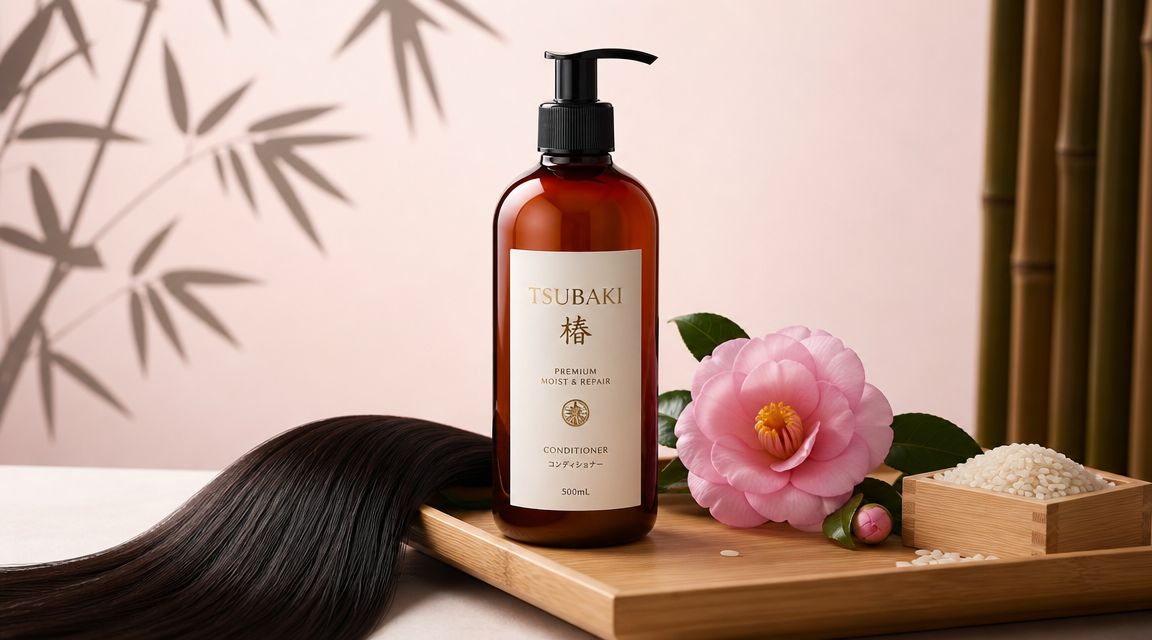
You wash your hair, apply conditioner, rinse, and still end up with one of two problems. Your hair either feels coated and flat, or it feels light but still rough at the ends. That's usually the point where people start looking at japanese hair conditioner and wondering why it seems to have such a loyal following.
The short answer is that many Japanese formulas are built around a different idea of conditioning. Instead of making hair feel heavy to prove it's moisturized, they often aim for softness, slip, shine, and a clean scalp feel at the same time. That balance is a big reason people with fine hair, humid-weather frizz, or daily-wash routines often get along with them so well.
If you're trying to figure out what makes these products different, how ingredients like camellia oil, rice bran, ceramides, and honey fit into the picture, and which formula suits your hair type, you're in the right place. If you want a broader routine around shampoo, treatment, and styling, this guide to a Japanese hair care routine is a helpful companion.
Your Guide to Japanese Hair Conditioners
You rinse out your conditioner, run your fingers through your hair, and can already tell how the day will go. The roots feel too soft and start to collapse by noon, or the lengths still catch at the ends. Japanese hair conditioner appeals to people stuck in that cycle because many formulas are built to solve both problems at once. They aim to smooth the hair fiber without making the scalp area feel overloaded.
That difference starts with formulation philosophy. Many Japanese conditioners are designed with a scalp-first mindset and a lightweight finish, so the product supports manageability, shine, and softness without relying on a thick waxy afterfeel to signal moisture. A formula can feel light in the palm and still work hard on the hair. In practice, that often means less drag during rinsing, easier combing, and better movement once the hair dries.
The ingredient choices matter too. Camellia oil often suits hair that feels dry, coarse, or dull because it softens and adds gloss without the dense finish heavier oils can leave behind. Rice bran ingredients are often a good match for hair that gets rough from frequent washing or heat styling, since they help support smoothness and flexibility. Ceramides are especially useful for hair that loses moisture quickly, such as porous, color-treated, or weather-stressed hair, because they help reinforce the hair's outer barrier. The goal is not just “silky hair.” It is choosing the kind of conditioning your hair needs.
Practical rule: If your roots go flat but your ends still feel frizzy, you may not need more conditioner. You may need a formula that better matches your hair's density, porosity, and level of damage.
One more point confuses many shoppers outside Japan. Product pages can look similar even when the formulas, market versions, and freshness are not. If you are building a full routine, this guide to a Japanese hair care routine for shampoo, treatment, and styling can help you see where conditioner fits and how to choose more confidently.
The Japanese Philosophy of Hair Conditioning
Japanese hair conditioning often starts with a simple idea. Hair should feel smooth and nourished, but still look clean, movable, and alive. Think of the difference between a silk shirt and a heavy wool coat. Both can feel luxurious, but they sit on the body very differently.
That same contrast helps explain why many Japanese conditioners feel distinct from richer formulas popular elsewhere. The goal often isn't a dense coating. It's controlled smoothing.

Lightweight nourishment
Many Japanese formulas rely on a layered conditioning system that combines low-viscosity emollients and cationic conditioners. As explained in this guide to Japanese hair care brands and their top-rated products, this approach reduces combing friction and smooths the cuticle without the weighed-down residue common in richer Western conditioners.
That sounds technical, but the everyday effect is easy to understand. Hair gets less snaggy in the shower, easier to comb after rinsing, and smoother once dry. You get polish without that “second-day film” some heavier formulas leave behind.
Cationic conditioning ingredients matter because damaged hair tends to carry a more negative surface charge. Those positively charged conditioning agents are drawn to the rougher, more damaged parts of the hair shaft, where they help reduce friction and improve slip. That's one reason a lightweight formula can still feel surprisingly effective.
Scalp-first thinking
A lot of Japanese hair care also reflects a scalp-first mindset. The idea isn't that conditioner belongs on the scalp in every case. It's that healthy-looking hair starts with keeping the whole routine balanced, especially if you wash frequently or live in a humid climate.
That's why many formulas aim to avoid the greasy, overloaded feel some users dislike. This design philosophy fits daily use well, especially for:
- Fine to medium hair that collapses easily
- Humid-weather routines where heavy products can feel sticky
- People who wash often and want softness without buildup
- Users who want shine but still care about root lift and movement
Smooth hair isn't always heavily coated hair. Often, it's hair with less friction, a flatter cuticle surface, and a formula that doesn't overstay on the strand.
Japanese conditioner also tends to fit into a more segmented routine. Instead of asking one rinse-off product to do everything, many users pair a lighter everyday conditioner with a separate repair treatment, mask, or leave-in when needed. That's part of why the category can feel more precise and less one-size-fits-all.
Powerhouse Ingredients in Japanese Conditioners
Ingredients matter, but not in the way marketing often suggests. The question isn't whether an ingredient sounds luxurious. It's what problem it's meant to solve on your hair.
That's especially useful with japanese hair conditioner, because many formulas are designed around specific results like smoothness, flexibility, shine, repair, or weightless moisture.

Traditional oils and botanical ingredients
Camellia oil, often called tsubaki oil in Japan, is one of the most recognizable examples. It's valued because it helps smooth the hair surface, add gloss, and soften dry lengths without always feeling overly greasy when used in balanced formulas. If you want a deeper look at how this ingredient is used, this article on how to use camellia oil for hair gives practical context.
Rice bran and rice-derived ingredients also fit the Japanese approach well. They're often associated with softness, surface conditioning, and a refined, non-heavy feel. For hair that feels dull, rough, or puffy rather than severely damaged, these ingredients can make a lot of sense.
A few common plant-based ingredients and who they suit:
- Camellia oil helps with shine, softness, and surface smoothness. Good for dry, frizz-prone, or medium-thick hair.
- Rice bran or rice extract suits hair that needs a smoother feel without a rich finish.
- Honey is often used for moisture retention and softness, which is why moisture-focused lines from brands like &honey are popular with dry hair.
Repair actives for damaged hair
Some Japanese treatments go beyond surface softness. Advanced formulas can include biomimetic lipids and repair actives such as hydrolyzed keratin and ceramides. As described in this Tokyo-based guide to Japanese hair products worth trying, these ingredients work to rebuild the hair's internal structure and fill cuticle defects, which is especially helpful for chemically treated or heat-damaged hair.
Here's the simpler version of that science.
Hydrolyzed keratin contains smaller protein fragments that can cling to damaged areas of the hair. Ceramides help support smoother, more sealed-feeling cuticles. Together, they're often used in formulas meant for bleached, colored, heat-styled, or high-porosity hair.
That's why products in the repair category often feel different from lighter daily conditioners. They're trying to do more than detangle. They're trying to make compromised hair feel less rough and less fragile.
If your hair tangles most at the ends, feels mushy when wet, or turns fluffy after blow-drying, you're usually looking at a repair need, not just a moisture need.
Moisture binders and texture enhancers
Moisture-focused Japanese conditioners often combine humectants with conditioning agents. Honey is a common example in consumer-facing branding, especially in products associated with softness and flexibility. Humectants help attract and hold water, while oils and conditioners help keep the strand from losing that soft feel too quickly.
This is one place where ingredient matching helps:
- Honey-rich formulas often suit dry, coarse, or frizz-prone hair
- Ceramide or keratin formulas fit bleached and heat-damaged hair
- Camellia and rice-based formulas often suit normal, slightly dry, or easily weighed-down hair
For product examples, shoppers often recognize brands such as Tsubaki for camellia-focused care, &honey for moisture-heavy softness, Ichikami for smoother traditional-botanical styling, and Shiseido Fino for repair-oriented treatment support.
How to Choose the Right Conditioner for Your Hair
You wash your hair at night, it feels soft in the shower, and by morning the roots are flat while the ends still feel dry. That usually is not a sign that conditioner "doesn't work." It means the formula and your hair behavior are not matched yet.
Japanese conditioners are often designed with a lighter, more targeted philosophy than many Western formulas. Instead of coating the whole head as heavily as possible, many aim to smooth the hair fiber without overwhelming the scalp area. That is why choosing by hair type alone can miss the point. The better question is how your hair responds. Does it collapse, puff up, tangle, stretch, or stay rough after drying?
Japanese hair care has also become more specialized over time. As noted in this overview from WAmazing on Japanese hair care selection, many products are grouped by concerns such as damage, dryness, and frizz, with clearer separation between daily conditioners, treatments, and masks.
Start with your hair's behavior, not the label
Hair often gives better clues than marketing terms.
If your hair gets flat a few hours after washing, it usually needs a lighter conditioner with less residue. If it catches on itself when wet, you need more slip and better cuticle smoothing. If it feels dry right after blow-drying even though it felt soft in the shower, you may need ingredients that hold softness longer, or you may need a leave-in step after rinsing.
One of the biggest points of confusion is oily roots with rough ends. Many people assume they need one stronger product for everything. In practice, they often need a lighter formula and better placement. Japanese hair care tends to handle this well because many formulas are built for mid-lengths and ends first, rather than for heavy all-over coating.
Match ingredients to the problem you want to solve
Ingredient matching gets easier once you know what each group tends to do.
Camellia oil usually suits hair that wants shine, glide, and softness without a waxy finish. It often works well for normal, slightly dry, medium, or thick hair, especially if the goal is a polished look.
Rice bran and rice-derived ingredients often appeal to fine hair, low-porosity hair, or hair that gets overloaded easily. They are commonly used in formulas that aim for smoothness and manageability with a lighter feel.
Ceramides and repair proteins are a better match for hair that has been bleached, colored, relaxed, or heat-styled often. These ingredients are chosen because damaged hair usually has a rougher, less sealed outer layer and needs more than surface softness.
That difference matters. Dry hair needs comfort. Damaged hair needs support.
Japanese Conditioner Matching Guide
| Hair Concern | Key Ingredients to Look For | Recommended Product Type |
|---|---|---|
| Fine hair that gets weighed down | Lightweight emollients, cationic conditioners, rice-derived smoothing ingredients | Lightweight daily rinse-off conditioner |
| Dry, rough, or frizzy hair | Camellia oil, honey, richer smoothing oils | Moisturizing conditioner or smoothing treatment |
| Bleached, color-treated, or heat-damaged hair | Hydrolyzed keratin, ceramides, repair lipids | Repair treatment or richer conditioner |
| Oily scalp with dry ends | Light conditioning agents, non-heavy moisturizers | Lightweight conditioner applied away from roots |
| Sensitive scalp and fragrance concerns | Simpler formulas, gentler daily conditioners | Mild daily conditioner, minimal layering |
| Low-porosity hair prone to residue | Lightweight conditioners, less coating-heavy formulas | Light rinse-off conditioner used sparingly |
Matching common Japanese brands to hair needs
A few examples make the categories easier to picture.
Ichikami often appeals to people with fine to medium hair who want softness and smoothness without a dense finish. That makes it a reasonable starting point for daily use if your hair falls flat easily.
Shiseido Fino is discussed more often as a treatment product than as a basic everyday conditioner. That tells you what role it usually serves. It is better suited to hair that feels compromised and rough, not hair that only needs light detangling. If you are unsure whether your hair needs a rinse-off formula or added post-wash support, this guide to Japanese leave-in conditioner can help you sort out the difference.
&honey is often explored by people whose hair feels puffy, brittle, or persistently dry. These formulas usually aim for a softer, more cushioned finish.
Tsubaki and other camellia-focused lines are often a good fit for medium to thick hair that wants gloss and smoother movement. They tend to make more sense for someone chasing shine and control than for someone trying to maximize root lift.
A simple way to decide
Use this filter before you buy.
- Choose a daily conditioner if your goal is regular softness, easy detangling, and a light smoothing effect.
- Choose a treatment or mask if your hair still feels rough, porous, or weak after conditioning.
- Choose a leave-in if shower softness disappears once the hair dries.
- Choose lighter formulas if your roots flatten quickly, your hair is fine, or you wash often.
- Choose richer repair formulas if your ends feel stretchy, straw-like, or heavily processed.
If you are still comparing routines, this ultimate guide to hair conditioning gives useful context on frequency and conditioner use. If you want to compare Japanese product types and brands in one place, Buy Me Japan is one practical option for browsing lines such as Tsubaki, Ichikami, Shiseido Fino, Milbon, Momori, and &honey.
Getting the Best Results From Your Conditioner
A great formula can still disappoint if you use it like a generic conditioner. Japanese hair products often perform best when you treat them as part of a method, not just a single step.

Where you apply it matters
Conditioner should be applied mainly to the mid-lengths and ends. That advice sounds basic, but it solves a lot of complaints.
Roots usually need less conditioning than older, more weathered ends. If you apply a richer formula all over, you can end up with flatness at the crown and still not fully address the driest areas.
A simple application routine works well:
- Squeeze out extra water first. Hair that's dripping wet can dilute the conditioner too much.
- Spread product between your palms. This helps distribute it more evenly.
- Work from the ends upward. Stop short of the scalp unless the formula specifically suits scalp-area use.
- Comb through gently with fingers. This helps coat rough sections without piling product onto one spot.
Conditioner versus treatment
Japanese hair care often separates daily conditioning from repair care more clearly than many shoppers expect. A conditioner is usually for regular softness, detangling, and basic cuticle smoothing. A treatment or mask is more targeted.
If your hair is color-damaged, heavily heat-styled, or still feels rough after a standard conditioner, you may get better results by rotating in a treatment instead of using more conditioner. In these situations, routines built around products like Fino make more sense. If you want a detailed method, this guide on how to use Fino hair mask is useful.
Salon-style habit: Don't judge a conditioner only by how it feels when wet. Judge it by how your hair behaves after drying, sleeping on it, and styling it the next day.
One extra trick many people overlook is emulsifying before the final rinse. Add a small amount of water to your conditioned hair, massage lightly for a few seconds, then rinse. That can help spread the product more evenly and improve the feel of the finish.
For a broader look at frequency and routine planning, Morfose has an ultimate guide to hair conditioning that's useful if you're still deciding how often your hair needs this step.
The silky feel and buildup tradeoff
Not every smooth result means your hair is healthier. Some Japanese conditioners create that polished feel through oils and conditioning polymers that improve slip and shine. That can be lovely, but it can also create residue for certain users.
As discussed in this article on Japanese hair treatments for silky hair, the tradeoff between shine and buildup matters most for people who wash infrequently or have low-porosity hair that's prone to residue.
If that sounds like you, a few adjustments help:
- Use less product than you think you need
- Apply only to damaged sections instead of the whole head
- Alternate with a lighter conditioner rather than using a rich one every wash
- Watch how hair feels on day two because buildup usually shows up later, not immediately
If your hair is curly or coarser, don't assume a Japanese conditioner will automatically be too light. Some will be. Some won't. The better question is whether the formula offers enough moisture and slip for your routine without conflicting with your wash frequency, leave-ins, or styling creams.
Where to Buy Authentic Japanese Hair Conditioners
You find a conditioner online that looks exactly like the one you researched. The bottle shape matches. The brand name matches. Then the product arrives, and you are left wondering whether you bought the Japanese domestic version, an export version, or an older listing using the same photos. That confusion is common, especially with Japanese hair care, where small differences in formula, packaging, and product category can change how the conditioner feels on your hair.
Authenticity matters because Japanese conditioners are often formulated with a very specific idea in mind. The goal is usually light, controlled conditioning that respects the scalp and smooths the hair without making it heavy. If you chose a formula for the way ingredients like camellia oil, rice bran, or ceramides support your hair type, you want the actual product you meant to buy, not a vague substitute with similar branding.
What to look for when buying
A reliable store makes the sourcing path easy to understand. You should be able to tell what the product is, where it ships from, and whether it is a conditioner, treatment, mask, or leave-in. That sounds basic, but Japanese hair care labels can be confusing if you are shopping across marketplaces with copied titles or inconsistent translations.
Use this quick checklist:
- Clear Japanese brand range so you can compare lines such as Tsubaki, Ichikami, &honey, Fino, Milbon, and Momori
- Shipping details that are easy to verify because origin affects confidence in what version you are buying
- Category labels that are specific so you do not mistake a richer hair mask for a daily conditioner
- Consistent product photos and naming which helps you spot duplicate listings or mismatched variants
- Ingredient visibility so you can match the formula to your actual hair needs, such as lightweight smoothing, barrier support, or richer moisture
If you are still deciding where to shop, this guide to best online Japanese stores for beauty and lifestyle products is a practical starting point.
Why Japanese origin matters
Buying through a source that clearly handles Japanese products helps preserve the logic behind the formula. A scalp-aware, lightweight conditioner is designed to behave differently from a heavy Western-style mask. That difference is part of the appeal.
It also gives you a better chance of choosing by hair behavior instead of by marketing promise. Fine hair often responds well to a lighter formula built around rice-derived ingredients or a modest amount of camellia oil. Dry, brittle, or chemically stressed hair may do better with ceramides or richer conditioning agents that support the cuticle without turning the finish waxy.
If you want more context on shopping in Japan or reading labels while traveling, this guide on how to overcome Japan's language barrier can help.
Buy Me Japan is one example of a retailer that lets you browse Japanese hair care by brand and product type, which makes it easier to compare conditioners, treatments, and masks without guessing from generic "silky hair" claims.


Share:
Japan Bra Size Guide: How to Find Your Perfect Fit
Body Scrub Japan: A Guide to Silky Smooth Skin