


You're comparing Minon bottles that all seem to promise gentle care, but one is a moisturizer, another is sunscreen, and a third may be an acne-care lotion. They share a brand philosophy, not necessarily a formula or a job in your routine. Choosing well means looking past the word “sensitive” and checking the exact product, ingredients, texture, and directions.
Minon is a Japanese brand known for gentle cleansing and amino-acid-based moisture care. This guide connects its history to the way its formulas differ, then offers practical selection and use tips for international shoppers. Cosmetic products can support everyday care, but they aren't guaranteed solutions or substitutes for medical advice. If you're also sorting out what Japanese skincare brands mean by “lotion,” this guide to Japanese lotion versus toner can help clarify the terminology.
Why Minon Products Are Not Interchangeable
A shopper might see a Minon cleanser, lotion, cream, mask, medicated lotion, and sunscreen on the same shelf and assume they're variations on one gentle formula. They aren't. Each product has its own purpose and ingredient list, so the brand's low-irritation positioning shouldn't be taken as proof that every item will feel the same or suit every person.
The range is easier to understand by asking what job a product does. A cleanser removes soil and excess residue. A lotion generally adds a water-focused layer after washing, while a richer cream may provide more emollient or occlusive ingredients. A sheet mask is a separate, occasional step, and a sunscreen is designed for daytime sun protection, not as a universal replacement for a moisturizer.
That distinction matters most when skin is reactive, dry, oily, acne-prone, or easily congested. “Sensitive skin” describes a concern, not one fixed skin type. Someone who wants a light layer under sunscreen may prefer a different texture from someone looking for a richer-feeling evening moisturizer. And a product described as medicated may have a different purpose from a standard hydrating lotion.
Practical rule: Choose by the product's role and full formula, not by the Minon name alone.
The brand's history helps explain why gentle cleansing and moisture care feature so prominently, but it can't predict your personal tolerance. Read the exact variant's ingredient list and directions, and introduce it cautiously. The following sections connect Minon's background to the practical choices that matter when you're deciding what, if anything, belongs in your routine.
How Minon Built Its Sensitive Skin Identity
Minon's story begins with a cleansing product, not a broad beauty line. Daiichi Sankyo Healthcare says the brand launched in 1973 with a bar soap, at a time when cosmetic-allergy-related skin problems were a significant concern and ingredient safety standards weren't firmly established. The original idea was that cleansing could help prevent or reduce irritation, rather than relying on aggressive treatment claims. That history helps explain the brand's continuing focus on mild cleansing and skin-barrier-conscious care. Minon's brand history
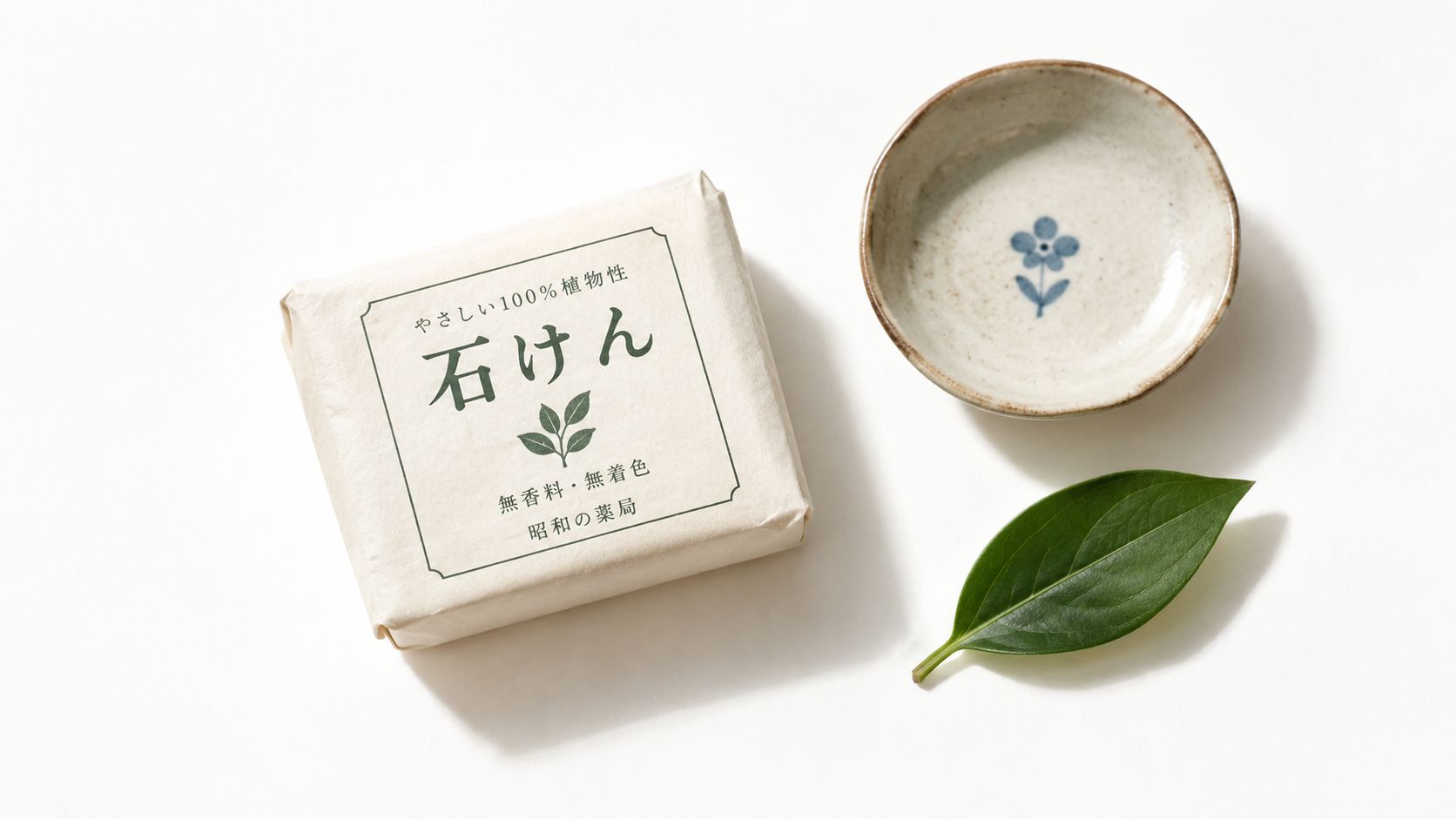
The three “Non” principles
The name “Minon” reflects three guiding principles described by the manufacturer: Non-allergic, meaning potential allergy-causing substances should be minimized; Non-alkaline, referring to mildly acidic formulations; and Non-toxic, expressing a low-irritation approach. These are useful clues to the brand's intentions, not a promise that no one will react. Individual tolerance depends on the person and the formula, so “sensitive skin” on a product or brand description shouldn't replace careful ingredient review.
The range later grew beyond cleansing into facial, body, and hair care, as well as products for babies and older adults. That expansion shows how the original approach became a multi-category brand, but it doesn't mean every product shares the same ingredients or suits every age or skin concern. Shoppers looking at body cleansers can also use this guide to Japanese body wash for dry skin to think about product role and feel.
From soap to facial moisture care
A second turning point came in 2009, when Minon introduced Amino Moist, a facial-care range developed around amino acids and the role they play in maintaining skin moisture. The brand describes its broader formulation history as using amino-acid-related cleansing ingredients since the original launch and pursuing “moisturizing cleansing,” or cleaning while helping preserve natural moisture. The manufacturer's account of Minon's development
For today's shopper, that history offers context, not a shortcut. Product names and sensitive-skin language can point you toward a range, but you still need to inspect the specific formula, texture, and label directions.
How Amino Acids Support Minon's Moisturizing Approach
Think of a moisturizing routine as adding water and then helping it linger. A water-rich lotion can provide a light layer that feels comfortable after cleansing. Ingredients known as humectants, including glycerin, betaine, and sodium PCA, help attract or hold water within a moisturizing formula. For a plain-language explanation of one common humectant, see this resource on glycerin's role in skincare.
Minon's Amino Moist concept centers on nine amino acids that the manufacturer describes as contributing to natural moisturizing factors, which are associated with water retention in the stratum corneum, the outermost layer of skin. In the acne-care lotion, the named amino acids appear with humectants such as glycerin, butylene glycol, betaine, sodium PCA, and sodium hyaluronate. That ingredient list tells you what the formula contains. It doesn't, by itself, establish independent clinical results for the complete product or prove that topical amino acids alone rebuild the skin barrier. Minon's explanation of its Amino Moist concept

Hydration is one layer, not the whole routine
A simple analogy can help: humectants are like a sponge that holds water, while emollients and occlusives add a more protective layer over the top. They don't perform identical roles. A lotion may feel sufficient in humid weather or as a light layer, while dry conditions or a compromised-feeling barrier may call for a richer moisturizer afterward. How a particular product feels will still depend on the formula and your own skin.
This is why a lotion followed by an emulsion or cream can make sense: the second layer may help reduce water loss from the skin's surface. It's a routine principle, not a guarantee that a product will repair damage or prevent irritation. A richer formula isn't automatically a better fit either, especially if you dislike heavier textures or are prone to congestion.
Amino-acid ingredients offer a reason to understand a formula, not a promise about how your skin will respond.
For another perspective on ingredient choices in moisture-focused routines, browse this guide to Japanese ceramide skincare. Keep the distinction clear: the manufacturer's stated formulation rationale and ingredient list are not the same as independent, product-specific proof of a result.
Comparing Two Featured Minon Products
Morning care often pairs two different steps. One adds moisture comfort. The other helps guard against UV exposure during the day. Confusing those jobs makes selection harder, because each formula is built around a separate purpose.
The Minon Amino Moist Charge Milk is a facial moisturizer. Its listed ingredients include glycerin, xylitol, amino acids, and allantoin. Those ingredients fit a moisture care role, where texture and layering order matter for how the skin feels through the day.
By contrast, Minon UV Mild Protection Milk SPF50+/PA++++ is a daytime sunscreen. The catalog lists its size as 80 ml and identifies SPF50+/PA++++ protection. Its description also highlights SPL and amino-acid-based ceramide analogs. Sunscreen belongs in daytime sun protection care, and its protection label does not give it the same function as a moisturizer.
Think of the pair as family members with different assignments. The moisturizer supports a hydrated feel before makeup or sunscreen. The sunscreen addresses UV protection as its main task. Sensitive skin response still depends on the particular formula and individual tolerance, so each product needs checking on its own terms.

Featured Minon Products at a Glance
| Product | Routine Role | Verified Details | What to Check |
|---|---|---|---|
| Minon Amino Moist Charge Milk | Facial moisturizer | Listed ingredients include glycerin, xylitol, amino acids, and allantoin. | Confirm the live page's current variant, full ingredient list, directions, and displayed details. |
| Minon UV Mild Protection Milk SPF50+/PA++++ | Daytime sunscreen | Catalog size is 80 ml, listed protection is SPF50+/PA++++. Description highlights SPL and amino-acid-based ceramide analogs. | Review the live page and current package for ingredients, directions, and any relevant warnings. |
Use the table to match the product to the need. Select a moisturizer for its feel and place in a moisture care routine. Select a sunscreen for daytime use according to its directions and protection labeling.
Choosing Minon for Your Skin and Climate
Start with how your skin feels and what you want the product to do, rather than trying to sort yourself into a single “sensitive skin” category. Dry, oily, combination, acne-prone, and eczema-prone skin can each have different preferences, and people can experience sensitivity alongside any of them. A light lotion may feel easier to layer in humid conditions; a cream with more emollient or occlusive ingredients may appeal in a dry climate or at night. Those are texture-based considerations, not promises about results.
| Need or preference | Product direction to consider | Keep in mind |
|---|---|---|
| Light hydration or layering | A water-and-humectant-focused lotion | Check the exact ingredients and how it feels in your routine. |
| A richer moisture-sealing feel | A cream with emollients or occlusives | Test cautiously if you're prone to congestion or dislike heavier textures. |
| Acne-care positioning | A medicated acne-care lotion with listed active ingredients | Don't treat it as interchangeable with a standard moisturizing lotion. |
| Daytime sun protection | A sunscreen | It has a distinct role and isn't a moisturizer substitute. |
The matrix is a way to narrow choices, not a product recommendation for a diagnosis. For instance, someone who prefers a lighter routine might start by comparing lotion textures, while someone in a dry climate might look for a richer finish. If heavier products tend to feel uncomfortable or congesting, introduce a richer texture cautiously instead of assuming more occlusion is always better.
Eczema-prone or otherwise reactive skin calls for particular care. A brand's mildness positioning doesn't guarantee tolerance, and ingredient lists can't predict every reaction. Minon's own product guidance advises users with sensitive skin to test a small amount and stop if redness or itching occurs. For a broader explanation of moisturizer roles, see this guide to barrier-repair moisturizers, while remembering that product choice should still reflect your own skin and the exact formula.
How to Use Minon Products Safely
A cautious routine is easier to evaluate when you keep its steps distinct. Cleanse first, use the moisturizer or lotion that fits your needs, and finish daytime care with sunscreen. The cleanser's job is to remove surface soil and residue, while the moisturizer and sunscreen have their own purposes. If you're comparing cleansing options, this guide to face cleansers for sensitive skin offers a useful way to think about that first step.
Follow the exact lotion directions
For the official Amino Moist lotion directions, apply the lotion after washing your face. Use approximately three to five pump presses on clean hands, then gently spread it over the face. With a new container, pump several times until the contents emerge. The manufacturer also advises testing a small amount on the inside of the arm and checking for redness or itching before broader use. Minon's lotion directions and patch-test guidance
Introduce one new product at a time. That makes it easier to notice which product may be linked to a reaction. If redness or itching appears, stop using that product; the manufacturer's whole-body cream guidance warns that continued use may worsen symptoms. A label's gentle-care positioning doesn't rule out individual allergy or irritation.
Treat a mask as its own step
For Minon's Smooth and Moisturizing Skin Mask, the stated wear time is about 10 to 15 minutes. Unfold the sheet, position it around the eyes and mouth, and adjust it to fit; after removing the mask, spread any remaining gel serum from the pouch over the skin. The manufacturer recommends using it once or twice a week, while noting that daily use may be possible depending on skin condition. The mask's application directions
Don't transfer one product's instructions to another just because both carry the Minon name. Check the label for the exact variant you buy, especially if the package has Japanese directions or the formula differs from a product you've used before.
Buying Minon Products Through Buy Me Japan
Ordering from abroad adds a translation step to every purchase. You see a familiar brand name, yet the variant, size, and directions may differ from what you expect. Treat the live product page as your final reference, not a saved screenshot or a description written for another version.
Before checkout, confirm the exact product name and variant, size, current ingredient list, directions, price, availability, shipping information, and any promotion shown. Those details can change over time. If an ingredient or warning affects your choice, compare the listing against the packaging once the item arrives.
Japanese packaging sometimes uses the word medicated in a regulatory sense that does not transfer directly to other countries. Read the stated active ingredients and use directions, then interpret claims through your own local labeling rules. Buy Me Japan describes itself as a Japanese online store focused on authentic products, with tracked shipping, secure payments, and customer service. Check the current site for the terms that apply to your order.
Key Takeaways for Choosing Minon
A shared focus on gentle care connects the range, yet each Minon formula has its own job, texture, and ingredient balance. Reading the line as one single product leads to mismatched expectations. Reading each label on its own terms makes selection clearer.
The two featured examples show why that distinction matters. Charge Milk works as a facial moisturizer in a daily routine, while UV Mild Protection Milk SPF50+/PA++++ works as daytime sun protection. Shoppers who compare them by role, finish, and fit for climate get closer to a useful choice than shoppers who compare them by brand name alone.
Start with the need you want to fill, then match it to the exact variant. Check the package directions, texture description, and current ingredient list. Patch test when skin is reactive, and introduce one new product at a time so you can see how your skin responds.
If either featured product looks relevant, confirm the details on the live page before checkout. You can also browse the current Minon listings on Buy Me Japan to review the options currently listed.
Buy Me Japan is a Japanese online store focused on making authentic Japanese beauty, lifestyle, food, and drink products accessible through a convenient shopping experience. Explore Buy Me Japan to review current Minon listings and choose by formula, texture, and routine role.

Share:
Japanese Deodorant Products: A Practical Buying Guide