


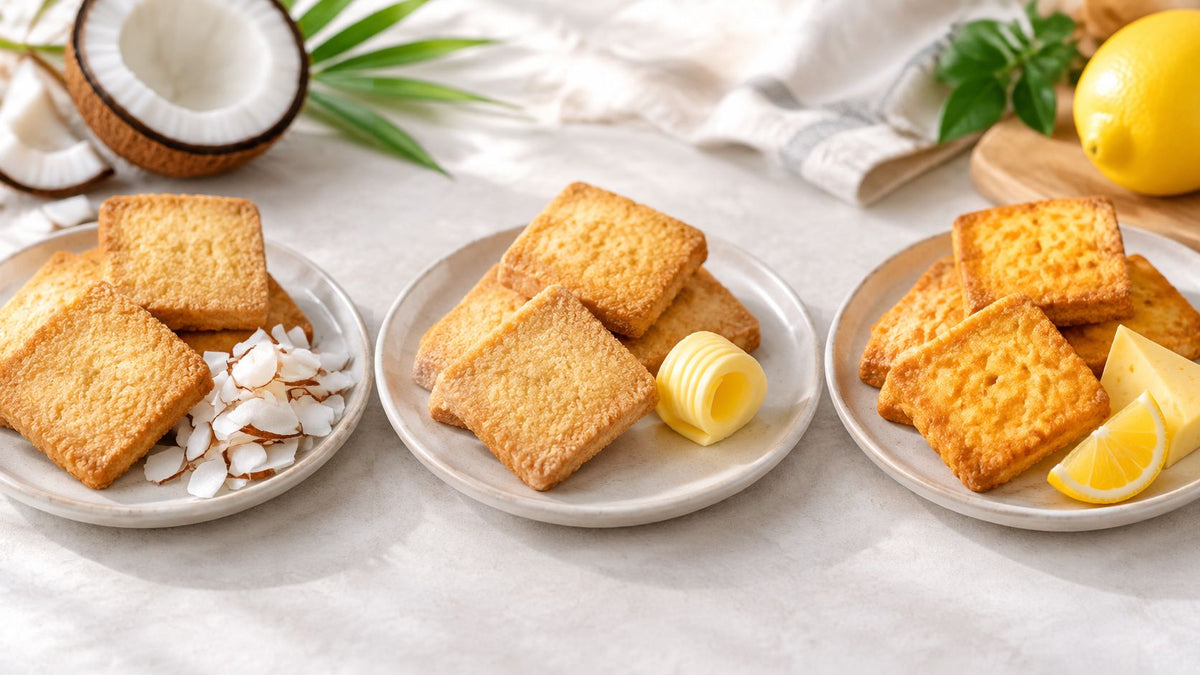
Butter and baked cheese sound like the richer Nissin Coconut Sable, the flavors a shopper would expect to cost more in calories and fat. Published nutrition panels show only a small spread in energy and fat, and Original carries the most fat of the three.
Salt is nearly the same on Original and Fermented Butter. The difference that matters is a short list of flavor-active ingredients: cultured butter, fermented-milk flavoring, cheese powder, processed cheese, and lemon powder.
Those ingredient lines decide the cookie more than the calorie column does. A few nutrient fields stay unpublished, so the panels still leave gaps.
Nissin Coconut Sable Flavors Side by Side
Short answer: Original for the classic coconut biscuit, Fermented Butter for a dairy-led version, and Baked Cheese for a sweet and savory contrast. The panels below show why that decision rests on flavor rather than on calories.
| Flavor | Energy (kcal) | Protein (g) | Fat (g) | Carbohydrate (g) | Salt-equivalent (g) |
|---|---|---|---|---|---|
| Original | 110 | 1.5 | 4.4 | 16.0 | 0.22 |
| Fermented Butter | 107 | Not published | 3.8 | 16.8 | 0.21 |
| Baked Cheese | 108 | 1.5 (calculated) | 4.0 | 16.5 | 0.28 |
Nissin's product announcement confirms the standard international pack holds 16 biscuits in four individual packets of four, and the per-serving panels put energy between 107 and 110 kilocalories and salt-equivalent between 0.21 g and 0.28 g. That is a span of three kilocalories and seven hundredths of a gram of salt across the entire range. Nobody picks a snack on margins that small, so treat the calorie column as a tie.
Salt deserves a closer look because the split is uneven. Baked Cheese carries 0.28 g per serving, roughly a third more than Fermented Butter at 0.21 g, while Original and Fermented Butter sit within 0.01 g of each other. Between those two, salt is no reason to prefer either one, so decide on flavor. Even the Baked Cheese gap only becomes relevant if you eat several packets in a sitting, since the absolute difference is a fraction of a gram.
The fat column runs against what the flavor names imply. Original leads at 4.4 g per serving, ahead of Baked Cheese at 4.0 g and Fermented Butter at 3.8 g, a spread of just six tenths of a gram. The butter and cheese variants sound richer than the plain original, yet the panel ranks them leaner. A label that implies indulgence and a panel that measures it are two different things, and Coconut Sable is a clean example of the gap.
Protein is the one incomplete column. Original publishes 1.5 g per serving. Fermented Butter publishes no protein figure in the material available, so that cell stays empty rather than guessed. The Baked Cheese figure is derived from energy, fat and carbohydrate using standard conversion factors instead of being read off a panel, so treat it as an estimate and give it less weight than the measured values around it.
The pack format simplifies comparison. One packet equals one serving on every panel, so the figures above need no arithmetic before you use them, and the four-packet structure makes portioning identical no matter which flavor you buy.
The same panel-first habit pays off across the wider snack aisle, including our guide to chocolate Pocky sticks, where flavor names and nutrition figures diverge in much the same way.
Ingredients That Set Each Flavor Apart
The nutrition panels differ by a rounding error. The ingredient lists are where the three flavors diverge.
| Ingredient | Original | Fermented Butter | Baked Cheese |
|---|---|---|---|
| Coconut and coconut oil | Yes | Not confirmed | Not confirmed |
| Sugar, shortening and salt | Yes | Not confirmed | Not confirmed |
| Skimmed milk powder | Yes | Not confirmed | Not confirmed |
| Fermented butter | Not listed | Yes | Yes |
| Fermented-milk-flavor powder | Not listed | Yes | Not confirmed |
| Cheese powder and processed cheese | Not listed | Not listed | Yes |
| Lemon powder | Not listed | Not listed | Yes |
Yes means the ingredient appears in the published summary for that flavor. Not listed means it doesn't appear. Not confirmed means no full ingredient list is published for that flavor in the material used here, so the table records an absence of information rather than an absence of the ingredient.
What the unfamiliar terms mean
Shortening is a solid vegetable fat that keeps a biscuit crisp rather than soft. Fermented butter is butter cultured with bacteria before churning, which gives it a tangier, rounder flavor than sweet cream butter. Fermented-milk-flavor powder is a flavoring that suggests dairy in the aroma. It isn't milk solids, and it doesn't add protein the way milk powder would.
Original leans on the first two categories. Its profile is built from wheat flour, sugar, shortening, coconut oil, coconut, salt and skimmed milk powder, with leavening agents, emulsifier and flavoring rounding out the list. Coconut appears twice, once as oil and once as coconut itself, which is why the flavor reads as coconut rather than as generic sweetness.
How the two dairy flavors differ
The butter variant is the simpler of the pair. Nissin's product listing names fermented butter and fermented-milk-flavor powder as the ingredients that set it apart, which points to aroma and a rounded finish rather than a new texture.
Baked Cheese goes further. The same listing names cheese powder, processed cheese, fermented butter and lemon powder. That's savory solids plus an acidic edge, a combination neither of the other two carries.
Reading rule: a flavor name describes a direction, not a recipe. Check the full ingredient list on the pack sold in your market, because domestic Japanese labels and export labels can differ.
For a shopper, the table reads cleanly. Original is coconut-led. Both alternatives add dairy-based flavoring. Only Baked Cheese adds cheese solids and lemon. Nothing in the published material suggests any of the three is lower in sugar or higher in protein than the others. If you screen snacks by ingredient list rather than by name, our guide to vegetarian Japanese snacks shows how to work through a Japanese label line by line.
How Each Flavor Tastes and How to Test It
Original works as the control because the other versions are judged against its coconut sweetness, crisp snap and dairy-free profile. That comparison matters here: the flavor names suggest a wide spread, while the published labels point to smaller differences in sweetness and salt, with flavor-active dairy and cheese ingredients doing much of the work.
Run a three-flavor tasting test
Use this as a simple tasting protocol, with one pack of each flavor and a fixed order. Write down your impressions if you are comparing seriously, since written notes prevent the last biscuit from shaping how you remember the first.
- Start with Original. Eat one biscuit plain and record three things: coconut aroma, sweetness level and crunch. This gives you a baseline for texture and flavor before dairy notes enter the comparison.
- Move to Fermented Butter. Note whether the difference reaches beyond aroma into richness or finish. My protocol is to check the nose first, then the aftertaste, because fermented butter and fermented-milk-flavor powder are listed as the ingredients setting this variant apart.
- Finish with Baked Cheese. Look for tang and a savory note sitting under the sweetness. Nissin's page for Rich Baked Cheese describes the flavor as recreating baked cheesecake through cheddar cheese and fermented butter, with lemon flavor to sharpen the taste and a small amount of salt to emphasize the cheese richness.
Between biscuits: rinse with plain water and wait a few seconds. Sweetness and dairy aroma both carry over, and a second biscuit eaten on top of the first will taste more buttery than it really is.
What to expect from the two dairy flavors
Treat these as expectations built from ingredient lists and product descriptions. Fermented Butter should read as a smoother, dessert-like version inside Original's sweet style. Baked Cheese should read as a cheesecake-style biscuit with a citrus edge and a savory undertone.
Two limits are worth stating plainly. The published material gives no coconut percentage and no sugar figure for the flavored versions, so judge sweetness with your own palate rather than by the name on the pack. And because Original and Fermented Butter sit within a hair of each other on salt-equivalent, a sharper finish in Baked Cheese most likely comes from cheese and lemon solids rather than from a heavier hand with salt.
If you want a plain butter biscuit as a reference point, Fujiya Horolu Shortbread Butter Cookies (12 Units) are a crisp shortbread made with Japanese butter and a melt-in-the-mouth texture, useful for calibrating how much dairy flavor a biscuit can carry before it tips into richness. For a wider view of how Japanese snack makers build flavor ranges, our breakdown of Calbee potato chip flavors follows the same logic.
Compare at the same temperature and keep the biscuits away from anything strongly flavored. A coconut biscuit eaten straight from the fridge tastes flatter than one at room temperature, and that difference can read as a flavor change when it is only a texture one.
What Makes the Baked Cheese Flavor Cheesecake-Like
Cheesecake flavor in this biscuit is an engineered stack of dairy and acid. The inclusion rates sit well below what the name implies.
A limited release that came back
The baked-cheese flavor first ran as a limited-time product in 2023 and later returned after consumers requested its revival. Nissin's announcement states that fermented butter accounts for 0.1% of the finished product. The revival kept the baked-cheesecake concept and names cheddar cheese and fermented butter as the key flavor components. The product presentation changed.
A buyer of the 2023 pack may not recognize the current wrapper. The flavor specification is what stayed in place: cheddar and fermented butter, sharpened with lemon and a small amount of salt.
What 0.1 percent tells you
At 0.1%, fermented butter works as a light aromatic accent beside the cheese solids.
Cheese powder and processed cheese, alongside cheddar, have to supply the cheese character. The published material gives no percentage for the cheese itself. Read against that gap, the ingredient list points to cheese solids and lemon as the main drivers, with butter as a supporting note.
The biscuit can still taste cheese-forward. Cheddar supplies the savory dairy base, lemon supplies the bright acid, and the trace of fermented butter rounds the two into a baked-cheesecake profile rather than a plain cheese note. Flavor impact and formula weight are separate measures here. The open question is the cheese share by weight. Without that figure, "cheesecake" names the intended flavor stack, not a measured portion of the biscuit.
Which Flavor Fits Your Taste and Snack Habits
The calorie gap between these three flavors is smaller than their names suggest. Fermented butter and cheese sound like they should cost more energy than plain coconut, yet the panels don't separate them by much. What distinguishes them is the flavor-active ingredients: dairy solids in Fermented Butter, cheese solids and lemon powder in Baked Cheese, coconut and coconut oil in Original. Salt-equivalent figures for Original and Fermented Butter sit nearly level, so picking between those two is a taste decision, not a sodium one.
| Your priority | Best fit | Why |
|---|---|---|
| Clean coconut flavor | Original | Coconut and coconut oil carry the profile |
| Dairy upgrade without cheese | Fermented Butter | Fermented butter and fermented-milk-flavor powder add rounded dairy aroma |
| Sweet and savory contrast | Baked Cheese | Cheese powder, processed cheese and lemon powder add tang and savory notes |
Read the table as a taste map, not a nutrition ranking. Butter and cheese names invite a richer, more premium reading, and with that often comes an assumption about lower sugar or higher protein. The published material supports neither. Original carries the most fat of the three, and Baked Cheese carries the most salt-equivalent.
A four-point check before you buy
- Confirm the flavor name on the pack. The range shares one design language, and imported listings sometimes translate flavor names loosely.
- Read the ingredient and nutrition labels for your market. Export labeling can differ from the Japanese domestic panel, and the figures here describe the Japanese versions.
- Check the nut line if nuts matter to you. The range includes a nut-based version, so read the label rather than assuming.
- Don't assume sugar or protein figures for the flavored versions. Only Original publishes protein in the material used here, so no flavored-versus-plain comparison on those two values is possible from the available data.
One more assumption deserves the same treatment. None of the three should be treated as free of any allergen or suited to a particular diet unless the current label says so, and that includes dairy, since all three list milk-derived ingredients in some form.
If you're building a wider shortlist of Japanese snacks and want the same label-first approach applied to other packs, the guide to healthy Japanese snacks covers how to read portion sizes and ingredient lists before you commit.
Choose Your Flavor and Check the Label
The flavor decision is really a serving-size decision in disguise. Because the calorie gap between Original, Fermented Butter and Baked Cheese is far narrower than their names suggest, the unit you compare them on changes the answer more than the flavor does.
Nutrition panels exist because regulators require certain declarations in a set format, and the FDA calorie disclosure rules explain how calorie information is expected to be presented. That is why the panels above report energy per serving rather than per biscuit, and why the four-piece packet is the right unit for comparison. Read per biscuit and the three flavors look almost identical; read per packet and the small differences in fat and salt-equivalent become the deciding data points. The near-identical salt figures for Original and Fermented Butter are the clearest example: the butter name implies a richer, saltier biscuit, yet the panel does not support that reading.
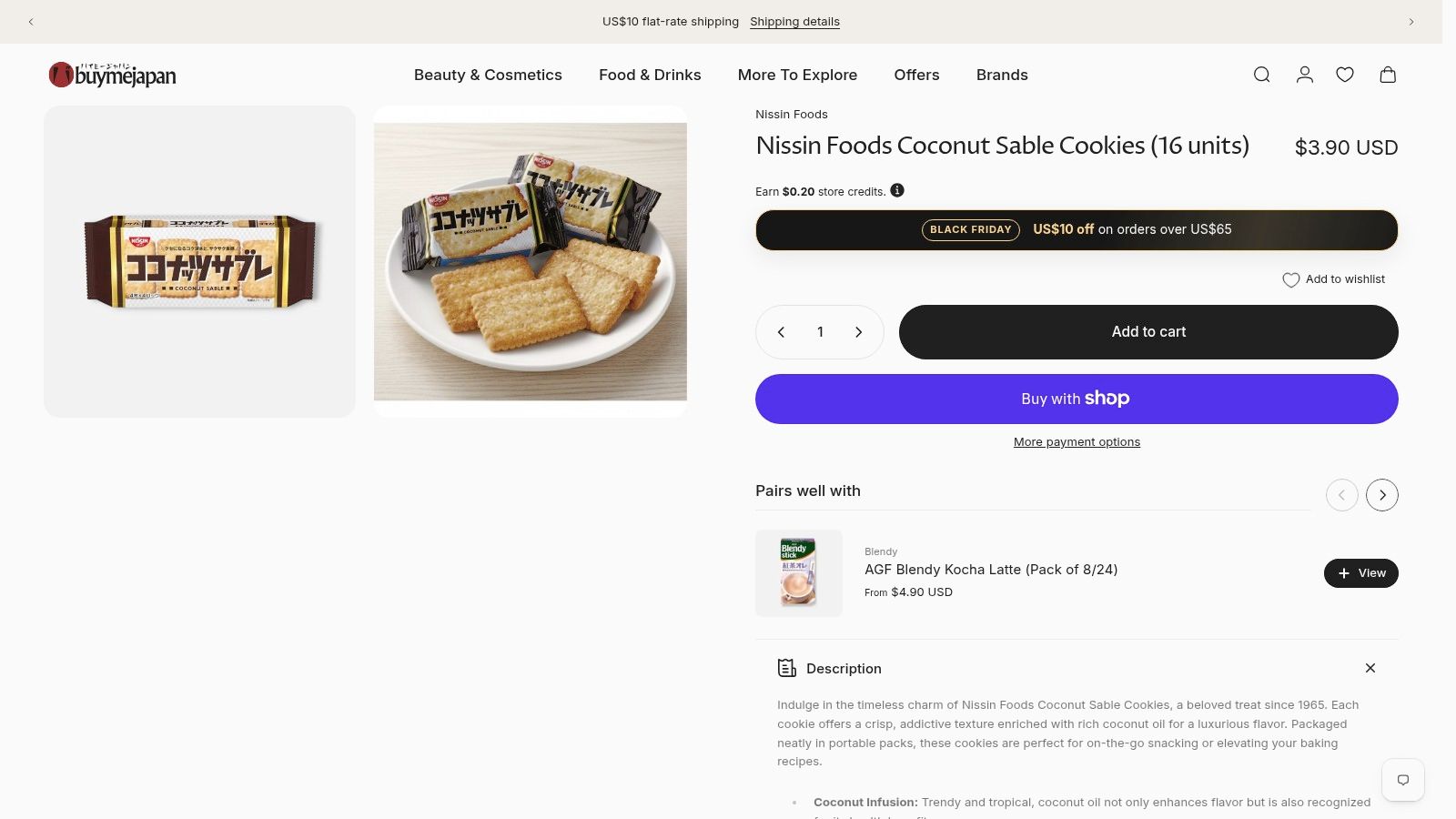
Buy Me Japan lists Nissin Foods on the site alongside brands such as Calbee, Lotte and Shiseido. Two catalog items sit closest to this comparison: Nissin Foods Coconut Sable Cookies (16 units) and Nissin Foods Coconut Sable Triple Nuts (16 units), the nut-based version in the range. Confirm which flavor each product page lists before ordering, and check the current price and availability there.
Here's a short walkthrough of the cookies in the range.
For more context on buying Japanese snacks from outside Japan, our guide to where to buy Japanese snacks covers what to look for. You can also browse the full Buy Me Japan collection of Japanese products for other snack ranges. When you are ready to compare the range in person, open the Coconut Sable product pages and match the packaging and ingredient list against the three flavor profiles covered above, since the dairy and cheese ingredients are what separate them once the calorie question is set aside.


Share:
Elixir Mizu Cream vs Oyasumi Sleeping Mask: Choosing a Format for Your Skin