


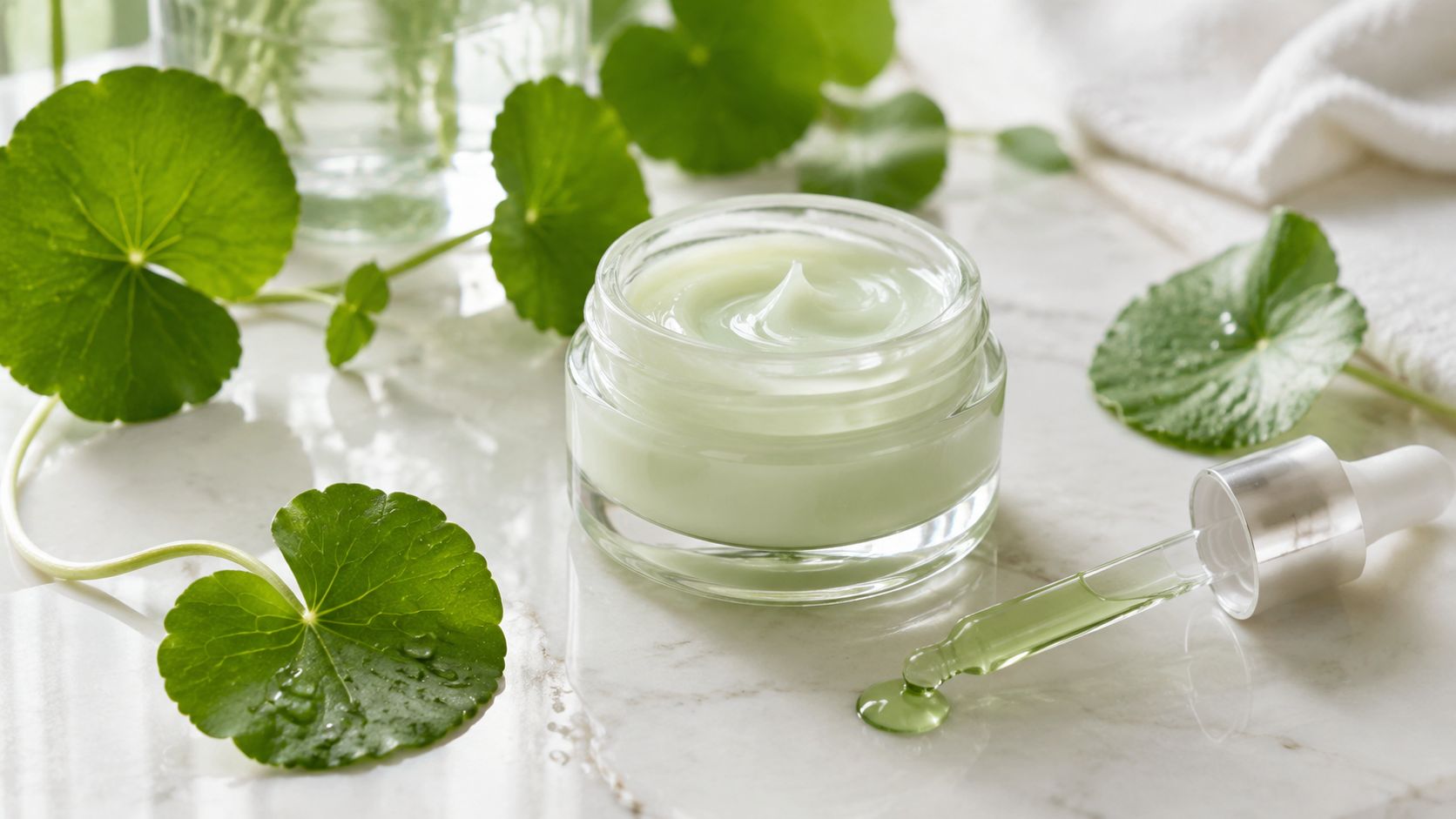
You've probably seen the word cica on cream jars, sheet masks, toners, and serums, then paused and thought, what is cica in skincare, exactly? It sounds scientific, a little trendy, and somehow always attached to products for stressed, red, or “angry” skin.
That curiosity makes sense. In Japanese skincare especially, ingredients are often chosen for how well they support the skin over time, not just how dramatic they sound on the front label. Cica fits that philosophy well. It's known for calming, comfort-focused care, and it appears in formulas designed for skin that feels reactive, over-cleansed, dehydrated, or worn down by strong actives.
If you shop Japanese beauty from overseas, this ingredient is worth understanding. Once you know what cica is, what it does, and how it usually appears on a label, it becomes much easier to choose products that match your skin's needs.
The Calming Ingredient You See Everywhere
One common skincare moment goes like this. Your skin feels tight after exfoliating, a breakout leaves lingering redness, or the weather suddenly turns your face dry and reactive. You start browsing products, and the same word keeps appearing. Cica.
That's not your imagination, and it isn't just marketing language. The global cica cream market was valued at USD 2.4 billion in 2024, with projections showing a 7.9% CAGR according to Fact.MR's cica cream market analysis. That tells you cica has moved well beyond niche beauty talk. It's now a major ingredient category with real demand.

Japanese skincare brands tend to approach ingredients like cica in a very specific way. Instead of building a routine around “stronger is better,” many Japanese formulas focus on daily balance, skin barrier support, and textures people can use comfortably morning and night. That's one reason cica makes so much sense in this space. It lines up with a gentler philosophy of skincare.
Why readers get confused about cica
A lot of people assume cica is one single lab-made ingredient. It isn't.
Others think it's only for very sensitive skin. That's not quite right either. It often shows up in products for visible redness, dehydrated skin, post-acne care, and routines that need a calming step after stronger treatments.
Cica is less like a one-day rescue sticker and more like a steady support system for skin that's been pushed too hard.
You'll also notice that cica products often sit alongside Japan's long-standing interest in soft, layered skincare. If you enjoy ingredient traditions and gentle beauty rituals, ancient Japanese beauty secrets give useful context for why calming, skin-respecting formulas remain so popular.
Unpacking Cica and Its Active Compounds
Cica is the common skincare name for Centella asiatica. That's a botanical ingredient with a long history in traditional medicine, and it later became a modern cosmetic favorite because of how well it fits repair-focused formulas.
According to Ameliorate's cica ingredient overview, Centella asiatica has been used for nearly 3,000 years to help speed wound healing. That same source also highlights the four bioactives often associated with cica in skincare: asiaticoside, madecassoside, asiatic acid, and madecassic acid.

What those names actually mean
You don't need to memorize the chemistry. It helps more to think of cica as a plant with a team of useful workers inside it.
- Asiaticoside helps explain why cica is often linked with skin recovery and a more resilient feel.
- Madecassoside is one of the compounds people often associate with calming formulas aimed at irritated-looking skin.
- Asiatic acid is part of the reason cica appears in products focused on overall skin support rather than just surface hydration.
- Madecassic acid rounds out the group and helps explain why cica is discussed in barrier-care conversations so often.
When you see cica on a label, you may find it listed plainly as Centella asiatica extract. In other formulas, you may also spot one or more of these individual compounds.
Why this matters on a Japanese product label
Japanese skincare packaging can be beautifully concise, which sometimes makes ingredient shopping harder for international customers. A product might emphasize “barrier care,” “moisture protection,” or “gentle soothing” without making the science obvious on the front.
That's why ingredient literacy matters. If you already know how watery layers, lotions, essences, and creams differ, it becomes easier to place cica in the right step of your routine. This guide on the difference between toner and essence helps if you're trying to decode where a cica product fits.
Think of “cica” as the nickname and “Centella asiatica” as the full name on the passport.
How Cica Works Its Magic on Your Skin
Cica works like steady coaching for a stressed skin barrier. Instead of forcing fast change, it helps skin return to a calmer, more stable state so it can hold moisture better and react less to everyday triggers.
That matters because irritated skin usually responds best to a routine that feels gentle and predictable. Japanese skincare brands often build cica products with that exact goal in mind. The formula is designed to reduce friction, support the barrier, and stay comfortable enough for daily use.
What Cica Does for Your Skin
A PubMed review on Centella-derived skincare notes that these ingredients are used in anti-aging, moisturizing, anti-inflammatory, and atopic-dermatitis applications. That broad range helps explain why cica shows up in so many Japanese lotions, gels, essences, and creams. It is not only there for skin that looks red. It is also used in formulas meant to keep skin balanced over time.
On your skin, the effects are usually easier to understand if you picture the barrier as a brick wall. The skin cells are the bricks. The lipids between them are the mortar. When that wall gets worn down by over-cleansing, exfoliating acids, dry air, or breakouts, skin starts to feel tight, stingy, and unpredictable. Cica is often added to support the repair environment around that wall, so the surface feels less reactive and more comfortable.
Here is what that can look like in practice:
- It helps reduce the look of irritation. Skin that appears flushed or feels hot and fussy often does better with formulas centered on calming support.
- It supports a healthier barrier. When the barrier is weakened, moisture escapes more easily and outside stress gets in more easily too.
- It suits recovery-focused routines. If your skin is worn out from too many actives, cica is often one of the first ingredients people reach for.
- It fits more than one skincare goal. Because cica appears in moisturizing and age-support formulas as well, it can be part of a long-term routine, not just an emergency step.
This is also where Japanese formulation style stands out. Many Japanese brands do not treat soothing care as a separate category only for damaged skin. They weave barrier support into elegant, layerable textures that sit well under the rest of your routine. A cica lotion might feel watery and light, while a cica cream may seal in comfort without feeling heavy. The philosophy is simple: keep skin calm enough that it does not need constant rescue.
That differs from routines built around frequent strong resurfacing. Faster results can be appealing, but skin often ends up caught in a repeat cycle of irritation and repair. Japanese cica products usually aim for consistency instead. They focus on helping skin stay steady day after day.
If your routine includes oil-control steps, balance matters. A soothing product can work well alongside masks or clay, especially if your skin gets shiny and sensitive at the same time. For a useful comparison, this guide to a red clay mask for oil-control and weekly care shows where a treatment step fits beside barrier-friendly products. And if dryness is part of the problem too, these expert insights on hyaluronic acid help explain why hydration and cica are often paired in Japanese formulas.
The Main Benefits and Who Should Use Cica
What does cica look like in real life, on real skin? Usually not instant glamour. More often, it shows up as less redness, less discomfort, and skin that stops reacting to every little thing.

The benefits most people notice first
- Visible calming. Cica is often used when skin looks blotchy, heated, or generally stressed.
- Barrier support. It's popular in routines for skin that feels thin, easily irritated, or stripped after cleansing and exfoliation.
- Post-breakout comfort. If acne leaves your skin feeling inflamed and tender, cica can be a helpful supporting ingredient.
- Hydration support. It isn't just about redness. Cica often appears in formulas that aim to keep skin comfortable and less reactive to dryness.
- Recovery after routine mistakes. Used too many acids? Tried a retinoid too often? Cica products often step in during that repair phase.
People who care about hydration usually pair barrier-supporting ingredients together. If you want a simple companion topic, these expert insights on hyaluronic acid are useful because hyaluronic acid and cica often complement each other well in comfort-focused routines.
Who tends to benefit most
Cica makes the most sense for:
- Sensitive skin types that flare up easily
- Acne-prone skin that needs calming without feeling smothered
- Over-exfoliated skin that feels tight, shiny, and uncomfortable
- Dry or dehydrated skin that needs a more supportive routine
- People using strong actives who want a buffer step
A good example is the VT Cosmetics Cica Daily Soothing Mask. A product like this fits the Japanese and East Asian habit of using lightweight, frequent hydration instead of relying only on one heavy cream. It's a practical option for people who want repeated, gentle contact with calming ingredients rather than an occasional rescue treatment.
If your skin often reacts to fragrance, weather shifts, over-cleansing, or acne products, it's worth comparing your routine against broader advice on Japanese skincare for sensitive skin.
For a quick visual explanation of how cica products are often used, this overview helps:
Skin that's stressed doesn't always need a stronger treatment. Often it needs a routine that stops aggravating it.
Choosing the Right Japanese Cica Products
Your skin feels hot, tight, and a little overworked after trying too many active products. You pick up two cica items. One is a watery lotion in a simple bottle. The other is a rich cream with madecassoside listed high on the ingredient list. In Japanese skincare, choosing between them is less about finding the “strongest” option and more about choosing the right tool for the job.

That mindset helps explain why Japanese and Japanese-adjacent skincare routines often feel gentler. Many Western products are framed around fast correction, strong exfoliation, or visible intensity. Japanese brands often start with a different question: how can a formula calm, hydrate, and support the barrier every day without making skin feel burdened? Cica fits that philosophy well.
Perricone MD's ingredient explainer on cica describes cica as an ingredient that shows its value with steady use, especially in routines focused on comfort and resilience. That lines up with how many Japanese formulas are built. They usually combine cica with hydrating textures, low-friction layering, and barrier-supportive ingredients so the product is easy to keep using.
How to choose by product type
| Product type | Best for | What it feels like |
|---|---|---|
| Toner or lotion | Light layering and early calming steps | Watery and easy to absorb |
| Essence or serum | Targeted support without heaviness | Thin to lightly cushioned |
| Cream | Daily barrier support and comfort sealing | Richer and more protective |
| Mask | Quick soothing session when skin feels worn out | Saturated, cooling, convenient |
| Balm | Localized dry patches or stressed areas | Dense and protective |
A simple way to read this table is to match the product to the moment your skin is having. A lotion works like the first glass of water. It gives quick hydration and prepares the skin. A cream works more like a light blanket, helping keep moisture in and reducing that exposed, stingy feeling.
What to look for on the label
Japanese cica labels can be a little confusing at first because the calming story may show up in several ways. Look for:
- Centella asiatica extract if you want the whole plant extract
- Madecassoside or asiaticoside if the formula highlights specific cica compounds
- Humectants and moisturizers such as glycerin, hyaluronic acid, or ceramides, which help turn cica into a more complete barrier-care formula
- A texture that matches your skin, since oily or acne-prone skin often prefers gels, fluids, or light essences, while dry skin may do better with creams or balms
Japanese formulation style stands out. Brands often put a lot of work into texture, absorption, and daily comfort. The result is a product that feels calm on the skin and easy to layer, rather than a treatment that announces itself with tingling or dryness. If you want a broader sense of how different brands approach that balance, this guide to Japanese cosmetic brands known for distinct formulation styles is a useful reference.
One practical example is the VT Cosmetics Cica Cream. A product like this makes sense if your routine already has enough hydration and you need the final step to feel more protective. If your skin gets congested easily, a lighter cica lotion or essence may be the better fit. The label tells you part of the story, but the texture tells you how the product will live in your routine.
Buy Me Japan carries Japanese skincare products for international shoppers who prefer to browse by brand and product type.
Your Cica Skincare Questions Answered
Can you use cica every day
Usually, yes. Cica is commonly described as suitable for daily use, especially in routines aimed at comfort and barrier care. Many people use it once or twice a day depending on the product texture.
Does cica work with other active ingredients
In many routines, yes. Cica is often used alongside stronger ingredients because it plays a supportive role. If you use vitamin C, exfoliating acids, or retinoid products, a cica serum or cream can make the routine feel less harsh.
How long does cica take to show results
Expectations matter. Cica usually isn't the ingredient for an overnight “wow” effect. It tends to show its value through calmer, more resilient skin after steady use.
Is tiger grass the same as cica
Yes. Tiger grass is another common name linked to Centella asiatica. If you see “tiger grass,” “Centella asiatica,” or “cica,” you're usually in the same ingredient family.
Is cica only for sensitive skin
No. Sensitive skin is the most obvious match, but it can also suit acne-prone, dehydrated, or over-treated skin. Many people use it because their routine needs a calmer center.
What should you remember when shopping
Look beyond the front label. Check the format, scan the ingredient list, and choose a product that fits the step your routine is missing. A watery cica toner won't replace a cream if your barrier needs more protection, and a rich cream may feel too much if your skin prefers lighter layers.
If you're ready to explore authentic Japanese skincare with cica and other barrier-focused ingredients, Buy Me Japan is a practical place to browse products shipped directly from Japan and compare textures, brands, and routine-friendly options with more confidence.

Share:
Makeup Brush Cleaning: A Japanese Guide to Perfect Tools
Yesstyle Shipping Time 2026: Guide to Processing & Delays