


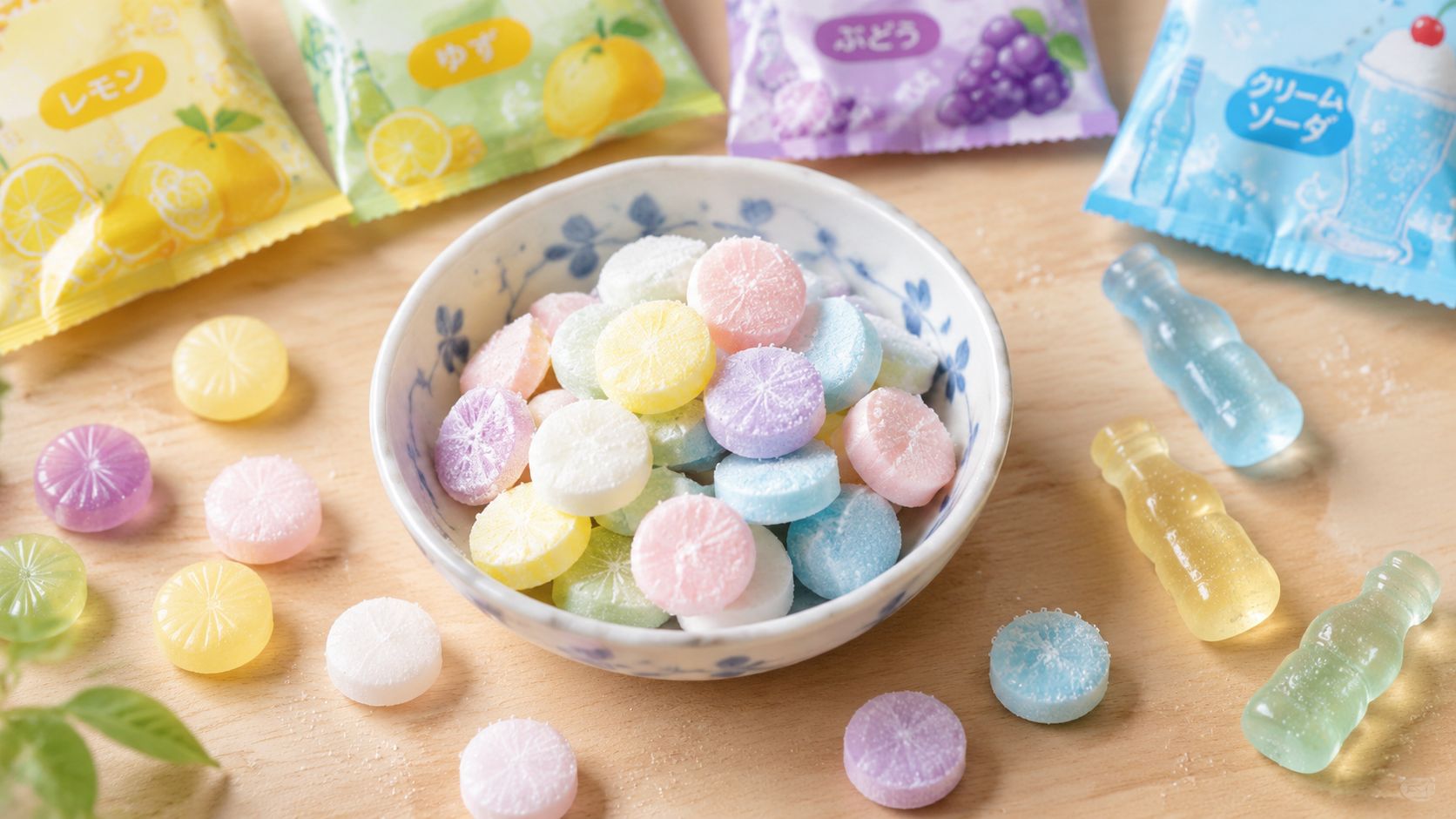
You're scrolling through a Japanese candy shop, and several packets promise soda, fizz, popping, or ramune. The pictures look playful, but the front of a packet won't always tell you whether you're looking at a dissolving tablet, a chewy sweet, a hard candy, or a novelty snack with only a soda-inspired flavour. Japanese soda candy becomes much easier to shop for once you know what creates the sensation, what the label reveals, and how the format changes the eating experience.
This guide treats the category as food rather than a marketing mystery. You'll learn where ramune candy came from, why citric acid and sodium bicarbonate fizz, how moisture affects quality, and which label details matter for sugar-conscious shoppers or people checking allergens. If you're also comparing Japanese pantry and drink products, a practical guide to how to choose ceremonial matcha can help you apply the same ingredient-first approach to another Japanese specialty category.
What Japanese Soda Candy Actually Means

A useful definition starts with shared traits, not a single brand. Japanese soda candy usually combines a soda-like flavour profile, a fizzy or popping sensation, and packaging that points toward a drink-inspired experience. The soda reference might be ramune, cola, lemon-lime soda, melon soda, or another familiar soft-drink style.
That makes it different from ordinary fruit hard candy. A lemon sweet can taste citrusy without fizzing, while a grape sweet may dissolve or melt. Soda candy adds a second sensory layer, often through an acid and bicarbonate system in tablets or through gas trapped inside a popping-candy structure.
The terms shoppers may see
Japanese listings can mix Japanese and English wording. Common terms include:
- ラムネ, or ramune, usually referring to the recognisable Japanese carbonated drink style and its candy-inspired flavour.
- ソーダ, or soda, a broad label for soda-style flavouring.
- シュワシュワ, or shuwa-shuwa, a Japanese expression associated with a sparkling, tingling sensation.
- English words such as fizzy, soda, and popping, which may describe either the flavour or the texture.
Ramune candy also overlaps with dagashi, the broad world of inexpensive Japanese sweets and snacks traditionally associated with children. Not every dagashi product is soda candy, and not every soda candy is a simple tablet. The umbrella is small but consistent enough across specialist retailers to help you filter listings quickly.
The safest first question is simple: does the product promise only a soda flavour, or does it also describe fizz, popping, or a sparkling texture? Then check the format and ingredient panel before relying on the illustration.
How Ramune Drink Culture Shaped the Candy

A chilled ramune bottle and a tablet of ramune candy share more than a sweet, citrus-like profile. The candy borrows the drink's cultural identity, then turns it into a portable solid that can be eaten without a bottle, refrigeration, or liquid packaging.
Ramune became closely associated with Japanese carbonated drinks after its introduction in Kobe in 1884 by Scottish pharmacist Alexander Cameron Sim. Its lemon-lime character and distinctive bottle helped establish a familiar taste and visual cue. Historical background on ramune describes the connection between the drink and the later candy category.
The candy form appeared later, during the postwar period. In 1948, a confectionery producer in Tokyo began making and selling ramune candy. That milestone shows how a drink-inspired novelty entered everyday confectionery, particularly through small, convenient sweets.
A category that kept changing shape
Ramune candy gradually moved beyond one tablet style. By the 1970s and 1980s, tablet, cola-shaped, and bar formats had expanded the category, giving shoppers different shapes, sizes, and eating experiences. The underlying idea stayed similar: reproduce a recognisable soft-drink style in a shelf-stable sweet.
Its growth also reflects Japan's wider confectionery market. The industry was valued at JPY 886.4 billion in 2021 and was projected to grow at more than 1% CAGR from 2021 to 2026, according to market context for Japan's confectionery industry. Ramune-flavoured sweets became widely known in Japan in the late 1940s as a type of dagashi, while portable tablet snacks expanded again by the 2000s.
The drink already had a strong place in Japanese soft-drink culture before candy adopted its identity. In 1953, ramune production accounted for more than 60% of carbonated drinks, helping explain why the flavour required little introduction. Candy could rely on an existing taste vocabulary, much like a familiar song played in a smaller room.
For international shoppers, this history explains the nostalgic packaging and playful shapes. Ramune candy represents recognition, portability, and texture rather than a premium positioning. It also sits within Japan's wider non-alcoholic drink culture, alongside the beverages described in this guide to Japanese non-alcoholic drinks. Product history can explain the format, but the ingredient panel still determines whether a particular sweet offers flavour alone or a fizzy sensation.
The Fizz Chemistry Behind the Candy

The familiar tingle in many tablet-style sweets comes from a simple acid-base reaction. A dry tablet may contain a food acid, such as citric acid, alongside a bicarbonate source, usually sodium bicarbonate. While the tablet remains intact, these ingredients are separated within the dry structure. Saliva dissolves that structure, lets the reactants meet, and produces carbon dioxide. The result feels like tiny bubbles or popping across the tongue.
Sugar or dextrose may provide sweetness, while calcium phosphate, starch, and other carriers affect the tablet's structure. Those supporting ingredients help determine how quickly it breaks down and whether the sensation builds gradually or arrives in a sharper burst. The explanation of how sour Japanese candy works also helps separate three sensations shoppers often combine: sourness from acids, sweetness from sugars, and fizz from gas release.
Why the same idea feels different in different products
Particle size, moisture control, and compression change the eating experience. Fine particles can react rapidly after they become wet. Binders such as starch, pullulan, or gum arabic can slow premature contact between ingredients and help the tablet keep its shape. Humidity creates a practical storage problem: if moisture enters the package, the reaction may begin early, reducing the fizz or causing clumps. Technical notes on ramune candy describe how formulation and packaging influence this behavior.
Some popping sweets use a different method. Instead of generating most of the sensation through a fresh acid-base reaction, they hold carbon dioxide inside the candy matrix. As the shell breaks or dissolves, the gas escapes and creates pops. A typical popping-candy ingredient list may include sugar, starch syrup or glucose, starch, flavouring, emulsifier, acidifier, and carbon dioxide, illustrating the trapped-gas approach described in the product ingredient description.
The label offers a useful starting point. An acidifier paired with sodium bicarbonate suggests a dissolving fizz tablet. A mention of carbon dioxide alongside popping language may indicate gas already held in the candy. Ingredients vary, so the sensation cannot be predicted from the word “soda” alone.
The unrelated catalog item Transino White C Clear Whitening Supplement (60/120/240 Tablets) is also sold as a tablet, but its purpose and formulation are separate from soda candy. A similar shape does not indicate similar food chemistry. Check the product category and ingredient panel before buying.
Main Formats and Textures to Know
Soda candy can look similar in a product photo while behaving very differently in your mouth. The format determines how long the sweet lasts, when the fizz appears, and whether you feel a steady tingle or a single burst.
Japanese Soda Candy Formats Compared
| Format | Fizz delivery | Texture sequence | Best for |
|---|---|---|---|
| Dissolving tablets | Acid and bicarbonate meet saliva as the tablet breaks down | Dry, powdery or compact opening, then rapid dissolving and fizz across the mouth | Slow sippers who want the sensation to develop |
| Pressed hard candies | Fizz may arrive in pulses as the outer layers dissolve | Firm surface, gradual melting, then intermittent sparkling pockets | Patient snackers who prefer a longer experience |
| Chewy gummies or jellies | Usually a short burst when the piece is bitten or its centre opens | Soft chew first, followed by a brief fizzy or sour release | Quick crunchers and texture-focused gummy eaters |
| Ramune-shaped pieces | May combine a mild chew with a powdery or fizzy centre | Shaped outer piece, softening chew, then a more concentrated centre | Sharers and gift buyers drawn to recognisable shapes |
A dissolving tablet is usually the clearest expression of the category. You place it on the tongue, let saliva soften the compact structure, and experience the reaction as the ingredients disperse. A hard candy slows everything down, so the fizz can feel layered rather than immediate.
Gummies change the rhythm. Their chew gives you resistance before the soda sensation appears, and the effect may be brief because the gas or fizzy centre is released at once. Ramune-shaped pieces add visual recognition, but the shape alone doesn't prove that the sweet will fizz. Look for ingredient and texture language, not just a bottle illustration.
For a contrast in Japanese confectionery texture, Fujiya Milky Candy represents a creamy candy style rather than a soda-fizz system. That comparison helps clarify why “soft,” “melt,” “chewy,” and “fizzy” should be treated as separate descriptions.
Common Flavors and How They Differ
Flavour names help, but they don't tell the whole story. A soda sweet usually combines sweetness, acid, and aroma, so the same broad flavour family can feel sharper, softer, fruitier, or more confectionery depending on the recipe.
Citrus-led profiles
Lemon, yuzu, and ramune-style lemon-lime flavours sit in the citrus group. Citric acid contributes brightness and sharpness, while aroma compounds create the impression of peel, juice, or carbonated refreshment. Ramune-style flavour usually points toward a light lemon-lime soda identity rather than a single fruit.
Yuzu may read as more aromatic and distinctly citrus-led, while lemon can feel more direct. The label matters because a product may use flavouring rather than juice, and the front colour or illustration can suggest a stronger citrus character than the formula delivers.
Fruit-led profiles
Grape, melon, strawberry, and peach bring a different emphasis. Fruit powder, juice components, or added aromas can add body to the sweetness, while acid keeps the profile from becoming flat. Grape and melon often appear in soda-style sweets because their aroma remains recognisable even when the candy is strongly sweetened.
Strawberry and peach may sit closer to fruit confectionery than to a classic soda profile unless the product also includes fizz or sparkling language. That's why you should read the format description alongside the flavour name. A “peach soda” gummy and a plain peach gummy may share a colour but deliver different textures and sensations.
Dessert and novelty flavours
Cola, cream soda, and yogurt-style profiles use aroma to suggest a drink or dessert rather than fresh fruit. The recipe may balance sweetness with acid, dairy-associated notes, or a spice-like cola character. Packaging often does more interpretive work in this group, so small-print wording deserves attention.
Use Japanese strawberry milk tea guidance as a reminder that Japanese flavour naming often crosses drink, dessert, and snack categories. Before buying, check three lines: the flavour description, the texture or product type, and the ingredient list. Together, they offer a more reliable prediction than colour alone.
Sugar Content, Allergens, and Dietary Notes
A packet of Japanese soda candy can look small enough for casual snacking, yet the candy itself is usually a concentrated sweet. Representative soda tablet products list approximately 370–385 kcal and 89–95 g of sugar per 100 g, according to available nutrition panels, including the Morinaga Ramune nutrition details. These values describe 100 g, not a single tablet or packet. Check the serving size and compare it with the package weight before judging how much sugar you may consume.
Fizz can make the eating experience feel lighter or more playful, but it does not dilute the sugar. Tablet form also says little about nutrition by itself. If you monitor sugar intake, compare the panel across tablets, gummies, and hard candies rather than assuming one format is automatically lighter.
Ingredients that deserve a closer look
The recipe changes by format and product. A typical ingredient panel may include:
- Sweeteners: Sugar, glucose, dextrose, or starch syrup may provide most of the candy's bulk.
- Fizz components: Citric or malic acid may be paired with sodium bicarbonate. When moisture reaches them, the acid-base reaction releases carbon dioxide, creating the familiar tingling sensation.
- Texture aids: Starch, calcium phosphate, gum arabic, and other binders can control how quickly a tablet dissolves.
- Colour and aroma: Colourants and flavourings shape the appearance and the impression of the flavour.
- Animal-derived or dairy ingredients: Milk or gelatin may occur in some products.
These categories cannot confirm that a product is vegan, halal, kosher, or gluten-free. Japanese labels, translated descriptions, and shared-equipment statements may be difficult to interpret, and recipes can change. For Japanese allergen vocabulary, TopFoodAppでアレルゲンメニュー offers useful context, but the current package remains the final reference.
Before buying from a Japanese specialty shop such as Buy Me Japan, read the allergen statement, ingredient list, nutrition panel, and shared-equipment warning. Vegetarian Japanese snack guidance explains related terminology, but a flavour name or familiar packaging cannot establish dietary suitability.
Storage, Shelf Life, and Serving Tips
Storage affects more than freshness. In a fizzy tablet, moisture can activate the acid and bicarbonate before you're ready to eat it. The result may be a weaker sensation, a sticky surface, or clumping inside the packet.
Keep unopened soda candy in a cool, dry place, away from direct sunlight and steam. A kitchen shelf near a kettle, a humid bathroom, or a warm windowsill can expose the product to conditions that work against a crisp tablet texture. Once you open a resealable pack or canister, close it promptly and avoid leaving the container open while serving.
Match the format to the occasion
Tablets travel well when the packaging stays intact, making them convenient for a desk drawer, a day out, or a small gift selection. Gummies and jellies may be more sensitive to warmth and can stick together, while hard candies are often easier to portion for a bowl or shared setting. Check the printed best-before information and any storage instruction on the specific package rather than applying one shelf-life assumption to every product.
Serving style can also change how you notice the candy. Try a tablet on its own first, so the fizz isn't masked by another strong flavour. For sharing, keep different formats separate and let people choose between a dissolving tablet, a chewy piece, or a popping sweet.
Practical rule: If the packet feels damp, the pieces have clumped, or the aroma seems altered, don't judge the original product by that sample. Moisture may have changed the texture and fizz before consumption.
Avoid mixing soda candy into hot drinks unless the product directions specifically support it. Heat and liquid can trigger dissolution quickly and may remove the staged texture that makes the sweet interesting. Treat it as a confectionery item, check the label, and keep the pack sealed between servings.
Buying Japanese Soda Candy with Confidence
A product photo can attract you, but the label should make the final decision. Use a short checklist that separates flavour, fizz mechanism, dietary information, and storage condition.
Start with the product type
Look for words that identify a tablet, hard candy, gummy, jelly, or popping sweet. If the listing says only “soda flavour,” expect a flavour resemblance rather than guaranteed fizz. If it mentions ramune, sparkling, shuwa-shuwa, popping, acidifier, bicarbonate, or carbon dioxide, inspect the ingredient list to understand what kind of sensation the product is designed to provide.
Read the panel before the artwork
Check whether the ingredient list includes sugar, glucose, starch syrup, acids, sodium bicarbonate, carbon dioxide, gelatin, milk, soy, or relevant starches. Then compare the nutrition panel with the serving size and total pack size. This step matters because a cheerful soda design can make a concentrated sweet look more like a casual drink than a confectionery product.
Choose by eating style
- For a gradual dissolve: Choose a tablet format with a dry, compact structure.
- For a longer melt: Look for a pressed hard candy.
- For a chew first: Select a gummy or jelly with soda or sparkling language.
- For sharing or gifting: Ramune-shaped pieces and assorted formats offer visual variety, but still check the individual ingredients.
Buy Me Japan presents Japanese food and drink products alongside its wider selection of beauty, cosmetics, lifestyle, and snack items. Its shopping experience is designed to make authentic Japanese products accessible through a convenient online store, with product pages that shoppers can review before ordering. If you're considering snacks for an office, event, or retail setting, a practical snack and soda vending guide can also help you think about format, packaging, and storage without confusing soda candy with bottled beverages.
The main buying lesson is straightforward. Ramune is a cultural flavour reference, fizz depends on formulation, texture determines the eating sequence, and the label controls the safety decision. Don't choose solely by colour, character design, or the word “soda.”
Buy Me Japan offers access to authentic Japanese food, drinks, snacks, beauty, and lifestyle products through a convenient online shopping experience. Visit Buy Me Japan to explore Japanese confectionery and check the current product details before choosing your next soda-inspired sweet.


Compartir:
Japanische BB-Cremes: Ein praktischer Leitfaden für 2026