


You're probably choosing between these two for a very normal reason. You want one sunscreen that feels good enough to wear every day, but you also don't want to find out at noon that your “lightweight” SPF disappeared during a sweaty commute.
That's why Anessa vs Biore sunscreen is such a common comparison. On paper, they often sit in the same high-protection tier. In real life, they don't wear the same at all. One is the bottle I'd reach for when the weather is rude and I need my sunscreen to stay put. The other is the one I'd grab when I want fast, easy, low-drama daily wear.
Two Japanese Sunscreens, Two Different Jobs
If you strip away the packaging and brand loyalty, this matchup is simple. Anessa is the performance pick. Biore is the comfort pick. That's the clearest way to start.
Historically, Anessa also has deeper roots. Shiseido's UV research goes back to 1923 with Uviolin, Shiseido introduced Japan's first SPF-labeled product in 1980 with SPF 6, and Anessa launched in March 1992 as Shiseido's dedicated sun-care brand, according to Shiseido's Anessa UV research history. In one cited e-commerce market snapshot, Anessa held 35.14% share while Biore held 12.12%, which shows how dominant Anessa can be in Japan-focused sunscreen rankings in some periods, as summarized by Compas coverage of Japanese sunscreen brands.
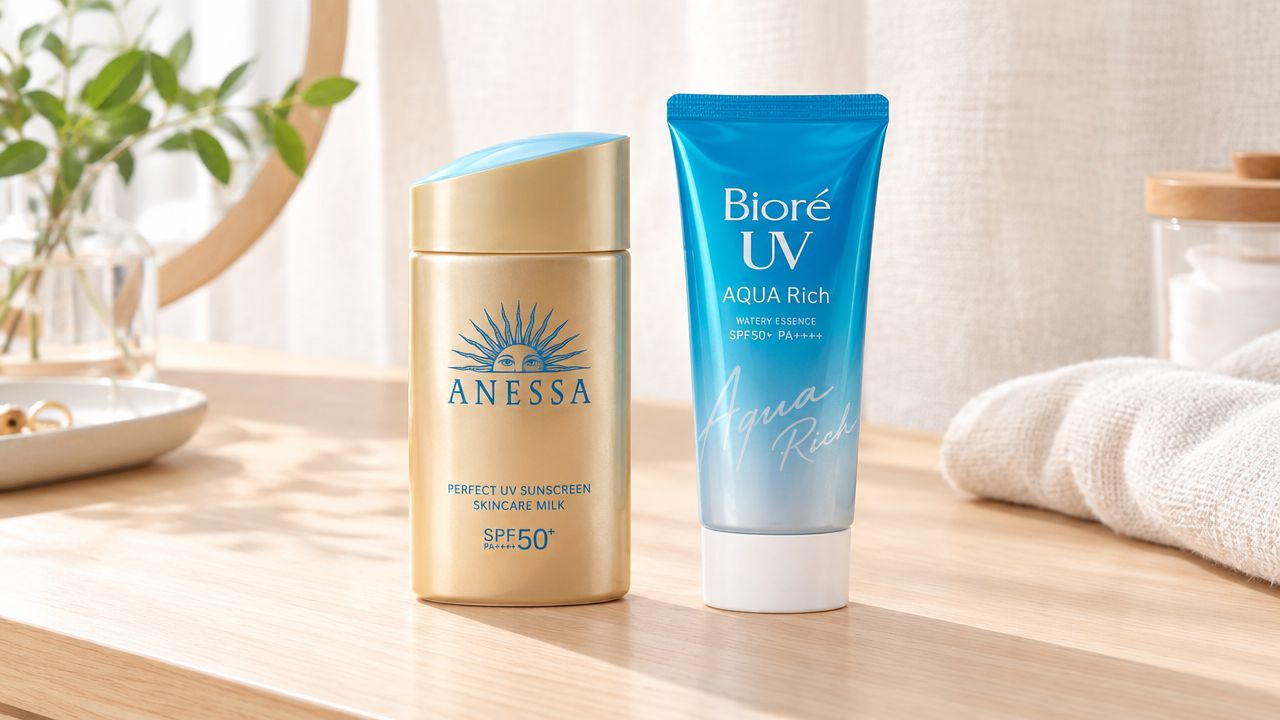
That doesn't mean Biore is a weak option. It means the two brands solve different problems. If you want context on why Japanese formulas earned such a loyal international following, this short read on the Japanese skincare revolution is a good companion.
Quick comparison first
| Brand | Core strength | Typical feel | Best routine fit |
|---|---|---|---|
| Anessa | Durability and outdoor wear | Milk, gel, or satin-dewy film | Beach, sports, high humidity, long days outside |
| Biore | Lightweight daily comfort | Watery, easy-spread texture | Office, commuting, makeup days, frequent reapplication |
Read this with your own day in mind
Before you choose, ask yourself:
- Where are you wearing it? A desk near a window needs something different from a pool day.
- How often will you reapply? If you know you won't reapply perfectly, durability matters more.
- What annoys you most? Stickiness, shine, pilling, or that tight sunscreen feel all point to different formulas.
Practical rule: Don't choose between Anessa and Biore by label alone. Choose by the version of you who's actually wearing it. Commute-you, gym-you, beach-you, or office-you.
What SPF and PA Actually Mean on the Label
A lot of confusion starts here. People compare Japanese sunscreens as if the bigger-looking label automatically means better protection. It doesn't work like that.
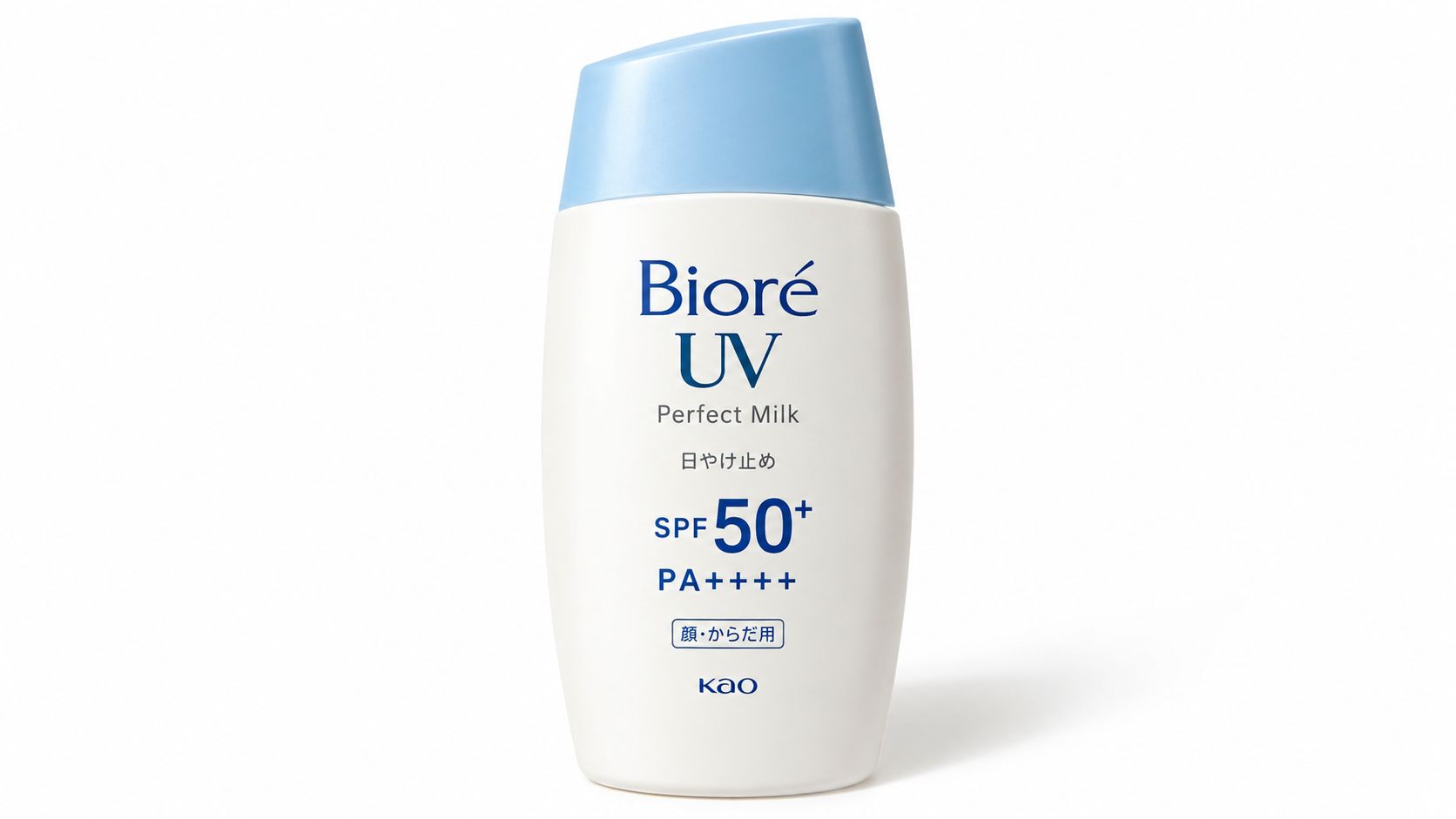
SPF measures UVB protection. That's the part usually associated with burning. PA measures UVA protection. In Japan, PA is standardized by the Japan Cosmetic Industry Association, with PA+ for UVAPF 2 to under 4, PA++ for 4 to under 8, PA+++ for 8 to under 16, and PA++++ for 16 or more, as outlined in the JCIA SPF and PA labeling standard.
What that means when you shop
Anessa officially sells multiple lines at SPF 50+ PA++++, and its Hong Kong site explicitly states that SPF 50+ and PA++++ are the highest sunscreen standards used in Japan, which you can verify on the Anessa Hong Kong site. Biore also competes in that same top visible tier. The U.S. listing for Biore Aqua Rich UV shows Broad Spectrum SPF 50 with PA++++ on the label in this DailyMed drug listing.
So no, Biore isn't automatically “lower protection” just because it feels lighter. And no, Anessa isn't selling something above SPF 50+ in a way the label can show. The printed scale has a ceiling.
The label tells you less than people think
Two products can both say SPF 50+ PA++++ and still behave very differently on skin. That's because:
- SPF doesn't tell you texture
- PA doesn't tell you water resistance
- Neither label tells you whether the film stays even after sweat, rubbing, or a second layer
If you want a simple explainer on why daily SPF matters in a skincare routine, this REVETIX guide to anti aging SPF gives helpful background without overcomplicating it.
High SPF on the box is useful. High SPF that you'll actually apply enough of and reapply is what matters.
Inside Each Formula and Finish
The Anessa vs Biore sunscreen choice gets real. The labels may look similar, but the skin feel isn't.
What Anessa feels like
Anessa's identity is built around stronger wear. Independent comparison guides consistently position Anessa Perfect UV Skincare Milk as SPF50+ PA++++ with “super waterproof” or 80-minute water resistance, and frame it as the more durable pick for sweat, humidity, swimming, and long wear in this comparison overview.
You feel that in the formula. Anessa usually has a more deliberate film on skin. Not heavy in a bad way, but present. It tends to read satin, sometimes lightly dewy, sometimes more set depending on the version and your skin type.
A useful detail is the brand's film behavior. An independent comparison notes that Anessa is known for auto-reactive UV-film behavior that responds to sweat, water, heat, and moisture, while Biore Aqua Rich is known more for its watery gel feel and lower cost per milliliter for city use in this Anessa vs Biore comparison.
What Biore feels like
Biore's appeal is immediate. It spreads fast, disappears faster, and usually feels easier to wear if you hate sunscreen texture. The watery essence and gel side of the line lean toward daily comfort first. That's why people who wear makeup or reapply at work often stay loyal to it.
Biore doesn't feel “cheap.” It feels efficient. If you want something that won't make you overthink your morning routine, this is usually the simpler wear.
For readers who prefer lighter textures in general, Buy Me Japan's guide to gel-based sunscreen is useful alongside this comparison.
Anessa vs Biore Signature Sunscreens at a Glance
| Product | Key UV Filters | Texture & Finish | Best For |
|---|---|---|---|
| Anessa Perfect UV Skincare Milk | Not verified in the provided source set | Smooth milk, more set and durable-feeling | Outdoor days, humidity, long wear |
| Anessa gel formats | Not verified in the provided source set | Lighter than the milk, still more substantial than a watery essence | Daily wear if you want Anessa durability with less weight |
| Biore UV Aqua Rich Watery Essence | Not verified in the provided source set | Watery, quick-spread, light finish | Commute, office, makeup layering |
| Biore watery gel formats | Not verified in the provided source set | Easy, fluid, low-fuss | Fast morning routines |
| Biore milk formats | Not verified in the provided source set | Usually a bit more set than the essence | People who want Biore but prefer a less juicy finish |
My blunt take on finish
If texture decides whether you'll wear sunscreen daily, Biore has the easier win. If you care more about whether the sunscreen still feels intact after heat, movement, and sweat, Anessa earns its reputation.
Water, Sweat, and Real-World Wear
This is the section that decides the winner.
Both brands can sit at the same top label tier, but durability is where they separate. The practical distinction in the available comparisons is straightforward. Anessa Perfect UV Skincare Milk is positioned as the more durable outdoor-performance option, while Biore UV Aqua Rich Watery Essence is described as more suitable for everyday wear with lighter water-resistance expectations in the same independent comparison source.
How they behave once the day gets messy
Anessa is the bottle I'd choose if any of these are true:
- You sweat easily
- You live in sticky weather
- You plan to swim
- You won't get many chances to reapply carefully
Biore is the better fit if your day looks more like this:
- Mostly indoors with short outdoor exposure
- You wear makeup and need sunscreen to sit underneath
- You'd rather reapply something light than wear a stronger-feeling film all day
Anessa vs Biore Real-World Wear Compared
| Feature | Anessa Perfect UV | Biore Aqua Rich |
|---|---|---|
| Visible label tier in flagship comparisons | Commonly SPF50+ PA++++ | Commonly SPF50+ PA++++ |
| Water-focused wear profile | Stronger outdoor-performance positioning | More everyday-use positioning |
| Sweat and humidity | Better benchmark choice | Fine for routine daily wear |
| Swimming or beach use | Better fit | Less reassuring pick |
| Reapplication feel | Can feel more noticeable on the second layer | Usually easier to top up |
| Best setting | Long, active, exposed days | City, office, errands |
If you need your sunscreen to survive your schedule, not just your bathroom mirror test, pick Anessa.
There's also third-party support for Anessa's stronger performance reputation. A spectrophotometer-based review of Anessa Perfect UV Sunscreen Skincare Gel reported an average equivalent SPF value of 577.24 and average equivalent PA value of 18.13 across five measurements, supporting its labeled claims and placing its equivalent PA among the highest in that comparison, according to this product test summary.
I wouldn't use that as a reason to get sloppy with reapplication. I would use it as evidence that Anessa's flagship formulas are built with serious performance intent.
How to Apply and Reapply Either Sunscreen
Application is where good sunscreen routines usually fail. People don't hate sunscreen as much as they hate what happens when they apply too little, rush the layers, then blame the formula.
First layer done properly
Use this order:
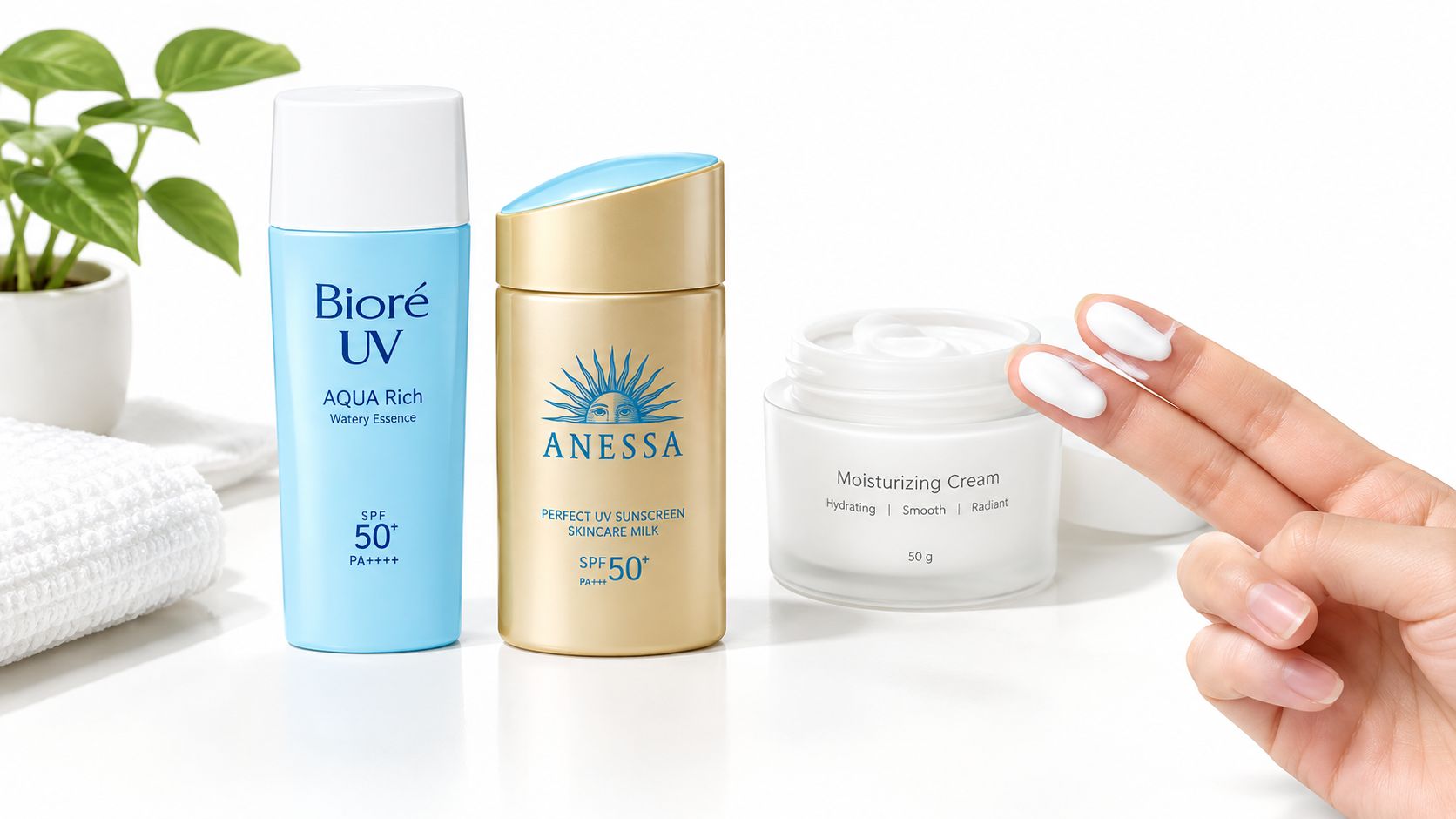
- Finish skincare first. Sunscreen goes after moisturizer.
- Apply enough. The common practical rule is the two-finger amount for face coverage.
- Press and spread evenly. Don't aggressively rub until the product bunches up.
- Let it settle before makeup. A short wait helps reduce pilling.
If your morning routine tends to get crowded, this guide to morning skincare routine steps helps keep product order simple.
What changes between Anessa and Biore
Anessa usually benefits from a more careful first application. Because the film is part of the point, it pays to spread it evenly and let it set. If you rush foundation on top, you're more likely to disturb it.
Biore is more forgiving. It usually slips into a routine with less fuss, especially if you're using light base makeup or no makeup at all.
Smart habit: If your sunscreen pills, don't assume it's bad. First check whether your moisturizer underneath was still wet or too heavy.
For a quick visual refresher, this walkthrough is worth watching before your next sunscreen restock:
Reapplying without ruining your face
Over makeup, keep it practical.
- For Biore users: A second layer is usually less annoying. That's one of its biggest strengths.
- For Anessa users: Reapplication can feel more noticeable, so thinner top-ups work better than one heavy coat.
- For both: Focus on high-exposure areas first. Cheeks, nose, forehead, and chin usually need the attention.
If you're indoors all day away from strong light, you may not need the same aggressive reapplication schedule as someone outside, sweating, or toweling off. But after heavy sweat, water exposure, or long direct sun, reapplication isn't optional.
Price and Value Over a Bottle
People often oversimplify things. They look at shelf price, see that Anessa costs more, and stop there. That misses the point.
The more useful comparison is what you're paying for. Anessa is commonly positioned at around three to four times the price of Biore in Japan, while Biore is often highlighted as the lower-cost, better-value-per-milliliter option for daily city use in this formula and value comparison.
Price and Longevity Breakdown
| Metric | Anessa Perfect UV | Biore Aqua Rich |
|---|---|---|
| Upfront cost profile | Higher | Lower |
| Value logic | Pays off when durability matters | Pays off when daily comfort matters most |
| Reapplication style | Better when you need staying power | Better when you'll top up often |
| Best buyer mindset | “I need this to hold up” | “I need this to feel easy every day” |
My value verdict
If you spend a lot of time outdoors, Anessa's higher cost makes more sense. You're buying endurance, not just a label.
If your sunscreen life is mostly commute, office, errands, and casual daylight exposure, Biore is easier to justify. It's cheaper to get into, and because it feels lighter, many people use it more consistently. That matters.
Which Sunscreen Fits Your Skin and Routine
This is the part most comparison posts should lead with. The best sunscreen isn't the one with the more intimidating name. It's the one that fits your face, weather, patience, and habits.
A Compas report cited in August 2023 placed Anessa at 34.2% market share and Biore at 31.4%, while another ranking cited Anessa at 35.14% and Biore at 12.12%, showing that the two can be close rivals in some periods and very far apart in others depending on channel and timing, as summarized in this Compas article. That's a good reminder that popularity alone won't choose your bottle for you.
My straight picks by scenario
| Scenario | Anessa Pick | Biore Pick |
|---|---|---|
| Hot, sweaty commute | Anessa milk-style formulas | Biore milk-style formulas if you still want lighter feel |
| Dry or dehydrated skin | Anessa gel-style formulas if you want more cushion | Biore UV Aqua Rich Watery Essence |
| Makeup underlayer | Anessa if you need stronger wear | Biore UV Aqua Rich Watery Essence |
| Sport, beach, pool | Anessa Perfect UV-style formulas | Biore only if you'll reapply very diligently |
| Office and indoor daytime | Anessa only if you prefer a more secure film | Biore Aqua Rich |
| Frequent reapplication | Usable, but more noticeable | Easier and more comfortable |
Who should pick Anessa
Choose Anessa if you know your sunscreen has to work harder than average.
That includes oily skin in humid weather, long outdoor lunches, walking commutes, travel days, exercise, beach trips, and any routine where you're exposed to sweat or water. Anessa is the safer recommendation when you want the formula to resist your day instead of melting into it.
Who should pick Biore
Choose Biore if sunscreen feel is your biggest sticking point.
Biore suits people who skip SPF because heavier films annoy them, people who wear makeup most days, and people who want a quick morning product that doesn't feel like a commitment. For daily city life, it's the easier relationship.
If you're also comparing beyond these two, this overview of Skin Aqua sunscreen types can help you place where lighter Japanese formulas sit in the broader category.
Patch-test any new sunscreen on a small area first, especially if your skin gets reactive easily. Inner forearm testing for a day before regular facial use is a sensible habit.
Picking Your Bottle and Where to Buy
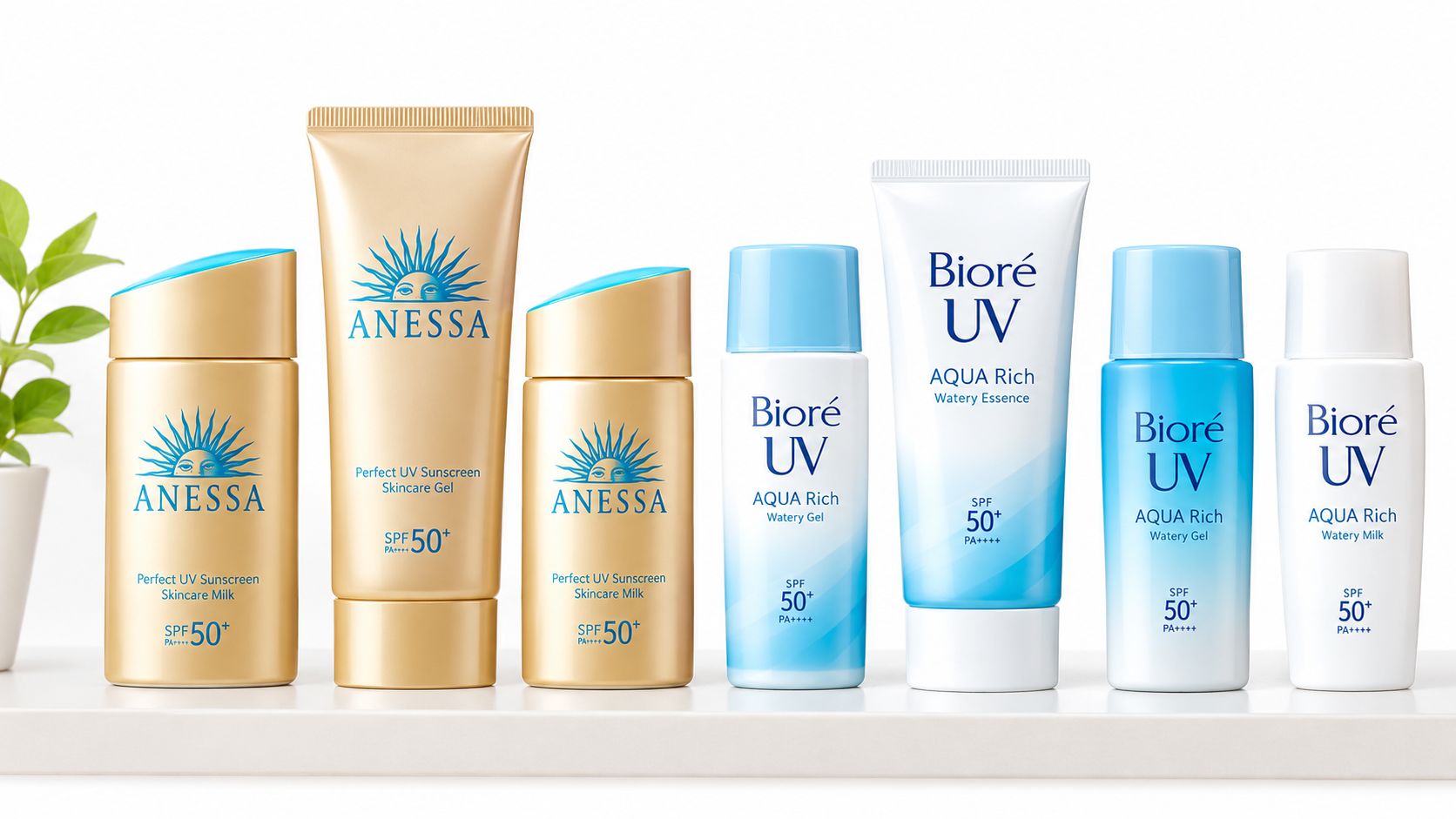
Names can be annoyingly similar across Japanese sunscreen lines, and that's where people buy the wrong product. Always confirm the exact product name and the printed SPF and PA on the listing before checkout.
The first thing I'd ask is simple:
Three questions to settle it fast
- Will you sweat, swim, or spend long stretches outdoors? Pick Anessa.
- Do you want something that feels lighter and easier to reapply? Pick Biore.
- Are you buying for routine comfort or performance under stress? That answer usually decides the brand.
What I'd personally tell a friend
If you only want one bottle and your weather is hot, humid, or active, buy Anessa first.
If you already know you hate the feeling of sunscreen and tend to avoid reapplying because of it, start with Biore. A sunscreen you enjoy wearing beats a stronger-feeling one you resent. If you're building a wider Japan beauty order, this guide on what to buy in Japan cosmetics is a practical next read.
There's also no rule saying you need to be loyal to one brand. Plenty of people do this the sensible way. Biore for daily life, Anessa for serious sun. That's probably the smartest answer in the whole Anessa vs Biore sunscreen debate.
If you want to compare authentic Japanese sunscreen options in one place, Buy Me Japan makes it easier to browse well-known lines like Anessa and Biore alongside other Japanese beauty staples, with tracked shipping, secure payments, and helpful customer service. Take a look at Buy Me Japan if you want a straightforward way to shop Japanese sunscreen based on how you live, not just what the label says.
Share:
Hada Labo Gokujyun vs Shirojyun: Which One to Choose