


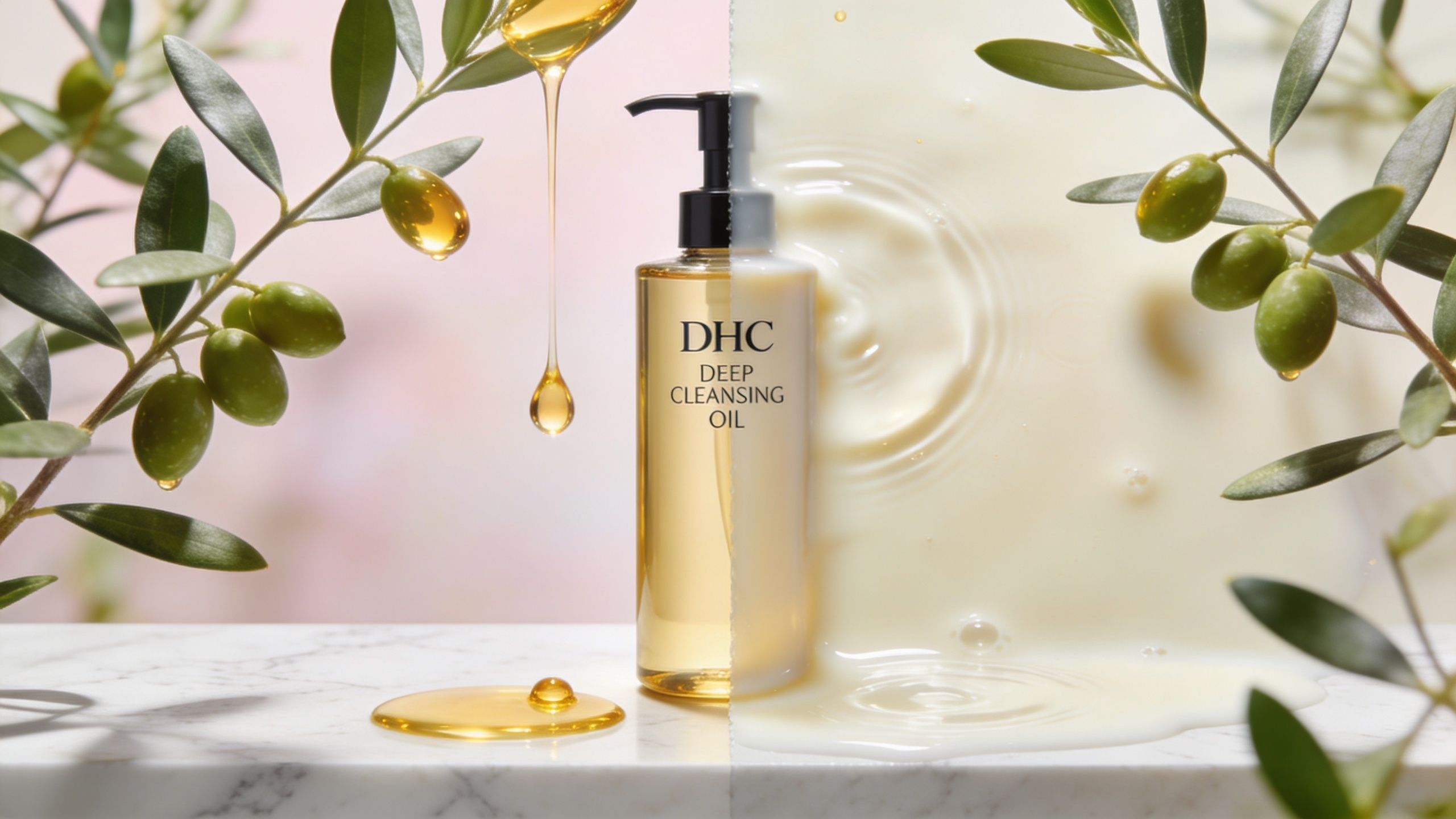
If you’re reading dhc deep cleansing oil reviews because your evening cleanse feels harder than it should, you’re not alone. Many people end the day with sunscreen, long-wear base makeup, waterproof mascara, and a face wash that still leaves residue around the hairline or nose. Others get the opposite problem. Their cleanser removes everything, but their skin feels tight, dry, or irritated afterward.
That’s the gap Japanese cleansing oils helped fill. In Japanese skincare, the first cleanse is often designed to remove oil-based buildup gently and thoroughly before the rest of the routine begins. DHC Deep Cleansing Oil is one of the best-known examples, and for many international shoppers it’s the product that introduced them to the idea that an oil cleanser can leave skin cleaner, not heavier.
This guide takes a practical look at the product from an educator’s point of view. You’ll find a clear explanation of why it became famous, how the formula works, how to use it properly, what different skin types should consider, and what real users tend to praise or dislike.
The Search for a Perfect Cleanse Ends Here
A frustrating cleanse usually follows a familiar pattern. You wipe off makeup once, wash again, then discover eyeliner still sitting at the lash line or sunscreen still clinging around the nose. If you scrub harder, your skin can end up feeling raw instead of refreshed.
That’s why so many people become interested in Japanese cleansing methods. Instead of treating every kind of buildup the same way, Japanese skincare often separates the cleansing step into a more logical sequence. Oil-based residue gets broken down first, then the skin can be finished with a second cleanser if needed. If you’re new to that routine, this overview of Japanese skincare steps is a useful place to understand where cleansing oil fits.
Why this product keeps coming up
DHC Deep Cleansing Oil appears again and again in beauty conversations because it promises a simple solution to a common problem. It’s designed to melt makeup, sunscreen, and excess sebum without the stripped feeling that many foaming cleansers can leave behind.
For international readers, that matters for another reason too. A lot of Japanese skincare products become popular overseas only after trends spread online. DHC is different. Its reputation comes from long-term use, repeat buyers, and a routine that already made sense in Japanese beauty culture before much of the world caught on.
Practical rule: If makeup removal feels like work, the issue often isn’t your skin. It’s the type of cleanser you’re using for the job.
What people usually want to know first
Most readers searching for dhc deep cleansing oil reviews are trying to answer a few specific questions:
- Does it remove stubborn makeup? Especially eye makeup, long-wear base products, and sunscreen.
- Will it feel greasy? This is the biggest hesitation for first-time oil cleanser users.
- Is it too much for sensitive or acne-prone skin? Many people worry that an oil cleanser will clog pores or trigger irritation.
- Is the Japanese version worth seeking out? Authenticity matters more in beauty than many shoppers first realize.
Those are sensible questions. The answers become much clearer once you understand what DHC is, why it became iconic, and how the formula is built.
What Makes DHC Deep Cleansing Oil a Global Icon
DHC Deep Cleansing Oil isn’t famous because of flashy packaging or a short-lived social media trend. It built its reputation by becoming part of people’s routines and staying there.
According to a review discussing the product’s history and market reputation, DHC Deep Cleansing Oil was launched as Japan’s original first-step oil cleanser and has reached cult-classic bestseller status globally, with a 100% organic olive oil-based formula and a history spanning over 30 years across markets including the US, Europe, and Asia, as noted in this DHC history review.

Why being the original matters
In beauty, “iconic” gets overused. Here, it means something specific. DHC helped define the first-step cleansing oil category for a large number of users. That role matters because products that create a category often shape how people judge every version that follows.
The formula also made the concept easier to trust. Instead of presenting oil cleansing as a harsh stripping step, DHC framed it as a gentler way to dissolve the things a water-based cleanser struggles to lift on its own. That logic became a natural fit in double cleansing, which later grew into one of the most recognizable parts of Japanese skincare outside Japan.
Why international buyers connected with it
Global popularity didn’t happen by accident. DHC Deep Cleansing Oil addresses a universal problem with very little explanation needed. Makeup needs to come off fully. Sunscreen needs to come off fully. Skin still needs to feel comfortable afterward.
That combination gave the product broad appeal across different routines and beauty preferences. It works for the person who wears a full face every day, the person who only uses sunscreen and concealer, and the person who wants a cleaner first step before continuing with toner or moisturizer.
If you enjoy exploring heritage brands with strong reputations in Japan, this guide to the best Japanese cosmetic brands gives useful context on why products like DHC earn lasting trust.
The cultural fit in Japanese skincare
Japanese skincare tends to value consistency, gentle care, and formulas that work smoothly in daily life. DHC fits that mindset well. It isn’t trying to feel dramatic. It’s trying to make one of the least enjoyable parts of a routine easier.
That’s also why so many long-running Japanese products gain loyal followings abroad. They’re often designed around repeat use, not novelty. When a cleanser removes buildup thoroughly and still leaves skin comfortable, people remember it. Then they buy it again.
A product becomes a staple when users stop thinking about replacing it.
The Science of a Perfect Clean An Ingredient Deep Dive
A cleansing oil can seem counterintuitive at first. If your skin already feels oily, why would adding more oil help? The answer comes from a simple chemistry idea: oil is effective at loosening other oil-based substances.
That includes sebum, sunscreen, long-wear foundation, and waterproof eye makeup. Instead of fighting those substances with harsher surfactants from the start, a cleansing oil binds to them so they can be lifted from the skin more easily.

The olive oil base in plain language
DHC is strongly associated with organic olive oil, and that matters to the user experience. Olive oil gives the formula slip, which means it can spread easily across dry skin and help break down stubborn product without aggressive rubbing.
People with sensitive or easily dehydrated skin often look for formulas that feel less stripping at the cleansing stage. If you want broader background on why olive oil continues to interest gentle-skincare users, this article on natural olive oil for sensitive skin gives helpful context.
Why it rinses off instead of sitting on the skin
Confusion frequently arises for many first-time users. They assume all cleansing oils behave like plain facial oil. DHC Deep Cleansing Oil doesn’t.
A product review focused on formulation explains that DHC Deep Cleansing Oil uses sorbeth-30 tetraoleate as a polysorbate surfactant together with caprylic/capric triglyceride to create a water-soluble cleansing oil that binds to impurities and rinses away cleanly without residue, according to this formula breakdown of DHC cleansing oil.
Think of it this way:
- The oil phase loosens makeup and sebum.
- The emulsifier helps that oily mixture mix with water.
- Rinsing then carries it away instead of leaving a film behind.
That middle step is the key. Without it, an oil cleanser could feel heavy or hard to remove. With it, the texture changes when water is added and the product becomes much easier to rinse clean.
Why emulsification matters: The rinse is part of the cleansing action, not an afterthought. If you skip proper emulsifying, you may blame the formula for residue that really comes from technique.
The formula profile many users appreciate
DHC also appeals to shoppers who prefer a simpler formula profile. It’s described in the verified material as color-free, paraben-free, mineral oil-free, and petroleum-based surfactant-free, with options that appeal to users who are cautious about unnecessary extras.
That doesn’t mean every sensitive person will react the same way. Skin is individual. But it does explain why the product has stayed relevant among people who want a cleanser that feels straightforward rather than overloaded.
If you’re comparing textures and want to understand where this formula sits in the category, this guide to light cleansing oil helps explain the differences between thinner and richer oil cleansers.
What this science means in real life
In practical use, the formula is trying to do three jobs at once:
- Remove hard-to-shift buildup
- Rinse away cleanly with water
- Leave skin comfortable enough for the next step
That balance is harder to formulate than it sounds. A product that removes makeup well but leaves a greasy layer isn’t enough. A product that feels squeaky clean but dries the skin out isn’t enough either. DHC’s long-standing reputation comes from sitting in the middle of those two extremes.
How to Use DHC Deep Cleansing Oil for Best Results
You get home after a long day, your sunscreen is still clinging to your skin, mascara has settled at the lash line, and a quick face wash somehow leaves everything half-there. This is the point where DHC Deep Cleansing Oil tends to make sense. In Japanese skincare, cleansing is treated as the foundation of the routine, not a rushed pre-step, and technique matters almost as much as the formula itself.

The method that usually works best
DHC Deep Cleansing Oil is usually used first at night, especially on days when you wear sunscreen, long-wear base makeup, or eye makeup. If you want a clearer explanation of why this first-cleanse step is so common in Japan, this guide to the benefits of double cleansing gives the full context.
A good way to use it is to treat the oil like a makeup remover and cleanser in one. It needs direct contact with what you are trying to dissolve.
- Start with dry hands and a dry face. Water too early can dilute the oil before it has a chance to break down sunscreen, sebum, and makeup.
- Dispense a few pumps and spread it gently. Begin with the cheeks and forehead, then move to areas where product collects more heavily, like the nose, chin, and hairline.
- Massage with light pressure. Let the oil glide. Around the eyes, hold your lashes and lids gently instead of rubbing back and forth.
- Take a little extra time on stubborn areas. Waterproof mascara and long-wear foundation usually loosen with patient massaging rather than force.
- Add water to emulsify. The oil should turn milky at this stage. That texture change is the signal that it is ready to rinse cleanly.
- Rinse well with lukewarm water. Hot water can leave skin feeling stripped, while cool water may not remove the emulsified oil as easily.
- Follow with a second cleanser if you want. Many people do this after heavier makeup days. Others stop here if their skin feels comfortable.
That milky stage confuses many first-time users. It is not a bonus step. It is the step that helps the oil lift away from the skin instead of lingering on it.
Common mistakes that make the product feel worse
Poor technique can make a well-loved cleanser seem heavier or less effective than it is.
- Applying it to damp skin first: The oil cannot grip makeup and sunscreen as well.
- Using too little product: A thin layer can drag across the skin instead of giving enough slip.
- Rushing eye makeup removal: Press, massage gently, and let the oil loosen the product before rinsing.
- Skipping emulsification: This is one of the main reasons people report residue.
- Scrubbing as if it were a foaming cleanser: Oil cleansers work best with patience, not friction.
A simple comparison helps here. Cleansing oil works more like melting than scrubbing. If you treat it like a foaming wash, you miss the reason it is effective in the first place.
International shoppers also tend to notice texture differences between markets and batches, which is one reason authenticity matters. Buying directly from Japan can give you more confidence that you are experiencing the product as Japanese consumers know it. If your overall routine is focused on barrier comfort, a gentle vegan sensitive skin routine can also help you build a calmer cleanse-to-moisturize flow around stronger makeup-removal steps.
A quick visual can help
If you prefer seeing the texture change and hand movements in real time, this video gives a helpful visual reference for using the product properly.
When to use it
Evening is the most common time to use DHC Deep Cleansing Oil because that is when sunscreen, makeup, and daily buildup need to be removed fully.
Morning use depends on your routine. If you wake up with bare skin and little residue, a simpler cleanse may be enough. If you used heavier overnight skincare or your skin produces a lot of oil, you may still like it in the morning. The best approach is the one that leaves your skin clean, comfortable, and ready for the next step without tightness or film.
Is DHC Cleansing Oil Suitable for Your Skin Type
A good cleanser isn’t universal in the exact same way for everyone. The better question is whether a formula makes sense for your skin’s patterns, your daily routine, and your tolerance for certain textures and scents.
DHC Deep Cleansing Oil often attracts a wide range of users because it targets makeup, sunscreen, and sebum in a direct way. Still, each skin type tends to approach it with different hopes and concerns.
Oily and acne-prone skin
Many people hesitate; they see the word “oil” and assume it can only make matters worse. In practice, cleansing oil is often used to dissolve the oily buildup already sitting on the skin.
For oily skin, the attraction is usually not nourishment. It’s efficiency. A formula like this can help loosen sunscreen, excess sebum, and pore-clinging residue before a second cleanser if you prefer one.
That said, oily skin users often do best when they pay close attention to rinse technique. Proper emulsification matters more than people think. If you leave any cleanser half-rinsed, your skin may feel heavier than it should.
Dry skin
Dry skin users often care most about what a cleanser doesn’t do. They don’t want that squeaky, over-washed feeling that can make the skin feel even tighter.
DHC’s olive oil-based identity is part of why dry-skin users find it appealing. The texture is designed to remove buildup while feeling more cushioning on the skin than a harsh foam-first routine. If your skin gets uncomfortable quickly after cleansing, that gentler feel may be the biggest advantage.
Combination skin
Combination skin usually benefits from balance rather than extremes. You may have an oily nose and chin, but normal or drier cheeks. A cleansing oil can work well here because it doesn’t force you to choose between stripping the T-zone and under-cleansing the rest of the face.
Many combination-skin users get the best experience by adjusting massage time by area. Spend a little more attention where congestion tends to show up and keep the rest of the face gentle.
Sensitive skin
Sensitive skin is less about one category and more about how easily your skin reacts. Fragrance level, rubbing, over-cleansing, and barrier condition all matter.
DHC’s cleaner formula profile is part of its appeal, but sensitive users should still patch-test any new product. If your skin is reactive, technique becomes even more important. Gentle massage, complete rinse-off, and a calm follow-up routine matter as much as the cleanser itself.
If you’re building a lower-irritation routine overall, this resource on a gentle vegan sensitive skin routine offers useful ideas on keeping the rest of your regimen simple. You can also compare broader J-beauty options in this guide to Japanese skincare for sensitive skin.
Sensitive skin often reacts to friction and over-cleansing as much as to ingredients. A gentler method can matter as much as a gentler formula.
Who may want to think twice
A few users may need a slower approach:
- People who dislike any oil texture at all: Even when a cleansing oil rinses cleanly, the application stage still feels like an oil.
- People who prefer fragrance-free experiences in the strictest sense: DHC is often described as having a subtle olive scent.
- People who want a one-texture foaming cleanse only: If you dislike emulsifying textures, this category may not be your favorite.
A simple way to decide
DHC tends to make the most sense if your routine includes makeup, sunscreen, or both, and you want a first cleanse that feels thorough without veering harsh. If your skin is very reactive, start slowly and observe. If your skin is oily, focus on rinse technique. If your skin is dry, pay attention to how comfortable your face feels afterward. Those are the signals that matter most.
The Honest Verdict User Reviews Pros and Cons
You finish a long day in sunscreen, foundation, and waterproof mascara. At the sink, the test begins. Reviews suggest DHC Deep Cleansing Oil has earned its following because it handles that moment well, especially for people who want one first cleanse to melt down the day without turning cleansing into a tug-of-war.
Across user feedback, the praise is strikingly consistent. People return to the same points again and again: it removes stubborn makeup efficiently, it feels comfortable for a product with serious cleansing power, and it stays in routines for years rather than weeks. For an international buyer, that matters. Japanese skincare classics often build their reputation slowly through repeat use, not flashy promises, and DHC fits that pattern.
What people praise most often
The biggest compliment is simple. It works.
Users often describe DHC as the cleanser they reach for when micellar water, wipes, or basic face wash are not enough for long-wear makeup and sunscreen. That reputation helps explain why the product became so well known outside Japan. In J-beauty, cleansing is treated as the foundation of the routine, not an afterthought, and DHC reflects that philosophy well.
Comfort is the second theme. Many reviewers say their skin feels soft and clean afterward rather than tight. That distinction is important because a cleanser can remove makeup thoroughly and still leave the face feeling overworked. DHC tends to get positive marks from users who want cleansing strength without that squeaky, stripped finish.
Long-term loyalty may be the most persuasive signal of all. Cleansers are practical products. People usually stay loyal only if the bottle keeps doing the job with little drama.
Where opinions differ
The formula does have a few recurring friction points.
Some users notice the natural olive scent right away. It is often described as mild, but scent is personal, and even a subtle note can shape whether someone enjoys daily use. Others mention that the texture feels a bit richer than very watery cleansing oils, so they prefer to rinse carefully and fully emulsify it with water before removal.
There is also a learning curve for first-time oil cleanser users. If you come from foaming cleansers only, the slip of an oil can feel unfamiliar at first, almost like using makeup remover and face wash in the same step. For some people that feels efficient. For others, it takes a few tries to trust that the formula will rinse away cleanly.
For many users, the main drawbacks are about sensory preference and technique, not a failure to remove makeup.
DHC Deep Cleansing Oil Pros and Cons at a Glance
| Pros | Cons |
|---|---|
| Strong reputation for removing stubborn makeup and sunscreen well | The olive scent may not appeal to everyone |
| Often described as comfortable on skin after rinsing | Richer texture may feel unfamiliar at first |
| Fits naturally into the Japanese double-cleansing approach | Careful emulsifying and rinsing matter |
| Wins repeat buyers and long-term routine loyalty | Less appealing if you only enjoy foaming cleansers |
| Useful for people who wear long-wear or waterproof products | Can feel messier than wipes if used carelessly |
My educator’s take
DHC Deep Cleansing Oil earns its status because the reviews line up with what the product is designed to do. It is a first cleanser built to dissolve makeup, sunscreen, and excess oil efficiently, then rinse off without the harsh after-feel many users want to avoid.
Its weak points are real, but they are usually about preference. If you dislike any oil texture, want a fragrance-free experience in the strictest sense, or prefer a feather-light cleanser, you may not enjoy using it even if you respect the results.
That distinction matters for international shoppers. A cult Japanese product is not automatically the right product for every face, but DHC has one quality that keeps showing up in reviews across markets. It is dependable. For many users, that is exactly what makes a cleanser worth repurchasing.
Buying Authentic DHC Oil A Smart Shoppers Guide
Once you’ve decided a product suits your routine, the next issue is authenticity. That matters more with Japanese skincare than many first-time international buyers realize.
A popular cleanser attracts copycats, stale stock, unclear sellers, and listings with poor storage history. Even when the bottle looks close to the original, the shopping experience may still be risky if you can’t confirm where the item came from or how it was handled. With a product you massage over the entire face, that uncertainty isn’t worth brushing off.

What smart buyers look for
International shoppers usually focus on price first, but that shouldn’t be the only filter. A better checklist includes:
- Seller credibility: Is the store clearly focused on Japanese products, or is it a mixed marketplace with inconsistent sourcing?
- Product clarity: Are the product names, packaging photos, and descriptions specific and consistent?
- Origin confidence: Can you tell whether the item is coming from Japan through a reliable channel?
- Condition expectations: Does the store show signs of actual curation and quality control, rather than anonymous bulk listing?
These details reduce the chance of a disappointing purchase. They also make repurchasing easier, which matters for a daily-use item.
Why buying from a Japan-focused retailer helps
Japanese skincare has a different retail context from many Western beauty categories. Packaging can vary by market. Product familiarity can vary by country. Popular items may also circulate through resellers with different handling standards.
That’s why many experienced buyers prefer retailers dedicated to Japanese goods rather than broad marketplaces. A specialist store is more likely to understand brand reputation, customer expectations, and what international shoppers need explained clearly.
How to shop with more confidence
If you’re comparing options, use this practical approach:
- Check whether the store specializes in Japan-based sourcing.
- Look for a clear product page, not a vague marketplace listing.
- Avoid sellers that create confusion around version, size, or origin.
- Pay attention to whether the retailer educates as well as sells. Stores that understand the category tend to present products more responsibly.
- Think about what else you may want to pair with it. A trusted source matters even more if you’re building a full routine with products from brands like DHC, Hada Labo, Shiseido, Canmake, or Fancl.
A note on sizes and expectations
Verified material notes that DHC Deep Cleansing Oil is available in 6.7 fl. oz. (200ml) and 5 fl. oz. (150ml) sizes. For many shoppers, the choice comes down to routine habits. If you wear makeup or sunscreen most days, a larger bottle may feel more practical. If you’re trying the formula for the first time or packing light, a smaller size may feel easier to commit to.
What matters more than the exact size is using the product consistently and correctly. A good cleanser earns its value through routine use, not shelf appeal.
The bigger reason authenticity matters
Japanese beauty has earned trust internationally because many products are built around careful formulation, daily usability, and category expertise. That value gets lost when shoppers treat every listing as interchangeable.
Authentic sourcing protects more than the product itself. It protects your ability to judge the product fairly. If you buy a questionable version, you’re no longer reviewing DHC Deep Cleansing Oil. You’re reviewing a gamble.
For readers seeking authentic products from a Japan-focused store, Buy Me Japan offers authentic Japanese beauty shipped directly from Japan, including DHC and many other established brands. If you’re ready to shop, you can browse DHC products at Buy Me Japan, explore trusted skincare names such as Hada Labo, or compare with sun care and skincare favorites from Shiseido. Buy Me Japan also highlights careful curation, direct-from-Japan sourcing, and a welcoming first-order discount for new customers, which makes trying a cult Japanese staple feel more straightforward.


Share:
J-Beauty: What Is the Difference Between Toner and Essence?
Fino Premium Touch Hair Mask: Your 2026 Guide to Silky Hair