


Foundation that looks right in the morning but turns deeper, warmer, or slightly orange by lunch is frustrating—and surprisingly common. The change is usually called “oxidation,” but that shorthand can hide a few different problems. Your foundation may simply be drying down to its true shade, reacting to oil on the skin, losing volatile ingredients after application, or sitting over skincare that never fully settled.
The useful question is not “How do I stop oxidation forever?” It is “What is making this particular base change on my skin?” Once you know that, the fix is usually much simpler: a better shade test, lighter prep, a primer chosen for your finish, thinner layers, or smarter setting.
What makeup oxidation actually looks like
A real color shift happens after application: the foundation becomes noticeably darker, more orange, or duller than it looked when first blended. Do not confuse that with an undertone mismatch. A shade that is too warm will look too warm immediately; a shade that changes only after it dries or after several hours points to a different issue.
Research helps explain why the effect varies so much between formulas. A study of 36 commercial liquid foundations found that darkening was related in part to the loss of volatile ingredients and to the way pigment particles were surface-treated. A separate 2024 study on sebum and liquid foundation suggests that higher amounts of sebum can intensify darkening in some formulas. In other words, the bottle is only half the story; your skin and the layers underneath it matter too.
First, diagnose the color change
1. Check the dry-down
Swatch a small amount along the jawline and look at it immediately. Then check the same swatch again once it has fully dried, preferably in indirect daylight. If it changes before you add powder or setting spray, the formula's dry-down is probably the main factor. Choose your shade based on the dried result, not the fresh swatch.
2. Compare a bare-skin swatch with a prepped-skin swatch
Place one swatch on clean, dry skin and another over your usual skincare and sunscreen. A stronger shift on the prepped side suggests that the layers underneath are contributing. This does not mean skipping sunscreen. It means simplifying the rest of your morning routine and giving each layer enough time to stop feeling wet or slippery before makeup.
3. Notice where the shade changes first
If the center of the face darkens before the cheeks, excess oil is a likely contributor. If the foundation becomes patchy around dry areas but not truly darker, the problem is texture and adhesion rather than oxidation. Treating those as the same issue often leads to too much powder and a heavier-looking base.
Prep skin without overloading it
Good makeup prep should leave skin comfortable, not coated. Use the lightest routine that keeps your skin balanced: a hydrating layer where needed, moisturizer in an appropriate amount, and your usual sunscreen. If the surface still feels slick, press lightly with a clean tissue instead of adding powder before foundation.
When skin is flaky or tight, piling on richer products right before makeup can make foundation slide. A consistent routine is more helpful than an emergency stack of serums. If irritation or dehydration is ongoing, start with a simple barrier-supporting skincare routine and adjust makeup once the skin feels settled.
Be equally careful with unstable skincare. For example, an oxidized vitamin C serum can change color in the bottle and may stain the skin or create an uneven canvas. Our guide to storing vitamin C serum explains what to watch for.
Choose primer by the problem you actually have
Primer is useful when it solves a specific issue. It does not need to cover the entire face. Many people get a better result by using an oil-control primer through the T-zone and a more comfortable, luminous base on drier areas.
For oily or combination skin: look for a light primer designed to manage shine and humidity. Concentrate it around the nose, forehead, and chin rather than applying a thick layer everywhere.
For dry or dehydrated skin: choose a flexible, glow-oriented base and keep powder targeted. A completely matte base can make dry texture more obvious even when the shade itself has not changed.
For sensitive or easily irritated skin: keep the routine short and patch-test new products. Redness can make a foundation appear warmer, which is easy to mistake for oxidation.
For recurring darkening: test one variable at a time. Try the foundation without primer, then with primer; change the setting step on another day. Replacing the entire routine at once makes the culprit harder to identify.
Four Japanese makeup products worth considering
These are not universal fixes, but each has a clear place in an oxidation-conscious routine. Choose the one that addresses your skin's actual behavior rather than adding every product at once.
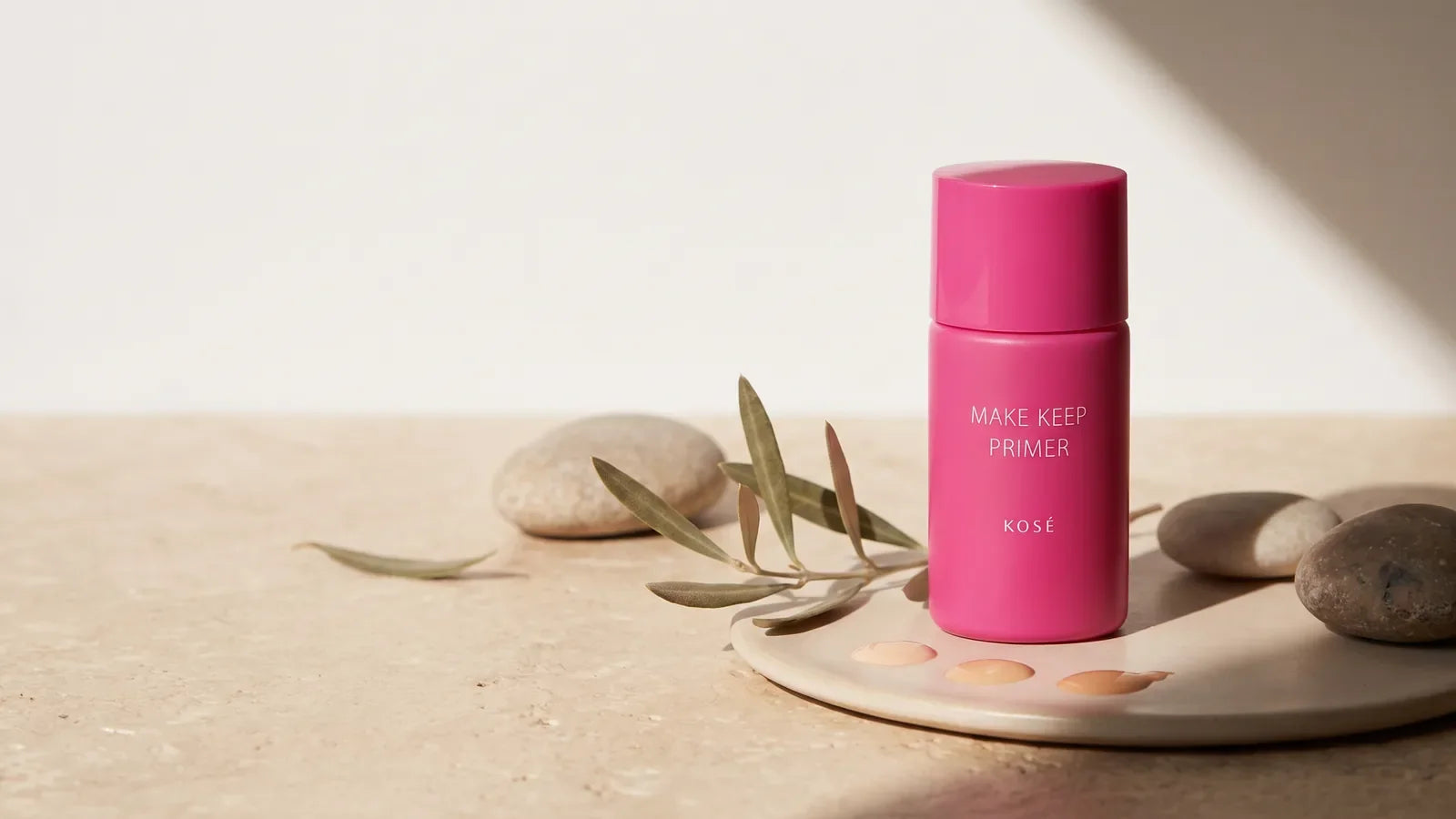
Kose Make Keep Primer 25g

This lightweight primer is positioned for sebum and humidity control, so it makes the most sense when foundation changes first through the oilier parts of the face. Apply a thin layer only where you usually become shiny. It is a practical option for combination skin that does not want a flat, all-over matte finish.
Shiseido Maquillage Dramatic Forming Glow Base Primer SPF30 PA+++ 30g

A glow base is the more natural choice when dryness or a flat finish is the bigger concern. This Maquillage primer gives you a luminous prep option with SPF30 PA+++. Use it sparingly under foundation and judge the finished shade only after both layers have settled.
Kirei & co. 4 Colors Face Powder 10g (Various Types)

This four-color powder comes in 01 Silky Clear and 02 Honey Pearl. It suits anyone who wants to set the T-zone while leaving the cheeks less powdered. Start with a small amount and press it onto areas that transfer or become shiny; a heavy all-over layer can make the base look dull even when the foundation has not darkened.
Majolica Majorca Moist Cocktail Fixer EX 60ml

This setting spray is a good final step for people who prefer a mist after powder. Spray from a comfortable distance and let the droplets settle on their own. A fixer can help the layers wear more evenly, but it will not correct a foundation shade that is already too warm or too deep.
If powder or mist is the step you are still choosing, see our guides to Japanese face powder and Japanese setting spray.
Application matters more than another layer
Apply foundation in thin layers, beginning at the center of the face and blending outward. Add coverage only where you need it. A thick coat traps more product on the surface and makes any later color or texture change more noticeable.
Use a clean sponge or brush and avoid working the foundation for too long after it starts to set. Dirty tools can redistribute oil and old product; our makeup brush cleaning guide covers a sensible routine.
Before powder, blot visible oil with tissue. Then press a small amount of powder onto the T-zone and any area that creases. This works better than sweeping a large amount over the entire face. Finish with setting spray only if you like the effect; it should support the base, not compensate for too much product underneath.
Store foundation so the formula stays consistent
Keep foundation tightly closed, away from direct sunlight, high heat, and humid storage. Shake it if the instructions call for shaking, and clean the nozzle or cap rather than letting residue build up. Check the period-after-opening symbol and replace the product if the smell, texture, or color in the container changes unexpectedly. Do not add water, oil, or other products to thin an aging formula.
A quick routine to try tomorrow
- Compare the foundation immediately and after it has fully dried.
- Keep skincare comfortable but light, and let sunscreen settle.
- Use primer only where it solves a real problem.
- Apply foundation in thin layers and build coverage selectively.
- Blot oil before adding a small amount of powder.
- Check the shade again in daylight before changing products.
The best solution is usually the least dramatic one. Diagnose when and where the color changes, adjust one step, and retest. That gives you a more reliable answer than chasing a long list of “anti-oxidation” rules—and a base that still looks like your shade hours later.


Share:
Japanese Pore Care Products: What Actually Helps (and What to Skip)
How to Prevent Split Ends Naturally: Japanese Hair Care