

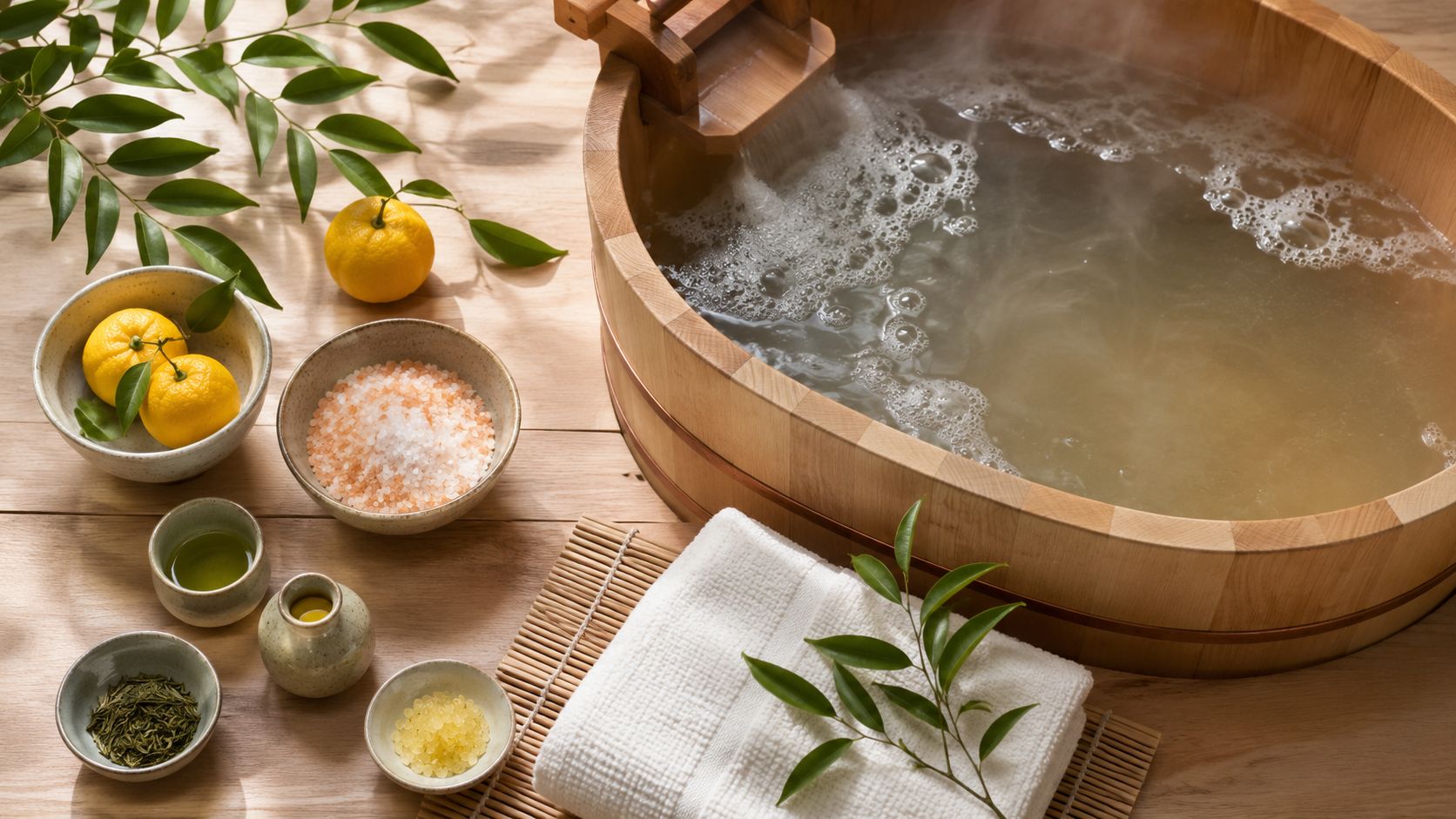
You've probably seen Japanese bath products on a shelf and wondered whether they're just prettier versions of what you already use, or whether they're built differently for a reason. The short answer is that many of them are designed around a bath culture that values soaking, water chemistry, and skin feel, not just quick cleansing.
If you've ever wanted to know why some Japanese bath soaks feel softer, why others are meant to hold warmth better, and how to choose one for a small apartment tub or sensitive skin, this guide will walk you through it in plain language. You'll learn what each product type does, how to read the ingredient logic, and how to make sense of the ritual before you buy.
Why Japanese Bath Products Stand Out
A first-time buyer often starts with the packaging. The jars look calm, the names sound soothing, and the product promises a spa-like bath. The deeper story is more practical. Japanese bathing is built around immersion, not a quick rinse, so the products are made to work with water, heat, and skin feel in a very specific way.
Japanese bath salts were first marketed in 1897, which shows how established the category is in Japan rather than how trendy it looks from abroad (government overview of the history of Japanese bath salts). That history matters because it explains why the category includes both sensory products and functional blends. Some formulas are designed to change how the bath water feels on the body, while others are closer to fragrance-led comfort items.
The bath itself shapes the product. Traditional Japanese bathing usually means sitting in the tub with water up to the shoulders, not stretching out for a long soak the way many Western tubs encourage (Japanese bathing-culture overview). That setup favors compact tubs, steady heat, and products that behave well in full-body immersion. It also explains why many formulas focus on warmth, softness, and the after-feel of the water.

Bathing is also part of daily life in Japan. Cultural overviews note that many people take a bath every evening in summer, with even more doing so in winter (Japanese bathing-culture overview). That makes bath products more than occasional pampering. They are designed for routine use, so brands tend to focus on formulas that feel dependable in a real home bath, not just impressive on a shelf.
Practical rule: if a bath product is meant for Japanese-style use, ask what it changes in the water, not just what it smells like.
The ingredient logic matters for the same reason. A mineral soak can alter water feel, scent, and skin after-feel in ways a simple bubble bath cannot. If you want to compare that idea with another bath-adjacent treatment, pure balneological mud for scalp shows how care products can be built around a specific function instead of fragrance alone. For readers who want to see how that same ingredient-first thinking carries into daily routines, the internal guide on Japanese skincare and beauty adds useful context.
Main Types of Japanese Bath Products
A first-time buyer can sort Japanese bath products by a simple question, what changes first, the water, the skin, or the routine around the tub. Some products are designed to alter the bath itself. Others cleanse before soaking, or support the body after the bath so the effects last a little longer.
Products that change the bath
Bath salts, bath powders, and tablet-style bath additives are the clearest examples. They go into the tub and change how the water behaves on the skin. A bubble bath mainly adds foam and scent, while a mineral soak is built to shift the bath experience more directly. That distinction matters, because shoppers often judge the product by the package art instead of by what it does in water.
Bath oils work differently. They do not try to change the water chemistry much, but they leave a conditioning feel on the skin and can make the bath seem more cushioning. For people whose skin feels dry after soaking, that extra skin feel can matter more than fragrance.
Products used before or after soaking
Body wash and bar soap still have a place in a bath-centered routine. Many people cleanse before they get into the tub, so the soak can focus on comfort and relaxation rather than removing the day's buildup. Afterward, lotion, body milk, or a light cream helps hold onto the skin feel the bath created.
A simple comparison helps here. The internal guide on Japanese bath salts is useful if you want to understand how mineral-based bath products differ from scented foams. For a more familiar reference point, the foam-heavy format in 12 bath bombs from ArtNaturals shows how many Western bath products lean toward fizz and fragrance rather than mineral engineering.
Accessories that change the experience
Bath towels, exfoliating cloths, and brushes are part of the category too. They are not decorative extras. They control how much cleansing or scrubbing happens before or after the soak, and that can matter as much as scent in an everyday routine.
If your goal is comfort, focus on the soaking product. If your goal is cleansing, start with what touches the skin before the bath.
For shoppers who want to see where bath-adjacent products fit within Japanese home care, the internal article on bath salt use in Japan is worth opening in another tab while you compare formats.
Signature Ingredients and What They Actually Do
Japanese bath formulas often look simple on the label, but the ingredient logic can be quite specific. Many bath powders are built around an alkaline mineral system, not just scent or color. That's why two products that both look like “bath salts” can feel very different in the tub.
The mineral core
The common ingredients listed in Japanese bath powders and medicated bath additives include sodium bicarbonate, sodium sulfate, magnesium sulfate, potassium chloride, and calcium carbonate (ingredient-focused product example). In plain English, these minerals change the feel of the bath water, its perceived softness, and how long the soak seems to hold warmth. The bicarbonate and sulfate balance is especially important in the “silky” or “soft bath” style that people often associate with Japanese soaking formulas.
That means a mineral soak is not just a scented bath. It's a water-treatment product for home bathing. The buyer who understands that will read the label differently. Instead of asking only “What does it smell like?”, they can ask “What does this mineral mix do to the bath?”
Botanicals and the sensory layer
Japanese bath lines also use botanicals like yuzu, hinoki, and green tea. These ingredients mostly shape aroma and the mood of the soak, but they can also make a product feel more rooted in Japanese bathing culture. A hinoki scent may signal a woodsy, spa-like bath, while yuzu tends to feel brighter and more seasonal.
For readers who think about skin comfort as part of bath planning, the benefits of rice bran for skin is a useful cross-reference, especially because rice-derived ingredients often show up in Japanese body care. The internal guide on rice water skin benefits also helps if you want to compare bath ingredients with broader Japanese skincare logic.
| Ingredient | Function in the Bath | What the User Feels |
|---|---|---|
| Sodium bicarbonate | Helps shape water softness and the mineral feel | A smoother, softer soak |
| Sodium sulfate | Part of the mineral base in bath powders | A fuller bath texture |
| Magnesium sulfate | Supports the bath's mineral profile | A heavier, more soak-like feel |
| Potassium chloride | Helps build the mineral blend | A balanced mineral sensation |
| Calcium carbonate | Adds to the water's mineral character | A denser, more traditional bath feel |
| Yuzu | Adds citrus aroma and a seasonal bath mood | Bright, fresh scent |
| Hinoki | Brings a woodsy Japanese bath aroma | Calm, forest-like atmosphere |
| Green tea | Adds a clean, familiar botanical note | Light, restrained scent |
Buyer's shortcut: if the label is mostly minerals, expect a change in bath feel. If it's mostly fragrance, expect mood first and function second.
The Japanese Bathing Ritual at Home
A Japanese-style bath works best when you treat it as a sequence, not as a single product moment. Each stage has a separate job. Cleanse first, soak second, condition after. That order matters because the water, the skin, and the room all respond differently at each step.
Step 1, wash before you soak
A body wash or bar soap clears away sweat, sunscreen, and daily buildup before the bath begins. That keeps the tub water cleaner and lets the soak do its work without turning into a rinse cycle. In Japanese bathing habits, this pre-rinse step is a normal part of the ritual, not a sign that the bath is “extra.”
Step 2, fill the tub for immersion
A review of Japanese-style bathing describes the usual routine as immersion from mid-thorax to neck in 40 to 41 °C water for 10 to 30 minutes, usually taken 0.5 to 2.0 hours before bedtime. The point is steady immersion, not a long splashy soak. The water surrounds the body evenly, so the bath feels more contained and deliberate than a casual dip in a wide tub.
That detail matters because Japanese tubs are often designed for seated, compact soaking. The experience depends on depth, posture, and stillness, not on stretching out. If your home bathroom is small, that is closer to the original logic than it may first appear.
Step 3, use the bath product with intention
Drop the mineral powder, tablet, or sachet in only after the tub is ready. If you are using a bath oil, use it sparingly so the skin-conditioning effect does not make the tub slippery. If you prefer a scented bath, keep the fragrance product separate from your cleanser so you can tell what each one contributes.
A bath ritual at home can stay very simple. Cleanse, soak, rinse lightly if needed, then moisturize. That sequence gives the water time to do its job, and it gives your skin a clear finish afterward.
If you are also trying to make a compact bathroom feel more suited to this routine, the guide to Japanese home decorating ideas can help you think through storage, layout, and the calm visual cues that support a bath-night habit.
How to Choose the Right Product for Your Skin and Space
A good Japanese bath product has to fit two things at once, your skin and your bathroom. A formula can be carefully made and still feel wrong if your skin is reactive, or if the product format does not suit the way your tub, shower, or storage area is set up.
Match the formula to the skin
Dry skin usually does better with bath oils and mild mineral soaks, because they leave less of that stripped, tight feeling after rinsing. Sensitive skin needs a closer look at fragrance, exfoliating texture, and any active ingredient that might change how the water feels on the body. A product can be Japanese and still be too strong for skin that reacts quickly.
The reason is simple. A foaming cleanser removes soil in one way, a scented soak changes the bath water in another, and an exfoliating towel works by mechanically lifting surface debris. They are not interchangeable, and each one can be too much if the rest of your routine is already drying or abrasive.
Simple test: if your skin stings after a bath, the cause may be the formula, the water temperature, or the exfoliation step, not the brand name.
Water chemistry matters too. Mineral soaks, for example, behave differently from plain bath additives because they change how the bath water feels against the skin, much like a rinse with a different balance of minerals can feel softer or drier depending on what is dissolved in it. If your tap water is already harsh, keep the formula gentler and avoid stacking strong fragrance with heavy exfoliation.
Match the format to the bathroom
Small bathrooms and shared showers call for different choices than deep soaking tubs. Powder, tablet, and sachet formats are easier to store, easier to measure, and less awkward in tight spaces. A large oil bottle or a set of multiple accessories can be inconvenient if your sink ledge is narrow or your bathing area has to be cleared after each use.
The physical setup matters more than many first-time buyers expect. One product-insight source frames compact bath mat choice around a standing-zone footprint of about 45 × 45 cm maximum, plus drain-grate compatibility and grip performance, which is a useful reminder that bath tools succeed when they fit the room, not when they only look calm on a shelf (compact non-slip bath mat guidance). In apartment bathrooms, drying time, floor space, and where water collects can matter as much as scent or packaging.
Buy Me Japan carries Japanese beauty and bath-adjacent products with direct-from-Japan sourcing, which can help when you care about formula version and product origin. For a closer look at a body-cleansing option that fits into this kind of routine, the guide on Bouncia body soap is a useful reference.
Trusted Japanese Brands Worth Knowing
A first-time buyer standing in a Japanese bath aisle usually sees two things at once, familiar names and unfamiliar formats. Brand recognition helps because it gives a clue about how a product is meant to behave in water, on skin, and in a bathroom where storage is tight.
Brands to keep on your shortlist
Shiseido, Hada Labo, Kose, Fancl, Minon, and Shiseido Aqualabel are widely recognized names in Japanese personal care, and they often appear beside bath and body items in broader skincare catalogs. Brands such as Kao, Biore, DHC, Canmake, Cezanne, Yuskin, and MUJI also matter, because Japanese buyers often expect consistency across an entire line, not only one product that happens to be popular.
That expectation is useful for shoppers abroad. A brand with a steady formula approach usually gives you a better sense of fragrance load, cleansing strength, texture, and how much residue it may leave in a small shower or tub. If you are trying to match a product to sensitive skin, hard water, or limited shelf space, that predictability is more helpful than clever packaging.

For a closer look at a body-cleansing option from a familiar Japanese brand, the internal guide on how Bouncia body soap fits into a bathing routine is a practical example.
Why a Japan-based source matters
Buying through a Japanese curator can reduce uncertainty around authenticity, packaging version, and product freshness. That matters more with bath products than many shoppers expect, because small changes in label language, mineral format, or seasonal scent can change how a product performs in use.
Japanese bath products are also often designed around local bathing habits. A product chosen by a Japan-based source is more likely to reflect that original use case, rather than a simplified export version built mainly for broad marketplace appeal.
Common Misconceptions About Japanese Bath Products
The biggest myth is that every Japanese bath product is automatically gentle or natural. That sounds reassuring, but it does not help a shopper make a sound choice. A foaming cleanser, a scented bath additive, and a scrubby towel can all feel spa-like while still being too much for sensitive skin.
What matters first is what the product is built to do. Look at fragrance intensity, exfoliation level, and whether the formula is mainly for cleansing, mineral soaking, or scent. A bath powder built around minerals behaves differently from a perfumed bubble formula, even if both are presented as relaxing. One changes the water itself, the other mainly changes the mood of the room.
Another misconception is that bath products are a luxury with no real function. Japanese-style soaking has been studied in relation to body temperature, skin temperature, heart rate, venous blood oxygenation, blood pH, and autonomic nervous system modulation. A separate review also describes a routine that can support sleep quality when the soak is taken before bed. That does not mean every bath product delivers the same effect, but it does show that the ritual has a real physiological basis.
The final mistake is assuming the prettiest product is the right one for your setup. Small bathrooms, shared showers, and shallow tubs all change the equation. A product that looks luxurious online can still be awkward if it is hard to store, hard to rinse, or mismatched to the way you bathe.
The safest buyer mindset is simple, check what the product does, then check whether your skin and space can support it.
Bringing It All Together on Your Next Bath Night
Japanese bath products make the most sense when you think about them as a system. There are cleansing products, bath additives that change the water, oils that cushion the skin, and accessories that affect grip or exfoliation. Once you know which category you need, the label becomes much easier to read.
The ingredient logic matters too. Mineral-based formulas, fragrance-led blends, and botanical add-ons are not interchangeable. The right choice depends on whether you want a softer-feeling soak, a scent-forward bath, or a product that fits a small, practical bathroom.
If you want authenticity, direct-from-Japan sourcing, and a curated way to compare real Japanese brands, Buy Me Japan is a useful place to start. Explore the selection with your skin type and bathroom layout in mind, then choose the format that matches the kind of bath you take.
Visit Buy Me Japan to browse authentic Japanese bath products, body care, and skincare shipped directly from Japan. If you're building a more thoughtful bath routine, start with the products that match your skin, your space, and the traditional way of Japanese bathing.
Share:
Face Cleanser for Sensitive Skin: A Complete Buying Guide