

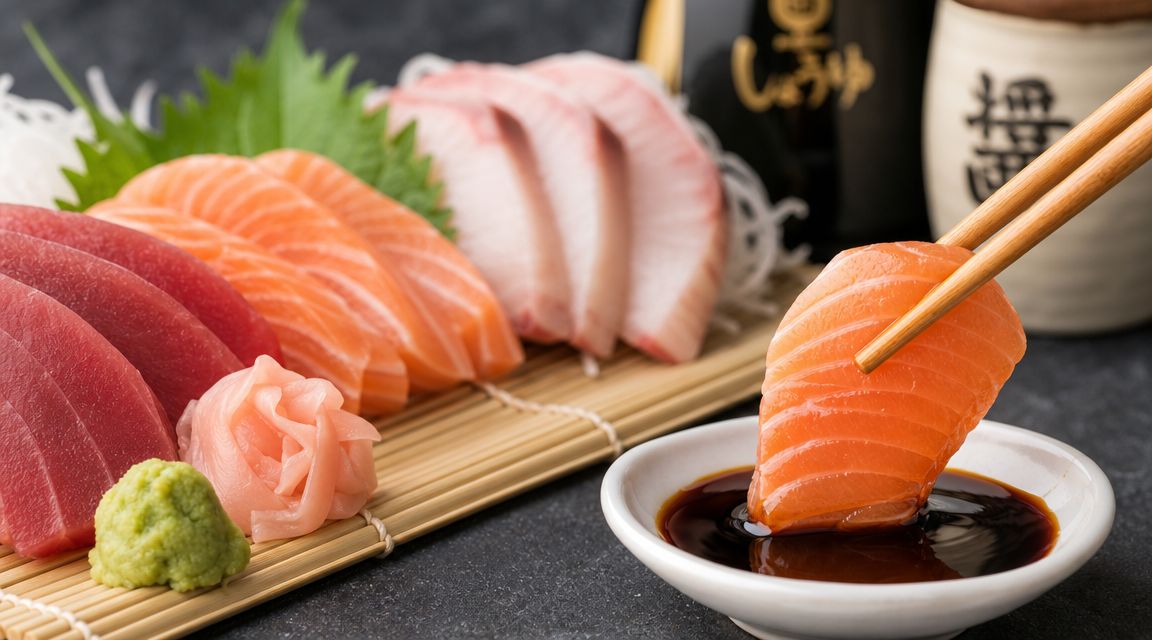
A lot of home cooks have had the same disappointing moment. You buy beautiful sashimi, chill the plate, maybe add a little wasabi, then dip the fish into whatever soy sauce is in the cupboard. The first bite tastes mostly of salt.
That's usually not a fish problem. It's a sauce problem.
Japanese soy sauce, or shoyu, has a long and nuanced tradition, and sauces made for sashimi are designed with a very specific purpose in mind. They're meant to support raw fish, not bully it. Once you understand that difference, even a simple plate of salmon or tuna feels more refined and much closer to what you'd hope for from a good Japanese meal at home.
Why Your Sashimi Deserves the Right Soy Sauce
A plate of sashimi doesn't have much to hide behind. There's no grilling, no heavy seasoning, no sauce reduction. You're tasting freshness, texture, fat, aroma, and knife work. That's exactly why the soy sauce matters so much.
If the sauce is too sharp, the fish disappears. If it's too thin, it runs off the slice and pools in the dish. If it's too salty, you lose the sweetness and clean finish that make sashimi satisfying in the first place.

Japanese soy sauce tradition is also much older than many people realize. Japan Heritage dates the birthplace of Japanese soy sauce to 1254 in Yuasa, Wakayama, which shows how firmly this craft is rooted in Japanese food culture, as noted by Japan Heritage's history of soy sauce in Yuasa.
That long history matters because sashimi soy sauce isn't some novelty bottle invented for export shelves. It sits inside a much older culture of refinement. Over time, Japanese producers learned that different foods need different balances of aroma, sweetness, salt, and body.
A small change that alters the whole plate
Think of maguro, or tuna. Lean tuna and fatty tuna don't taste the same, and they shouldn't be treated the same way either. If you're curious about tuna itself, this guide to what is maguro is a helpful companion.
A good sashimi soy sauce doesn't try to taste stronger than the fish. It tries to land in the background at exactly the right volume.
That's the central idea to keep in mind as you read labels and choose a bottle. The best one for sashimi often tastes quieter, rounder, and more deliberate than the soy sauce you use for stir-fries or marinades.
What Makes Sashimi Soy Sauce Different
The simplest explanation is that sashimi soy sauce is usually built to taste gentler on first contact. But that gentle impression comes from very deliberate formulation choices.
Some bottles sold specifically for sushi and sashimi are designed to deliver a little sweetness, a little thickness, and a more immediate sense of umami. That combination helps the sauce sit on the fish more gracefully and keeps the salt from arriving too aggressively.

A clear example comes from a Kikkoman product specification. Its Sushi & Sashimi Soy Sauce includes soy sauce, sugar, water, modified tapioca starch, lactic acid, sodium benzoate, and disodium inosinate, and Kikkoman describes it as specially blended for sushi and sashimi and slightly milder than classic soy sauce, as shown on the Kikkoman Sushi & Sashimi Soy Sauce product page.
Why those ingredients are there
Those extra ingredients often confuse shoppers because they expect soy sauce to be only a fermented seasoning. For sashimi use, though, the additions make practical sense.
- Sugar helps round out edges. Raw fish can taste sweet and delicate, and a touch of sweetness in the sauce helps the fish feel fuller rather than sharper.
- Modified tapioca starch changes texture. A slightly thicker sauce clings to the fish instead of sliding straight off.
- Disodium inosinate boosts savory impact. It helps create a more immediate umami impression in a small amount of sauce.
- Lactic acid adjusts balance. That can make the sauce feel less flat and more controlled on the palate.
How to taste the difference at home
Try this with two small dishes. Put ordinary table soy sauce in one and sashimi soy sauce in the other. Dip the same slice of fish lightly into each.
You'll usually notice a few things:
- Standard soy sauce can hit harder and faster with salt.
- Sashimi soy sauce often feels rounder and a little softer.
- The finish may seem sweeter or more savory, even when the dip is very light.
If you're shopping and not sure what you're looking at, label language can help. A bottle that mentions ingredients such as starch, sweeteners, or disodium inosinate often signals a sashimi-oriented profile rather than a plain all-purpose shoyu.
It's not “better” for everything
That point is important. Sashimi soy sauce isn't automatically superior to every other soy sauce. It is tuned for a specific job.
For dumplings, fried rice, or braised dishes, you may prefer a sharper or more straightforward soy sauce. For raw fish, especially when the fish itself is subtle, a more restrained sauce tends to be the smarter choice.
For a broader primer on soy sauce itself, this guide on what is shoyu helps put these differences into context.
A Guide to Japanese Shoyu Varieties for Sashimi
You don't always need a bottle labeled “sashimi soy sauce.” Many traditional Japanese shoyu styles can pair beautifully with raw fish if you match them thoughtfully.
The reason is chemistry as much as tradition. A peer-reviewed review explains that soy sauce develops its complexity through fermentation and reactions such as Maillard reactions, producing free amino acids like glutamine and other flavor compounds that give brewed shoyu its savory depth, as described in this review of soy sauce aroma and flavor chemistry.

That's why traditionally brewed soy sauce can make sashimi taste fuller without making it saltier.
A practical comparison
| Shoyu type | General character | Good sashimi match | What to expect |
|---|---|---|---|
| Koikuchi | Balanced, familiar, versatile | Salmon, tuna, mixed sashimi platters | A classic everyday choice |
| Usukuchi | Lighter in color, more delicate in look | White fish and visually subtle sashimi | Lets appearance stay clean |
| Saishikomi | Richer and deeper tasting | Fatty cuts like toro | More concentrated, luxurious feel |
| Tamari | Fuller-bodied and often thicker | Rich fish, scallop, or small dipping portions | Dense umami and cling |
Koikuchi for the broadest use
If you want one bottle to start with, koikuchi is often the easiest path. It's the general dark soy sauce many people picture when they think of Japanese shoyu.
For sashimi, koikuchi works best when it's brewed with care and used lightly. It suits salmon, tuna, and mixed platters where you want a familiar soy sauce flavor without too much complication.
Usukuchi for delicate-looking fish
Usukuchi often confuses people because its color is lighter, yet that doesn't automatically mean it tastes lighter in every way. For sashimi, its visual restraint can be a real advantage with pale white fish.
When you dip a translucent slice of sea bream or flounder, a lighter-looking soy sauce can keep the presentation elegant and the taste less visually heavy.
With sashimi, appearance is part of flavor. A dark puddle on a pale fish changes the experience before you even take a bite.
Saishikomi for richer cuts
Saishikomi is often called double-brewed soy sauce. In practical tasting terms, it tends to feel denser, deeper, and more layered.
That makes it a natural partner for fatty tuna or other richer sashimi. The fish has enough richness to stand up to a more profound soy sauce, and the pairing can feel almost silky if the dip is very controlled.
Tamari for body and depth
Tamari is often appreciated for its thicker texture and strong umami presence. Some shoppers also seek it out when they want a soy sauce style that can work well for gluten-conscious households, though checking the actual label is still essential.
For sashimi, tamari can be excellent with richer cuts or when you want a sauce that adheres cleanly in a very small amount. It's less ideal when the fish is extremely delicate and you want near-invisible seasoning.
How to choose by fish
Instead of memorizing soy sauce theory, use a simple pairing instinct:
- Fatty fish often welcomes deeper shoyu.
- Lean fish usually benefits from a lighter hand.
- Very delicate white fish may need only the mildest soy sauce, or almost none.
- Mixed platters are easiest with a balanced, versatile shoyu.
That mindset will serve you better than chasing one “best” bottle.
How to Serve and Pair Sashimi Soy Sauce
Serving matters almost as much as the bottle itself. A fine soy sauce can still disappear under heavy-handed dipping.

Start with a small pour in the dipping dish. You only need a shallow amount. That makes it easier to touch the fish lightly to the surface instead of soaking it.
The basic serving rules
- Pour less than you think you need. You can always add more, but too much encourages over-dipping.
- Dip the fish, not anything else. With sashimi, that's simple because there's no rice attached. The point is to season the surface, not saturate the bite.
- Use wasabi sparingly. A tiny amount on the fish is usually cleaner than stirring a large blob into the soy sauce.
- Eat promptly. Cold fish warms quickly, and the texture changes as it sits.
A related Japanese seasoning question often comes up with sushi rice and sauces. If you want to understand those pantry differences more clearly, this comparison of rice wine vinegar vs mirin is useful.
Two easy pairing ideas
You don't need to make a complicated dipping sauce. Simple additions work best.
- Wasabi soy dip Put a very small dab of fresh or prepared wasabi on the fish, then touch it to the soy sauce. This keeps the heat direct and brief.
- Ginger soy dip Add a trace of freshly grated ginger to a small dish of mild soy sauce for fish that tastes clean and slightly sweet. Ginger can brighten the bite, but too much will dominate.
Here's a visual guide if you want to see serving style and handling more clearly.
When you may not need it at all
Many people get surprised by this. A specialized sashimi soy sauce can be lovely, but it isn't mandatory for every bite.
Kikkoman's European product explanation notes that sashimi soy sauce is sweeter and milder, but the more interesting practical point is that for very delicate or very high-quality fish, some cooks prefer only a very light touch of mild shoyu, or none at all, as discussed on the Kikkoman Sushi & Sashimi Soy Sauce page for Europe.
Sometimes the most respectful seasoning is restraint.
If the fish is especially soft, sweet, or aromatic, take one piece completely plain first. Then try the next with soy sauce. That side-by-side comparison teaches you more than any label ever will.
A Buyer's Guide to Authentic Japanese Soy Sauce
Choosing soy sauce can feel oddly difficult because shelves are full of bottles that look similar. But once you know what to read, the decision gets easier.
Japan has an estimated 1,600 soy sauce manufacturers, while the top 16 companies account for over 70% of the market, and major Japanese soy sauce brands reach over 100 countries worldwide, according to Kikkoman's soy sauce history overview. That means two things are true at once. Japanese soy sauce is globally available, and distinctive regional bottles can still be hard to find.
What to check on the label
The first thing I'd look for is whether the soy sauce is presented as traditionally brewed or naturally brewed. That usually points you toward a more layered flavor profile that suits sashimi better than a flatter, more aggressive sauce.
Then read the ingredient list carefully.
- Short, straightforward ingredients often signal a more classic shoyu style.
- Added sugar or starch can indicate a sashimi-focused formulation.
- Disodium inosinate suggests a product designed for stronger immediate umami.
- Country of origin matters if you want Japanese-made soy sauce rather than a product merely styled after it.
Match the bottle to your actual cooking
Many buyers make the mistake of searching for the most premium soy sauce without deciding how they'll use it.
If sashimi is your main goal, ask yourself:
- Do you want a dedicated dipping sauce for raw fish only?
- Do you prefer one versatile bottle for sashimi, tofu, and simple Japanese meals?
- Are you serving delicate white fish or richer tuna and salmon more often?
- Do you enjoy a sweeter, softer profile or a more traditional brewed taste?
Those questions narrow the field quickly.
Storage matters more than people think
Even a good soy sauce loses some of its charm if it's handled casually.
Keep the bottle in a cool, dark place before opening. After opening, refrigeration helps protect the aroma and flavor, especially if you use soy sauce slowly. A clean pour spout and a tightly closed cap also make a difference over time.
Buy smaller bottles if you use soy sauce occasionally. Freshness in an open bottle matters more than owning a large one.
If you're exploring Japanese pantry staples more broadly, this overview of popular products in Japan gives useful context on what international shoppers often seek out from Japan.
Elevate Your Meals with Authentic Flavor
Sashimi soy sauce sounds like a small detail. In practice, it changes the whole meal.
The right bottle is usually gentler, rounder, and more thoughtful than a standard all-purpose soy sauce. It may include ingredients that improve cling, sweetness, or umami. Or it may be a well-brewed traditional shoyu chosen to suit the fish in front of you.
That's also why there isn't only one correct answer. Koikuchi can be a dependable all-rounder. Usukuchi can flatter delicate fish. Saishikomi can suit rich cuts. Tamari can bring depth and body. And sometimes the best move is barely any soy sauce at all.
The deeper lesson is simple. Good Japanese food often depends on balance, not excess. Sashimi makes that especially clear because every choice is exposed. A careful soy sauce choice doesn't complicate the meal. It sharpens your attention to it.
If you enjoy building Japanese flavor at home, another useful next step is learning the quiet power of stock. This guide on how to make dashi stock is a natural companion piece.
A simple plate of sashimi can feel more elegant, more intentional, and more Japanese with just one adjustment. Choose the soy sauce as carefully as you choose the fish, and the meal will taste more complete.
If you're ready to explore authentic Japanese pantry staples, Buy Me Japan offers a curated way to shop products shipped directly from Japan. It's a practical option for finding genuine Japanese soy sauces and other food essentials when you want the flavor experience to be closer to what you'd enjoy in Japan itself.


Share:
Skin Care Emulsion: Japanese Beauty Secrets for Hydrated
Japanese Eye Patch Guide for Brighter, Youthful Eyes