

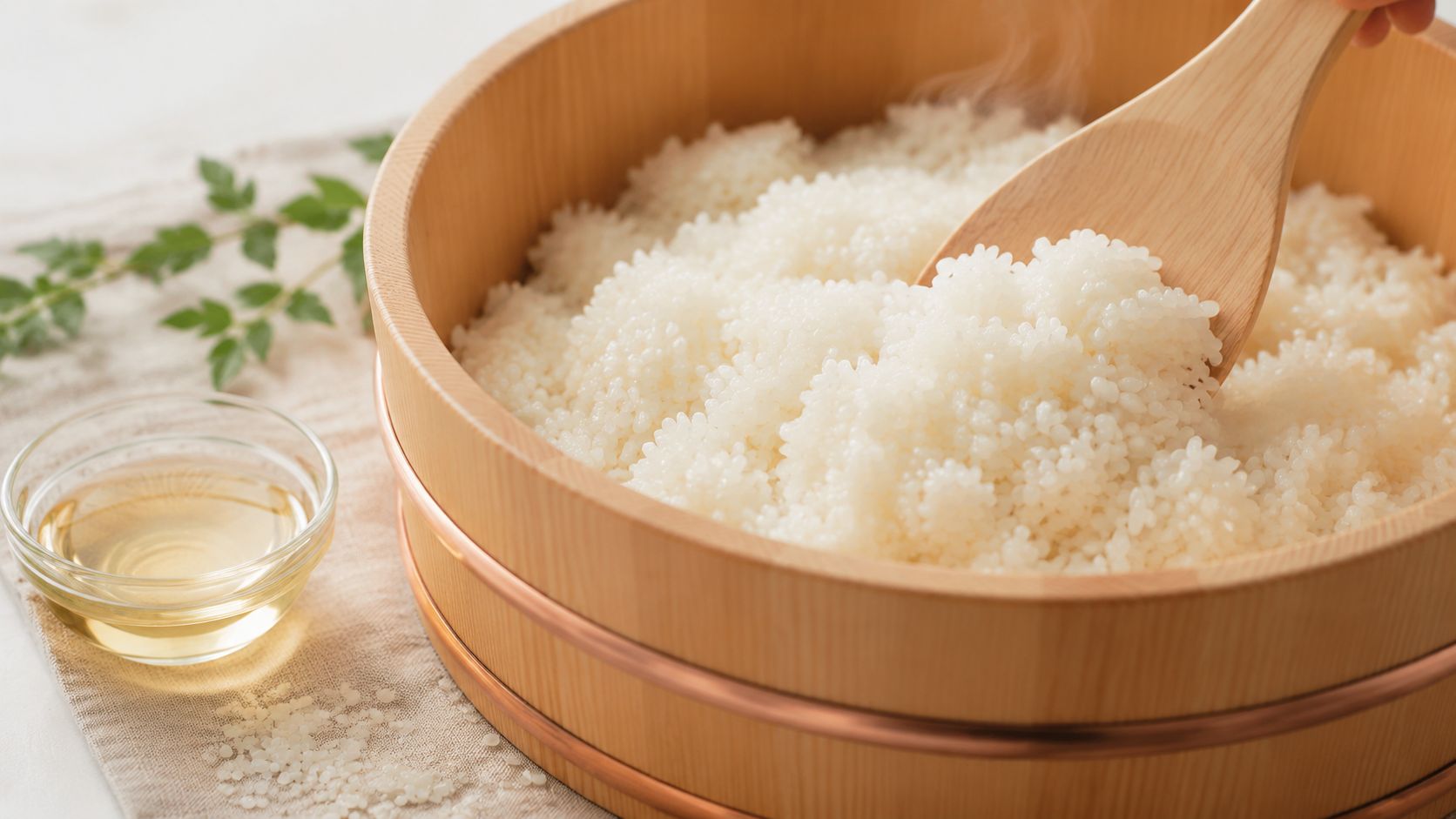
You've probably had this happen. The sushi filling is ready, the nori is on the mat, and the rice still doesn't feel right. It's either dull, too sticky, too sharp with vinegar, or missing that gentle sweetness and shine you get at a good Japanese restaurant.
That gap often comes down to seasoning, not just cooking. In authentic Japanese preparation, mirin isn't a random add-on. It's part of a broader seasoning logic that gives sushi rice a rounded flavor, a light gloss, and a more polished finish.
This guide focuses on mirin sushi rice from a practical cook's point of view. You'll learn how to choose ingredients properly, how mirin fits into sushi-su, the seasoned vinegar mixture, and how handling the rice matters just as much as what goes into it.
The Secret to Restaurant-Quality Sushi Rice at Home
Good sushi rice doesn't taste loudly sweet or aggressively sour. It tastes balanced. The grains hold together when you shape them, but they still stay distinct on the tongue. That's the standard most home cooks are aiming for, and it's absolutely possible without restaurant equipment.
The first correction I usually make is this. Stop thinking of sushi rice as plain rice with vinegar stirred in at the end. In Japanese cooking, sushi rice is a finished preparation with its own seasoning method, texture target, and cooling process. Mirin matters because it supports that balance instead of acting like a blunt sweetener.
A useful starting point is understanding that mirin has a long place in Japanese cooking. It's a centuries-old Japanese ingredient that evolved from earlier sweet sakes and is now treated as a staple flavoring in dishes such as teriyaki, yakitori, and sushi rice, where it's valued for sweetness, umami, and gloss, as explained in this history of mirin and its culinary role.
Good mirin sushi rice should look slightly glossy, smell clean and rounded, and feel light in the mouth rather than wet.
What makes sushi rice feel professional
Restaurant-quality rice usually comes from a few simple habits done carefully:
- Correct rice choice: Japanese short-grain rice gives you the cohesion sushi needs.
- Measured seasoning: The vinegar, sugar, salt, and mirin need balance.
- Timing: Rice must be seasoned while hot, then cooled properly.
- Handling: Mixing with a cutting motion prevents crushed, gummy grains.
Many home cooks focus only on the ingredient list. The better approach is to treat the rice as a technique. If you want a deeper look at the rice itself, this guide to Kokuho Rose rice and Japanese-style rice cooking is a helpful companion.
The role mirin actually plays
Mirin contributes sweetness, but that's not the full story. In sushi rice, it also helps round out the sharper edge of vinegar and adds a subtle sheen. That's why rice made with mirin often feels more complete, even when the difference seems small on paper.
If your sushi rice has ever tasted flat despite using decent vinegar and sugar, mirin may be the missing piece.
Choosing Your Ingredients The Japanese Way
The best mirin sushi rice starts before the pot goes on the stove. Ingredient quality shows up clearly in sushi because the seasoning is simple. There's nowhere to hide a poor rice choice or a harsh, overly sweet mirin substitute.

Start with Japanese short-grain rice
For sushi, use Japanese short-grain rice, often sold as sushi rice. It has the starch structure needed to hold shape without turning into paste when handled correctly. Long-grain rice won't give you the same compact but tender texture, and that difference is obvious in rolls, nigiri, and chirashi.
The grains should cook up plump and slightly glossy. If they look dry and separate like pilaf rice, you're using the wrong style.
Hon-mirin and mirin-style seasoning are not the same
Many recipes become too vague. They say “mirin” as if every bottle performs the same way. It doesn't.
Hon-mirin is traditional mirin, a fermented sweet rice wine used in Japanese cooking. Mirin-style seasonings, often labeled in ways that sound similar, usually aim to imitate that sweetness but don't deliver the same depth or finish. For sushi rice, that difference matters because the seasoning is exposed. You taste it directly.
Practical rule: If the rice seasoning is simple, choose the more authentic ingredient. The less you hide it behind sauces or frying, the more quality matters.
A good way to think about it is this:
| Ingredient | What it contributes to sushi rice | What to watch for |
|---|---|---|
| Japanese short-grain rice | Cohesion and proper sushi texture | Avoid long-grain substitutes |
| Mild rice vinegar | Clean acidity | Harsh acidity throws off balance |
| Sugar | Direct sweetness | Too much makes rice candy-like |
| Hon-mirin | Rounded sweetness, aroma, gloss | Mirin-style products can taste flatter |
Vinegar should be mild, not aggressive
Rice vinegar for sushi rice should support the rice, not dominate it. When the vinegar is too sharp, home cooks often overcompensate with extra sugar, and the result tastes heavy. A gentler rice vinegar makes it easier to build a seasoning that feels integrated rather than layered on top.
If you need a temporary substitute
Sometimes you're midway through prep and realize you're out of mirin. In that moment, a recipe support tool can be useful, especially if you're comparing pantry swaps and want something more systematic than random forum advice. The OrganizEat ingredient substitution tool is a practical place to check replacement options.
That said, for sushi rice, substitution is still a compromise. This is one of those dishes where using proper mirin is worth it. If you want a clearer breakdown of what mirin is and how it differs from similar seasonings, this overview of what mirin sauce is and how it's used is useful background.
The Perfect Sushi-su Ratio with Mirin
The heart of mirin sushi rice is sushi-su, the seasoning liquid mixed into freshly cooked rice. This is where many home versions go off track. The rice itself may be fine, but the seasoning is either too acidic, too sugary, or too weak to give the grains character.

A reliable benchmark comes from experienced sushi rice recipes that use 4 parts rice wine vinegar, 2 parts sugar, and 1 part sake or mirin, described in this sushi-su ratio guide. That formula works because each part has a distinct job. Vinegar brings brightness, sugar softens the edge, and mirin adds a more layered sweetness and a polished aroma.
Why this ratio works
This proportion doesn't make the rice taste like dessert. It keeps the vinegar in front, but not harshly so. Sugar fills the middle. Mirin gives the finish more roundness.
In practical terms, mirin helps prevent sushi rice from tasting one-dimensional. Sugar alone sweetens. Mirin sweetens and contributes character. That difference becomes clearer once the rice cools, because cold or cooled rice reveals imbalance very quickly.
Salt belongs in the conversation too
Many cooks focus only on vinegar and sweetness, but salt is part of the seasoning mix in many sushi rice preparations. It doesn't make the rice taste salty. It sharpens the other flavors and keeps the sweetness from feeling soft or vague.
If your rice tastes oddly flat even though the vinegar level seems right, the issue may be seasoning structure rather than quantity.
When sushi rice tastes balanced, no single ingredient announces itself first. You notice harmony before you notice sweetness or acidity.
Scaling without guessing
Another useful benchmark from sushi rice recipes is using about 1 part sushi-su for every 4 parts rice, as noted in this practical sushi rice seasoning reference. That helps when you're making a larger or smaller batch and don't want to reinvent the formula each time.
A smart way to adjust is to keep the structure the same and make only small personal changes. If you prefer a slightly softer sweetness, nudge the mirin side gently rather than flooding the rice with extra sugar. If the rice will be paired with rich toppings, you may want a slightly firmer vinegar edge.
The mistake is changing everything at once. Once the balance drifts, it becomes hard to tell what went wrong.
Cooking and Seasoning Your Mirin Sushi Rice
Technique decides whether your seasoning becomes absorbed elegance or a wet coating on the outside of the rice. Good ingredients can't rescue poor handling.

A standard sushi rice method involves rinsing the rice, soaking it for at least 30 minutes, cooking it for about 15 minutes, and then resting it for another 10 to 20 minutes before seasoning while still warm, as outlined in this step-by-step sushi rice method. Those timings aren't decorative. They help the grain cook evenly and prepare it to absorb seasoning properly.
The cooking stage
Start by rinsing the rice well. The goal is to remove excess surface starch, not to scrub the grains aggressively. If too much loose starch stays on the rice, the final texture becomes gluey before you even add seasoning.
Then soak the rice. This step helps the grains hydrate before heat sets their structure. Rice that skips soaking often cooks unevenly, which gives you a mix of firm centers and overly soft outer layers.
A simple sequence looks like this:
- Rinse gently: Wash until the water is much clearer.
- Soak properly: Give the grains time to hydrate fully.
- Cook without fussing: Avoid lifting the lid constantly.
- Rest after cooking: Let steam finish the interior texture.
Season while the rice is still warm
This is the step people rush or delay, and both mistakes hurt the result. Warm rice accepts sushi-su much more evenly than cool rice does. The seasoning spreads, the sharper alcohol notes soften, and the grains stay more cohesive.
Transfer the rice to a wide bowl. A traditional wooden tub is ideal because wood helps manage excess moisture, but any broad non-metal bowl works better than leaving the rice cramped in the cooker bowl.
Pour the seasoning over the rice gradually, not in one heavy spot. Then mix with a slicing or cutting motion. You're separating and coating the grains, not stirring porridge.
Kitchen cue: If the paddle is smashing down, you're pressing too hard. The motion should lift and cut, not mash.
A visual guide helps here because the movement is subtle:
Cooling creates the texture
Many online recipes underplay this point. Cooling isn't just about making the rice comfortable to touch. It shapes the final texture.
Some guides stress that sushi rice should be mixed gently, fanned, and cooled quickly to stay shiny and avoid becoming mushy, and one source points out that the key is drying the rice so the grains separate, as discussed in this practical note on sushi rice texture and shine. That's why fanning matters. It removes surface moisture while the seasoning settles in.
What the finished rice should feel like
Use your senses more than your timer at this stage.
- Look for shine: The grains should glisten lightly, not look wet.
- Check separation: The rice should mound together but still show individual grains.
- Smell balance: You want a rounded aroma, not a blast of vinegar.
- Touch for warmth: It should cool until only slightly warm before use.
If you plan to use it in simple rolls, hand rolls, or rice bowls, this is also the stage where a light finishing accent like nori komi furikake can inspire serving ideas, though classic sushi rice itself is usually left clean and unadorned.
Common Mistakes and Expert Fixes
The biggest misconception about mirin sushi rice is that any sweet cooking wine will do. It won't. Sushi rice is too exposed for rough substitutions. The seasoning sits directly on the rice, so shortcuts become obvious.
Another common point of confusion is whether mirin is necessary at all. Some recipes treat it as optional, and that's exactly why home cooks get mixed messages. A helpful summary of that problem appears in this discussion of whether mirin is necessary in sushi rice, which notes that many recipes don't clearly explain the tradeoff between flavor, sweetness, and alcohol content.
When the rice turns mushy
Mushy sushi rice usually comes from process errors, not from mirin itself.
Common causes include:
- Poor rinsing: Excess starch creates a gluey surface.
- Too much force while mixing: Pressing with the paddle crushes grains.
- Weak cooling: If the rice stays steamy and wet, the grains clump.
- Overloading with seasoning: Too much liquid sits on the exterior instead of being absorbed.
The fix is mechanical. Use less pressure, widen the bowl, and cool more actively. If the rice already feels heavy, spread it slightly and fan it longer rather than stirring more.
When the flavor feels off
If the rice tastes sharp, your vinegar is probably leading too hard. If it tastes flat and sugary, mirin may have been omitted or replaced poorly. More sugar doesn't solve that. It only makes the sweetness louder.
A few reliable corrections:
| Problem | Likely reason | Better fix |
|---|---|---|
| Sharp, stinging finish | Vinegar dominates | Soften the balance next time, don't just add more sugar blindly |
| Sweet but dull flavor | Sugar replaced mirin's role | Use proper mirin for a more rounded profile |
| Sticky clump instead of glossy grains | Mixing and cooling issues | Cut gently and fan more |
| Dry surface with weak seasoning | Rice cooled too much before seasoning | Season while still warm |
Optional doesn't mean equivalent
You can make sushi rice without mirin. But rice without mirin doesn't taste the same as rice with mirin. That's the point worth keeping clear.
If you want to compare how mirin and rice vinegar differ in flavor and function, this guide on rice wine vinegar vs mirin helps clarify why one can't replace the other.
Storing and Using Your Perfect Sushi Rice
Fresh sushi rice has a short window where it feels its best. The ideal texture is slightly warm or near body temperature, with the grains settled but still supple. That's when mirin sushi rice tastes most complete.

Best use on the day it's made
Sushi rice is best used the day you prepare it. Keep it covered so the surface doesn't dry out. A damp cloth or towel works well because it protects the grains without trapping too much condensation directly on them.
Refrigeration is usually a poor choice for finished sushi rice. The grains harden and lose the tender texture you worked to create. If you're holding it for a short period at room temperature, keep it protected and don't leave it exposed to moving air.
Good ways to use it
Mirin sushi rice isn't only for rolled sushi. It works beautifully for:
- Nigiri: The balanced seasoning supports fish without overpowering it.
- Maki rolls: Properly seasoned rice makes simple fillings taste better.
- Chirashi bowls: The rice becomes a full base, not just a carrier.
- Inari-style preparations: The sweetness sits naturally with seasoned tofu pockets.
If you're packing homemade sushi for a gathering, presentation matters too. For takeaway-style serving or organized transport, eco-friendly sushi combo containers are a practical reference for the kind of format that keeps pieces tidy and separated.
If you have leftovers
Leftover sushi rice rarely returns to ideal sushi texture once time passes. Instead of forcing it back into rolls, repurpose it. Fried rice is a sensible second use because the seasoning already gives the rice some character.
Fresh sushi rice is a finishing product, not a make-ahead staple. Treat it like something at its peak, not something waiting in storage.
The more carefully you handle the rice after seasoning, the more that gentle mirin gloss and balanced taste stay intact.
If you want authentic Japanese ingredients for mirin sushi rice, Buy Me Japan is a reliable place to shop. It ships directly from Japan and focuses on genuine Japanese food, beauty, and lifestyle products, which makes it easier to choose real pantry staples with confidence instead of guessing from lookalike labels.


Share:
Japanese Hydration Tech: Lip Balm Water Based Guide
Instant Japanese Coffee the Ultimate Buyer's Guide 2026