


If you’ve ever wondered what gives Japanese food its signature savory depth, the answer is almost always dashi. It's the quiet foundation of Japanese cooking, a simple yet profound broth that forms the flavor base for everything from miso soup to delicate noodle dishes. Making dashi at home is the first step toward unlocking authentic Japanese cuisine, and it's simpler than you think.
The best part? You can make this cornerstone of Japanese cuisine in your own kitchen in under 30 minutes. It's a surprisingly simple process of gently steeping high-quality ingredients like kombu (dried kelp) and katsuobushi (bonito flakes) in water to extract their natural umami.
What Is Dashi? The Heart of Japanese Cooking
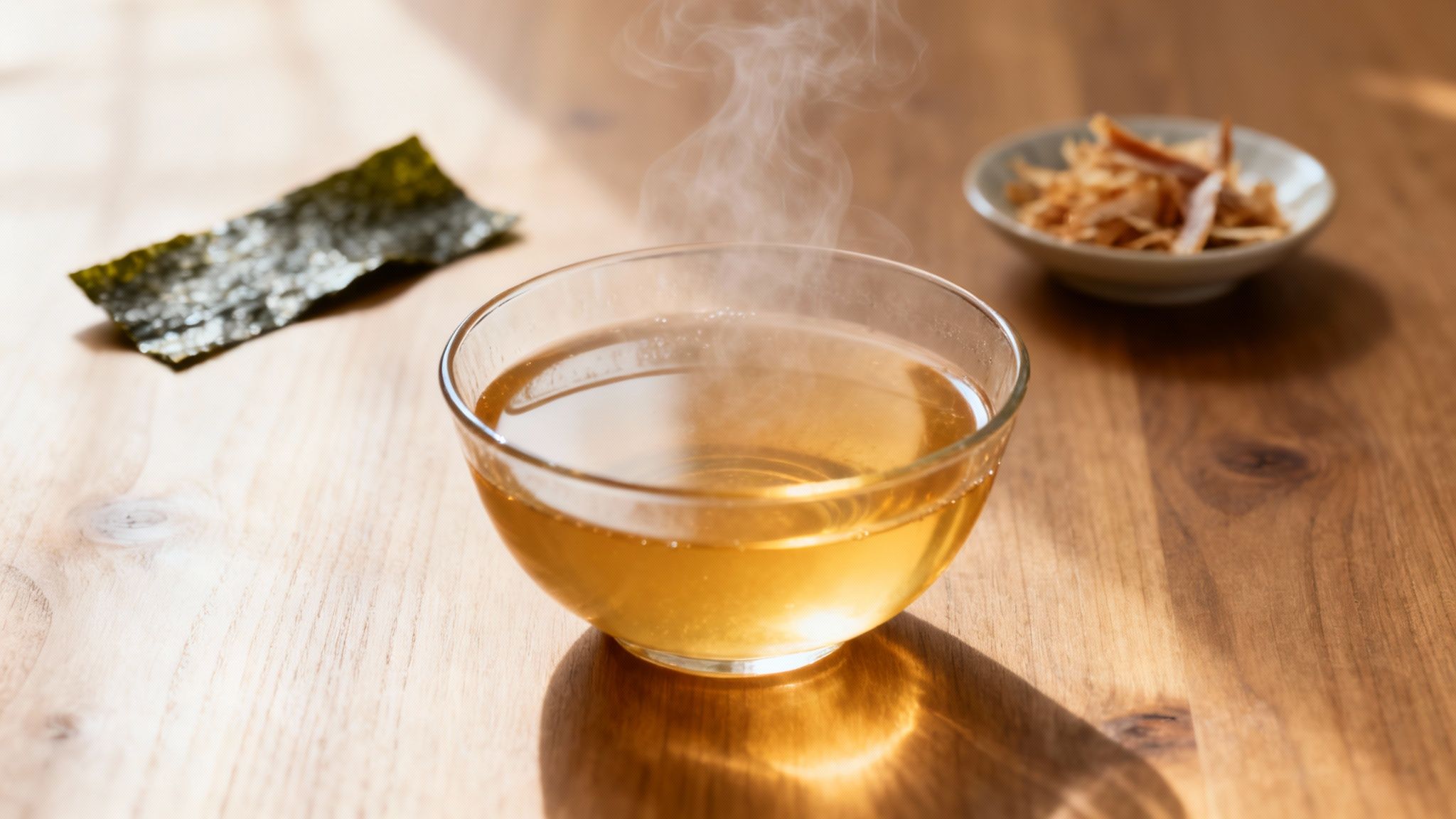
Dashi is the essential Japanese soup stock that serves as the primary source of umami—the satisfying, savory fifth taste. Unlike Western stocks that often bubble away for hours with bones and vegetables, authentic Japanese dashi is a study in speed and elegance. The goal is to extract pure, clean flavor from just a couple of high-quality ingredients like kombu and katsuobushi. This fundamental difference is key to understanding authentic Japanese flavors and the cuisine's focus on clarity and balance.
This homemade broth is the secret weapon for elevating your cooking. It provides a subtle yet complex base that enhances other ingredients without ever overpowering them. You’ll find it in a huge range of dishes:
- Soups: It’s the soul of miso soup and clear soups (suimono).
- Noodle Dishes: It forms the delicate broth for udon, soba, and ramen.
- Simmered Dishes: It’s the cooking liquid for nimono (simmered vegetables, tofu, or meat).
- Sauces: It’s a key component in dipping sauces like mentsuyu.
Dashi isn't meant to be the loudest flavor in the room. Instead, think of it as a foundational layer that brings everything else together, harmonizing and deepening the taste for a richer, more satisfying meal.
This guide will walk you through the simple techniques you need to create this liquid gold at home. Getting a handle on these fundamentals is the first real step on an incredibly rewarding culinary journey. To explore more foundational techniques, check out our guide on Japanese cooking basics.
Types of Dashi
Understanding the different types of dashi allows you to tailor the flavor foundation of your dish. While many variations exist, a few core types form the backbone of Japanese cooking.
Kombu Dashi
This simple, vegan dashi is made only from kombu and water. It has a clean, mild, and subtle umami flavor. Its gentle profile makes it perfect for delicate clear soups, steamed dishes, and poaching vegetables where you don't want to overpower the main ingredients.
Awase Dashi
This is the most common and versatile dashi, made by combining kombu and katsuobushi (bonito flakes). The glutamic acid from the kombu and the inosinic acid from the bonito flakes create a powerful umami synergy, resulting in a rich, complex, and well-rounded broth ideal for almost any Japanese dish, from miso soup to noodle broths.
Katsuo Dashi
Made only with katsuobushi, this dashi has a strong, smoky aroma and a more pronounced savory flavor. It's a quick alternative when you're short on time, as it skips the kombu soaking step and is excellent for noodle dipping sauces or dishes needing a robust, fragrant punch.
Other Dashi Variations
For more specialized flavors, you might also encounter Niboshi Dashi, made from dried baby sardines for a bold, rustic taste common in hearty miso soups, and Shiitake Dashi, a vegan option made from dried shiitake mushrooms that provides a deep, earthy umami perfect for simmered dishes.
Ingredients Overview
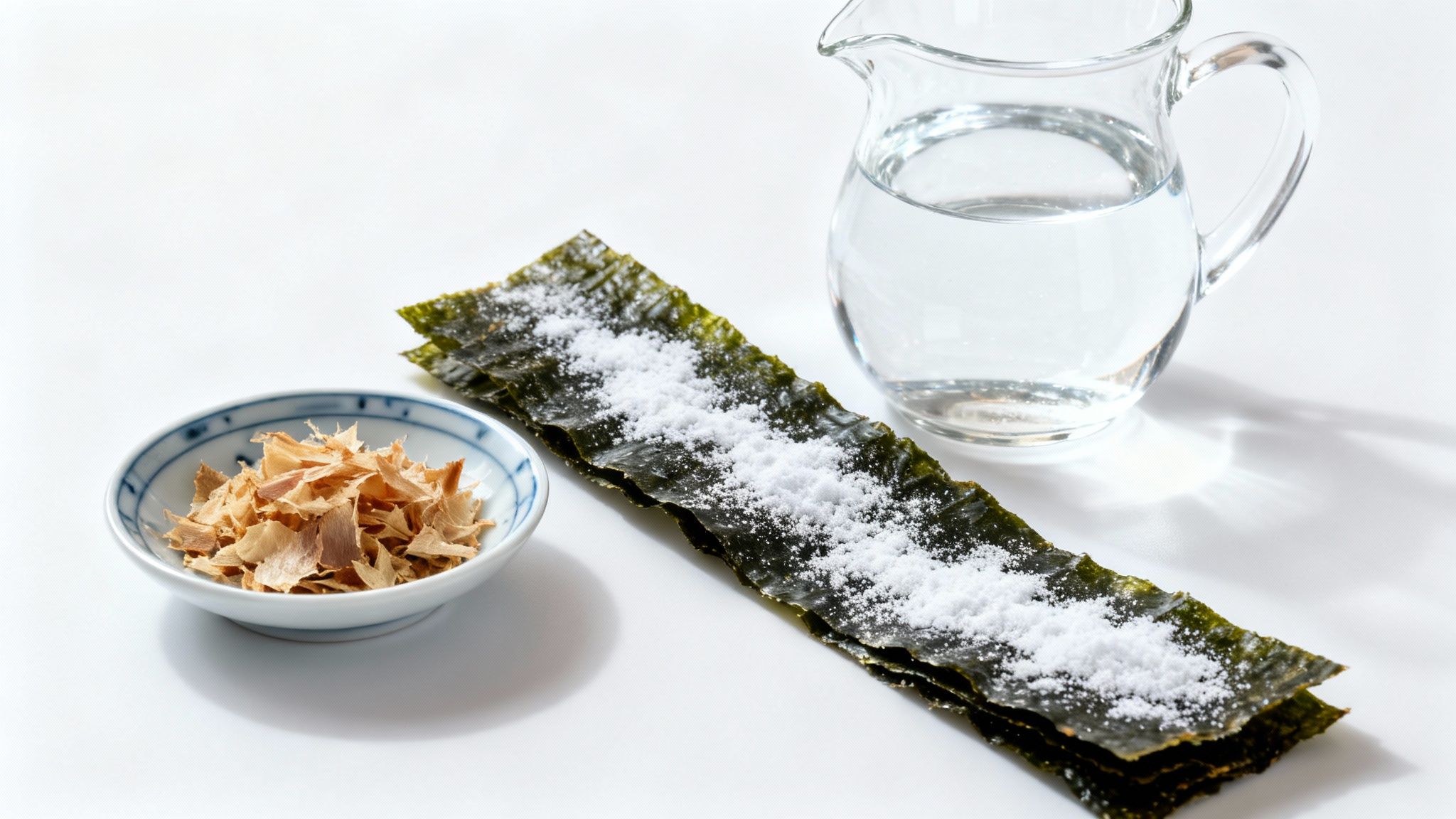
The incredible depth of flavor in dashi comes from just a few high-quality components. Getting these right is the most important step.
- Kombu (Dried Kelp): This is the primary source of deep, savory umami. Look for thick, dark green pieces. You may notice a fine white powder on the surface—this is mannitol, a natural source of umami, so do not wash it off aggressively. A gentle wipe with a dry cloth is all that's needed.
- Katsuobushi (Bonito Flakes): These delicate shavings of dried, fermented, and smoked bonito fish add a smoky, savory aroma and an intense flavor. Fresher flakes will provide a cleaner taste without any "fishy" off-notes. For excellent results, consider authentic Japanese brands like Ajinomoto. If you're interested in exploring more, you can learn about Japanese dried fish snacks.
- Water: Since dashi is a gentle extraction, start with cold, clean water. Filtered or soft mineral water is ideal, as it allows the subtle notes of the ingredients to shine without interference from chlorine or other impurities.
For a standard batch of awase dashi, a good ratio is 20 grams of kombu and 30 grams of katsuobushi for every 1 liter (about 4 cups) of water.
Step-by-Step Instructions: Basic Awase Dashi
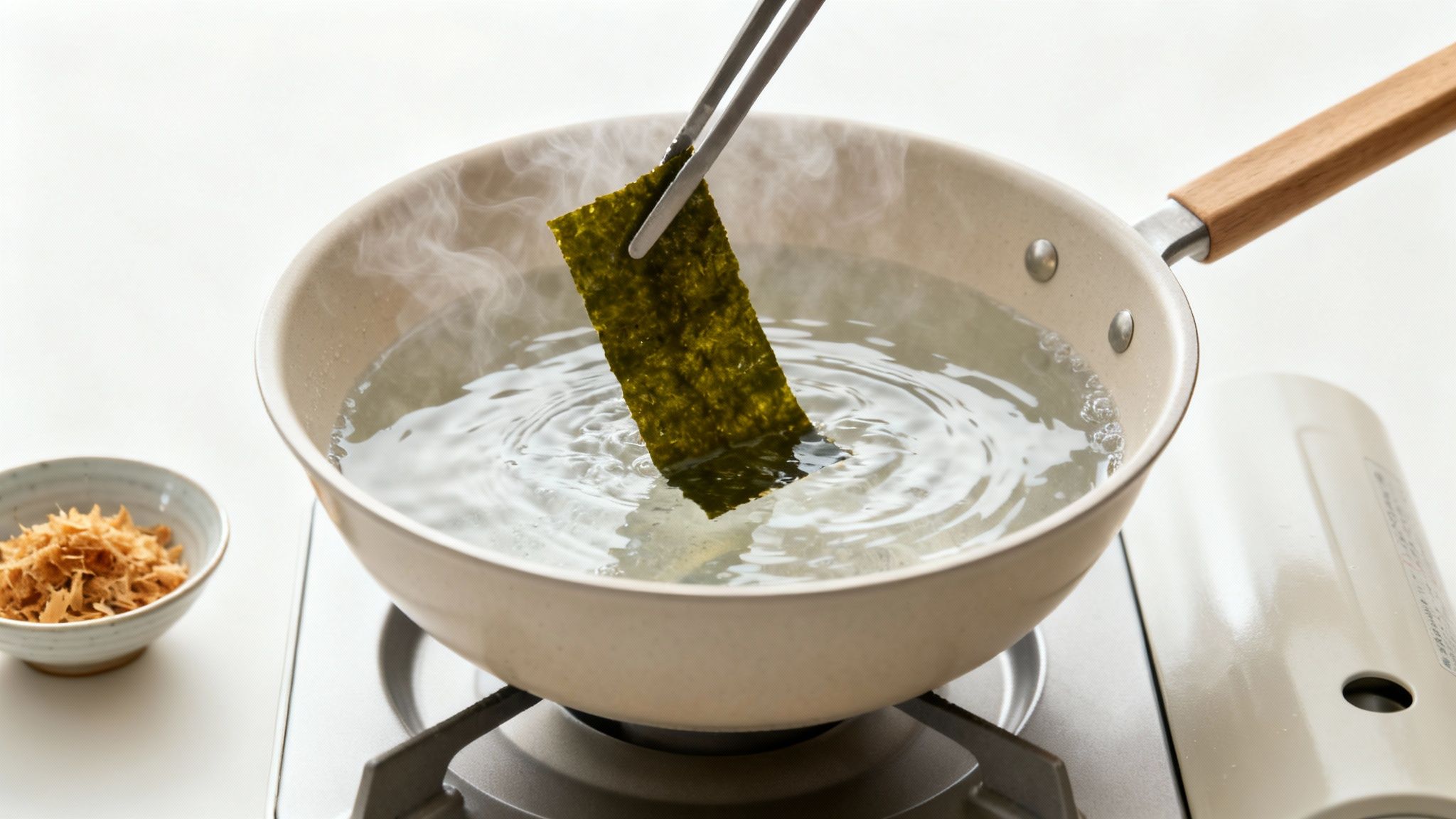
This classic method combines kombu and katsuobushi to create a golden broth bursting with synergistic umami. Using the right tools, such as quality saucepan sets, can help with the precise heat control needed for perfect extraction.
- Prepare the Kombu: Gently wipe any grit off the kombu with a dry cloth, being careful to leave the white umami powder (mannitol) intact.
- Cold Soak: Place the kombu in a saucepan with 1 liter of cold, filtered water. Let it soak for at least 30 minutes, or for a deeper flavor, soak it in the fridge for 4 hours or overnight (this is called the mizudashi method).
- Gentle Heating: Place the saucepan over low-medium heat. Slowly bring the water to a bare simmer. This should take about 10–15 minutes. Just as small bubbles begin to form around the edges of the pot, remove the kombu. Boiling kombu will make the stock bitter and slimy.
- Add Bonito Flakes: Once the kombu is removed, bring the water to a full boil, then immediately turn off the heat. Add the katsuobushi all at once.
- Steep and Strain: Let the bonito flakes steep undisturbed for 1–2 minutes, until they absorb water and sink. Strain the broth through a fine-mesh sieve lined with cheesecloth or a paper towel. Do not press or squeeze the flakes, as this will make the dashi cloudy and bitter.
The clear, golden liquid you are left with is ichiban dashi (first dashi), prized for its delicate and refined flavor.
Alternative Methods
While the traditional method yields superior results, sometimes convenience is key.
- Quick Dashi Method: For a faster version, bring water to a simmer, add bonito flakes, steep for one minute, and strain. This katsuo dashi is less complex but still provides a smoky, savory base.
- Kombu-Only Dashi (Vegetarian): For a clean, vegan broth, simply follow the cold soak and gentle heating steps for kombu, but do not add bonito flakes. This method is perfect for dishes where a subtle umami is desired.
- Using Dashi Powder: Instant dashi powders are a convenient option. Simply dissolve the powder in hot water according to package directions. While useful in a pinch, be aware that instant dashi often contains MSG and salt, resulting in a less nuanced and more aggressive flavor compared to homemade stock.
Common Mistakes to Avoid
A few simple mistakes can compromise the quality of your dashi.
- Boiling Kombu: This is the most common error. Boiling kombu releases bitter compounds and creates a slimy texture. Always remove it just before the water boils.
- Over-steeping Bonito Flakes: Leaving katsuobushi in the hot water for more than a couple of minutes will make the dashi taste overly fishy and can introduce bitterness.
- Reusing Kombu Incorrectly: After making your primary dashi (ichiban dashi), the leftover ingredients can be simmered again to make a secondary broth (niban dashi), which is great for stews or miso soup. Don't discard them after one use.
- Using Too Much Ingredient: While it may seem like more is better, overloading your dashi with kombu or katsuobushi can create an overpowering, unbalanced flavor. Stick to classic ratios for the best results.
How to Store Dashi
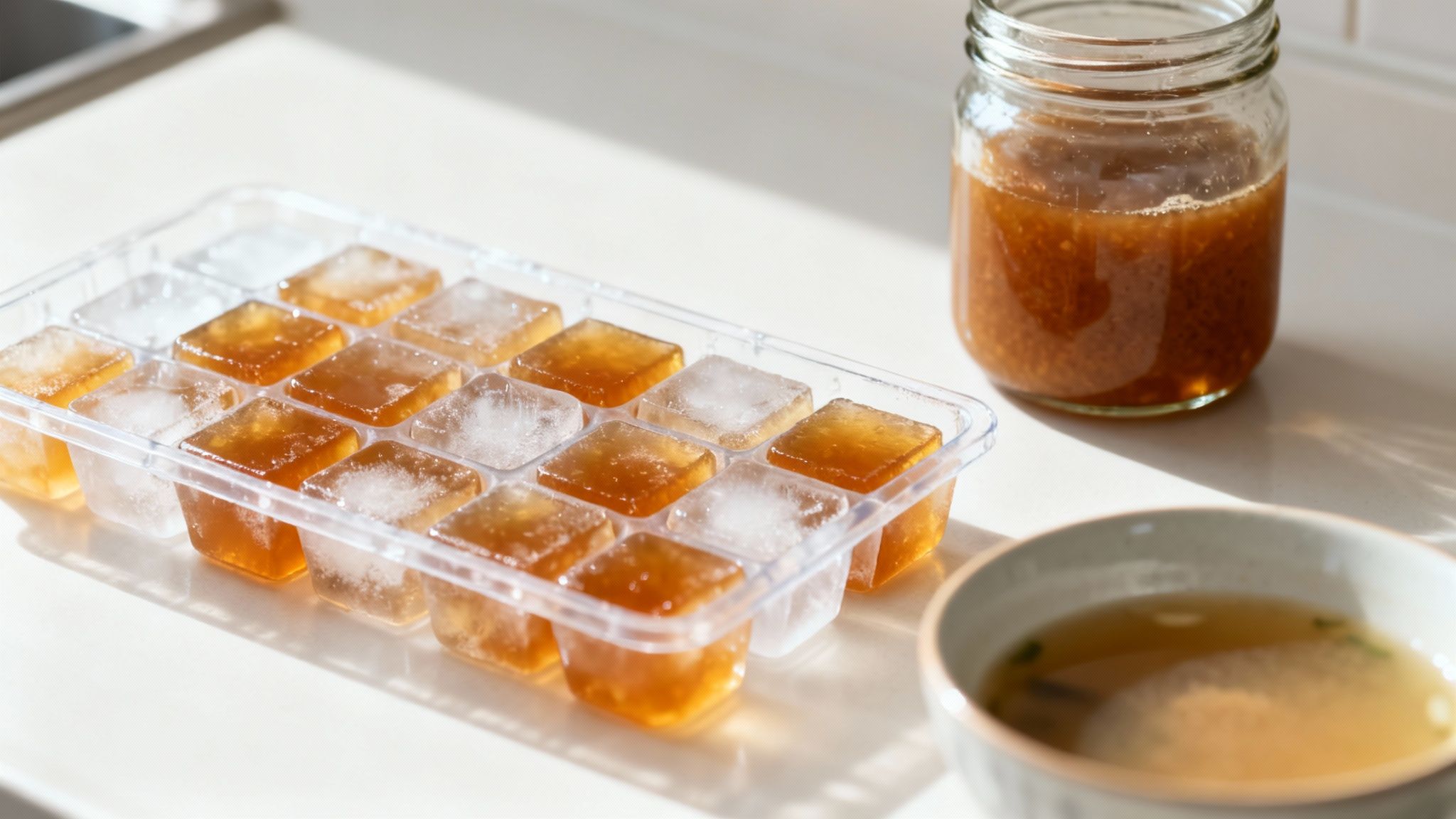
Fresh dashi is best, but it can be stored for later use.
- Refrigeration: Store fresh dashi in an airtight container in the refrigerator for up to 3-5 days.
- Freezing: For longer storage, pour cooled dashi into ice cube trays. Once frozen, transfer the cubes to a freezer-safe bag. They will keep for up to 3 months and provide perfectly portioned amounts of dashi for quick use.
How to Use Dashi
Having a stash of homemade dashi opens up a world of authentic Japanese cooking. It’s the foundational flavor for many iconic dishes.
- Miso Soup: The most classic application. Gently heat dashi with tofu and wakame, then dissolve in miso paste off the heat. For more miso options, you can elevate your dishes with low-sodium miso paste.
- Udon and Soba Broth: Combine dashi with soy sauce, mirin, and sake for a classic noodle soup broth. Discover how dashi forms the base for another iconic noodle dish in our article on the different types of ramen.
- Tamagoyaki: Add a tablespoon of dashi to beaten eggs for a flavorful and fluffy Japanese rolled omelet.
-
Simmered Dishes (Nimono): Use dashi as the braising liquid for vegetables, fish, or tofu to infuse them with a delicate, savory flavor.
Learn more about its classic use in our guide on all you need to know about Misoshiru Japanese soup.
Conclusion
Making dashi from scratch is a simple, quick, and transformative step for any home cook looking to explore Japanese cuisine. This foundational stock provides a clean, nuanced umami that instant powders cannot replicate. By mastering this basic technique, you unlock the secret to the authentic, balanced flavors that define Japanese cooking. We encourage you to try making homemade dashi—the difference in your dishes will be unmistakable.
Ready to make dashi that will truly transform your cooking? You need the best ingredients. At Buy Me Japan, we've curated a selection of premium kombu, katsuobushi, and other Japanese pantry essentials from trusted brands like Glico, Meiji, and Lotte. We also carry a wide range of Japan's best beauty products, from Shiseido Fino hair care to Hada Labo skincare, ensuring you can bring the best of Japan into your home.
Shop our Japanese food and drink collection today and taste the difference real quality makes.



Share:
A Guide to Authentic Japanese Rice Snacks
What Is Toner Used For? A Guide to Skincare Benefits