


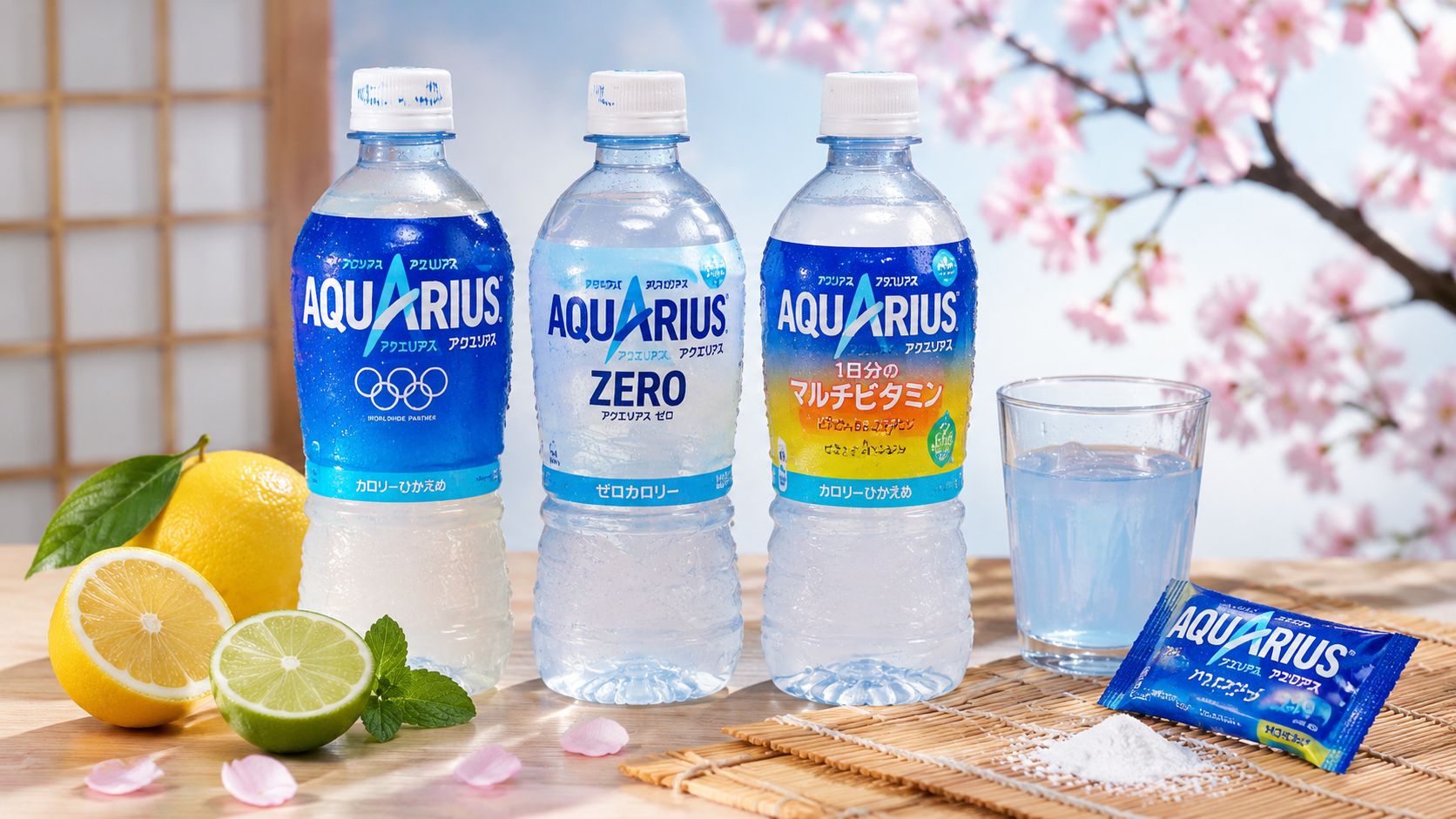
You finish a workout, step out into humid air, or wake up feeling a bit drained, and suddenly plain water doesn't sound like enough. If you've spent time in Japan, you've probably seen Aquarius in convenience stores, vending machines, train kiosks, and supermarket shelves. It's one of those drinks that locals reach for without thinking twice.
For international shoppers, the confusing part isn't what Aquarius is called. It's understanding what kind of drink it is, how it compares with Pocari Sweat, and whether the bottled version or powder sachets make more sense. That matters even more if you want the authentic Japanese version rather than a generic sports drink substitute.
Aquarius has deep roots in Japan. It's manufactured by The Coca-Cola Company in Japan and built around a simple purpose: helping the body rehydrate with fluid and electrolytes in a form that feels light and easy to drink. If you're curious about ingredients, flavors, everyday use in Japan, and how to choose the right format, this guide walks through it in plain language.
Introduction
In Japan, Aquarius is one of those drinks people know from childhood. It isn't treated like a niche fitness product. It's part of everyday life, especially during hot weather, after exercise, or when someone wants something gentler than a sugary soft drink.
That broad use makes it different from how many overseas shoppers first picture a sports drink. Aquarius is not only for athletes. In Japan, it sits in a practical middle ground. It's a hydration drink people buy because they want something refreshing, light, and familiar.
A lot of readers also want clarity on one specific point: how the Japanese Aquarius drink compares with Pocari Sweat. Both are major names in Japan, but they don't feel identical when you drink them. Taste, texture, sweetness, and buying format all shape the choice.
Aquarius makes the most sense when you stop thinking of it as a gym-only product and start thinking of it as a daily Japanese hydration staple.
This is also where Japanese authenticity matters. A drink made for the Japanese market often has its own positioning, flavor profile, and product lineup. That's why people looking for Aquarius from Japan usually want the domestic version, not just any bottle with the same brand name.
What Is the Aquarius Drink from Japan
Aquarius is a Japanese sports drink with a long, established place in the local market. More specifically, Aquarius is a brand of sports drink manufactured by The Coca-Cola Company in Japan, and it is a major isotonic beverage. Along with Pocari Sweat, it is one of the two dominant brands in Japan's sports drink sector, which had a production volume of 1.44 million kiloliters in 2023 according to the Aquarius overview on Wikipedia).

What isotonic means in simple terms
“Isotonic” sounds technical, but the practical idea is simple. It refers to a drink designed to help fluid move into the body efficiently while also supplying electrolytes. That's why Aquarius is positioned differently from plain water and differently from standard soda.
If you're shopping across categories, this fits into a wider consumer shift toward beverages with clearer function and ingredient communication. For a broader look at that trend, Pep Tea's piece on adaptogen and probiotic transparency is a useful read.
Why Aquarius became so visible in Japan
Aquarius has lasted because it solves a common everyday need. Japan's summers are humid, sports culture is strong, and vending-machine convenience shapes what people buy. A drink that feels light, easy, and familiar can become part of the daily routine very quickly.
A few traits explain its staying power:
- Japanese market identity: It's produced in Japan for Japanese consumers, not just imported into the market.
- Mainstream availability: It's the kind of drink you expect to find in convenience stores and vending machines.
- Clear purpose: People understand it as a hydration drink, not as a novelty beverage.
- Strong category position: It sits at the center of Japan's sports drink culture, alongside one other major rival.
That local credibility matters. When people talk about the Aquarius Japanese drink, they're talking about a product shaped by Japan's own drinking habits, climate, and preference for functional beverages that don't feel overly heavy.
The Science Behind Aquarius Ingredients
Aquarius was developed to rehydrate the body in a more functional way than plain water alone. The key point is the electrolyte content, especially sodium. According to Coca-Cola Japan's Aquarius product information, the beverage is formulated with electrolytes, notably sodium, which serves as the key mineral content responsible for rapid hydration. It was developed in Japan in 1983, and its inclusion accelerates rehydration compared to plain water.
Why sodium matters
People often hear “electrolytes” and assume that means something complicated. In this case, the useful takeaway is straightforward. Sodium helps the body retain and move fluid more effectively, which is why it matters in a hydration drink.
That doesn't turn Aquarius into medicine. It explains why many people find it more suitable than plain water after sweating or feeling depleted.
Practical rule: If you're choosing between plain refreshment and hydration support, the sodium content is part of what gives Aquarius its purpose.
Calories and drinking feel
Aquarius also has a defined energy profile. It contains 18 kcal per 100ml according to the product listing at GLTJP. That helps explain why it tends to feel lighter than many soft drinks while still offering some energy.
A few ingredient-related points help first-time buyers understand the experience:
- Electrolyte function: Sodium is the main mineral feature tied to hydration support.
- Moderate calorie level: At 18 kcal per 100ml, it sits in a space that feels functional rather than dessert-like.
- Non-carbonated format: There's no fizzy heaviness, which many people prefer after exercise or in hot weather.
- Designed drinking ease: It's made to go down smoothly when you're thirsty.
Bottles and powder serve different needs
The ingredient story also connects to format. Aquarius comes as ready-to-drink liquid and as powder sachets for home mixing. Coverage often skips the practical difference, but that's exactly what many buyers want to know.
Ready-to-drink bottles are simple. Open and drink. Powder sachets are more flexible if you want portability before mixing, easier storage, or a home stock. If you enjoy learning about other functional Japanese drinks beyond sports beverages, this guide to Aojiru green juice is another helpful reference point.
A Guide to Aquarius Flavors and Formats
One reason Aquarius stays interesting is that it isn't frozen in time. In April 2025, Aquarius received its first major flavor revamp in its history, and the renewed product became available nationwide in Japan starting on April 21, 2025, as reported by Gigazine's coverage of the Aquarius renewal. That tells you something important about the brand. Even a familiar Japanese staple still gets updated when tastes change.

Common flavor directions you'll see
The classic Aquarius profile is light, clean, and easy to drink. Depending on where you shop, you may also see versions such as Zero or other line extensions. The exact selection can vary, but these are the broad patterns shoppers usually notice:
- Original Aquarius: Best for people who want the standard Japanese sports drink experience.
- Zero-type options: A practical pick for shoppers who want the Aquarius taste direction in a lower-calorie style.
- Special editions or refreshed versions: These matter to repeat buyers who follow what's currently sold in Japan.
If you like exploring regional and everyday Japanese beverages more broadly, this article on non-alcoholic Japanese drinks gives useful context.
Ready-to-drink versus powder
Many guides on this subject remain too vague. Aquarius comes in bottled liquid and powder sachets, and the choice depends more on lifestyle than on brand loyalty. Current coverage often fails to explain the practical differences between the formats, even though powder sachets are widely available in Japan for home mixing and offer a different value proposition, as noted by Japanese Products Blog's Aquarius powder overview.
Here's a simple comparison:
| Format | Best for | Main strength | Main trade-off |
|---|---|---|---|
| Ready-to-drink bottle | Daily convenience, travel day use, immediate drinking | No prep needed | Heavier to carry in bulk |
| Powder sachet | Home use, storage, packing for later | Compact and flexible | You need water and mixing |
Which format fits your routine
Choose bottles if you want the easiest possible experience. This is the version most closely tied to the everyday Japanese convenience-store habit. It's also better for first-time buyers who want to understand the taste without any mixing variables.
Choose powder if you want practicality. It's easier to keep on hand, easier to pack, and often better suited to people who think ahead about hydration rather than buying one bottle at a time.
Bottles suit impulse and convenience. Powder suits planning.
Aquarius vs Pocari Sweat A Detailed Comparison
When shoppers ask about the Aquarius Japanese drink, the next question is almost always about Pocari Sweat. That makes sense. In Japan, these two names define the category for many people.

The easiest way to understand the difference
The simplest comparison is sensory. Aquarius usually comes across as lighter and cleaner. Pocari Sweat is often perceived as fuller, with a slightly more distinct salty-sweet impression.
Neither choice is automatically better. They just create different drinking experiences.
Here's a practical side-by-side view:
| Point of comparison | Aquarius | Pocari Sweat |
|---|---|---|
| Overall impression | Lighter, crisp, easygoing | Fuller, more pronounced |
| Taste direction | Often described as cleaner and softer | Often described as slightly saltier and rounder |
| Best fit | People who want a refreshing daily hydration drink | People who prefer a stronger sports-drink identity |
| Typical use feeling | Casual, all-purpose, easy to sip | More obviously “rehydration” in character |
How people choose in real life
In Japan, the choice is often situational rather than ideological. Someone coming out of baseball practice might grab either one. Someone browsing a convenience store on a sticky summer afternoon may choose based purely on mood.
A few common patterns help:
- Choose Aquarius if you dislike drinks that feel too heavy or too salty.
- Choose Pocari Sweat if you want a flavor that signals “sports drink” more clearly.
- Choose by context if you're pairing the drink with daily errands, commuting, or casual outdoor time rather than intense exercise.
That's one reason both brands remain strong. They overlap, but they don't taste identical enough to make one irrelevant.
A cultural difference in how they're used
What international shoppers sometimes miss is that Japanese people don't treat these drinks as highly specialized products. They often buy them in ordinary moments. After school club activities, after a long walk in summer, after a bath, or when they just want something gentler than soda.
That everyday use is part of why the comparison matters. You aren't only choosing a hydration formula. You're choosing a taste profile that fits your routine.
For a quick visual comparison, this video is a useful reference.
So which one should you buy
If you're new to Japanese sports drinks, Aquarius is often the easier starting point. Its profile tends to feel approachable for people who want refreshment first and sports-drink function second.
If you already know you enjoy drinks with a stronger salty-sweet identity, Pocari Sweat may suit you better. But if your goal is to understand what many shoppers mean by a light, everyday Japanese hydration drink, Aquarius is a strong first purchase.
How and When to Drink Aquarius in Japan
In Japan, Aquarius shows up in ordinary life more than many visitors expect. You'll see it after school sports, in office workers' bags during humid weather, and in vending machines where people want something refreshing without carbonation.
That daily usefulness is part of the appeal. It isn't locked to the gym. People drink it after walking in summer heat, after spending time outdoors, or when they want something easy on the stomach compared with richer beverages.
Everyday Japanese drinking moments
A few situations come up again and again:
- After exercise: This is the obvious one. School clubs, running, gym sessions, and casual sports all fit.
- During hot weather: Japan's humid summer makes light hydration drinks especially appealing.
- After bathing or onsen: Many people want a cool drink that feels restorative rather than heavy.
- When feeling run-down: Some people prefer this style of drink when plain water feels too plain.
If you're dealing with hot weather in general, HYDAWAY has a practical roundup of effective ways to beat the heat that pairs well with this topic.
Why the Japanese version matters
Authentic Japan-market drinks can be harder to find abroad than people expect. Even when the brand name exists internationally, the exact Japanese lineup, packaging, or variants may not be easy to access. That's especially true for buyers who want the domestic feel of what's sold in Japan rather than an export-market equivalent.
This is similar to other iconic Japanese drinks that are simple in concept but hard to find in the exact local version overseas. If you've ever been curious about another classic Japanese bottle format, this guide on how to open a Ramune shows how everyday beverage culture in Japan often has its own quirks.
In Japan, Aquarius fits daily life because it's convenient, familiar, and easy to drink in moments when people want hydration more than indulgence.
Where to Buy Authentic Aquarius Online
Finding authentic Japanese Aquarius online can be less straightforward than it sounds. You may find listings with unclear sourcing, limited flavor selection, or packaging that doesn't look like the domestic Japanese version. For buyers outside Japan, that uncertainty is often the biggest obstacle.

What to check before buying
A good listing should answer practical questions clearly. If it doesn't, pause before ordering.
Use this checklist:
- Japanese market origin: Look for confirmation that the product is sourced from Japan.
- Format clarity: Make sure the listing says whether you're buying bottled drink or powder sachets.
- Packaging photos: Domestic Japanese labeling helps you identify the intended market.
- Seller reliability: Look for stores that specialize in Japanese products rather than random mixed inventory.
The same basic logic applies in offline settings too. If you're curious how beverage availability is managed in workplaces and shared spaces, the Vendmoore Enterprises vending guide gives a useful look at how drink selection decisions are made more generally.
Questions smart buyers usually ask
People often want answers to these points before they order:
-
Is this the Japan version?
Check the product description and images carefully. -
Am I buying a ready-to-drink item or a mix-at-home item?
This matters a lot for shipping weight and daily use. -
Will the flavor match what I had in Japan?
Domestic sourcing gives you the best chance of getting the familiar local product.
For shoppers comparing specialist stores, this guide to the best online Japanese stores is a practical starting point.
Frequently Asked Questions About Aquarius Drink
Is Aquarius an energy drink
No. Aquarius is a sports drink made for hydration support, not an energy drink. People sometimes confuse the categories because both can be sold in convenience stores and vending machines, but Aquarius is associated with fluid and electrolyte replenishment rather than the stimulant-heavy image people usually associate with energy drinks.
Can you drink Aquarius every day
That depends on your routine and preferences, but many people in Japan treat it as an everyday beverage rather than a special-occasion product. The important thing is to match it to how you live. If you're active, spending time in hot weather, or want a lighter non-carbonated drink, it can fit naturally into your rotation.
Is the powder version worse than the bottled one
Not necessarily. The difference is more about convenience and use style than “good” versus “bad.” Bottles are easier when you want instant hydration. Powder makes more sense if you want a compact option to store or carry before mixing.
Does Japanese Aquarius taste different from sports drinks sold outside Japan
Often, yes in a practical sense, because drinks made for the Japanese market are shaped by local taste preferences and local product lineups. Even when an overseas shopper finds something with a similar name, it may not deliver the same everyday Japanese drinking experience.
What should I try if I like Japanese drinks beyond sports beverages
If Aquarius sparked your interest in practical Japanese drink culture, it's worth exploring other everyday categories too. For example, this guide to instant Japanese coffee shows a very different side of Japan's convenience-focused beverage world.
Conclusion
Aquarius has earned its place in Japan because it does a simple job well. It's a Japanese sports drink with a light drinking feel, clear hydration purpose, and strong everyday presence. For many people, that makes it easier to approach than heavier or sweeter alternatives.
If you're deciding between Aquarius and Pocari Sweat, think about taste first. If you're deciding between bottle and powder, think about routine. And if you want an authentic Japanese experience, choosing an authentic Japan-market product makes a real difference.
If you want to shop Japanese products with confidence, Buy Me Japan is a reliable place to start. It ships directly from Japan and focuses on authentic Japanese goods across beauty, snacks, food, and lifestyle categories, which makes it useful for shoppers who care about genuine Japan-market products rather than vague marketplace listings.


Share:
Find the Best Essence for Face from Japan
Japanese Skincare Revolution: Your 2026 Guide