


You curl your lashes before work, apply mascara carefully, and catch your reflection later to find the curl has relaxed. If your lashes grow straight or point downward, the problem may not be your technique alone. The formula has to dry in a way that supports the curl, and too much wet product can pull it back down.
The useful way to choose Japanese mascara for straight lashes is to look beyond “waterproof” on the label. Preparation, film formation, formula weight, and brush shape all affect whether a curl lasts. Mascara can help hold a curl, but it generally works best on lashes that have already been curled.
Why Straight Lashes Need a Different Mascara Strategy
During the pandemic, face coverings put more attention on the eyes. Mascara accounted for 39.88% of Japan's eye-makeup market in 2020, and Japanese market reporting describes mascara as benefiting from heightened interest in eye makeup while masks were common. As outings resumed after 2021, the category recovered. Estimates put Japanese mascara sales at approximately USD 650 million in 2023, with another estimate reporting 80 million units sold that year. These figures describe mascara overall, not the share made for straight lashes, but they show that eye makeup remained commercially significant beyond the mask-wearing period.
That shift had a practical side. When the eyes became a more visible focus, curl, lift, and definition mattered alongside color and volume. For someone whose lashes lose their bend soon after application, mascara isn't just a decorative finish. It's a product expected to support a shape.
The curl is made before the mascara sets
An eyelash curler bends the lash temporarily. Mascara then coats it, and as the formula dries, the film around the lash helps hold that shape. It functions like hair setting spray, supporting a style you've already created rather than shaping straight lashes on its own.
Formulation analysis identifies acrylate- and urethane-based film formers as contributors to drying, wear, and curve retention. Waxes add structure and help control how the product spreads, but a formula that deposits too much weight can work against lift (mascara viscosity and formulation analysis).
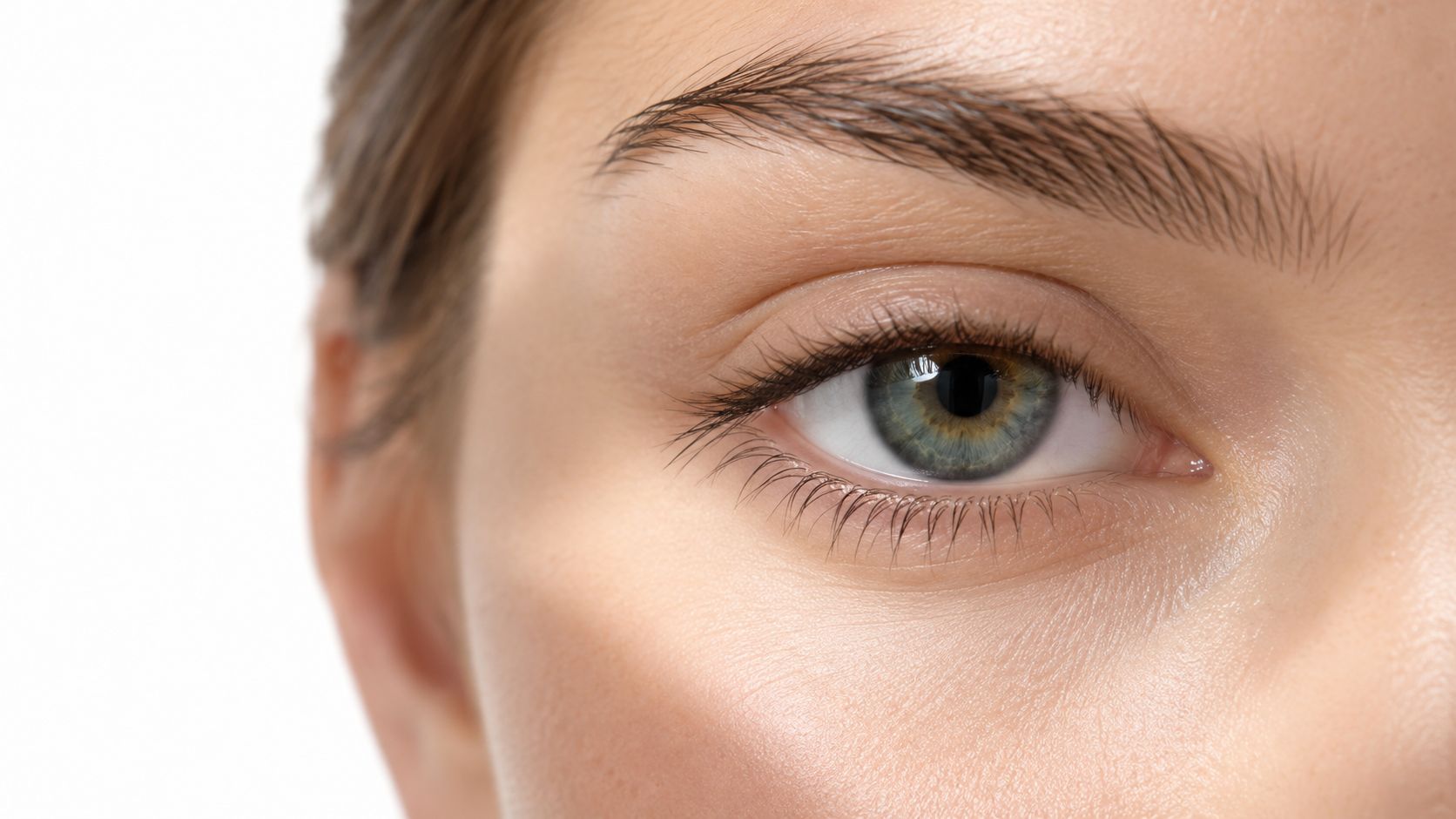
Straight lashes tend to spring back toward their natural position, while gravity and humidity can further challenge a fresh curl. A useful formula needs to set after application without leaving so much product on the lashes that its weight bends them down.
That's why “curl mascara” is best understood as a product designed to support a prepared curl. The label alone can't tell you how it'll behave on your lashes. Look at the formula's feel, how quickly it sets, the amount the brush deposits, and whether the curl still looks lifted after the mascara has dried.
Film-Type, Waterproof, and Hybrid Formulas Compared
For straight lashes, “waterproof or washable?” is only part of the choice. What matters is how much product the formula leaves behind, how its film sets, and whether it stays comfortable to remove.
A film-type mascara forms a coating that typically comes away with warm water. A waterproof mascara is designed to resist water and may be a better fit when humidity, tears, or oily lids are concerns. Hybrid formulas aim to balance wear and easier removal, but the exact behavior depends on the product. Don't assume that every formula in one category performs the same way.
A patent-described mascara system gives typical viscosity ranges of approximately 10–60 Pa·s for washable formulas and 10–70 Pa·s for waterproof formulas. It describes film-forming polymers at about 0.1–20% by weight (patent-described mascara system). These are broad formulation ranges, not a product-by-product ranking or a promise of performance.
Higher viscosity can make application feel more controlled, but it may also leave more material on each lash. Extra mass can pull against the curl before the film has set. A slim, quick-setting coat is often more useful than a thick, wet layer.
| Formula Type | Best For | Removal |
|---|---|---|
| Film-type | Those who prefer a warm-water removal routine | Usually loosens with warm water |
| Waterproof | Conditions where water or oil resistance matters | Often benefits from a dedicated eye-makeup cleanser |
| Hybrid | Those looking for a balance of wear and removal comfort | Follow the product's directions |
If you're comparing formula labels and removal styles, this guide to Heroine Make mascara types can help you understand the distinctions. Then consider your own routine: Is your climate humid? Do your eyelids get oily? Do you wear contact lenses or prefer a simple wash-off?
Wand Shapes and Brush Geometry That Actually Lift
The wand is a tool for controlling where the formula lands and how much. A brush that suits one lash line may feel awkward on another, even when the mascara itself is a good match.
- Slim combs help separate short or sparse-looking lashes and can make lower-lash application more precise. Use a light, steady sweep.
- Curved brushes can follow the lash line and help target the outer lashes. Turn the curve toward the area you're coating.
- Ball-tipped wands are useful for reaching small clusters or inner-corner lashes. Use the tip to add product selectively rather than dragging it across the full lash line.
- Dense brushes tend to deposit more formula and can create a fuller look. They require a careful hand if your lashes droop under extra weight.
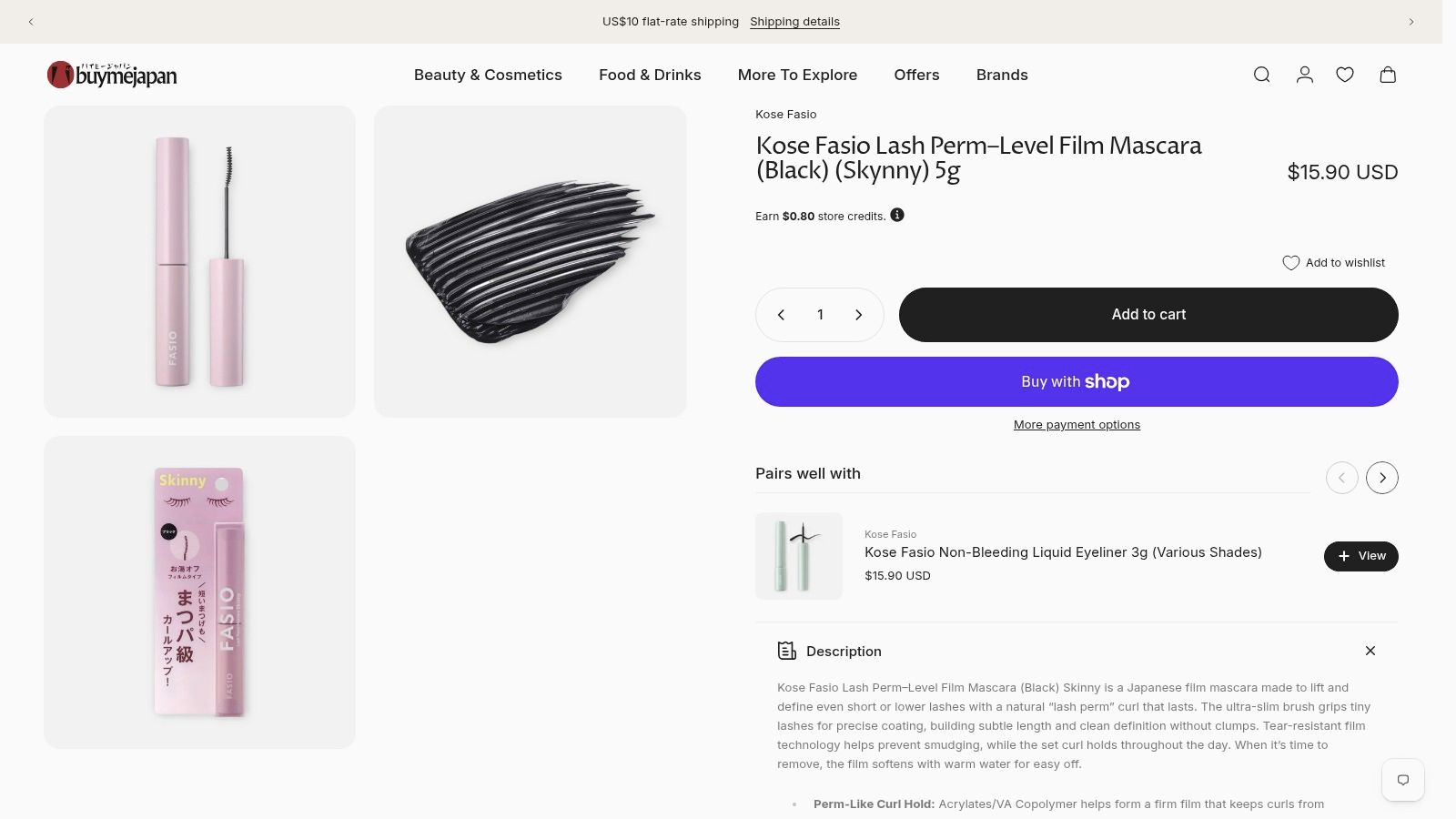
A very slim wand, sometimes described as “skynny,” can be useful when you want to coat lashes with less product per pass. For instance, the catalog listing for Kose Fasio Lash Perm Level Film Mascara Black Skynny gives shoppers a specific example of that narrow-brush style. A slim brush doesn't guarantee a better curl, but it can make controlled application easier.
Brush geometry matters because the mascara is still wet when it first touches the lashes. If a wand deposits a heavy coat at once, the lashes may begin to sag before the film supports them. A smaller brush can help you work from root to tip in a thinner layer, especially around short corner lashes.
Treat brush shape as part of the formula choice, not an afterthought. The same mascara can feel and perform differently depending on how its wand distributes product.
Preparing the Lash Before the Wand Touches It
Start with the curler, not the mascara. Japanese eye-makeup guidance recommends placing the curler as close to the roots as comfortably possible, squeezing gently but firmly for about three seconds, then easing the pressure and moving the curler a few millimeters upward (Japanese eyelash-curling guidance).
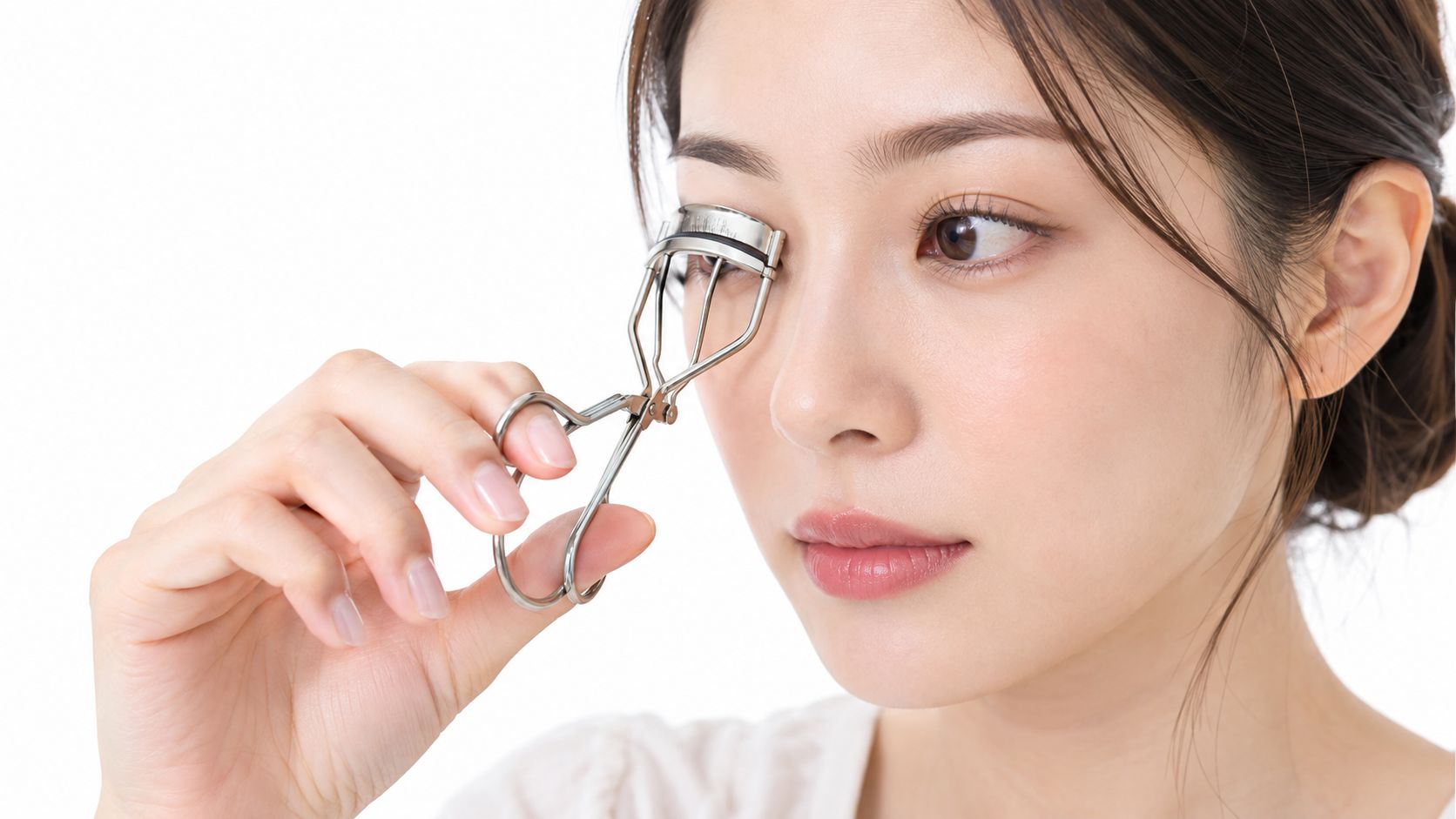
Curler cue: Hold gently at the roots for about three seconds. Release pressure slightly before shifting the curler upward, so you build a curve rather than pinching one hard bend.
That small upward repositioning helps distribute the curl along the lash rather than leaving a sharp kink at the base. The curler should feel secure, not painful. If you're choosing one, this guide to the Koji eyelash curler provides a place to learn about the tool and its use.
After curling, give yourself a moment to check that the lashes are clean and dry. An oily or wet surface can make application less predictable. A primer or thin base coat may be part of your routine, but it's not essential for everyone; if you use one, apply it lightly and let it settle before mascara.
A common source of droop is adding more wet product before the first layer has set. The first coat needs time to form a supporting film. If you immediately brush on another heavy layer, you can disturb that film and add weight while the lashes are still vulnerable.
This short demonstration can help you visualize the tool motion before practicing:
Application Technique That Preserves the Curl
A careful first coat usually does more for straight lashes than fast layering. Begin at the root, wiggle the brush lightly at the base, then pull straight through to the tips. Japanese eye-makeup guidance recommends this motion because continuing to wiggle through the entire sweep can make lashes stick together.
Keep the pressure light. You're coating the lash, not pushing it upward with the wand. Let the brush do the work, and avoid repeatedly combing through a section while it's wet.
Build in thin layers
Use a thin coat, wait, thin coat rhythm. The first layer should dry before you add more. A second light coat can build definition without leaving one thick, heavy mass, while repeated wet strokes may encourage clumps or pull the curl down.
Keep the root cleanly coated: Start at the base, then sweep through to the tips. Avoid painting the underside of the lash as a routine step, since extra product there can add weight and work against the curl.
Before applying mascara to each eye, wipe excess product from the wand. A blob at the tip or a heavily loaded brush can deposit more than a straight lash can comfortably support. If you want a more complete eye look, this guide to applying eyeliner properly covers a related part of the routine.
Don't pump the wand in and out of its tube. That movement can introduce air into the product and may make it dry out sooner. Instead, draw the wand out smoothly, remove excess, and apply a deliberate first coat. Give it time to set before deciding whether you need more.
Choosing a Formula for Your Climate and Lifestyle
Your daily conditions help narrow the choice more effectively than a simple waterproof-versus-washable rule. Consider humidity, eyelid oiliness, exercise, contact-lens use, and how you want to remove your makeup.
In a humid environment, or if your eyelids tend to get oily, you may prefer to try a waterproof or hybrid formula. These may resist moisture or oil better, but they can be less convenient to remove. If easy removal matters most, a film-type option may suit your routine, though its behavior in humidity can differ from a more water-resistant formula.
Think through the trade-offs this way:
- Humid weather or exercise: Consider whether water resistance matters more than a quick rinse.
- Oily lids: Look for a formula that stays tidy on your own skin, and check for smudging through the day rather than judging only the fresh application.
- Contact lenses: Favor comfortable wear and a formula that doesn't visibly flake into the eye area. Stop using any cosmetic that causes discomfort.
- Removal preference: If you dislike rubbing or using a separate cleanser, a warm-water-removable formula may be more practical.
“Just go waterproof” leaves out the weight-and-removal trade-off. A formula that holds up well in heat may take more effort to remove, while a lighter formula may feel simpler at night but need more careful testing in humid or oily conditions.
A practical decision is to start with the problem you most want to solve. If curl loss in damp weather is your main frustration, prioritize wear resistance. If comfort and easy removal matter more, start with a lighter-removal option and apply a restrained coat. The right choice is the one that fits your conditions and your removal routine, not a label alone.
Debunking the All-Day Lift Promise
Mascara can help hold a curl, but it shouldn't be treated as a substitute for curling straight lashes. A 2025 study involving seven panelists found that mascara alone produced less durable curl than combining an eyelash curler with mascara. The study also identified humidity, formula type, and application technique as factors in curl retention, with performance commonly declining after roughly two to four hours (panel study on mascara and curl retention).
That finding is a useful check on claims that a mascara can create dramatic lift from scratch. In practice, the product usually helps preserve a bend made by the curler. If your lashes start straight, preparation and a quick-setting, not-too-heavy application are part of the result.
A July 2026 development report from KOSÉ describes a specific formula that maintained the shape and curl angle of artificial eyelashes for 24 hours, with human-lash testing also confirming curl retention over the same period. The report further states that treated lashes kept an upward curl after prolonged exposure to continuous steam (KOSÉ curl-retention development report). That's a result for one development under its testing conditions, not evidence that every Japanese mascara will perform that way.
When you assess a product, look for results that clarify what was tested. Useful details include whether the lashes were artificial or human, how the curl angle changed over time, how the formula behaved around steam or oil, and whether the test describes a specific product rather than a broad category.
A meaningful performance claim tells you what was tested and under what conditions. “All-day lift” alone doesn't tell you how the product will behave on your lashes.
The same practical standard applies to other long-wear makeup: performance is easiest to judge when you know the conditions and the removal routine. For a related look at setting products, see this guide to Japanese setting sprays.
Removing Curl-Hold Mascara Without Losing Lashes
Good removal is part of choosing a formula. A mascara that stays put but makes you scrub at the lash line may not be a comfortable fit for your routine. Film-type formulas generally loosen with warm water, while waterproof formulas may be easier to remove with an oil-based or dedicated eye-makeup cleanser. Check the directions for the product you use.
Be gentle around curled lashes. Rubbing hard or pulling can stress the hairs, particularly where they bend. Instead of wiping back and forth, soften the mascara first, then slide it away with light pressure.
A gentler removal sequence
- Press: Wet a soft pad or cloth with the remover that suits your mascara, then rest it gently over the closed eye.
- Hold: Give the product a moment to loosen the coating. Don't tug at the lashes while the mascara is still firm.
- Slide: Move the pad downward along the lashes with light pressure. Use a fresh area if product remains, rather than scrubbing.
- Cleanse: Follow your cleanser's directions and rinse or wipe away residue without pulling at the lash line.
If you use an oil cleanser, this guide to Kose Softymo cleansing oil types can help you understand the range of cleansing textures and formats. Follow the current product directions, and avoid getting cleanser in your eyes. If a product causes discomfort, stop using it.
The core routine is simple: prepare the curl, choose a fast-setting formula that suits your climate and skin, and give each coat time to dry. Mascara is most reliable as a curl-holding layer, not a tool that creates a bend on its own. That's why a measured curler technique and light application matter as much as the tube you choose.
For international shoppers, Buy Me Japan offers a curated selection of authentic Japanese products sourced through official suppliers in Japan, with tracked shipping and secure payments. If you're ready to compare options, explore the Buy Me Japan mascara collection.

Share:
Heroine Make Mascara Types: A Practical Buyer's Guide