


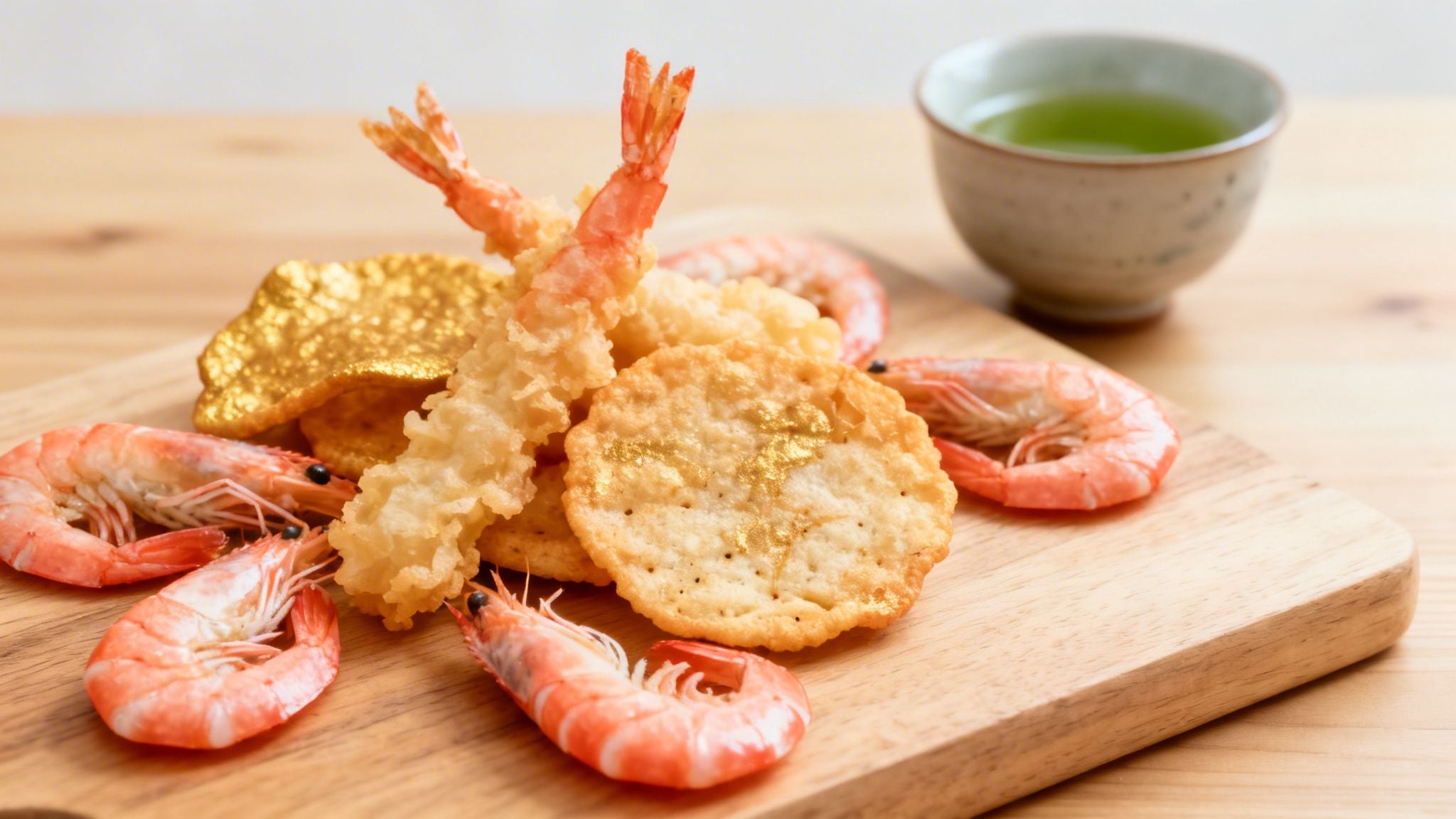
A friend once handed me a bag of shrimp crackers from Japan and said, “Try these before you judge them.” I expected the usual light prawn crisp, but the first bite was deeper, toastier, and much more savory than anything I had tried outside Japan.
That difference is why japanese shrimp crackers deserve a closer look. In Japan, these snacks are not just a generic seafood crisp. They sit at the meeting point of regional food culture, careful ingredient choices, and snack-making craft.
If you have ever wondered what ebi senbei are, why some taste intensely shrimpy while others are light and airy, or how to buy authentic versions online without ending up with a disappointing substitute, this guide will help. The goal is simple: make the world of real Japanese shrimp crackers easy to understand and enjoyable to shop for.
Introduction What Are Japanese Shrimp Crackers
Japanese shrimp crackers are usually called ebi senbei or ebisen in Japanese. “Ebi” means shrimp, and “senbei” means cracker. That sounds simple, but the category is wider than many people expect.
Some ebi senbei are thin, firm, and packed with roasted shrimp flavor. Others are lighter and crispier, more like a modern snack food. A few are made with rice, some with wheat dough, and some with potato starch. This variety often confuses first-time buyers. They assume all shrimp crackers are the same.
They are not.
What makes them different
The easiest way to understand them is to think about two questions:
- How much real shrimp is in the cracker
- What gives the cracker its texture
A cracker made with whole minced shrimp will taste very different from one that relies on a lighter dough and a more snack-like crunch. Neither style is “wrong.” They offer different experiences.
Why authenticity matters
For international shoppers, the big challenge is that many products sold abroad under labels like “prawn crackers” or “shrimp chips” do not reflect what people in Japan expect from ebi senbei. Authentic Japanese versions often have a clearer shrimp aroma, a more balanced salty-sweet profile, and a texture that feels more deliberate.
A good ebi senbei should taste like shrimp first, not just salt and oil.
That is why knowing a little history and a few product clues makes such a big difference when you shop.
The Rich History of Japanese Shrimp Crackers
A traveler in old coastal Japan might have been offered something simple after the day’s catch was sorted. Shrimp mixed into dough, pressed thin, then cooked until fragrant and crisp. That small, practical food eventually grew into one of Japan’s most recognizable savory snacks.
Japanese shrimp crackers have roots in fishing communities, where using local seafood well mattered. Over time, what began as a way to turn shrimp into a shelf-stable food also became a regional craft. That history helps explain why authentic ebi senbei from Japan often feel more deliberate than many export-market “shrimp crackers,” which are usually designed for a louder crunch or heavier seasoning instead of clear shrimp flavor.

From local food to regional identity
Aichi Prefecture became especially important in this story, particularly coastal areas with steady access to shrimp. Over many years, local makers refined the process and turned shrimp crackers into a specialty people associated with the region itself. In Japan, that regional link matters. A snack is often not just a snack. It can also represent a place, a craft tradition, and a local ingredient people are proud of.
That is one reason premium ebi senbei are often bought as gifts or souvenirs. They carry the same kind of meaning that a well-known local pastry or cheese might carry in other countries.
One long-established name is Bankaku, a maker closely tied to the history of shrimp crackers in Aichi. Its continued presence helps show how ebi senbei stayed connected to craftsmanship even as Japan’s snack market modernized.
Why this history matters to international buyers
This background clears up a common misunderstanding. Many shoppers outside Japan meet shrimp crackers first through mass-market “prawn crackers” or “shrimp chips.” Those products can be enjoyable, but they are not always a good guide to what traditional Japanese ebi senbei are trying to do.
Authentic Japanese versions usually aim for balance. You notice the shrimp, then the toastiness, then the seasoning. The flavor works like a well-made broth. It has layers, not just salt. If you want a clearer sense of that savory depth, this short guide to umami flavor in Japanese food helps explain why good shrimp crackers taste so satisfying.
That difference matters when you shop from abroad. A bag with English packaging and a generic shrimp image may deliver a familiar snack-food crunch, while a product from Japan by brands such as Calbee or Kameda often reflects a more specific Japanese style, whether traditional or modern. For buyers using services like Buy Me Japan, knowing that history makes it easier to spot products that come from an authentic Japanese snack tradition rather than an overseas imitation.
Ebi senbei became popular not only because they were tasty, but because they preserved the flavor of shrimp in a form people could share, gift, and remember.
That long path from coastal cooking to trusted Japanese snack shelves is a big part of what makes the authentic versions worth seeking out.
Exploring the Main Types of Ebi Senbei
When people say “shrimp crackers,” they may be talking about very different products. Some are traditional and concentrated in flavor. Others are designed for easy snacking and broad appeal.
This visual summary helps show that the category is broader than many shoppers expect.

Traditional style
Traditional ebi senbei usually lean harder into seafood flavor. They are often flatter, firmer, and more aromatic. In products associated with makers such as Bankaku, the point is not just crunch. The point is the shrimp itself.
These crackers work well for people who enjoy roasted, savory snacks and want something that feels closer to a regional specialty than a convenience-store chip.
Modern style
The category changed in a major way when Calbee launched Kappa Ebisen in 1964, described by Calbee as a hugely popular snack made by kneading fresh shrimp into wheat dough in its company product history. This modern style is lighter, more airy, and easier to eat by the handful.
That launch mattered because it helped define the familiar “shrimp snack” format many people now recognize across Asia.
A related guide to https://buymejapan.com/blogs/japanese-skincare-and-beauty/japanese-rice-snacks is useful if you want to place ebi senbei within the broader world of Japanese crunchy snacks.
Premium ingredient-driven styles
There is also a premium segment that focuses closely on ingredient quality and texture. One example from the verified data is North Colors Pure Japanese Shrimp Crackers, which use 100% sweet shrimp from Haboro, Hokkaido and potato starch. The product description explains that this supports a lighter, crisper texture, as noted on the North Colors product page.
This is the sort of product that helps explain why one shrimp cracker can feel delicate and clean, while another feels dense and roasted.
Here is a quick side-by-side view.
Japanese Shrimp Cracker Styles at a Glance
| Feature | Traditional Style (e.g., Bankaku Yukari) | Modern Style (e.g., Calbee Kappa Ebisen) |
|---|---|---|
| Base idea | Highlights shrimp flavor as the main event | Built for casual, easy snacking |
| Texture | Firmer, denser, more structured | Lighter, crispier, more airy |
| Typical base | Often associated with senbei-style craft | Wheat dough in the Kappa Ebisen style |
| Flavor impression | Toasted, savory, concentrated | Snackable, balanced, familiar |
| Best for | Tea time, gifting, tasting slowly | Everyday snacking, sharing, parties |
A short video can make those differences easier to picture in real life.
How to choose your style
If you are new to japanese shrimp crackers, use this shortcut:
- Choose traditional style if you want a stronger seafood character and a more distinctly Japanese gift-snack feel.
- Choose modern style if you like crispy, repeatable snacking and want something easy to share.
- Choose premium regional styles if ingredients matter to you and you want to taste how different shrimp types and starches shape the final result.
The best starting point depends less on price and more on what kind of eater you are.
What Goes Into Authentic Shrimp Crackers
A lot of flavor differences come down to ingredients. This is the part many shoppers skip, but it explains why one cracker tastes flat and another tastes layered.

Whole shrimp changes the taste
Some premium crackers use more than just shrimp meat. The verified product information for Namban Ebi Senbei says they use whole minced shrimp, including heads and tails, which contributes extra umami and aromatic compounds during production, as described on the Namban Ebi Senbei product page.
That matters because different parts of the shrimp bring different flavor elements. When a product includes more of the shrimp, the taste usually feels deeper and more complete.
The base matters too
Shrimp is only part of the story. The starch or flour in the dough shapes the bite.
A few common examples:
- Rice-based crackers often feel more like classic senbei, with a firmer bite.
- Wheat-based styles can be lighter and more uniform.
- Potato starch versions can turn out especially crisp and airy.
This is why two products can both say “shrimp crackers” on the package and still eat differently.
If you enjoy the denser side of Japanese crackers, this guide to https://buymejapan.com/blogs/japanese-skincare-and-beauty/rice-crackers-with-seaweed offers another useful comparison point.
How they are made
The process is usually simple in concept, even if the craft takes skill:
- Shrimp is prepared. It may be minced, dried, pasted, or blended depending on style.
- The shrimp is mixed with a starch or dough base.
- The mixture is shaped and cooked, often by baking, roasting, or frying.
- Seasoning finishes the flavor, sometimes with salt, kelp, bonito, or mild sweetness.
If the ingredient list emphasizes real shrimp and the product style highlights texture, you are usually looking at a more characterful cracker.
That is the practical takeaway for buyers. Better ingredients do not just sound nicer on paper. They usually show up clearly in aroma, aftertaste, and crunch.
How to Serve and Store Your Crackers
A good shrimp cracker is easy to enjoy straight from the bag, but a few simple habits make the experience better.

Easy ways to serve them
In Japan, crackers often show up as a small pleasure rather than a big event. That means you do not need a complicated setup.
Try them with:
- Green tea for a calm afternoon snack. The tea helps balance saltiness and lets the shrimp aroma stand out.
- A cold Japanese beer if you prefer something savory and casual.
- A snack plate with mixed rice crackers, nuts, or seaweed snacks when friends visit.
- Soup or salad on the side if you want contrast between crisp and soft textures.
Traditional styles are nice when served on a small plate instead of eaten from the package. It slows you down a little and makes the flavor easier to notice.
Storage matters more than people think
The main enemy of shrimp crackers is moisture. Once opened, they lose their crispness quickly if left exposed.
Use these basic rules:
- Seal them tightly after opening.
- Move them to an airtight container if the package does not reseal well.
- Keep them away from heat and humidity.
- Avoid the refrigerator unless the product specifically says to refrigerate. Cold storage can introduce moisture when the crackers return to room temperature.
If your crackers taste dull, check the texture first. Even a good ebi senbei loses part of its appeal when it softens.
Serving tip for gifting
If you bought a premium Japanese product as a gift, serve a few pieces at a time rather than opening everything at once. That keeps the rest fresh and makes the packaging feel part of the experience.
A Simple Recipe for Homemade Shrimp Crackers
Making shrimp crackers at home will not perfectly copy a commercial Japanese product, but it is a fun way to understand the basic idea. You will taste how shrimp, starch, and drying time affect the final crunch.
What you need
Use simple ingredients you can find in many supermarkets:
- Raw shrimp, peeled
- Potato starch or rice flour
- A little salt
- A small amount of sugar if you like a gentle balance
- Neutral oil if you plan to fry, or parchment paper if you plan to bake
A food processor helps, but you can chop the shrimp finely by hand if needed.
A beginner-friendly method
- Blend the shrimp into a sticky paste.
- Mix in your starch and seasonings until you get a workable dough.
- Shape the dough thinly. Thin pieces crisp more easily.
- Let the slices dry a bit before cooking. This step improves texture.
- Bake or fry until crisp and lightly colored.
If you bake them, expect a drier, more cracker-like finish. If you fry them, the texture will usually puff more.
What beginners often get wrong
The biggest mistake is making them too thick. Thick pieces stay chewy in the middle.
Another common issue is under-seasoning. Shrimp crackers need enough salt to bring the seafood flavor forward, but not so much that they just taste salty.
Try adjusting one thing at a time:
- Make one batch thinner.
- Make another batch with a little more starch.
- Test baked versus fried.
That small experiment teaches you a lot about why professionally made ebi senbei are so satisfying.
For more approachable home cooking ideas from Japan, this collection of https://buymejapan.com/blogs/japanese-skincare-and-beauty/easy-japanese-recipes-quick-delicious-dishes-for-every-night is a good next step.
Why this is worth trying
Even if your homemade version looks rustic, you will come away with more respect for authentic versions. You will notice how much technique goes into controlling crispness, shrimp flavor, and shape.
And once you have made a batch yourself, reading product descriptions becomes easier. Terms like rice-based, whole shrimp, or light crisp texture start to mean something concrete.
Your Guide to Buying Authentic Shrimp Crackers Online
Many international shoppers often get stuck at this point. They know they want Japanese shrimp crackers, but search results often mix authentic Japanese products with generic imports or unrelated “shrimp chip” styles.
According to this article on finding Japan-style shrimp crackers abroad, many international consumers specifically look for real Japanese brands like Calbee or Kameda and struggle to find reliable sellers that can handle authenticity and international shipping clearly. That matches what many shoppers experience in practice.
What to look for on the product page
A useful listing should make a few things easy to identify:
- Brand origin. Look for known Japanese snack brands rather than vague store-brand wording.
- Product style. Is it a rice cracker, a wheat-based shrimp snack, or a premium regional senbei?
- Ingredient clues. Listings that mention real shrimp, regional sourcing, or a distinct texture are usually more informative than generic “seafood snack” descriptions.
- Package photos. Clear Japanese packaging often helps you verify what you are buying.
Red flags for international buyers
Some listings sound “Japanese-inspired” without being a product people in Japan would recognize. Others use broad terms like prawn cracker while giving almost no information about maker, ingredients, or country of sale.
That does not always mean the product is bad. It does mean you may not be getting the authentic experience you were searching for.
A practical buying route
If you want direct access to Japanese snack brands, one route is browsing curated Japan-based retailers such as Buy Me Japan, which ships Japanese products directly from Japan and carries snack brands including Calbee and Kameda. It is also helpful to read category guides like https://buymejapan.com/blogs/japanese-skincare-and-beauty/japanese-food-products-online before choosing.
A few examples relevant to this topic are the Seven Eleven Spicy Miso Shrimp Crackers and Famimaru Shrimp and Salt Rice Crackers available on the site. Products like these are useful because they show the range inside the category, from convenience-style crunch to more classic rice-cracker territory.
The safest purchase is usually the one that tells you exactly what the product is, who made it, and how it fits into Japanese snack culture.
That approach reduces surprises and helps you buy with confidence.
Conclusion Your Next Favorite Japanese Snack
Japanese shrimp crackers are easy to underestimate. They look simple, but behind that crunch is a long history, a real regional tradition, and a surprising range of styles.
Some lean traditional and roasted. Some are light and snackable. Some use whole shrimp for deeper flavor. Once you know what to look for, the category stops feeling confusing and starts feeling exciting.
This is what makes authentic Japanese shrimp crackers so appealing. They offer a small, approachable taste of Japan that still carries craftsmanship and local identity. You do not need expert knowledge to enjoy them. You just need to know that not every shrimp cracker on the market is aiming for the same thing.
If you choose carefully, you get more than a salty snack. You get the texture, aroma, and savory balance that make ebi senbei feel distinctly Japanese.
If you want to explore authentic Japanese snacks with more confidence, Buy Me Japan offers a practical starting point for browsing products shipped directly from Japan, including familiar snack brands and harder-to-find everyday favorites.

Share:
Tobiko vs Masago What Is the Real Difference?
How to Open a Ramune Bottle The Right Way