


You're standing at a supermarket chiller with a pack in your hand. It says kani, it looks like crab, and the price looks reasonable. Is it real crab meat, or is it something made to taste like crab?
That confusion is normal, and it's not your fault. The word on the front rarely tells the whole story. The species name and the ingredient list do, and they change what you're buying in flavor, protein, sodium, and storage. Once you know where to look, the label takes about thirty seconds to read with confidence.
What Kani Means and How It Differs From Kanikama
Say a shopper picks up bright orange and white sticks labeled kani for a salad. She expects crab, gets home, and finds a mild, slightly sweet, bouncy stick that shreds into neat strands. It's pleasant, but it isn't crab leg meat. That mismatch is the core confusion to clear up first.
In Japanese, kani (かに) means crab. It's a broad word, not one species. The CKBK reference entry for kani lists common commercial categories including tarabagani (king crab), kegani (horsehair crab), and zuwaigani (snow crab), which is why a precise label should name the species alongside kani.
Kanikama is different. It's a crab-style fishcake made from surimi, a paste of white fish that's formed, colored orange on the outside, and flavored to imitate crab. Think of a menu where a veggie burger sits beside a beef patty. Both can go in a bun, but the ingredients, texture, and nutrition aren't the same. Kanikama sits beside crab meat in the same way.
Real Kani Compared With Kanikama
| Item | Main ingredient | Typical form | Typical use |
|---|---|---|---|
| Real kani (crab) | Crab meat from the legs or claws | Cooked legs, claws or flaked meat | Sushi, hot pot, simple boiled crab with ponzu |
| Kanikama | Surimi, a paste made from white fish | Sticks or flakes, colored orange | Salads, sushi rolls, sandwiches, prepared foods |
Real crab tends to flake in irregular, fibrous pieces and tastes distinctly sweet and briny. Kanikama is smoother, more uniform, and already seasoned, which makes it convenient for mixing and rolling. Neither is wrong to buy. Problems start only when you pay for one and expect the other.
Practical rule: if the front says kani but the back says surimi, you're buying fishcake, not crab meat.
Make three quick checks on any pack. First, look for kanikama, surimi, or crab-style on the label. Second, if it claims to be crab meat, look for a species name. Third, read the ingredient list before you decide what the product is.
Kani Varieties, Species and Seasons
At a Japanese seafood counter, several crabs may all be labeled kani. The species name helps explain why their size, flavor, price, and season differ. Common names include tarabagani, or king crab, with its large legs; kegani, or horsehair crab, which is smaller; and zuwaigani, or snow crab, known for long legs and delicate, sweet meat. Comparing products by species is a fairer way to judge them than comparing the broad word kani alone.
Matsuba-Gani and the Winter Season
Matsuba-gani is the regional name for male snow crab landed in the San'in area, including Tottori and Shimane prefectures. The Japan National Tourism Organization newsletter gives the regulated San'in snow-crab season as November 6 to March 20.
Fresh local matsuba-gani is therefore seasonal. A product described as fresh and local outside that period deserves a closer look; frozen or cooked crab caught during the season is a different claim, which should be clear from the label.
The cold-water habitat is part of the crab's story. These crabs live in cold, nutrient-rich water at roughly 300 meters depth. In winter, shoppers often prize the meat for its sweet, succulent character.
Common Kani Varieties, Origins and Seasons
| Name | Species or type | Typical origin | Season |
|---|---|---|---|
| Matsuba-gani | Male snow crab | San'in coast, including Tottori and Shimane | November 6 to March 20 |
| Zuwaigani | Snow crab | Landing port named on the label | Catch dates named on the label |
| Tarabagani | King crab | Landing port named on the label | Catch dates named on the label |
| Kegani | Horsehair crab | Landing port named on the label | Catch dates named on the label |
For varieties without a regional name that specifies origin or season, check the label rather than assuming where or when the crab was caught. Then note whether it is fresh, frozen, or cooked. Together, those details help you compare products and plan when to eat them.
What to Check on the Label
At the counter, two packs can both say “kani” while containing very different foods. The species name and ingredient list reveal whether you're buying crab meat or kanikama, a crab-style fishcake.
Start with the product name. Kanikama, imitation crab, or crab-style indicates a crab-flavored product; a species name such as tarabagani, kegani, or zuwaigani indicates crab. If the wording is unclear, check the ingredients before relying on the picture.
Then check the form and preparation. Sticks, flakes, leg meat, and claw meat describe the cut or shape. Look for whether the product is cooked or raw: that affects how you can use it. Sticks or flakes may suit a salad, while leg or claw meat can be served in larger pieces.
The storage line tells you whether the pack is frozen, refrigerated, or ambient and gives any thawing instructions. Follow the package directions when you get home.
Read the ingredients and allergen information on the current pack. Kanikama usually includes fish, and a product may also list shellfish, egg, wheat, or soy. Recipes can differ between brands and products, so check each label rather than relying on what another pack contained.
For a broader guide to reading Japanese food labels, see these vegetarian Japanese snack label terms.
If the species, cooked-or-raw status, or storage instructions are unclear, choose a pack that states them plainly. When comparing two products, those details are more useful than the front-of-pack image.
Storing Kani Safely at Home
Crab muscle is lean and delicate, so temperature swings change it quickly. A study of red snow crab in Fisheries and Aquatic Sciences reported approximately 1.20% lipid and 11.6% protein, illustrating that the muscle is relatively lean and especially vulnerable to texture changes from ice-crystal formation, protein denaturation, and drip loss during temperature fluctuations.
In plain terms, water inside the meat freezes into crystals, the protein firms or breaks down, and moisture leaks out as drip when it thaws. That's why crab that has warmed and refrozen can taste watery and feel tough or mushy. Steady cold storage protects firmness more than any sauce can fix later.
Kani Storage Temperatures and Handling
| Stage | Temperature and handling |
|---|---|
| Frozen kani | Keep at -18°C (0°F) or colder until use |
| Thawing | Thaw in the refrigerator at 4°C (40°F) or below |
| Opened refrigerated kanikama | Keep sealed at 4°C (40°F) or below and use by the date on the pack |
| Cooked kani dishes | Chill promptly after serving and do not leave out |
Thaw only as much as you need, and avoid repeated thaw and refreeze cycles. Keep the pack closed, store it at the back of the fridge rather than the door where temperatures swing, and pat the meat dry before using it in salads so excess moisture doesn't thin the dressing.
Discard kani or kanikama if you notice a sour smell, a slimy surface, or a dull, grey color. Don't taste it to check. Your packaging should state the storage temperature, thawing instructions, and whether the product is cooked or raw. Follow those instructions over general advice, because the producer knows how that specific product was prepared and packed.
Kani in Japanese Cooking and Serving Ideas
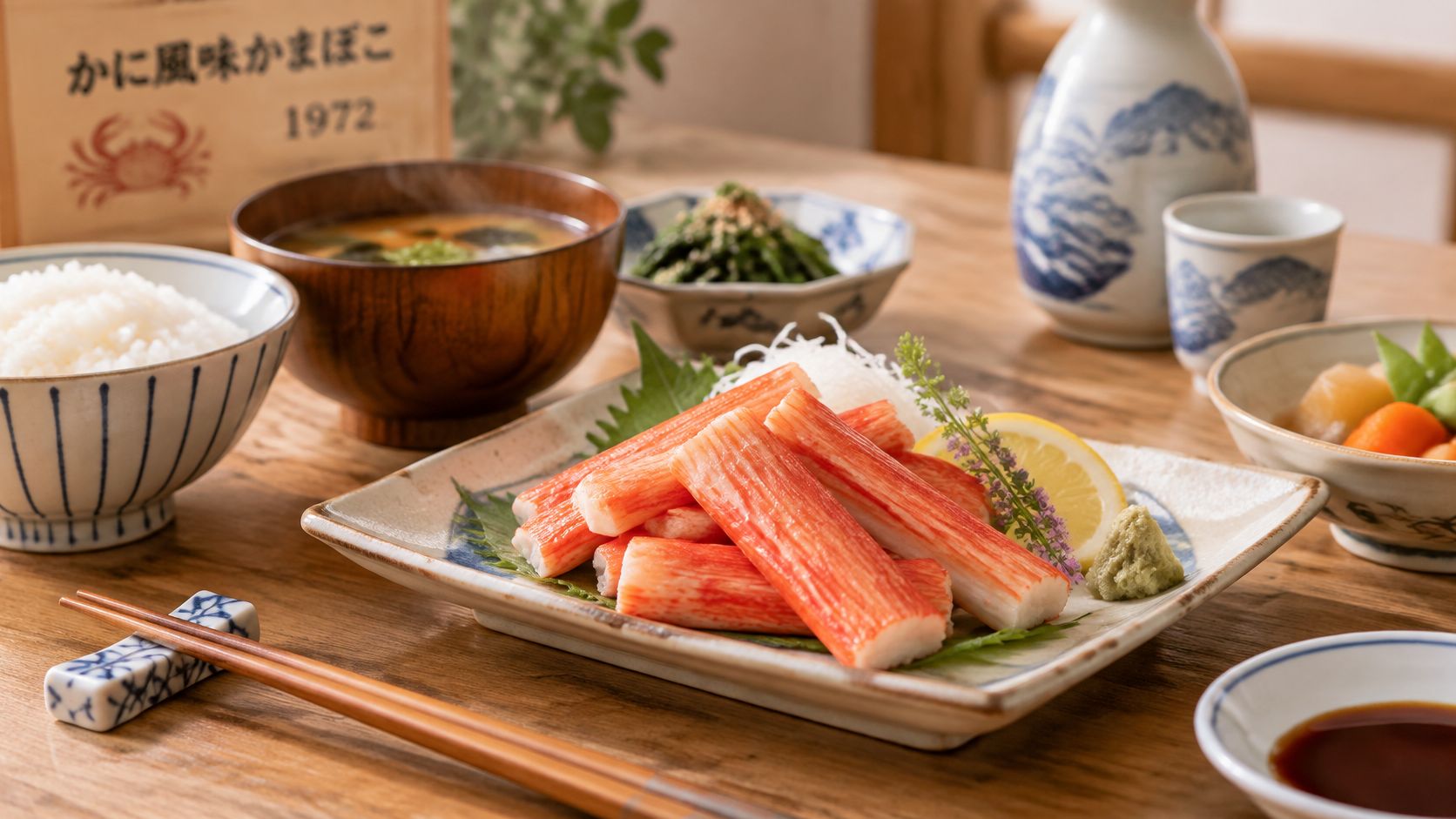
The sticks in the chiller have a specific origin. The Food Network guide to imitation crab explains that Japan's modern kanikama industry began in 1972, when Sugiyo, a seafood processor in Nanao City, Ishikawa Prefecture, commercialized a crab-flavored kamaboko called "Delicious Kamaboko Kani Ashi", developed from research into artificial jellyfish where thinly sliced, colored kamaboko resembled crab-leg meat.
That gave shoppers a consistent, portionable seafood substitute made from relatively inexpensive fish. By the 1980s, manufacturers in other countries had developed their own versions for sushi, salads, sandwiches, and prepared foods.
The photo below shows the familiar stick form as it's often served.
Four Everyday Ways to Serve It
- Kani salad: Shred kanikama, mix with cucumber and Japanese mayonnaise, and chill before serving so the flavors settle and the cucumber stays crisp.
- Kani mayo: Chop kanikama with mayonnaise for an onigiri or sandwich filling. It's already seasoned, so taste before adding salt.
- Sushi: Use kanikama in a California roll with avocado and cucumber, or scatter flakes over a chirashi bowl for color and mild sweetness.
- Real crab: Serve chilled leg meat with ponzu, a soy-based citrus sauce, or add it to a hot pot near the end so it doesn't toughen.
Drain and pat dry kanikama before mixing so salads stay firm. Cucumber, avocado, and sesame complement crab's sweetness, while rice vinegar balances sushi rice. For serving at the table, Daiso Rustic Style Chopsticks N88 (2 Pairs) are 23cm chopsticks made in Japan from poly butylene terephthalate and glass fiber, with heat resistance up to 220°C (428°F).
If you're planning a meal around what's already in your fridge, Recipe One ideas for pantry meals from Recipe One can help you build a dish around leftover cucumber, rice, or avocado alongside your kanikama.
The short video below shows a simple preparation you can follow at home.
Real crab is a winter treat in Japan, which is why crab meat and kanikama often share a counter. Enjoy each for what it is, and check each ingredient label rather than assuming a dish suits a particular diet.
Nutrition and Allergens in Kani Products
Start with the numbers for kanikama, then compare protein with real crab. The HB Mag nutrition guide to kani reports estimates for a 3-ounce serving of approximately 80–100 calories, 6–9 grams of protein, under 1 gram of fat, 10–15 grams of carbohydrate, and 400–700 milligrams of sodium, while real crab typically provides about 16–20 grams of protein per comparable serving.
Kanikama and Real Crab Per 3-Ounce Serving
| Nutrient per 3 oz | Kanikama |
|---|---|
| Calories | 80–100 |
| Protein | 6–9 g |
| Fat | Under 1 g |
| Carbohydrate | 10–15 g |
| Sodium | 400–700 mg |
The trade-off is clear. Kanikama is low in fat and calories, which suits light meals, but its starch, sugar, and sodium make daily reliance less appropriate, especially if you're watching sodium. It also isn't a high-protein food compared with real crab, despite tasting like seafood.
Repeated washing during surimi processing removes much of the fish's fat, so don't treat kanikama as an equivalent source of omega-3s. Pair it with vegetables, keep portions in line with the serving size on your actual pack, and check the sodium line every time because brands differ. For wider context, this article on whether Japanese food is healthy looks at balance across a whole meal.
For allergens, check the current label for fish, shellfish, egg, wheat, and soy. Don't assume any product is allergen-free, vegan, halal, or gluten-free unless the label confirms it. If you have specific dietary needs, consult a health professional rather than relying on general serving advice.
Choose Your Kani and Shop With Confidence
Two products can both be listed as kani yet suit different meals. Compare their named species or product type, ingredients, and pack size on the product pages. That makes it easier to choose between crab meat for a crab-forward dish and kanikama for a fishcake-based recipe.
Before adding a product to your cart, check its species name or product type on the listing, then read the product details. The guide to Japanese food online shopping in the USA covers what to check before ordering food online. Buy Me Japan offers Japanese food, drinks, snacks, and lifestyle products, with tracked shipping, secure payments, and customer service.
Visit Buy Me Japan to browse Japanese products sourced through official suppliers in Japan. Start with the current food listings, check each product page, and choose the kani that fits your recipe, budget, and storage space.

Share:
Matcha Powder Guide for Grades and Everyday Use