


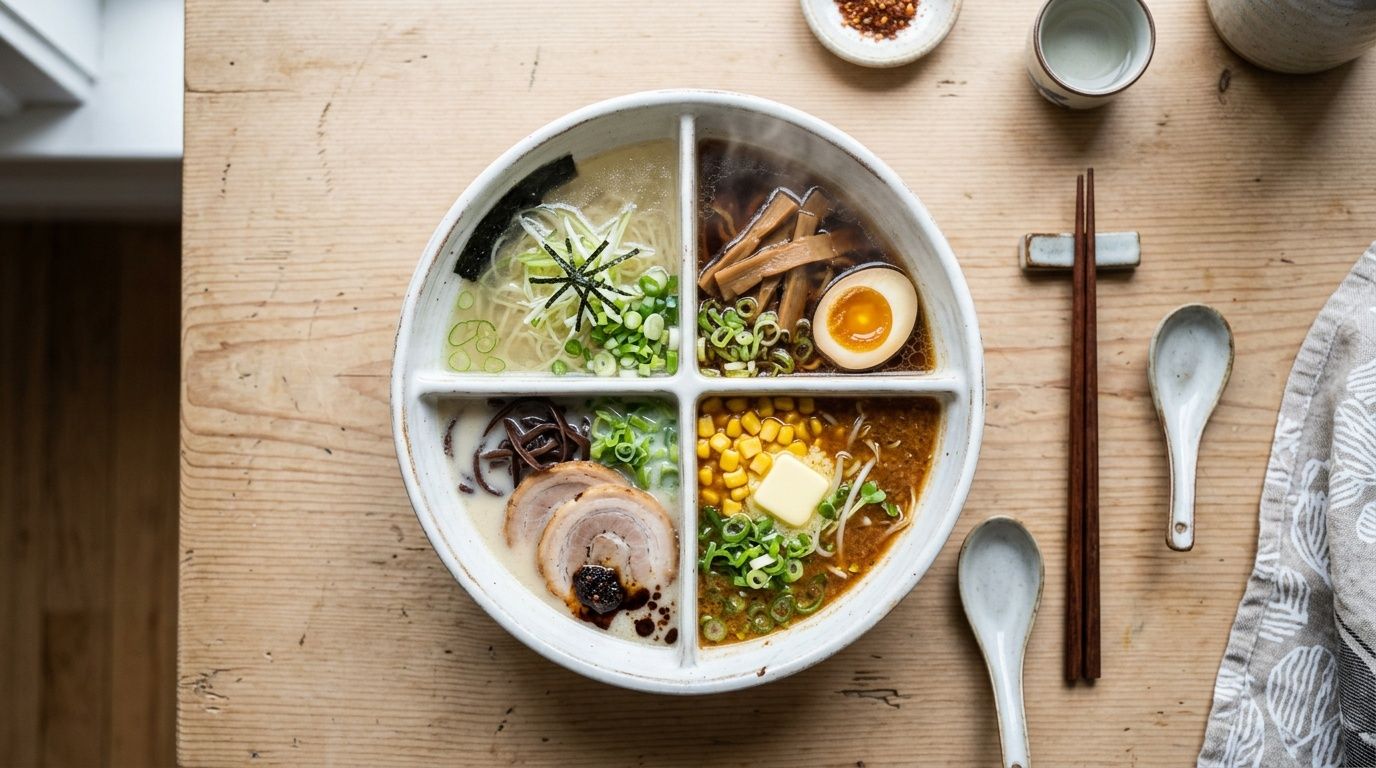
You're standing in the noodle aisle, looking at packets that say shoyu, miso, tonkotsu, shrimp, spicy, black garlic, and roast chicken. Everything sounds good, but choosing one can feel harder than it should.
That confusion makes sense. Ramen is simple to eat, but the flavor world behind it is deep, regional, and very Japanese. Once you understand the basic broth families, the search for the best ramen noodle flavor becomes much easier and much more fun.
Japanese ramen is also far from a niche interest. The global ramen noodles market report says the market is valued at USD 62.77 billion in 2026 and is projected to reach USD 84.99 billion by 2030, growing at a 7.9% CAGR. That scale tells you something important. People around the world aren't just buying noodles. They're returning to flavors they love.
Finding Your Perfect Ramen in a World of Flavor

Many readers start with one question. What is the best ramen noodle flavor? The honest answer is that there isn't one universal winner, because ramen works like music. Some people want something clean and quiet. Others want something rich, loud, and unforgettable.
Japanese ramen also uses flavor words that can feel unfamiliar at first. Shio means salt. Shoyu means soy sauce. Miso is fermented soybean paste. Tonkotsu is pork bone broth. If those terms are new to you, it helps to first understand what umami flavor means in Japanese food, because umami is the thread connecting almost every memorable bowl.
What usually confuses shoppers
The problem isn't that ramen is complicated. It's that packets often tell you the headline flavor but not the personality of the bowl.
A chicken ramen can be light and soothing. Another chicken ramen can be creamy and heavy. A miso ramen can be gentle and nutty, or deep and spicy. Once you learn the broth “DNA,” labels start making more sense.
The best ramen noodle flavor is usually the one that matches how you like soup, not the one that wins the loudest ranking.
A simple way to think about ramen
Use this quick lens when you shop:
- Broth base matters most: Shio, shoyu, miso, and tonkotsu each create a different mood.
- Oil and toppings change the finish: Garlic oil, sesame, seaweed, or egg can push a bowl in a new direction.
- Noodles are part of the flavor: Texture affects how the broth lands on your tongue.
That last point matters more than many people expect. In Japan, noodle shape and broth are treated as a pair, not as separate parts.
The Four Pillars of Japanese Ramen Broth

The heart of ramen is the broth. In Japan, most bowls you meet trace back to four major families. Learn these four, and most ramen labels stop feeling random.
Shio ramen
Shio means salt. It's often the clearest-looking broth of the four, and it usually tastes the most direct.
Think of shio as the crisp white shirt of ramen. It's clean, neat, and easy to read. You notice the stock itself more clearly, whether that stock comes from chicken, seafood, or vegetables.
Shio is a strong choice if you like:
- Clean flavor: You want broth that feels light rather than heavy.
- Delicate toppings: Seaweed, chicken, green onion, and a soft egg fit naturally here.
- A less crowded bowl: You want to taste each part separately.
A good shio ramen doesn't taste plain. It tastes focused.
Shoyu ramen
Shoyu ramen uses soy sauce as its main seasoning base. This is one of the most classic Japanese ramen styles, especially in Tokyo. The broth is usually brown or amber, but still fairly clear compared with creamy styles.
Shoyu often gives you a layered savory taste. It can be slightly sharp, aromatic, and comforting without becoming too thick. If shio is a clear bell, shoyu is a violin. There's more resonance and more shadow in the flavor.
A technical detail from Japanese ramen practice helps explain why shoyu tastes so elegant. The Yamachan ramen noodle and broth guide notes that the optimal noodle pairing for Tokyo-style shoyu broth is medium-thin straight noodles with a 30–35% hydration level, because that helps the noodles hold the soy-based umami while preserving the wheat aroma.
Practical rule: When a shoyu ramen uses straighter, slimmer noodles, that isn't an accident. The noodle is helping the broth taste clearer and more precise.
If you enjoy soups with a classic savory backbone, shoyu is often the best starting point.
Miso ramen
Miso ramen is built around fermented soybean paste. This broth usually looks cloudier and richer than shio or shoyu, and it often tastes fuller, sweeter, nuttier, and more rounded.
Miso ramen is the sweater-weather bowl. It feels warming and substantial. Garlic, ginger, sesame, corn, butter, bean sprouts, and minced meat often pair well with it because miso can carry bold companions.
For many international readers, miso is one of the easiest ramen flavors to love because it has body without requiring you to enjoy pork-heavy broth. If you want to cook with the ingredient itself, this guide on where to get miso paste is useful background.
A few common traits make miso easy to spot:
| Broth type | Usual impression | Good for people who like |
|---|---|---|
| Light miso | Savory, gentle, a little sweet | Balanced, everyday bowls |
| Red miso style | Deeper, saltier, more intense | Stronger, richer flavors |
| Spicy miso | Warm heat on top of miso depth | A bolder finish |
Tonkotsu ramen
Tonkotsu means pork bone broth. This is the style many people recognize instantly because the soup often looks pale, creamy, and rich.
Tonkotsu is not cream-based in the Western sense. Its texture comes from pork bones being cooked until the broth turns emulsified and opaque. The result is silky, dense, and full-bodied.
This style is for readers who want ramen with presence. Tonkotsu coats the mouth more than the other three. Garlic, pickled ginger, sesame, and green onion often sharpen the bowl and stop it from feeling too heavy.
Some people love tonkotsu immediately. Others find it intense at first. Both reactions are normal. It's one of the most distinctive flavors in ramen.
Exploring Modern and Regional Ramen Flavors
The four classic broth types are the foundation, but Japanese ramen doesn't stop there. Shops and instant noodle makers keep building new expressions on top of those basics.
Curry ramen
Curry ramen takes the familiar warmth of Japanese curry and folds it into noodle soup. The flavor is aromatic, savory, and often slightly sweet, with more spice fragrance than raw heat.
This style suits people who enjoy thicker soups and recognizable comfort flavors. If you already like Japanese curry rice, curry ramen often feels like an easy next step.
Seafood-forward ramen
Seafood ramen can lean elegant or bold depending on the ingredients. Some bowls highlight dried fish or shellfish in a delicate way. Others move toward shrimp-rich or oceanic savoriness.
The World Instant Noodles Association rankings identify Tom ChuaCay, a mixture of shrimp and acidic flavors, as the most popular instant noodle flavor globally. That popularity helps explain why shrimp, seafood, and tangy savory notes feel so familiar in many instant noodle lines across Asia.
Seafood ramen is often a good match if you like:
- Briny depth: Flavor that feels linked to the sea rather than the farm.
- Lighter body with strong aroma: Intensity without the density of tonkotsu.
- A sharp finish: Some seafood bowls have a clean ending rather than a lingering fatty one.
Spicy ramen
Spice in ramen doesn't always mean the same thing. In some bowls, chili is the main message. In others, heat sits in the background and lifts the broth rather than dominating it.
Spicy miso is a common gateway because miso's weight supports chili well. Tantan-style bowls often add sesame richness and a nutty edge. Tonkotsu with spicy oil becomes fuller and more aggressive. Shoyu with chili can feel sharper and more pointed.
If you're curious about aromatic oil, the Japanese flavor world around black garlic oil is worth exploring. A small amount can completely change the personality of a bowl.
Some ramen flavors don't fit neatly into one box. A bowl can be shoyu-based, seafood-led, and spicy at the same time.
That mixing is part of ramen's charm. The best ramen noodle flavor for you might be a hybrid rather than a pure classic.
Vegetarian and Vegan Ramen Options in Japan
A lot of people assume authentic Japanese ramen must contain pork or chicken. Traditional ramen often does, but that's not the whole story anymore.
Japan has a growing plant-based ramen scene, and many vegetarian or vegan bowls are very satisfying when they're built well. The key is understanding where flavor comes from.
What creates depth without meat
A strong vegetarian ramen usually relies on ingredients that naturally bring savory complexity:
- Kombu: Kelp adds marine umami and quiet depth.
- Shiitake mushrooms: These give a rounded, earthy savoriness.
- Miso: Fermented soybean paste adds body and richness.
- Roasted vegetables: Onion, garlic, ginger, and carrot can build sweetness and backbone.
- Sesame: This can add aroma and a gentle creamy impression.
These bowls often taste best when the maker balances more than one of those elements. Kombu alone can be elegant, but kombu with shiitake and miso creates a fuller bowl.
What to check on the package
Vegetarian and vegan ramen shoppers should read the small print carefully. A bowl labeled “miso” or “vegetable” isn't automatically meat-free. Some products still use chicken extract, pork seasoning, bonito, or seafood powder.
Look for ingredient clues such as:
- Animal stock terms: Pork, chicken, beef, bonito, or seafood extracts
- Plant-led signals: Kombu, mushroom, vegetable broth, soy-based seasoning
- Flavor oils: Garlic oil or sesame oil can be plant-based, but it's still worth checking
For home cooks, a few drops of Japanese sesame oil can help a vegan bowl feel more rounded and aromatic without changing its identity too much.
Which vegetarian ramen style usually works best
Miso is often the easiest vegetarian gateway because it already has weight and character. Shio can also work beautifully if the stock uses kombu and mushrooms well. Shoyu is possible too, though it needs careful balancing so it doesn't feel thin.
If you're vegetarian or vegan, you don't need to chase imitation tonkotsu. A plant-based bowl can be delicious on its own terms.
How to Choose Your Best Ramen Noodle Flavor

The search for the best ramen noodle flavor gets easier when you stop looking for a universal champion. Taste rankings disagree for a reason.
For example, Sporked's Maruchan ranking placed Roast Chicken at #1, while other outlets often favor Pork or Beef. That's a helpful reminder that “best” depends on what you want from the bowl.
Choose by soup personality
Start with how you normally choose soup in general.
| If you usually like | Try this ramen style | Why it often fits |
|---|---|---|
| Clear chicken soups | Shio | Light, clean, and direct |
| Savory brown broths | Shoyu | Soy depth without heavy texture |
| Hearty, rounded soups | Miso | Fuller body and warming flavor |
| Creamy, rich bowls | Tonkotsu | Dense, silky, pork-forward finish |
This method works better than chasing labels like “premium” or “best-selling.”
Choose by craving
Sometimes the best ramen noodle flavor changes with your mood. What sounds perfect on a cold night may feel too heavy on a warm afternoon.
Use this quick matching guide:
- You want comfort without heaviness: Choose shoyu or a mild roast chicken profile.
- You want the deepest richness: Choose tonkotsu.
- You want warmth and body with flexibility: Choose miso.
- You want something crisp and clean: Choose shio.
- You want excitement: Choose spicy miso, seafood chili, or a broth with aromatic oil.
“Best” is personal. The bowl that feels balanced to you will beat the bowl that wins someone else's ranking.
Choose by topping compatibility
Many shoppers get stuck. They choose the packet first and only later think about what they'll add.
That order can work against you. Some broths are better platforms than others.
- Shio: Great with chicken, seaweed, scallions, and delicate vegetables
- Shoyu: Excellent with egg, bamboo shoots, mushrooms, and simple meat toppings
- Miso: Handles corn, butter, bean sprouts, garlic, sesame, and chili
- Tonkotsu: Loves green onion, pickled ginger, garlic, and firmer toppings that can cut richness
If you already know you want kimchi, tofu, or a jammy egg, start with the broth that welcomes those additions naturally.
A beginner's tasting path
If you're new to Japanese ramen, don't begin with the heaviest option unless that's already your comfort zone.
A smart tasting path is:
- Shoyu first
- Miso next
- Shio after that
- Tonkotsu when you want something richer
That sequence helps your palate notice differences instead of getting overwhelmed.
Elevating Your Instant Ramen to a Gourmet Meal
Instant ramen becomes much more interesting when you treat the packet as a base, not a finished product.

Customization has become a major part of how people enjoy ramen at home. The Reddit discussion on best Maruchan ramen flavor points to a 34% year-over-year increase in interest for ramen with kimchi, tofu, or egg additions. That tracks with what many home cooks already feel. A bowl becomes more personal when you finish it your own way.
The easiest upgrades that make a real difference
You don't need restaurant training. You need contrast.
- Ajitama-style egg: A soft-boiled egg adds richness and soft texture.
- Nori: Seaweed brings aroma and a clean ocean note.
- Scallions: Fresh onion cuts through heavier broths.
- Menma: Bamboo shoots add a gentle crunch.
- Kimchi: This works especially well with miso or richer chicken broths.
- Tofu: Best in vegetarian, miso, or spicy bowls.
- Sesame seeds: They give a nutty finish without much effort.
A simple bowl with one protein, one fresh topping, and one aromatic element usually tastes more complete than a bowl overloaded with five strong additions.
Match your toppings to the broth
At this point, instant ramen starts tasting intentional rather than improvised.
| Broth | Add-ins that usually work well |
|---|---|
| Shio | Nori, chicken, scallion, spinach |
| Shoyu | Egg, mushrooms, bamboo shoots, roasted chicken |
| Miso | Corn, kimchi, tofu, sesame, bean sprouts |
| Tonkotsu | Pickled ginger, garlic, green onion, chili oil |
For a deeper dive into styles and product ideas, this guide to Japanese ramen instant noodles is a helpful next read.
A short cooking demo can also give you visual ideas for texture and topping order.
Small details that improve the final bowl
Use less water if you want a stronger broth. Add delicate toppings after cooking so they stay fresh. If the packet includes seasoning oil, stir it in at the end rather than boiling it too long.
Kitchen note: The packet gives you the skeleton. Toppings, timing, and final oils give the bowl its face.
If you're serving ramen outside the home, presentation matters too. For takeaway soup service, Afida's guide for UK cafes is a practical resource for choosing containers that handle hot broth well.
The gourmet feeling often comes from restraint. One excellent egg, a little seaweed, and chopped scallion can do more than a crowded bowl that loses focus.
Start Your Japanese Ramen Journey Today
Ramen becomes much easier to understand once you see the main personalities clearly. Shio is clean and bright. Shoyu is classic and savory. Miso is rounded and warming. Tonkotsu is rich and creamy. None of them is automatically the best ramen noodle flavor for everyone.
Your perfect bowl depends on what kind of comfort you want. Some days call for a quiet shio. Other days need miso with corn and sesame, or a full tonkotsu with garlic and green onion. That flexibility is part of why ramen stays so beloved.
If ramen is also part of a future Japan trip for you, this guide to luxury Japan destinations can help you think beyond the bowl and plan the wider experience around it.
The best way to learn your taste is simple. Try one classic style, change one topping, and pay attention to what makes you want another bite. That's how ramen lovers in Japan learn too.
If you're ready to explore authentic Japanese ramen, Buy Me Japan is a practical place to start. The store ships directly from Japan and curates trusted Japanese food, beauty, and lifestyle products for international shoppers, which makes it easier to find genuine ramen and pantry items without guessing. Browse a few broth styles, try one or two classic flavors, and build your own favorite bowl with confidence.


Share:
Momori Peach Hair Cream: A Guide to Silky Japanese Hair
Fermented Ingredients in Skincare: A Japanese Beauty Guide