


In Japan, pure retinol reached a major regulatory milestone in 2017, when Shiseido received certification for it as a quasi-drug active ingredient with a wrinkle-improvement effect. But a product labeled “retinol” may contain pure retinol, a retinol ester, or another retinoid-like ingredient, so the label matters more than the front of the package.
Why do so many guides call Japanese retinol products gentle without explaining which form of vitamin A you're buying? Retinol is one member of the broader retinoid family, and each form has a different balance of activity, irritation, stability, and expected results. For an international shopper, understanding that distinction is the practical starting point.
What Retinol and Retinoids Actually Mean
Retinoids are vitamin A derivatives used in skincare because they interact with receptors in the skin and influence renewal, texture, pigmentation, and the processes associated with collagen support. The word “retinoid” covers several ingredients, not one universal strength.
The family includes retinoic acid, also known as tretinoin, retinal, retinol, and retinyl esters such as retinyl palmitate and retinyl acetate. You may also see retinoid-like ingredients, including bakuchiol, grouped into the same conversation even though bakuchiol isn't a vitamin A derivative.
Retinol has to undergo conversion in the skin before it reaches the active retinoic-acid form. Retinal generally sits closer to that active form, while retinyl esters require more conversion steps. That difference helps explain why a retinyl ester can feel comfortable but work more gradually, while pure retinol may offer a more direct cosmetic approach with a greater chance of dryness or irritation.
The word retinol needs context
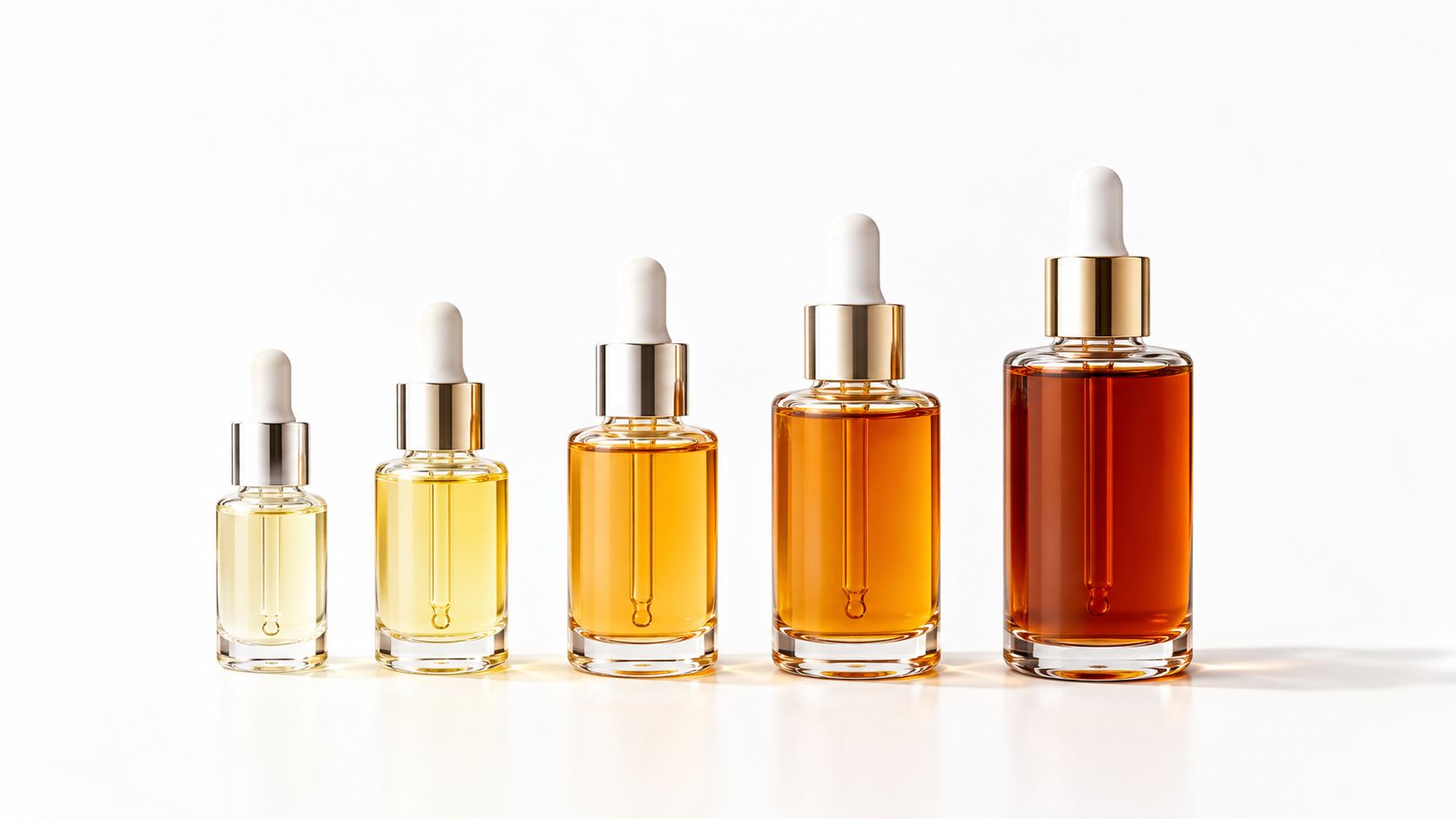
On Japanese packaging, the presence of the word retinol doesn't automatically tell you whether the product contains pure retinol or a derivative. International shoppers should look for the exact ingredient term in the full Japanese list, rather than treating every “retinol cream” as equivalent. This distinction is also useful when comparing retinoid care with gentler lifestyle approaches, such as this guide to aromatherapy for skin health.
Japanese ingredient lists can help because ingredients are generally listed in descending order of concentration, which gives you a better sense of whether retinol appears as a meaningful formula component or near the end of the list. That still doesn't reveal the precise percentage for an ordinary cosmetic, but it provides useful context. You can also learn how exfoliating acids fit into a routine through this guide to alpha hydroxy acid in Japanese skincare.
The most useful way to assess Japanese retinol products is to ask three questions:
- Which active form is present? Pure retinol, retinyl ester, retinal, HPR, or bakuchiol?
- What regulatory category does the product use? Ordinary cosmetic, quasi-drug, or pharmaceutical?
- Can your skin tolerate the delivery format? A rich cream, lightweight serum, encapsulated formula, or wash-off product may feel very different even when the ingredient family overlaps.
How Japan's Regulatory Tiers Shape Retinol Products
Japan separates personal-care products into broad regulatory categories, including ordinary cosmetics, quasi-drugs, and pharmaceuticals. These categories affect what a product can claim, how its active ingredients are handled, and how much information shoppers can expect to find on the package.
The quasi-drug category, called iyaku-bugaihin in Japanese, sits between ordinary cosmetics and medicines. Products in this category can use approved active ingredients for defined efficacy claims after Ministry of Health, Labour and Welfare review. In 2017, Shiseido obtained certification for pure retinol as an active quasi-drug ingredient associated with wrinkle improvement, and Shiseido describes this as Japan's first certification of that kind for a retinol product. The company also states that pure retinol was the only quasi-drug active ingredient officially certified for wrinkle improvement in Japan at that time. Shiseido's regulatory and research explanation provides the relevant background.
The three categories in practical terms
| Tier | Regulatory class | Concentration disclosure | Typical retinol forms |
|---|---|---|---|
| Ordinary cosmetic | General cosmetic product | Exact percentage usually isn't printed as a regulated efficacy claim | Retinol, retinal, retinyl esters, HPR, or alternatives |
| Quasi-drug | Reviewed product with an approved active ingredient | Approved active and applicable concentration information may be disclosed | Pure retinol or approved retinol esters |
| Pharmaceutical | Medicine regulated separately from cosmetics | Pharmaceutical labeling rules apply | Prescription or medicinal retinoid forms |
A quasi-drug example might identify a retinol active at a labeled 0.075%, while another may use retinyl palmitate in an emulsion. An ordinary cosmetic described as a “retinal booster” may contain retinal but not print a percentage because it isn't using the same approved quasi-drug claim framework. Those examples illustrate why the word “retinol” alone isn't enough to compare strength.
Japan's benchmark is also linked to clinical testing. Shiseido reports that its retinol formulation was evaluated in a randomized, double-blind, placebo-controlled study in healthy Japanese women, with measurable wrinkle improvement reported by week 9. A separate 12-week study found significant softening of the stratum corneum by week 4, connecting visible wrinkle endpoints with a biophysical skin-surface measure. Shiseido's study announcement explains those findings.
Practical rule: A regulated claim tells you more about review and permitted labeling than it tells you about whether your own skin will tolerate the product.
For shoppers, the tier is useful evidence, but it isn't a substitute for reading the active form, packaging instructions, and full ingredient list.
Pure Retinol vs Retinyl Esters vs Retinol Alternatives
The easiest mistake is to treat all vitamin A ingredients as interchangeable. Pure retinol, retinyl esters, and retinol alternatives occupy different places on the activity and tolerance spectrum, so your choice should reflect your skin's current condition and your willingness to introduce an active slowly.
Pure retinol has a more direct route through the skin's conversion process than retinyl palmitate or retinyl acetate. It can be a logical option for shoppers focused on texture and visible signs of aging, but it may also cause more dryness, stinging, peeling, or temporary sensitivity. Japanese formulas often use protective packaging, encapsulation, or barrier-supportive ingredients to make pure retinol easier to use consistently.
Retinyl esters are generally more gradual. They're commonly considered approachable for beginners or sensitive skin because they need additional conversion before becoming active. That gentler profile also means shoppers should expect a slower cosmetic response and avoid judging the product after only a few applications.
A side-by-side guide
| Active form | Potency | Irritation risk | Typical timeline for results |
|---|---|---|---|
| Pure retinol | More direct cosmetic retinoid activity | Higher than retinyl esters for many users | Gradual, consistent use is needed |
| Retinyl palmitate or acetate | Gentler, with more conversion required | Usually lower | Slower and more subtle |
| Retinal | Closer to the active form than retinol | Can still irritate, depending on formula | Potentially quicker than retinol, but tolerance varies |
| HPR | Retinoid-like option designed for stability and comfort | Often positioned as gentle, though individual reactions differ | Gradual |
| Bakuchiol | Retinol alternative rather than vitamin A | Often chosen by people avoiding traditional retinoids | Gradual and formula-dependent |
These timelines are qualitative because ordinary cosmetic labels don't always disclose concentration or provide comparable clinical endpoints. A product's vehicle matters, too. A concentrated serum may feel more active than a cream with the same general ingredient family, while an encapsulated formula may release the ingredient more gradually.
You'll also encounter supporting ingredients that aren't retinoids. Niacinamide, ceramides, tranexamic acid, and centella may help a formula feel more comfortable, but they don't transform a retinyl ester into pure retinol. If your main concern is uneven tone or blemish-prone skin, it may help to compare retinol with a separate guide to azelaic acid benefits.
The right question isn't “Which ingredient sounds strongest?” It's which form can you use consistently without compromising your skin barrier.
Adding Japanese Retinol to Your Skincare Routine
Retinol works best as a gradual evening step, not as a product you introduce alongside several other strong actives. Start with a clean face, allow your skin to settle, then apply a hydrating toner or essence if those products already suit you.
A simple evening sequence
- Cleanse gently. Remove sunscreen and makeup without scrubbing or leaving the skin tight.
- Hydrate if needed. Apply a familiar toner or essence and let it absorb.
- Use a small amount of retinol product. Begin on two evenings per week, unless the package gives different directions.
- Seal with moisturizer. Choose a plain, comfortable cream rather than adding another exfoliating active.
- Keep the eye corners, nostril folds, and lip corners in mind. These areas often become irritated first, so apply sparingly and follow the product directions.
Sensitive skin may prefer the sandwich method. Apply moisturizer first, place the retinol product over it, then add another thin layer of moisturizer. The extra cushioning can make the routine easier to tolerate, although it may also make the active feel less intense.
Your morning routine protects the process
Morning care should stay uncomplicated:
- Cleanse according to your skin's needs. Some people need only a gentle rinse, while others prefer a low-foam cleanser.
- Use hydrating layers. Toner, essence, or moisturizer can help reduce the tight feeling associated with active care.
- Apply broad-spectrum SPF 30 or higher. Retinol can increase sensitivity to sunlight, so daily protection is an important companion step.
Before applying a new imported product to your face, patch test it on the inner forearm or behind the ear. Use the product as directed and observe the area over 48 to 72 hours. A patch test can't predict every facial reaction, but it can help you identify obvious intolerance before full application.
If your skin remains comfortable, increase use gradually over six to twelve weeks rather than rushing toward nightly application. Persistent burning, pronounced peeling, or worsening breakouts means you should pause, simplify your routine, and consider moving down to a retinyl ester. For more help supporting a stressed barrier, see this barrier repair skincare routine.
How to Read a Japanese Retinol Product Label
The front of a package is designed to communicate quickly. The back label is where you find the information needed to make a careful decision. Japanese cosmetics must provide full ingredient disclosure, and the ingredient list is commonly printed on the back under terms meaning “ingredients” or “full ingredients.” This Japanese skincare label guide explains why that section deserves your attention.
Identify the exact vitamin A form
Look for the ingredient name rather than relying on an English product title:
- Retinol indicates pure retinol.
- Retinal or retinaldehyde indicates a different vitamin A form.
- Hydroxypinacolone retinoate, often shortened to HPR, is a retinoid-like ingredient.
- Retinyl palmitate and retinyl acetate are retinol esters.
- Bakuchiol is a retinol alternative, not retinol itself.
A product may use more than one form. It may also place the active alongside ingredients intended to support comfort, such as niacinamide, tranexamic acid, ceramides, or Centella Asiatica. Those additions can improve the overall formula experience, but they don't change the identity of the vitamin A ingredient.
Inspect the container
Retinol is sensitive to environmental exposure. An opaque tube, airless pump, or closed dispenser generally offers better protection from light and repeated air exposure than a wide-mouth jar. That doesn't prove a product is well formulated, but it's a sensible packaging preference for an ingredient that can oxidize.
You may also see stabilizers such as tocopherol, BHT, or ascorbic acid. Their presence can support formula stability, though label readers shouldn't assume that any one stabilizer guarantees a particular shelf life or potency.
The PA mark relates to protection against UVA exposure and may appear alongside sunscreen information. It isn't, by itself, proof that a retinol product is a quasi-drug. For quasi-drug status, look for the relevant Japanese classification and approved active-ingredient information.
Look for dates and handling instructions
Japanese products may carry production or expiration information, and storage instructions can indicate whether the product should be kept away from heat, direct sunlight, or moisture. Follow the package directions, especially after opening. If the label doesn't provide a clear opening period, keep the container tightly closed and avoid storing it in a warm bathroom.
Matching Japanese Retinol Products to Your Skin Type
Skin type helps narrow the format, but it shouldn't determine your starting strength by itself. A person with oily skin can still have a damaged barrier, and dry skin can sometimes tolerate a well-formulated active when introduction is slow.
Use texture and active form together
| Skin type | Recommended form | Preferred format | Supportive ingredients |
|---|---|---|---|
| Oily or blemish-prone | Retinyl ester or carefully introduced retinal | Lightweight serum or lotion | Niacinamide, humectants, soothing extracts |
| Dry | Retinol or retinyl palmitate | Cream, balm, or serum under moisturizer | Ceramides, squalane, glycerin |
| Sensitive | Retinyl ester, gentle retinal, HPR, or bakuchiol | Cushioned cream or soothing gel | Ceramides, centella, panthenol |
| Mature or texture-focused | Pure retinol or retinal if tolerated | Concentrated serum or treatment cream | Peptides, barrier lipids, vitamin C derivatives |
Oily and blemish-prone skin
A light lotion or serum may feel more comfortable than a heavy cream, particularly if you dislike residue. Retinyl palmitate or another ester can be a reasonable starting point when you want to learn how your skin responds before trying pure retinol. Avoid assuming that a matte finish means the formula is less irritating. The active form and your usage frequency still matter.
A separate blemish-focused routine can help you avoid layering too many products. This guide to skincare for acne-prone skin offers useful routine context.
Dry and sensitive skin
Cream textures can provide more comfort, especially when paired with ceramides, glycerin, or squalane. Sensitive skin usually benefits from the lowest practical tier, fewer simultaneous actives, and the sandwich method. If you experience persistent redness or burning, stop rather than trying to push through it.
Mature skin and visible texture
A higher-activity form may suit someone whose skin already tolerates retinoids, but “stronger” isn't automatically better if it leads to skipped applications. Start with the lowest tier that fits your goals, then adjust only after your skin remains stable. Patch testing still matters, regardless of age or experience.
Buying Japanese Retinol Products and FAQ
Buying from abroad adds practical questions that local shoppers may not face. You want the exact product, intact packaging, a clear ingredient list, and storage guidance that makes sense for the journey.
Start with authenticity checks. Look for Japanese-language packaging, a complete ingredient panel, manufacturer information, and a batch or JAN code where applicable. A product page should match the name, size, and variant printed on the item. If the online description and package differ, ask the seller before opening it.
International purchasing checklist
- Verify the seller: Choose a retailer that clearly identifies its sourcing and provides customer support.
- Match the variant: Check whether the listing refers to a cream, serum, refill, or a particular size.
- Review delivery information: Customs declarations, destination rules, and delivery timing can vary by country.
- Consider temperature exposure: Avoid leaving retinol products in direct sun or high heat after delivery.
- Store carefully: Keep the product closed, away from light and heat, and follow the package directions.
Buy Me Japan offers Japanese beauty and lifestyle products through its online store, including Japanese skincare products for international shoppers. Its broader products available in Japan guide can help readers understand the range before choosing a specific active.
Common questions from first-time buyers
Can I patch test an imported product?
Yes. Patch test the unopened-to-you product according to its directions on a small area such as the inner forearm or behind the ear. Observe it over 48 to 72 hours, then introduce it to the face gradually if there's no concerning reaction. Don't apply it to broken or already irritated skin.
How can I translate the Japanese ingredient list?
Use the exact Japanese ingredient terms and compare them with a reliable ingredient reference. Focus first on distinguishing retinol, retinal, retinyl palmitate, retinyl acetate, HPR, and bakuchiol. If you can't confirm the active form, ask the retailer rather than guessing from the English product name.
Will a quasi-drug retinol product ship to my country?
That depends on the destination's import rules, the product category, and the retailer's shipping policy. Check the current information before ordering, and remember that an item legally sold in Japan may be treated differently by customs elsewhere.
What should I do if the product irritates my skin?
Pause the retinol and simplify your routine to gentle cleansing, moisturizer, and daytime sun protection. Persistent burning, swelling, or severe discomfort warrants professional medical advice. Once your skin is calm, you can reassess whether a lower-activity retinyl ester is more appropriate.
How long does retinol last after opening?
Follow the product's printed instructions and any opening-period symbol. Store it tightly closed and away from light and heat. Don't rely on a generic shelf-life assumption because packaging, formula stability, and local labeling can differ.
Can I combine retinol with vitamin C or acids?
Many people prefer to separate retinol from exfoliating acids, especially while building tolerance. Vitamin C may fit comfortably in a morning routine for some users, but introducing several actives at once makes irritation harder to identify. Add one change at a time.
Should I buy a sample before a full jar or tube?
If a travel size, sample, or smaller format is officially available, it can be a sensible way to assess texture and tolerance. Don't transfer retinol into an unlabelled container, and don't assume a sample has the same packaging protection as the full-size product.
The practical takeaway is simple. Identify the active form, understand the regulatory category, choose packaging that limits exposure, and introduce the product slowly. Japanese retinol products become much easier to compare once you stop treating every “retinol” label as the same ingredient.
Buy Me Japan makes authentic Japanese skincare and lifestyle products available through a convenient online store, with product information, secure payments, tracked shipping, and customer support for international shoppers. Visit Buy Me Japan to explore Japanese retinol products and choose a formula that matches your skin's tolerance and routine.
Share:
Japanese Ceramide Skincare: A Practical Guide