


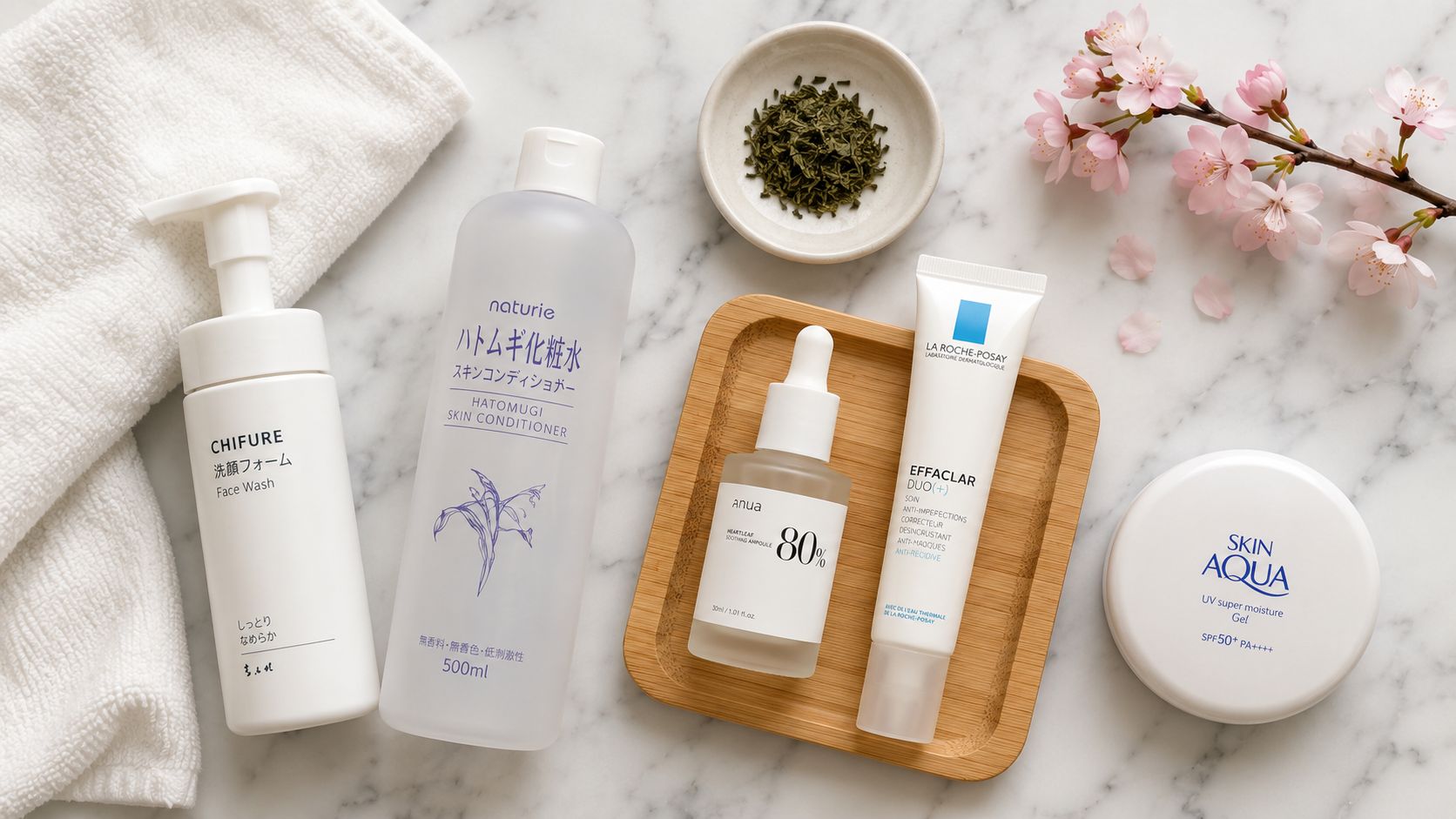
If you're reading this after another breakout, there's a good chance you've already tried the usual cycle. A strong cleanser. A drying spot gel. Maybe a scrub that felt satisfying for a day and made your skin angrier by the end of the week. Acne can make people feel as if they need to do more, faster, and more aggressively.
That's often where things go wrong.
In Japanese skin care, the goal usually isn't to wage war on the skin. It's to help the skin function more calmly and consistently. For acne-prone skin, that means removing excess oil and buildup without stripping, using one or two well-chosen treatment steps, and protecting the skin barrier so it can tolerate those treatments over time.
A good skin care regimen for acne prone skin isn't just a random list of products. It's a repeatable system. Once you understand that system, shopping becomes easier, ingredient labels become less intimidating, and you're less likely to bounce from trend to trend.
You'll see that approach across many Japanese routines. Lightweight hydration, gentle cleansing, and elegant sunscreen textures are taken seriously because they make consistency easier. If you want to build that kind of routine with authentic Japanese products, it also helps to use a retailer that ships directly from Japan so you can access the actual formulas people use there.
Introduction
A very common story sounds like this. Someone starts getting regular breakouts, searches online, buys several “acne” products at once, and ends up with skin that feels tight, shiny, flaky, and still congested. They assume their acne is getting worse, so they add even more treatment. In reality, they may be dealing with acne plus irritation from overtreating.
I see this especially often in people who have been told that oily skin doesn't need hydration, or that “purging” explains every bad reaction. Neither idea is very helpful when your face feels sore and unpredictable.
Japanese skin care offers a steadier way to think about acne. Instead of trying to strip all oil away, it focuses on balance. You cleanse gently, support hydration, use targeted actives with restraint, and treat sunscreen as part of acne care rather than a separate cosmetic extra.
That shift matters because acne-prone skin is often both oily and vulnerable. It can clog easily, but it can also become irritated very quickly. A routine that respects both sides usually works better than one built around harshness.
You don't need a shelf full of products. You need a method.
Acne routines fail less often from “not enough products” than from poor sequencing, too many actives, and inconsistent use.
What follows is a practical guide built around morning and evening care, key ingredients, and the small decisions that make a routine easier to stick with. I'll explain the reason behind each step in plain language, and I'll also point to Japanese product types and brands that are often helpful for this skin type.
The Core Principles of an Acne Fighting Routine
An effective acne routine is easier to understand when you reduce it to four jobs your skin care needs to do every day. Those jobs are cleanse, treat, moisturize, and protect. If a routine is missing one of those pillars, results often become less stable.
A clinical study gives this structure real support. In an 8-week clinical study, participants with mild to moderate acne vulgaris used an acne-specific foam wash, an SPF 30 moisturizer, and a once-daily topical gel containing adapalene 0.1% and benzoyl peroxide 2.5%. The study concluded that this combined approach supported both efficacy and safety. That's one reason acne routines are now often built as a full regimen rather than as spot-only care.

Cleanse without stripping
Cleansing isn't about making the skin feel squeaky. It's about removing sweat, excess sebum, sunscreen, makeup, and debris so the next steps can work properly.
If your cleanser leaves your face feeling stiff or overly tight, that's not a sign it's “working harder.” It often means your barrier is getting disrupted. Japanese cleansers for acne-prone skin tend to do well here because many are designed to feel fresh but not harsh.
Treat with intent
The treatment step is where active ingredients do the acne-focused work. This might be a retinoid, benzoyl peroxide, salicylic acid, or niacinamide depending on your skin and goals.
The important part is intent. One well-matched treatment used consistently is usually more useful than several overlapping products used inconsistently or aggressively.
Practical rule: Don't choose actives by popularity. Choose them by the problem you're actually trying to solve, such as clogged pores, inflamed breakouts, or marks left after acne.
Moisturize to improve tolerance
Many acne-prone people fear moisturizer because they associate moisture with greasiness. Those aren't the same thing. A good moisturizer helps reduce treatment irritation and helps skin stay comfortable enough for you to continue your routine.
That's one reason full-regimen care works better than relying on acne treatment alone. Treatment can only help if your skin can tolerate it.
Protect every morning
Sunscreen is part of acne care. It helps protect skin that may already be sensitized by active ingredients, and it's especially important if you're trying to avoid lingering post-breakout marks looking darker or lasting longer.
If you're trying to sort out whether you're dealing with acne, texture, or a look-alike condition, this expert guide to common skin concerns can help clarify some common confusion.
Many people also get confused about where hydrating layers fit in this structure. If that's you, this explanation of the difference between toner and essence is useful because Japanese “lotions” often hydrate rather than act like old-style astringents.
Your Morning Skincare Regimen Step by Step
Morning care should feel clean, light, and protective. You're not trying to do your heaviest treatment work here. You're preparing the skin for the day, keeping oil and dehydration more balanced, and making sunscreen comfortable enough to wear every day.

Major dermatology guidance, including from the American Academy of Dermatology, consistently places twice-daily cleansing and daily use of a broad-spectrum sunscreen with SPF 30 or higher at the center of an effective acne-prone skin routine, as described in this dermatology guide for acne-prone skin routines.
Step 1 gentle cleanse
Some people wake up oily and need a proper cleanse. Others do better with a very mild wash. The test is simple. After cleansing, your skin should feel fresh, not stripped.
Japanese options from lines like Hada Labo, Cow Brand, or Shiseido Senka often suit people who want a low-irritation morning cleanse. If your skin is easily sensitized, choose a simple foaming or gel cleanser rather than a scrub or strong acid wash.
Step 2 add hydration, not heaviness
This is the step many acne-prone people skip, then regret later. In Japanese skin care, a lotion or toner is usually a hydrating layer. It helps soften that tight feeling after cleansing and can make the rest of the routine sit better on the skin.
A watery hydrating layer from Hada Labo, MUJI, or Minon can work well when your skin is dehydrated but still prone to breakouts. If you're curious about where brightening fits into an acne-safe morning routine, this guide on how to use vitamin C serum helps explain when to place it and how to keep the routine sensible.
Morning decision guide
| Skin feeling in the morning | What to do |
|---|---|
| Tight but oily | Use a gentle cleanser, then a hydrating lotion |
| Comfortable but shiny | Cleanse lightly, keep hydration thin and fast-absorbing |
| Easily irritated | Skip anything fragranced or strongly exfoliating |
Step 3 use a light moisturizer
Acne-prone skin usually does better with a lightweight gel-cream, milk, or lotion texture rather than a heavy occlusive cream. The right moisturizer should make your skin feel settled, not greasy.
Good Japanese examples often come from Hada Labo, Minon, Curél, and Shiseido d Program. A product like a light moisture gel is often a better choice for breakout-prone skin than a rich sleeping cream meant for very dry skin.
If your skin gets shinier during the day after skipping moisturizer, your skin may be reacting to dehydration rather than “proving” it doesn't need moisture.
Step 4 sunscreen every day
This point is critical. Acne treatments can make skin more reactive, and even without prescription actives, daily UV exposure can complicate recovery from breakouts.
Japanese sunscreens are popular for a reason. They often feel lighter and more wearable, which matters because the best sunscreen is the one you'll apply every morning. Products many shoppers look for include Biore UV Aqua Rich Watery Essence, Shiseido Anessa sunscreens, and Kanebo ALLIE UV formulas. These textures usually suit people who hate thick sunscreen.
A quick visual walkthrough can help if you're still figuring out layering textures and finish.
A simple morning example
- Cleanser such as a gentle Hada Labo or Senka wash
- Hydrating lotion from Hada Labo, MUJI, or Minon
- Light moisturizer such as a gel or milk texture
- Sunscreen such as Biore UV, Anessa, or ALLIE
That's enough for many people. Morning routines should be reliable, not crowded.
Your Evening Skincare Regimen Step by Step
Evening is where acne-prone skin gets its deeper reset. You're removing the day thoroughly, then giving treatment products the best chance to work on clean skin.
For many people, the biggest difference-maker at night isn't a stronger active. It's better cleansing technique.

Step 1 remove sunscreen and makeup properly
If you wear sunscreen daily, and you should, your evening cleanse has to remove it well. Double cleansing fits this requirement. In Japanese skin care, that means using an oil-based cleanser first, followed by a water-based cleanser.
The first cleanse dissolves sunscreen, makeup, and excess sebum. The second cleanse removes residue and leaves the skin clean enough for treatment. Done gently, this is often less irritating than trying to remove everything with one aggressive face wash.
If you've never tried this method before, this guide to light cleansing oil explains why a properly emulsifying oil cleanser can suit acne-prone skin very well.
A classic example is DHC Deep Cleansing Oil. It's often chosen because it breaks down sunscreen and makeup efficiently. Follow it with a mild foaming or gel cleanser so the skin feels clean, not coated.
Step 2 apply your treatment step
This is the center of the night routine. Not everyone needs the same active, so think in terms of your main pattern.
Use this simple matching approach:
- Clogged pores and blackheads often respond well to salicylic acid
- Red, inflamed breakouts may benefit from a routine built around benzoyl peroxide or a dermatologist-guided retinoid plan
- Post-breakout marks and uneven tone may pair well with ingredients like vitamin C or niacinamide
- Very sensitive acne-prone skin often does better starting with one calming, barrier-friendly active rather than several
Japanese product categories can be helpful here. Some people like an acne lotion or essence from Mentholatum Acnes or Meishoku. Others prefer a brightening support product such as Melano CC Essence for the after-effects of acne rather than the active breakout itself.
Your evening treatment shouldn't leave your face feeling raw every night. Mild dryness can happen with acne actives. Persistent burning is a sign to simplify.
Step 3 moisturize for recovery
Night moisturizer has one job. Help your skin tolerate treatment and wake up calmer than it was before bed.
If you're oily, choose a gel-cream or milk. If your skin is also sensitive, consider Japanese brands known for low-irritation formulas, such as Minon or Shiseido d Program. These are useful when your skin needs support, not extra stimulation.
A practical PM structure
| If you wore | First cleanse | Second cleanse | Treatment | Finish |
|---|---|---|---|---|
| Sunscreen only | Cleansing oil or balm | Gentle face wash | One active | Light moisturizer |
| Makeup and sunscreen | Cleansing oil | Gentle face wash | One active | Moisturizer |
| No sunscreen and no makeup | Optional, depends on skin | Gentle face wash | One active | Moisturizer |
A realistic evening example
- Oil cleanse with DHC or a similar Japanese cleansing oil
- Second cleanse with a gentle face wash
- Treatment matched to your skin's needs
- Moisturizer in a light but comforting texture
That's the kind of evening routine people can sustain. Sustainability matters because acne care is won through repetition, not intensity.
Key Ingredients to Use and Avoid
Ingredient lists become much less intimidating when you sort them into two groups. The first group contains ingredients that can support acne-prone skin when used thoughtfully. The second group contains ingredients or product styles that often create trouble, especially when skin is already irritated.
One of the biggest gaps in acne advice is that people are told to use active ingredients, but not taught how to avoid overdoing them. As a result, many routines mention benzoyl peroxide and salicylic acid without explaining how irritation can build when products are stacked carelessly. As noted in this acne routine guide focused on avoiding over-treatment, an effective routine can be as simple as one active ingredient plus a moisturizer and SPF.

What to look for
- Salicylic acid helps with clogged pores and congestion. It's often useful when your acne looks like blackheads, bumps, and texture rather than only inflamed pimples.
- Niacinamide is a good support ingredient for people dealing with oiliness, visible redness, and a weakened-feeling barrier.
- Hyaluronic acid doesn't treat acne directly, but it helps maintain hydration so your treatment routine feels more tolerable.
- Retinoids are often used for acne management, especially when clogged pores and recurring breakouts are part of the picture.
- Benzoyl peroxide is a focused acne treatment, but it's not something to layer casually with multiple other strong actives in the same session.
Japanese formulations often shine in the support category. Hydrating lotions from Hada Labo, low-irritation moisturizers from Minon or d Program, and targeted acne care from Mentholatum Acnes can help create a more stable routine around your main active.
What to be careful with
Some ingredients aren't universally “bad,” but they're often poorly tolerated when acne-prone skin is already stressed.
- Harsh physical scrubs can make inflamed skin angrier
- Strongly fragranced formulas may be uncomfortable for reactive skin
- Alcohol-heavy products can feel refreshing at first, then leave skin dry and overreactive
- Too many exfoliating acids at once often push skin from acne-prone into irritated
If you're exploring cleansers that use exfoliating acids, it helps to understand when they fit and when they don't. This article on AHA facial wash is useful because acid cleansers can be helpful for some people but excessive for others.
A treatment product isn't automatically wrong because it stings a little once. It becomes wrong when your skin gets progressively redder, tighter, shinier, and more fragile over time.
How to combine actives without chaos
Don't start three acne actives in the same week. That's the mistake I see most often.
Try this instead:
- Pick one primary active based on your main concern
- Keep the rest of the routine boring with gentle cleanser, moisturizer, and sunscreen
- Watch the skin for irritation signals such as tightness, stinging, flaking, or unusual redness
- Add another active only if there's a clear reason
That's very close to the Japanese idea of gentle efficacy. You don't need your routine to feel intense. You need it to remain usable.
Customizing Your Routine and Managing Expectations
No acne routine works the same way for every face. The base structure stays similar, but the texture, strength, and frequency of products should change depending on what your skin is doing.
At this point, many people either give up too soon or overcorrect too quickly.
A clinically studied twice-daily, 3-step OTC acne regimen showed statistically significant improvement in acne grading scores after 2 weeks, with continued gains through 6 weeks, according to this clinical study on a 3-step acne regimen. That's a helpful reminder that skin usually needs consistent time, not daily routine changes.
If your skin is oily but dehydrated
This is one of the most misunderstood acne patterns. Your face may look shiny, but still feel tight after cleansing. In that case, use lighter textures, not fewer hydrating steps.
A hydrating lotion, a light gel moisturizer, and a comfortable sunscreen often work better than trying to dry the skin out. Japanese products are especially strong in this area because many are designed to hydrate in thin layers instead of one heavy cream.
If your skin is sensitive and acne-prone
Go slower than you think you need to. Sensitive acne-prone skin usually does better when the routine is stripped down to the essentials.
Look at gentle lines such as Minon, MUJI, or Japanese skincare for sensitive skin if you're trying to reduce variables. Shiseido d Program is also worth considering when your skin becomes reactive easily.
If your breakouts are inflamed
Inflamed acne needs care that is focused but not punishing. Keep cleansing gentle, avoid scrubs, and resist the urge to pile on drying spot treatments all over the face.
For some readers, it's also helpful to think beyond products alone. This Skin Revision's approach to acne is a useful example of a broader perspective on acne management, especially if your breakouts seem connected to multiple triggers.
Common reasons progress stalls
- Changing products too often means you never learn what is helping
- Using too many actives together can create irritation that looks like worsening acne
- Skipping moisturizer often reduces tolerance for treatment
- Not wearing sunscreen daily makes recovery harder for skin that marks easily
- Expecting overnight change leads people to abandon routines before they have a fair chance to work
A steady timeline matters
When a routine is well chosen, you may notice some early improvement within weeks, but continued improvement often requires staying consistent beyond that first encouraging phase. That's why I tell clients to judge a routine by patterns over time, not by one bad skin day.
A few isolated breakouts don't automatically mean the routine has failed. The better questions are these: Is the skin calmer? Are angry spots resolving more cleanly? Is the overall cycle becoming less intense?
That's the mindset that leads to better long-term decisions.
Conclusion
A strong skin care regimen for acne prone skin doesn't depend on aggression. It depends on structure. Cleanse gently. Treat with purpose. Moisturize so your skin can tolerate that treatment. Protect it every morning with sunscreen.
That sounds simple, but simple is often what acne-prone skin needs most.
The Japanese approach is especially helpful for people who feel exhausted by extremes. Instead of pushing the skin harder and harder, it favors gentle efficacy, elegant textures, and barrier support. That makes routines easier to repeat, and repeatability is what gives products a fair chance to work.
If your skin has been through a lot, that calmer philosophy can be a relief. It also makes it easier to tell whether you're seeing true acne, irritation, or a mix of both. And if you ever add treatments or procedures later, thoughtful aftercare matters too. For example, this expert guidance for post-microneedling is a useful reference for understanding how much skin benefits from gentleness during recovery.
You don't need to copy someone else's ten-step routine. You need a routine your skin can live with morning and night.
If you're shopping for Japanese skin care, use that same logic. Choose authentic products, keep the routine cohesive, and let consistency do the heavy lifting. A gentle cleanser, one well-chosen active, a light moisturizer, and a sunscreen you'll consistently wear can take you much further than a bathroom shelf full of conflicting products.
If you want to build your routine with authentic Japanese skin care, Buy Me Japan is a practical place to browse cleansers, lotions, moisturizers, and sunscreens shipped directly from Japan. Start with the basics, choose textures your skin will tolerate, and build slowly.


Share:
Unique Gifts for Men from Japan: Shop 2026 Collection
Vegetarian Japanese Snacks: The Ultimate Buyer's Guide