

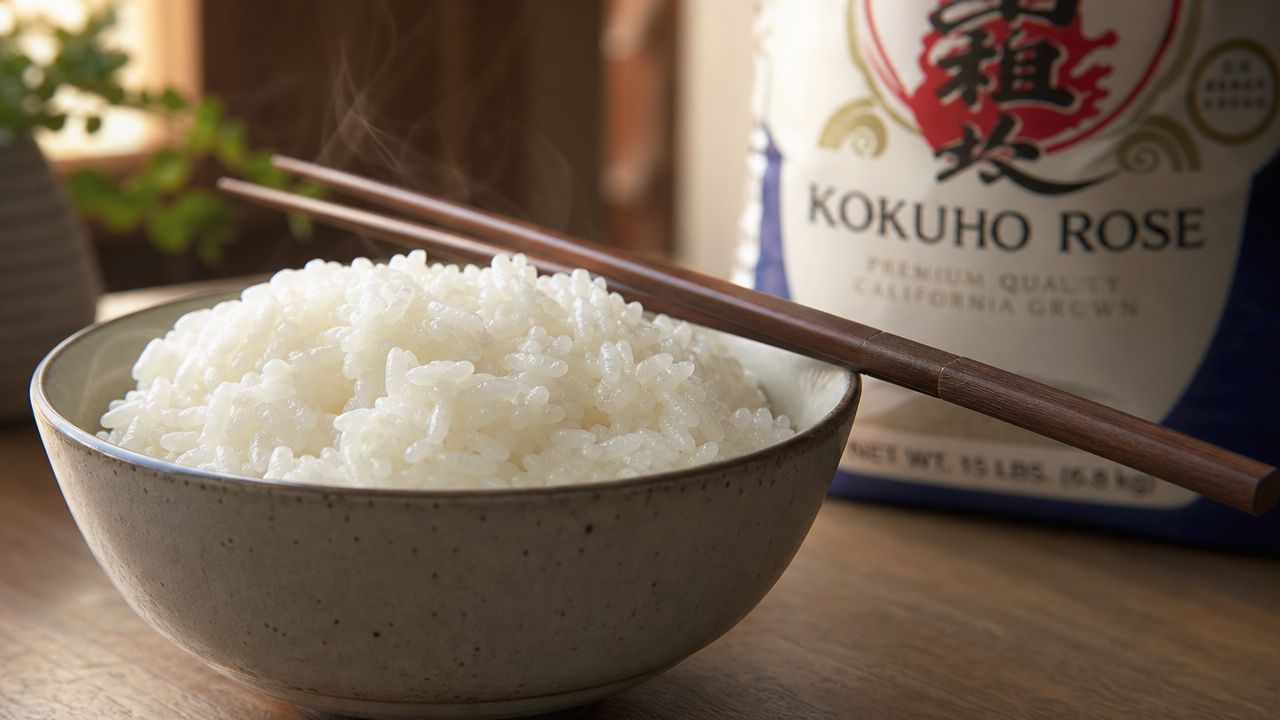
A good bowl of Japanese-style rice changes the whole meal. You notice it most when the rice is almost right but not quite. The grains may look fine, yet they turn dry, clump too hard, or disappear under sauce instead of supporting the dish.
That's why so many cooks become curious about Kokuho Rose Rice. It has long been one of the best-known Japanese-style rices in the United States, and it earned that reputation by being dependable, pleasant to eat, and especially well suited to meals where the rice must hold together without becoming heavy.
If you've seen the name on a bag and wondered what makes it special, the answer starts with heritage, but it doesn't end there. Kokuho Rose is also a practical rice to understand because its texture, cooking method, and even its modern production story all affect how confidently you buy and use it at home.
Introduction
For many home cooks outside Japan, the search starts the same way. You want rice that feels at home with Japanese food, but the shelf gives you a confusing mix of labels such as sushi rice, sticky rice, premium rice, California rice, and Japanese rice. Some bags promise authenticity. Others promise convenience. Few explain texture in a useful way.
Kokuho Rose Rice stands out because it isn't just a familiar brand name. It became a reference point for quality in Japanese-style table rice in the U.S., which is why it still appears in so many kitchens, grocery listings, and recipe conversations. If you want to understand whether it's right for sushi bowls, onigiri, donburi, or everyday meals, you need more than a label.
What matters is knowing where it came from, what kind of grain it is, how it cooks, and what recent production changes mean for shoppers who care about tradition and trust.
The Heritage of Kokuho Rose Rice
Kokuho Rose has a very specific place in Japanese-American food history. It is a proprietary medium-grain rice grown and sold by Koda Farms in California's San Joaquin Valley since 1963, and it has been described as having a uniform kernel with a texture that is slightly chewy and slightly sticky when cooked as white rice, according to CooksInfo's overview of Kokuho Rose Rice.

Why its origin matters
That description tells you two important things at once. First, this is not standard long-grain rice dressed up with Japanese branding. Second, its appeal comes from eating quality, not only nostalgia. Japanese cooking often asks rice to do several jobs at once. It should be tender, cohesive, and able to carry sauces or seasonings without turning mushy.
That balance helps explain why Kokuho Rose became beloved in households that cook Japanese food regularly. A bowl of plain rice, an onigiri lunch, or a sauced rice bowl all ask for a grain with some cling and some structure.
If you enjoy dishes served over rice, the logic is similar to the comfort found in donburi rice bowl meals. The rice isn't background. It is the foundation.
Practical rule: When a rice develops a reputation across generations, cooks are usually responding to texture consistency more than marketing.
A legacy beyond branding
Kokuho Rose also matters because it moved beyond being just one product among many. In practice, its name came to signal a recognizable style of eating quality. That's rare. Plenty of foods are popular. Fewer become standards that people use to judge other versions.
For international home cooks, that's useful because it gives you a clearer starting point. If you are trying to cook Japanese-style meals and don't yet know the fine distinctions among rice varieties, Kokuho Rose is easy to understand as a historical benchmark: California-grown, Japanese-American in legacy, and built around table quality.
That heritage is part of its charm. It carries the story of adaptation as much as tradition. It isn't rice grown in Japan, but it was shaped by cooks and producers who understood what Japanese meals demand from a bowl of rice.
What Makes Kokuho Rose Different from Other Rice
The first point to understand is grain type. Kokuho Rose is a medium-grain premium rice, which places it between long-grain varieties and true Japanese short-grain rice in both shape and eating character. In a USDA Agricultural Marketing Service grading document, another rice was described as having “table quality equal to Kokuho Rose,” showing that Kokuho Rose had become a benchmark rather than serving only as a label on a bag.

What medium-grain means on the plate
Home cooks often get stuck on the word “sticky.” They hear that Japanese food needs sticky rice and assume more stickiness is always better. That isn't right.
Kokuho Rose works well because it sits in the middle. It has enough adhesion to gather neatly with chopsticks and to support dishes like sushi bowls or onigiri, but it still keeps enough grain definition to feel light rather than pasty.
Here's a simple comparison:
| Rice type | Texture after cooking | Best everyday use |
|---|---|---|
| Long-grain jasmine | Fluffier, more separate | Southeast Asian dishes, pilaf-style meals |
| Kokuho Rose | Slightly chewy, slightly sticky | Japanese-style bowls, everyday table rice, onigiri |
| Japanese short-grain like Koshihikari | More cohesive and classic for Japanese rice service | Sushi, rice-centered Japanese meals |
This is why cooks who find jasmine rice too loose and some very sticky rice too dense often feel at home with Kokuho Rose.
How it compares with Japanese rice
Kokuho Rose is often grouped with Japanese-style rice, and that's fair in culinary use. But it's still useful to be precise. True Japanese short-grain rice usually gives a more traditional texture for sushi and formal Japanese rice service. Kokuho Rose gives a very appealing middle ground, especially for cooks in the U.S. who want versatility.
Kokuho Rose isn't trying to behave like jasmine rice, and it isn't exactly the same as premium Japanese-grown short-grain rice. Its value is in the balance.
That balance makes it forgiving. It pairs well with grilled fish, teriyaki-style meals, and rice bowls where sauce needs to coat the surface of the rice without collapsing the grain.
For readers exploring rice choices for family meals beyond Japanese cooking, a gentle, digestible grain can also be helpful in comfort-food planning. A useful example is this postpartum support meal bundle, which shows how rice can anchor simple, restorative meals in another culinary tradition.
Why cooks remember it
Many rice brands compete on origin, price, or packaging. Kokuho Rose became memorable because people could describe how it ate. That's a stronger form of reputation.
If your reference point has been long-grain rice, Kokuho Rose will feel more cohesive and more suitable for chopsticks. If your reference point is top-tier Japanese short-grain rice, it may feel slightly less classic, but still highly usable and often very satisfying for everyday Japanese-style cooking.
How to Cook Kokuho Rose Rice Perfectly
Cooking Kokuho Rose well is mostly about restraint. Don't drown it, don't rush it, and don't disturb it once the pot is doing its work.
A documented preparation guide notes that Kokuho Rose yields about 3 cups cooked from 1 cup uncooked, and specifies 1 cup rice to 1.5 cups water with a 20-minute simmer under a tight lid, then a short rest before serving, according to this product registry entry with preparation details.
A simple stovetop method
Use this as your baseline:
- Measure carefully. Start with 1 cup of uncooked rice and 1.5 cups of water.
- Rinse the rice. Wash it under cool water until the water looks much less cloudy. This helps remove excess surface starch.
- Add water and cover tightly. A good lid matters because steam is part of the cooking.
- Simmer for 20 minutes. Keep the lid on.
- Rest briefly off the heat. That short resting period lets moisture settle through the grain.
- Fluff gently. Use a rice paddle or spoon to lift and separate the rice without crushing it.
Where people usually go wrong
The most common mistake is treating medium-grain rice like pasta or generic white rice. Kokuho Rose wants a measured water ratio, not guesswork.
Another mistake is over-stirring. Once the grains are cooked, rough stirring smears starch across the surface and makes the rice heavier than it should be.
Kitchen note: If the rice seems slightly firm right after cooking, give the resting period a chance to finish the job before adding extra water.
If you're making seasoned rice for sushi bowls or a vinegared side, understanding how rice vinegar is used in Japanese cooking helps you keep the rice balanced rather than overly wet.
Rice cooker or pot
Kokuho Rose works in both. A rice cooker gives repeatability. A pot gives you more feel for what the rice is doing. Neither is automatically better.
What matters more is consistency. Use the same measuring cup, keep your lid closed, and pay attention to the final texture. After one or two batches, you'll know whether you prefer it a touch firmer for rice bowls or a little softer for simple table service.
Best Culinary Uses for Kokuho Rose Rice
Kokuho Rose shines most clearly in meals where rice is visible, tasted directly, and expected to support other ingredients without disappearing. That's why it works so well in Japanese-style home cooking.

Everyday bowls and side servings
Serve it beside grilled salmon, miso-based dishes, or simple protein-and-pickle meals, and its value becomes obvious. The rice has enough body to feel satisfying on its own, which matters in Japanese meals where plain rice is not filler. It is one of the main tastes on the table.
It also performs well in donburi-style bowls. Sauce can coat the grains, but the bowl still feels structured rather than soggy. That same quality makes it a comfortable choice with Japanese curry. If you enjoy rich rice dishes, this guide to Japanese curry spices and flavor building pairs naturally with the kind of rice texture many cooks want under curry.
Onigiri and chirashi-style meals
For onigiri, you want rice that holds when pressed but doesn't become gummy in the center. Kokuho Rose is well suited to that sort of shaping. The grains cling enough to make a proper rice ball, especially for casual home cooking.
For chirashi-style bowls, it offers another advantage. Toppings such as fish, cucumber, egg, and roe sit neatly on the rice, while the texture remains pleasant even after seasoning.
A visual guide can help if you're planning Japanese rice dishes at home:
Where it is less ideal
Kokuho Rose can be used for sushi-style meals at home, but if your goal is a highly traditional sushi texture, many cooks prefer true Japanese short-grain rice. That's not a criticism. It's about matching the rice to the result you want.
For most home kitchens, though, Kokuho Rose is an excellent “daily driver” rice. It handles simple bowls, lunchbox rice, and family dinners with ease.
A Smart Shoppers Guide to Buying Rice
Shoppers often ask a reasonable question. If Kokuho Rose has such a strong heritage, does the bag on the shelf today represent the same story it once did?
Recent reporting from the Los Angeles Times says the rice will remain available, but the milling and drying process is moving from Koda Farms to Western Foods' Woodland facility. That means the product is shifting from a farm-processed heirloom story toward a more industrial supply chain, as described in this Los Angeles Times report on the Koda Farms transition.

What authenticity means now
Here, many shoppers get confused. They think authenticity is a simple yes-or-no label. It usually isn't.
With rice, authenticity can mean several different things:
- Cultural authenticity means the rice is tied to a real cooking tradition.
- Production authenticity means the growing, milling, and handling story matches what buyers expect.
- Culinary authenticity means the rice behaves in the kitchen the way the cuisine requires.
Kokuho Rose still matters culturally and culinarly. But if part of its appeal for you was the original family-farm processing story, then the production change is important to know.
Heritage and current processing aren't the same thing. A smart buyer looks at both.
How to buy with confidence
When reading a rice bag or product page, focus on practical signs:
- Check the grain style. Terms like medium-grain and short-grain tell you more about likely texture than broad words like premium.
- Read the origin carefully. California-grown Japanese-style rice and rice grown in Japan are not the same category, even if both can be excellent.
- Look for cooking guidance. Clear instructions suggest the seller understands the product and expects consistent results.
- Match the rice to the dish. For sushi, many cooks prefer Japanese short-grain. For flexible daily use, a medium-grain rice can be ideal.
For shoppers interested in broader Japanese product sourcing, how products in Japan are selected and understood by overseas buyers is helpful context. The same logic applies to food. Origin, processing, and seller transparency all matter.
When to choose Japanese-grown rice instead
If your priority is the closest possible connection to Japanese agriculture, Japanese quality standards, and the classic texture used in Japan, then a Japanese-grown rice such as Koshihikari may be the better fit.
That doesn't reduce Kokuho Rose's value. It places it in the right category. It is best understood as a respected Japanese-style American rice with real heritage, rather than a direct substitute for every premium rice grown in Japan.
Proper Storage and Nutritional Information
Rice quality doesn't end at purchase. Even very good rice can taste tired if it sits in a warm, damp cupboard with the bag half open.
A practical approach is to move uncooked rice into a well-sealed container and store it in a cool, dry place away from direct light and heat. The goal is simple: protect it from moisture, kitchen odors, and pantry pests. If you buy more than you'll use quickly, divide it into smaller sealed portions so you aren't reopening the same large container again and again.
What the package information tells you
In major U.S. grocery channels, Kokuho Rose White Rice commonly appears in a 5 lb size, and one nutrition analysis page for a similar new variety rice lists 150 calories per serving, as shown on this Foods Co product listing for Kokuho Rose White Rice.
That tells you less about health claims and more about context. Kokuho Rose is sold as a mainstream staple food with standard packaging and standard nutrition labeling. For home cooks, that's useful because it means portioning and meal planning are straightforward.
Keeping portions practical
If you like to estimate meals around rice, it helps to note how much uncooked rice you normally use for a dinner, lunchbox, or family meal and repeat that measure consistently.
For readers who build mixed meals and want to estimate total nutrition from rice plus toppings, a recipe nutrient analyzer can be a practical tool. It's especially useful for chirashi bowls, curry rice, or donburi, where the toppings change the nutrition profile more than the rice itself.
You may also enjoy the cultural side of rice beyond eating. For example, rice water in Japanese beauty traditions shows how integral rice is to everyday Japanese life.
Conclusion
Kokuho Rose Rice earned its reputation through texture, consistency, and a heritage that matters to generations of Japanese-American cooking. It offers a pleasing middle ground: cohesive enough for Japanese-style meals, but still distinct enough to feel light and versatile.
It's also a rice worth truly understanding. Its legacy is real, and its current production story deserves attention from careful shoppers. If you cook it with the right water ratio, use it in the dishes that suit its character, and buy with clear expectations, Kokuho Rose can still be a very satisfying choice for the home kitchen.
If you're ready to explore authentic Japanese food, beauty, and lifestyle products with more confidence, Buy Me Japan is a useful place to browse carefully selected items shipped directly from Japan. It's a practical next step when you want products that connect more closely to everyday Japanese quality and culture.


Share:
Japanese Cast Iron Frying Pan: A Complete Guide (2026)
The Ultimate Guide to Non Alcoholic Japanese Drinks