


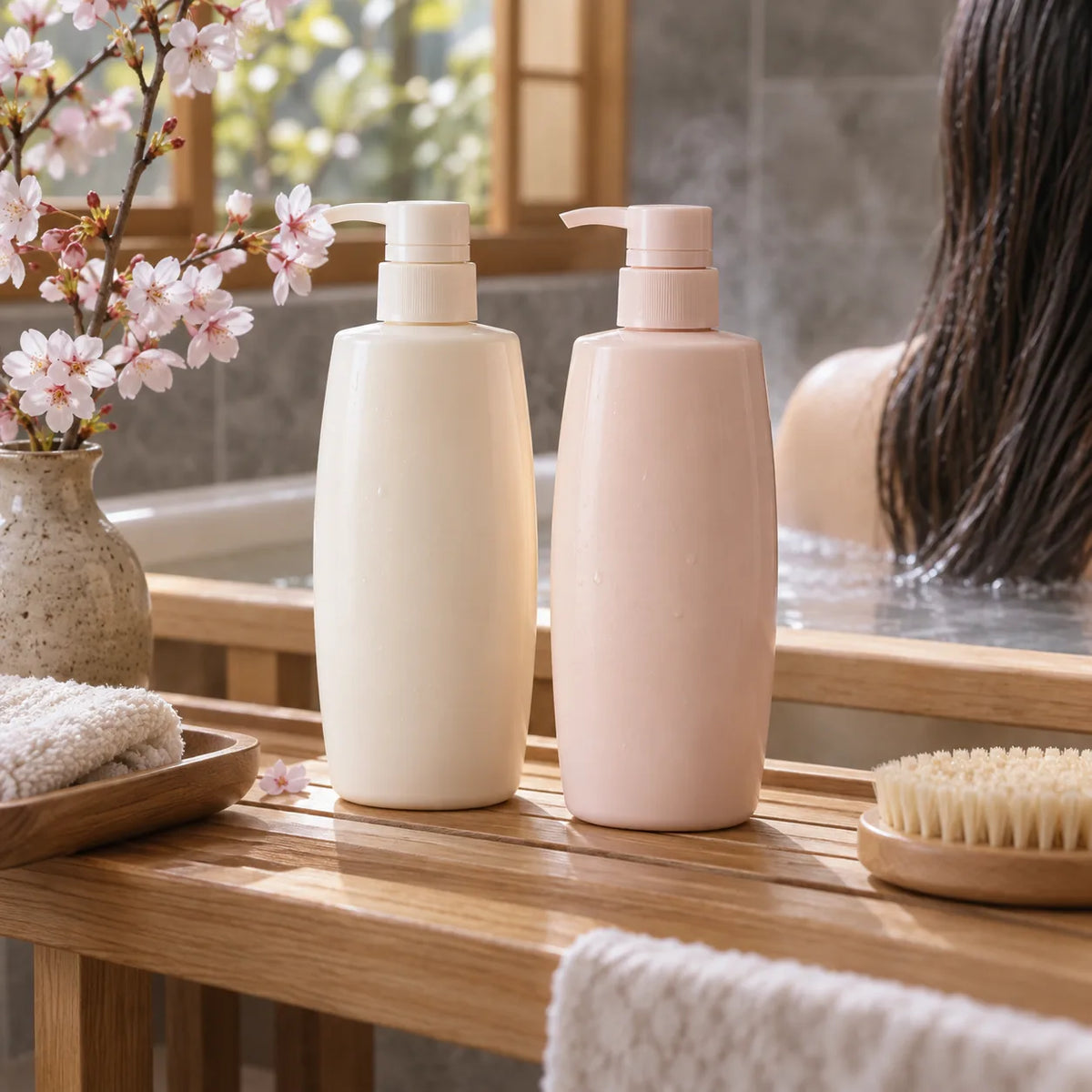
When you are choosing between Ichikami bottles, the color is the least useful part of the decision. Think about what happens after you rinse: does your hair snag at the ends, feel rough once it dries, or lose shape when the weather turns damp? That everyday clue is more useful than a broad promise on the front label.
Kracie’s range separates its care into smoothing, moisturizing and damage-repair/color-care lines, with a Premium Hair Treatment Mask as a separate step. The company describes the broader series as using Japanese botanical extracts in its hair-care approach. Those are the manufacturer’s descriptions, not a guarantee that one variant will suit every texture. The official Ichikami lineup is the best place to check the current range and exact product labels.
Choose by how your hair behaves between washes
If the lengths feel rough or catch when you detangle, a smoothing-oriented set is a sensible first comparison. If they feel dry and you want a softer, more conditioned finish, look at the moisturizing line. If you color your hair or routinely use heat tools, the damage-repair/color-care category is the one Kracie presents for that routine—but read the label and see whether the feel suits your hair before committing to a full-size pair.
Fine hair can be dry too. The answer is not always a richer formula; a small amount of conditioner placed from mid-length to ends may feel better than coating the roots. Coarse, curly or frequently processed hair may welcome more conditioning, but even then, a heavy finish is not automatically a better one.
Shampoo and conditioner do different jobs in the shower. Focus the shampoo at the scalp, where oil and styling residue collect, and let the rinse pass through the lengths. Put conditioner where your hair needs slip—usually the middle and ends—then rinse thoroughly. If your scalp becomes oily quickly, this simple placement adjustment can matter more than switching lines.
What “Japanese botanicals” should—and shouldn’t—tell you
Botanical ingredients can be interesting, but they do not tell you the whole formula. The product label, the variant name and the way your hair feels after drying are more useful buying clues than a single featured extract. A shampoo can smell lovely and still not be your best match; a conditioner can feel good in the shower but leave fine roots flat if too much reaches the scalp.
One practical way to test a new set is to keep the rest of your routine unchanged for a few washes. Do not add a new mask, oil and leave-in at the same time. If you change everything, it is difficult to tell which product made detangling easier—or which one left residue.
If humidity is the thing that makes your hair expand or lose definition, our guide to Japanese shampoo for frizzy hair covers that problem from a slightly different angle.
Three Ichikami options in the current catalog
These live listings cover two everyday sets and one separate treatment. They are useful starting points, not a ranking; choose the one that fits the way you wash and style your hair.
Kracie Ichikami Moisturizing Shampoo & Conditioner Set 450ml Each
Consider this pair if you tend to want a more conditioned feel through the lengths. Because it includes both shampoo and conditioner, it keeps the routine straightforward. If your roots are fine or become weighed down easily, start with a modest amount of the conditioner and keep it off the scalp.

Kracie Ichikami Smoothing Shampoo & Conditioner Set 450ml Each
This set is the more natural comparison if your main complaint is that the lengths feel rough or are hard to comb after a wash. The official product page positions Smoothing for hair that tangles or feels brittle; that is a useful description to compare against your own experience, not a promise of a salon finish.

Kracie Ichikami Premium Hair Treatment Mask 200g
A mask is a separate treatment step, not a required third bottle for everyone. It may be worth comparing if your lengths still feel dry or tangled after your regular conditioner. Follow the product directions on how often to use it, and start with the lower lengths rather than coating your roots.

A wash routine that leaves room for the formula
Give your scalp a thorough lukewarm rinse before shampooing. Use the pads of your fingers rather than nails, then rinse until the roots feel clean. One wash may be enough; a second is a choice for days with heavier styling or buildup, not a rule you must follow.
Before conditioning, squeeze excess water from the lengths so the product does not immediately slide off. Spread a small amount between your hands, work it through the mid-lengths and ends, and let it sit for the time on the label. Detangle gently while it is in, using your fingers or a wide-tooth comb, then rinse. A towel twist can rough up already tangly hair, so press or blot instead.
There is no single ideal number of wash days. If your scalp is comfortable, keep the schedule that works for you. If the lengths feel coated, use less conditioner or reach for a lighter format; if they still feel rough, a treatment mask may be a better experiment than adding oil everywhere.
Questions worth asking before you buy
Is Ichikami only for one hair type? No. The lineup itself has multiple care directions, so the important part is choosing the one that matches your concern and then checking how the formula behaves on your hair.
Should shampoo and conditioner always be from the same range? A matching set is convenient, but it is not mandatory. If your scalp and ends have different needs, you can keep the shampoo that cleans comfortably and choose a separate conditioner or mask for the lengths.
Does “damage repair” mean damaged hair is permanently fixed? Do not read a cosmetic product name as a permanent repair promise. Rinse-off products can change how hair feels and handles after washing; they cannot replace a trim for split ends. The product’s exact packaging and directions matter more than a broad category phrase.
For an easy start, select the Ichikami variant whose purpose sounds most like your hair, keep the rest of your routine steady, and pay attention to the dry-down. A bottle that makes shower hair feel silky but leaves the next morning’s roots limp is not a better match than one that makes wash day simpler.
It is fine to change one thing at a time
Hair habits shift with season, travel and styling. In humid weather, you may prefer less product through the lengths; in a heated room, the ends may want more conditioning. There is no need to switch your entire routine when the weather changes. Adjust the amount of conditioner or the frequency of the mask first, then decide whether a different shampoo variant is needed.
If you are new to the range, a matched set can be convenient, but it is also a bigger commitment than a single bottle. When you know which step you want to change, begin there. That small experiment gives you a clearer read on how your scalp and lengths respond than replacing every bottle in the shower at once.

Share:
Hair Conditioner Japan: Top Ingredients and Picks for 2026
Hada Labo Gokujyun vs Shirojyun: Which One to Choose