


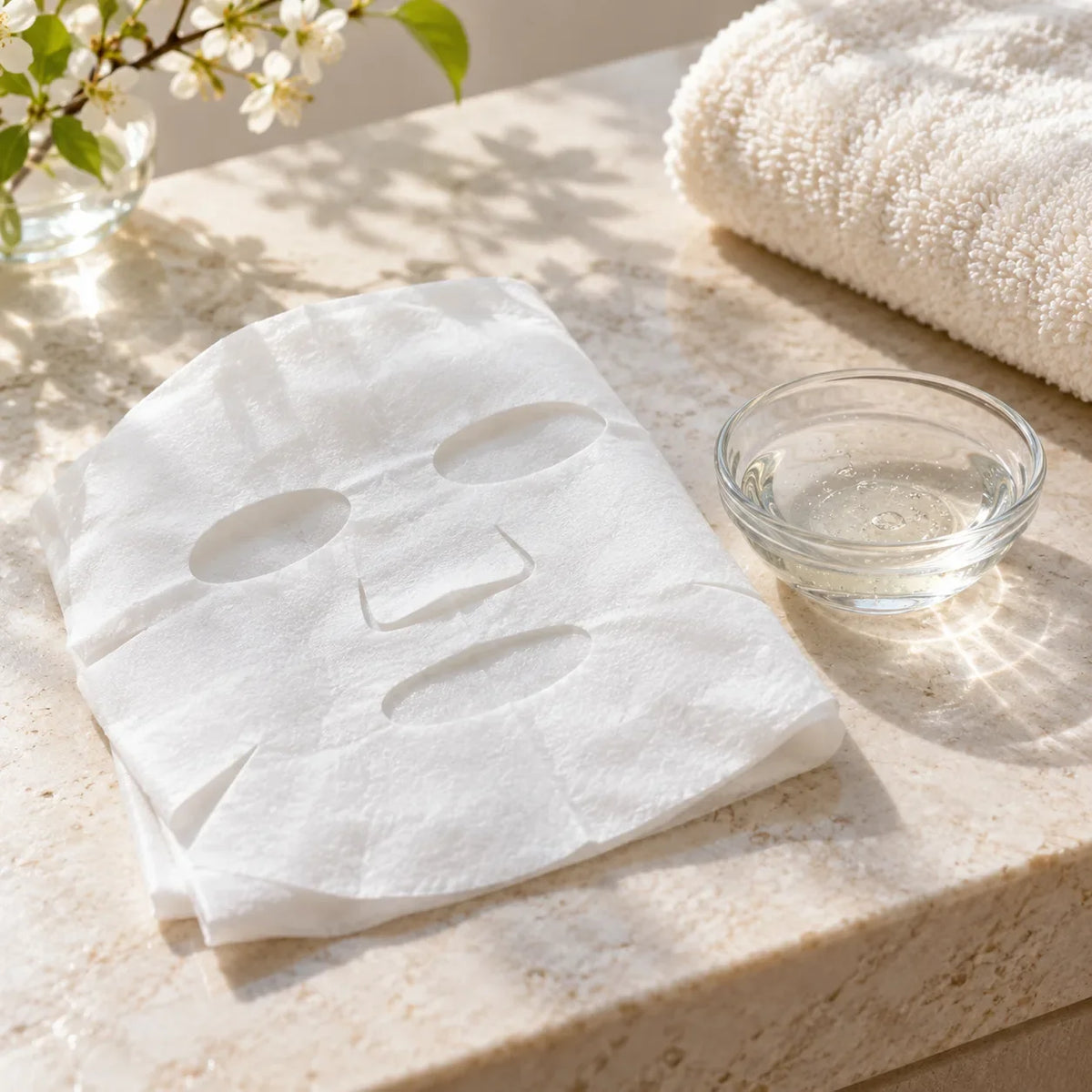
A sheet mask is at its best when it makes a routine feel easier, not when it is asked to do the work of an entire routine. Japanese daily masks come in everything from single packets to large multi-sheet packs, and that difference matters more in day-to-day life than a dramatic ingredient name on the front.
If you are deciding whether to use one often, start with the simple questions: does the sheet fit your face, does the formula feel comfortable, and will you actually use it according to the package directions? Those are better guides than treating a mask as a weekly “reset” or expecting overnight transformation.
What a sheet mask can—and cannot—do
A sheet mask is a delivery format: a pre-cut sheet holds a liquid or essence against the skin for a limited period. That can be a pleasant, convenient way to add a moisturizing step. It does not replace cleansing, a moisturizer that suits you, or sunscreen in the morning. The American Academy of Dermatology’s basic routine guidance puts cleansing first, followed by treatment products and moisturizer or sunscreen; adding too many steps can also irritate skin. See the AAD’s advice on product order.
Think of a mask as optional care for a day when you want that extra step. If your skin is already comfortable, there is no need to add one just because a calendar says “mask day.” If it stings, burns, or leaves persistent redness, take it off, rinse gently and pause the product.
Fit and feel beat the trendiest label
Look at the material and fit as much as the ingredient callouts. A sheet that is too large around the nose or mouth can bunch up; a stiff, poorly fitting mask may be more annoying than relaxing. The essence should feel comfortable rather than hot or itchy. Fragrance and botanical extracts can suit some people and bother others, so check the ingredient list if you know you react to particular ingredients.
“Daily” on a product name or marketing page is not a personal instruction. Use the product at the frequency and for the amount of time stated by its manufacturer. Do not leave a sheet on until it dries, and do not sleep in an ordinary sheet mask unless its directions specifically say that it is intended for overnight use. Longer is not automatically better.
Single sachet or value pack?
A single sheet is useful when you are trying a format for the first time; it limits the commitment if the texture or fit is wrong for you. Multi-sheet packs are convenient when you already know you like that formula and can store it as directed. With a tub or pouch, use clean hands or the included dispenser, close the package promptly, and follow any storage instructions. The point is not to turn sheet masks into a complicated ritual—it is to make the choice that you can use sensibly.
Do not compare packs only by sheet count. Check the size, the number of sheets, the listed ingredients and the directions on the actual package. Product names can be similar while formulas differ. If a listing uses a brightening or “anti-spot” phrase, treat it as product positioning, not a promise that a mask will erase pigmentation.
Three formats to compare

Kose Clear Turn Hada Fukkura Skincare Mask (50 Sheets)
A multi-sheet pack makes sense if you already know that you enjoy this format and expect to use it regularly. The practical question is whether a tub or pouch will fit your routine better than individually wrapped sheets.

Lululun Hydra V Mask Vitamin (7/28 Sheets)
The 7- or 28-sheet options make this a useful comparison for shoppers deciding between a smaller trial and a larger repeat-use pack. Check the selected size and current package directions before ordering.

VT Cosmetics CICA & Vitamin C Soothing Skincare Mask (30 Sheets)
This is another 30-sheet format to consider if a ready-to-use pack is more appealing than buying single masks. As with any formula, read the full ingredient list and discontinue use if it irritates your skin.
A routine that stays uncomplicated
On a mask day, cleanse gently, apply the mask as directed, then finish with moisturizer if your skin needs it. In the morning, sunscreen still belongs at the end of your skincare steps and before makeup. You do not need to layer a strong exfoliant or retinoid at the same time simply because you are using a mask; one new product at a time makes it easier to spot irritation.
When comparing Japanese daily sheet masks, let comfort, directions and package format lead. A mask can be a useful, enjoyable part of skincare, but consistency with a basic routine usually matters more than collecting extra steps.
A quick comfort check
When trying a new mask, pick a day when you are not also testing a new cleanser or active. If it feels warm, prickly or itchy, remove it; there is no need to “push through” discomfort. Rinse away residue if the package directions call for it, then use only familiar products. A small test on an inconspicuous area can help you notice an immediate reaction, though it cannot guarantee that a later reaction will not happen.
Store multi-sheet packs exactly as their label instructs. Keep the opening clean and closed so the remaining sheets are not unnecessarily exposed to air or handling. Check the package for the number of sheets and for any differences between “daily” and occasional-use versions. In a family of similarly named masks, packaging can look alike even when the intended use or ingredient list is different.
There is no need to use a sheet mask every day just because a product includes many sheets. If you enjoy the ritual and the formula is comfortable, follow its directions. If you find yourself adding masks on top of multiple serums, exfoliants and creams, simplify instead. A short routine that your skin tolerates is a better starting point than a long one you are constantly trying to troubleshoot.
Product details and availability can change; follow the current package directions and listing.

Share:
Japanese Skincare for Mature Skin Over 40: A Practical Guide
LuLuLun Mask Types: Complete Guide to Every Series