


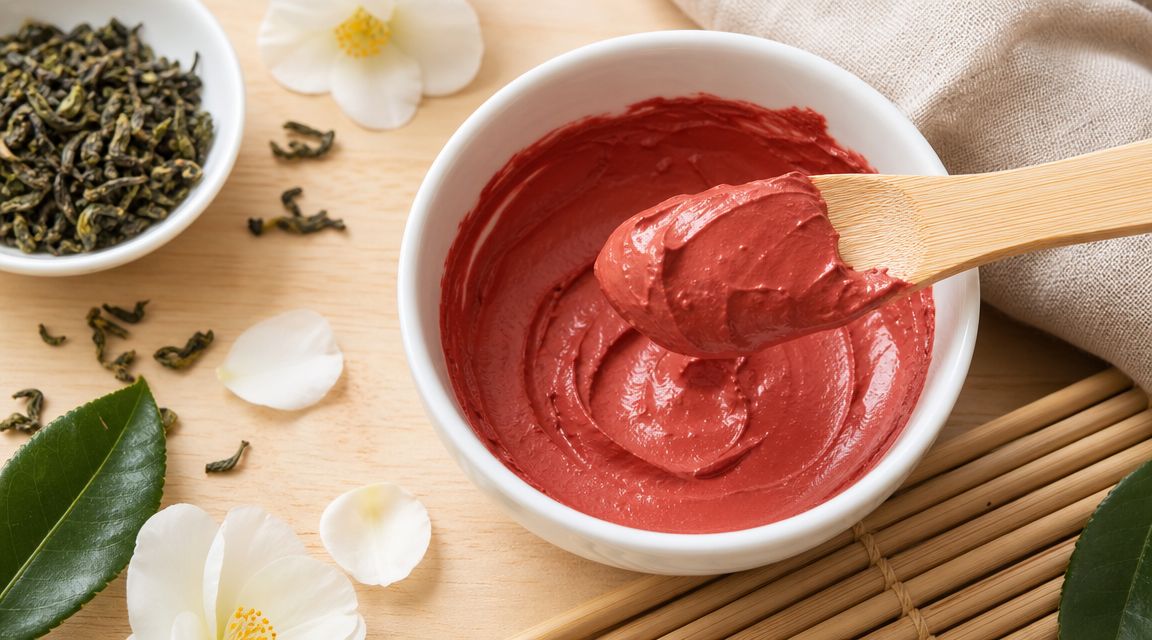
If you're looking at your skin and seeing two things at once, shine in the T-zone and dullness everywhere else, you're not alone. That mix of congestion and flat-looking skin is one of the most common reasons people start searching for a red clay mask.
In Japanese beauty, the goal usually isn't to push the skin hard. It's to bring it back into balance. A well-chosen clay mask fits that mindset very well because it can help lift away excess surface oil and impurities without turning your routine into an aggressive stripping cycle.
A red clay mask can be a smart option when you want skin to feel clearer, smoother, and more refined. The important part is knowing who it suits, how to use it safely, and what to choose if your skin is reactive. If you also enjoy broader J-beauty routine building, this guide to Japanese beauty products for glowing skin is a useful next read.
Your Introduction to Red Clay Masks
A red clay mask sounds simple, but many people get confused about what makes it different from other clay masks. The short answer is that red clay is valued for its mineral profile and its milder oil-absorbing character compared with stronger clays often used for very oily skin.
That difference matters. Some clay masks leave skin feeling “clean” for a few hours, then tight, dry, and uncomfortable later. Red clay is often a better fit for people who want purification with a softer touch.
Why people reach for a Red Clay Mask
Most readers I speak with usually want one or more of these things:
- Less visible congestion around the nose, chin, and forehead
- A fresher skin feel when makeup or sunscreen seems to sit heavily
- A more balanced finish instead of greasy by midday and dry by evening
- A gentle weekly treatment that doesn't feel as intense as a peel
Japanese skincare habits often treat masks as support products, not miracle products. That's a helpful way to think about red clay too. It isn't there to “fix” everything. It's there to help reset the skin surface so the rest of your routine works better.
A clay mask should leave your skin feeling calm and refreshed, not punished.
Where people often go wrong
The biggest mistake isn't choosing red clay. It's using any clay mask as if more time automatically means better results. Another common mistake is assuming a pore-focused product must suit everyone.
That's why safe use matters as much as ingredient choice. Skin that is oily can still be dehydrated. Skin that breaks out can still be sensitive. A red clay mask works best when you match it to your actual skin condition, not just your skin type label.
What Is a Red Clay Mask and How Does It Work
Red clay is typically made with iron- and copper-rich clay minerals, and the iron oxide content gives it its red color while also contributing to a mild astringent profile. In practical skincare terms, that makes red clay better suited to combination or acne-prone skin than to very dry skin because it can help adsorb surface oil and impurities while still being less aggressively stripping than some stronger clays, as explained in this overview of white, green, and red clay for the skin.

What it's doing on the skin
Think of a red clay mask like a very fine blotting layer that sits evenly across the skin. As it rests on the surface, it helps take up excess oil and cling to residue sitting around the pores.
It doesn't need to be harsh to be useful. That's the point many people miss.
A well-formulated red clay mask can help skin feel cleaner and look less heavy or shiny, especially in areas where sebum tends to collect. If enlarged pores are one of your main concerns, this article on how to reduce enlarged pores gives useful context for where masks fit into the bigger picture.
What astringent means in plain language
“Astringent” can sound severe, but here it means the clay can create a cleaner, tighter-feeling finish on the surface of the skin. That's why many people notice a more matte appearance after rinsing.
What it does not mean is that the mask should sting, over-dry, or leave the skin squeaky. If it does, the product may be too strong for your skin, or it may be staying on too long.
Practical rule: Clay should reduce surface excess, not strip away comfort.
Some readers also want to pair pore care with tone-evening goals. If that sounds like you, this guide on how to treat hyperpigmentation with face masks can help you think about masks more strategically without expecting one product to do everything.
Red Clay vs Other Clays A Simple Comparison
Not all clays behave the same way. That's why one person calls clay masks “amazing” and another says they can't tolerate them at all. Often, they're talking about completely different clay types.
Red clay usually sits in the middle. It offers more oil-absorbing action than very gentle white clay, but it's often less forceful than green clay formulas chosen for heavy oiliness.
Clay Mask Comparison Chart
| Clay Type | Best For Skin Type | Primary Benefit | Absorption Level |
|---|---|---|---|
| Red clay | Combination, acne-prone, mildly oily skin | Helps adsorb surface oil and impurities with a milder astringent feel | Moderate |
| Green clay | Oily skin | Stronger oil control and deep purifying feel | High |
| White clay | Sensitive, dry-leaning, or delicate skin | Gentle cleansing and softer feel on skin | Low |
How to choose the right one
If your skin gets shiny but also feels reactive, red clay often makes more sense than jumping straight to stronger green clay. If your skin is very dry or easily irritated, white clay is often the safer starting point.
This is also why Japanese skincare shoppers often do well with a “less but better” approach. One moderate product used correctly tends to outperform a stronger product used too often.
Here's a simple way to decide:
- Choose red clay if your main issue is mixed-zone oiliness, clogged-feeling skin, or a need for occasional purification.
- Choose green clay if your skin is consistently oily and tolerates stronger absorbent products well.
- Choose white clay if your skin barrier feels fragile, dry, or easily overstimulated.
Where confusion happens
People often assume the strongest clay is the most effective clay. That isn't how skincare works. The best clay is the one your skin can use consistently without rebound dryness or irritation.
If you enjoy texture-focused treatments, you may also want to compare clay masks with other cooling or hydrating mask formats. This overview of the hydro jelly mask is helpful because it shows how different mask categories solve very different problems.
A mask that suits your skin will usually give quieter, steadier results than a mask that gives one dramatic day followed by irritation.
How to Use a Red Clay Mask Safely and Effectively
Good results from a red clay mask come more from technique than from intensity. In Japanese beauty, application style matters. The skin should feel respected throughout the process.

Start with clean, calm skin
Use your mask after cleansing, not on top of makeup, sunscreen, or a day's worth of residue. If you wear long-wear sunscreen or makeup, proper removal first makes a real difference. This guide to the benefits of double cleansing explains why the first cleanse and second cleanse together create a better base for treatments.
Apply a thin, even layer. You don't need a thick coating for the mask to work. In fact, thicker application can make it harder to judge when it's time to rinse.
The safest method
Follow this sequence:
- Cleanse first so the clay touches skin, not residue.
- Apply a thin layer over areas that need oil control or congestion care.
- Avoid delicate zones such as the immediate eye area and any visibly irritated patches.
- Rinse before the mask becomes overly dry and tight.
- Follow with hydration so the skin feels balanced afterward.
One of the most common myths is that clay masks should dry completely and crack. That can leave the skin feeling over-pulled. For many people, the better moment to rinse is when the mask has set but hasn't turned into a dry shell.
If your face feels stiff and uncomfortable, you've probably left the mask on too long.
Who should be careful
Many brands focus on quick cosmetic results like “pore-tightening,” but it's important to know when to avoid use. For users with eczema, rosacea, or a compromised barrier, a clay mask's oil-absorbing properties can be too stripping. A better approach includes patch-testing, shorter wear times, or applying the mask only to oily areas like the T-zone, as noted in this practical guidance on Earth Tones Mask use and skin sensitivity.
That means you don't need to give up on clay completely. You may just need to change the method.
- Patch-test first if your skin reacts easily.
- Try multi-masking by using clay only on the nose, chin, and forehead.
- Keep contact shorter if your skin feels tight very quickly.
- Skip use entirely when your barrier is already stressed.
For a visual walk-through of mask application and removal, this can help:
What to do after rinsing
After a red clay mask, choose softness over activity. A hydrating toner, essence, or simple moisturizer usually makes more sense than piling on strong exfoliants.
This is especially true if you're new to clay masks. Your skin will tell you quickly whether the balance is right. If it feels cleaner but comfortable, you're on the right track.
Choosing the Best Japanese Clay Masks
When you shop for a clay mask through a J-beauty lens, don't focus only on the clay itself. Look at the full formula. Japanese skincare is often strongest when it balances a treatment ingredient with comfort-supporting ingredients.
That means a good clay mask isn't just “purifying.” It should also fit into a routine that protects the skin barrier.

What to look for on the label
A thoughtful formula often includes clay alongside ingredients that soften the overall experience.
Look for:
- Humectants such as glycerin or hyaluronic-acid-type ingredients to help offset post-mask tightness
- Soothing support from calming ingredients that reduce the chance of that raw, over-cleansed feeling
- A balanced texture that spreads easily and rinses cleanly instead of dragging across the skin
- Clear positioning for skin type, especially if your skin is sensitive or combination
If your skin is easily upset, this guide to Japanese skincare for sensitive skin is worth reading before you add any absorbent mask to your routine.
Good Japanese alternatives if you don't find a pure Red Clay Mask
A shopper looking for a red clay mask may also do very well with other Japanese pore-care masks and clay cleansers. In Japan, products are often designed around practical daily or weekly use rather than dramatic one-time intensity.
Examples to consider include:
- Rosette Cleansing Paste sea clay types for wash-off cleansing with a clay-based feel
- Keana pore-care products for people focused on nose area congestion and visible pores
- Rice-based masks such as Keana Nadeshiko Rice Mask when your skin needs support, softness, and pore-focused care in the same routine
These aren't identical to a red clay mask, but they reflect a very Japanese strength in formulation. Instead of relying on a single “hero” ingredient, they often combine cleansing, comfort, and routine compatibility.
The best Japanese mask is usually the one you can use regularly without having to spend days repairing your skin afterward.
Why authentic Japanese products appeal to international shoppers
Many international customers prefer Japanese skincare because the products are usually designed with texture, routine layering, and everyday tolerability in mind. That doesn't make every product perfect for every person, but it does make formulation quality an important buying factor.
Generic clay masks often sell the idea of dramatic detox. Japanese beauty shoppers are usually better served by products that respect skin balance.
The Takeaway Your Path to Clearer Skin
A red clay mask can be a very useful part of a routine when your skin feels congested, looks dull, or gets oily in specific areas. Its appeal is that it offers purification with a more moderate feel than stronger clays, which makes it easier for many combination and acne-prone skin types to use comfortably.
The most important habit is restraint. You don't need to leave clay on until it cracks. You don't need to use it all over the face if only your T-zone gets oily. And you definitely shouldn't force clay into a routine when your skin barrier is already irritated.
Japanese beauty philosophy is helpful here because it favors balance, consistency, and skin comfort. That's a strong match for clay masking. Choose formulas carefully, apply them gently, and follow with hydration.
If your wider goal is smoother-looking skin overall, not just less oil, this comprehensive guide to skin texture is a useful companion read because texture concerns usually need a routine approach, not a single product.
A red clay mask won't do everything. Used correctly, though, it can do one job very well. It can help your skin feel cleaner, calmer, and more balanced without pushing it too far.
If you'd like to shop authentic Japanese skincare with direct shipping from Japan, Buy Me Japan is a practical place to explore trusted J-beauty brands, pore-care treatments, masks, and daily essentials curated for international customers who want genuine products and reliable quality.

Share:
Japanese Eye Patch Guide for Brighter, Youthful Eyes
Milky Candy Fujiya: A Guide to Japan's Famous Sweet