


A typical 8-ounce cup of Japanese sencha has about 20-40 mg of caffeine. This is enough to provide a gentle lift in energy and focus, but it is much less than the jolt you might get from coffee.
It is this moderate, smooth energy that has made sencha the most popular daily tea across Japan. What is fascinating, and something we will explore here, is how much control you have over the caffeine in your cup just by adjusting how you choose and brew your tea. This guide will explain everything you need to know about sencha green tea caffeine.
Putting Sencha Caffeine in Perspective
When most people need a wake-up call, they often reach for coffee. But Japanese sencha offers something different, a more balanced and sustained alertness that feels less like a spike and more like a gentle awakening.
Understanding where sencha sits on the caffeine spectrum is key to appreciating its role in Japanese daily life. The goal is not a massive energy spike. It is about achieving a state of calm, clear-headed focus that supports your day.
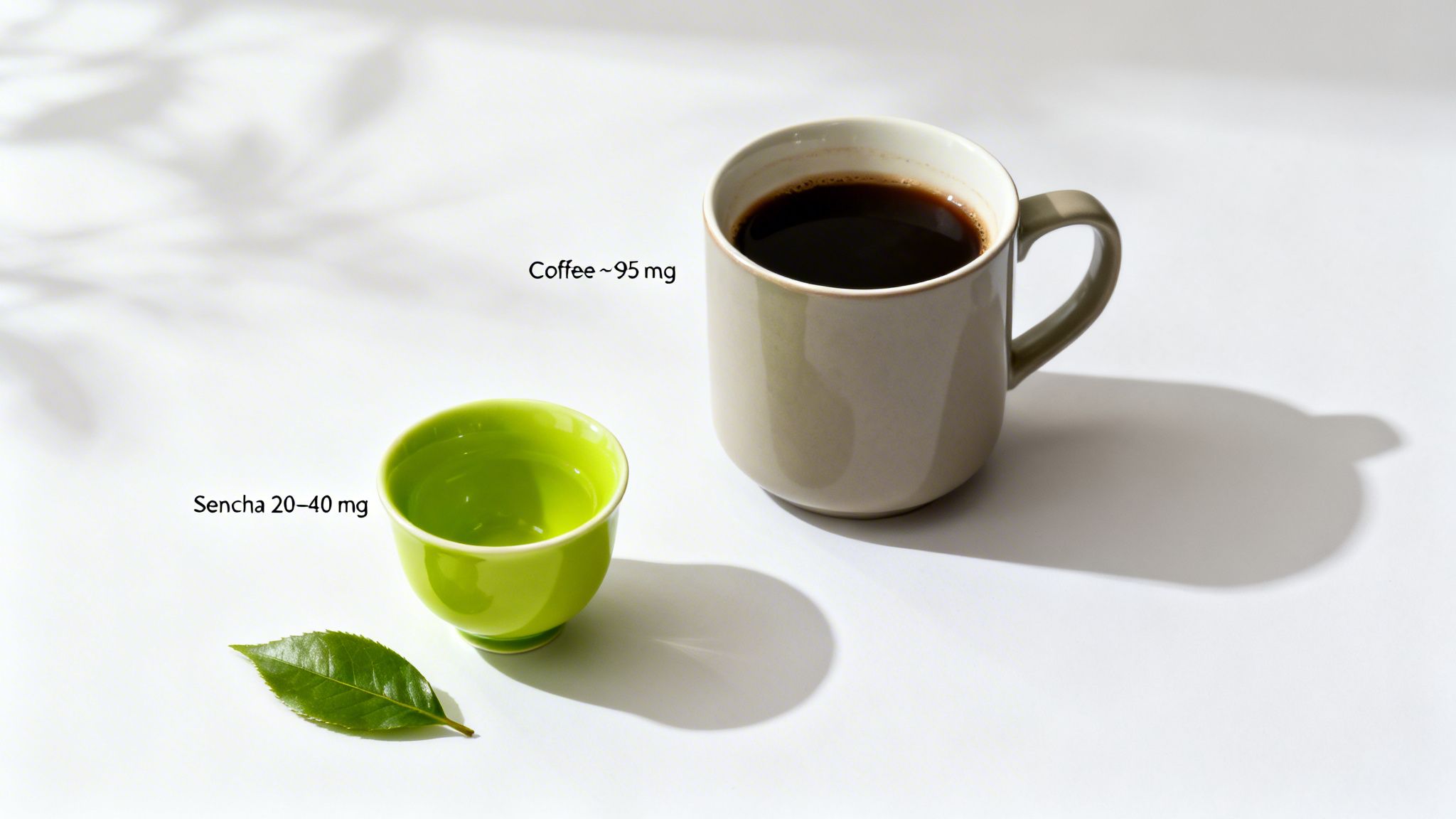
The numbers make this difference clear. A standard cup of coffee contains around 95 mg of caffeine, sometimes more. That delivers a powerful, immediate punch that can often lead to a crash later. Sencha, in contrast, smooths out that energy curve for a more stable experience.
Caffeine Quick Comparison Sencha vs Other Drinks
To really see where sencha fits in your day, it helps to compare it against other common drinks. Its moderate caffeine content makes it incredibly versatile. It is perfect for getting your morning started, but also a great choice for a mid-afternoon reset that will not keep you awake at night.
Here is a quick look at the numbers.
| Beverage | Average Caffeine (mg) |
|---|---|
| Coffee (8 oz) | 95 mg |
| Black Tea (8 oz) | 47 mg |
| Sencha Green Tea (8 oz) | 20-40 mg |
| Decaf Coffee (8 oz) | 2-7 mg |
This table highlights sencha's role as the perfect middle ground. It has enough caffeine to sharpen your mind and reduce drowsiness, but it is far less likely to trigger the jitters or anxious feelings that high-caffeine drinks can cause, especially if you are sensitive.
Sencha offers a mindful, enduring energy. It’s not about how high you can spike your alertness, but how long you can sustain a feeling of calm focus. That is the real magic of this everyday Japanese treasure. For a deeper dive into how other teas stack up, this guide on how much caffeine is in tea is a great resource.
What Determines Caffeine Levels in Your Sencha
Have you ever noticed how one cup of sencha gives you a gentle lift, while another feels more energizing? That is because the caffeine in sencha green tea is not a fixed number. It is a direct reflection of the tea plant’s journey, from a hillside in Japan to your teapot.
Several key factors shape the final caffeine level. These are the result of centuries of refined Japanese tea cultivation and production methods. Once you know what to look for, you can choose a sencha that perfectly fits the experience you want.
The Timing of the Harvest
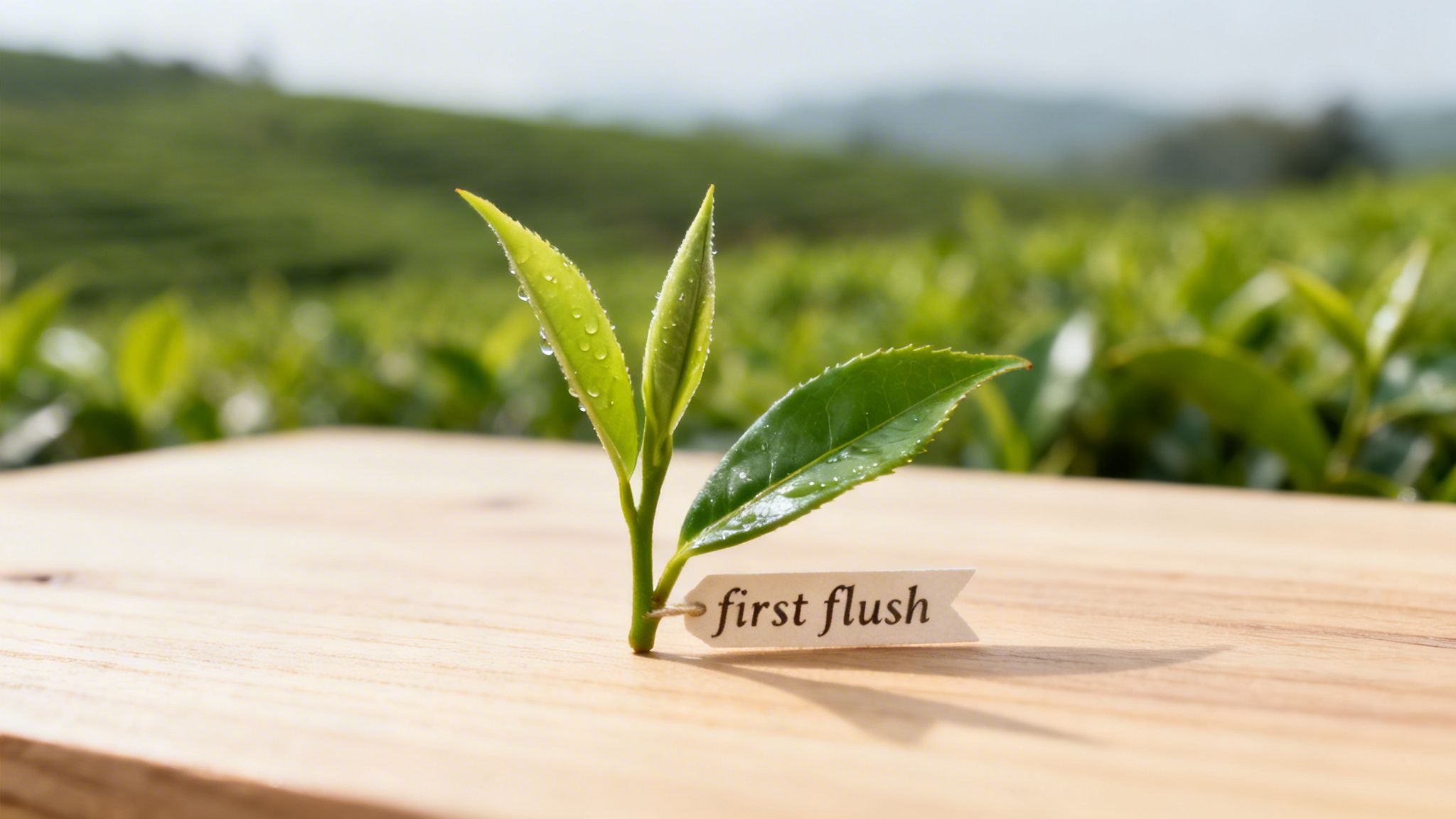
In the world of Japanese tea, timing is everything. The harvest season, or "flush," is probably the biggest influence on a tea's caffeine content.
The first flush (Ichibancha) is the very first harvest of the year, usually in early spring. The tea plant has spent all winter storing energy and nutrients. The result is young leaves that are packed with the highest concentrations of caffeine and flavor compounds like L-theanine.
Later flushes (Nibancha and Sanbancha) are harvested later in the summer and autumn. These teas have spent more time in the sun, which alters their chemistry. They typically have less caffeine and a more robust, sometimes astringent, flavor compared to the delicate sweetness of the first flush.
If you are looking for a more stimulating brew, always opt for a first flush sencha. This premium harvest delivers a potent yet nuanced experience, the classic "calm alertness" that makes Japanese green tea so unique.
Which Part of the Plant Is Used
Not all tea leaves are created equal. Where a leaf is plucked from on the Camellia sinensis plant directly impacts how much caffeine it contains.
The tea plant produces caffeine as a natural insect repellent. This protective compound is most concentrated in the youngest, most tender parts of the plant.
Young buds and shoots are the tender, new-growth buds and the top couple of leaves. They are richest in caffeine. This is exactly what is used for premium sencha, giving it not only a higher caffeine content but also a smoother, sweeter profile.
Mature leaves are the older, tougher leaves from further down the stem. They contain far less caffeine. These are typically reserved for lower-grade teas like Bancha, which is known for its mellow character.
Processing and Cultivation Methods
What happens after the leaves are picked also plays a role. Sencha is defined by its steaming process, which locks in its vibrant green color and fresh flavor by stopping oxidation. But even small variations in cultivation can make a difference.
For instance, some sencha is lightly shaded for a few days before harvest. This trick stresses the plant just enough to boost its caffeine and chlorophyll levels, deepening both its flavor and its energizing effect.
These elements are all part of the art of tea making. But the final piece of the puzzle is you. Your brewing technique is the last step in this journey, and you can learn all about it in our guide on how to brew Japanese green tea.
Comparing Sencha Caffeine To Other Japanese Teas
To get a feel for sencha's unique character, it helps to see where it stands among other Japanese teas. Not all Japanese green teas are the same, and their caffeine content can vary widely depending on how they are grown and processed. Knowing this spectrum is the key to picking the perfect tea for any moment.
Sencha hits the sweet spot right in the middle. It delivers a moderate, balanced lift that is just right for daily drinking. It has more kick than teas made from older leaves or roasted stems, but it is gentler than the prized, high-caffeine teas often saved for special occasions.
The Japanese Green Tea Caffeine Spectrum
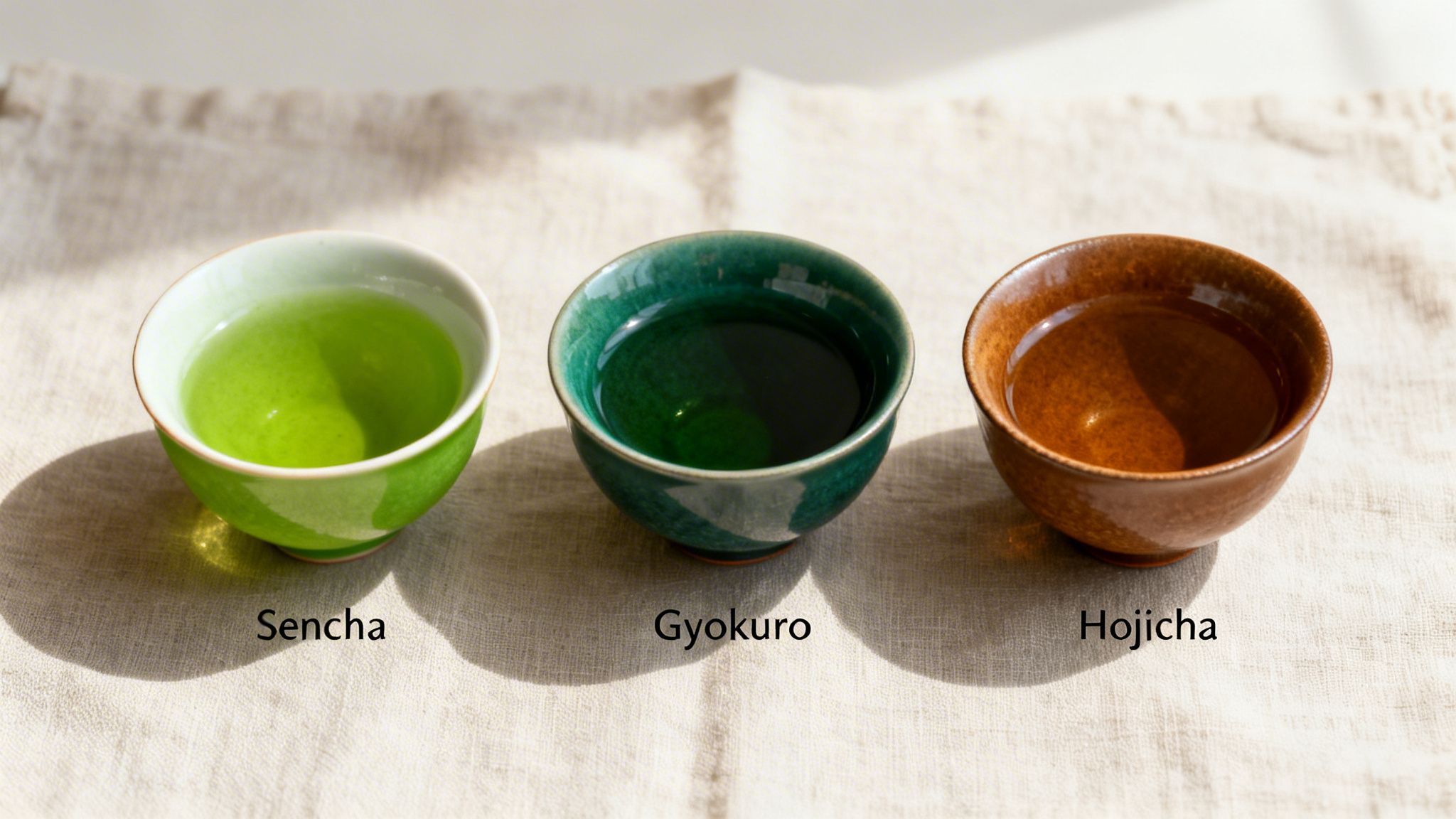
Think of it like a scale. On one end, you have highly stimulating teas like Gyokuro. On the other, you will find mellow, low-caffeine options perfect for the evening. Sencha sits comfortably in the middle, making it wonderfully versatile.
An average cup of sencha has about 20-40 mg of caffeine. This puts it well ahead of low-caffeine choices like Bancha or Genmaicha, which are closer to 12 mg. But it is much lower than Gyokuro, which can pack 140-160 mg per cup. This huge difference comes from a special shade-growing technique that supercharges the tea leaves with caffeine.
Choosing the right Japanese tea is like choosing the right kind of energy. Sencha is the reliable daily choice, Gyokuro is the high-performance option, and Hojicha is for relaxing in the evening. To help you visualize where your favorite brew fits in, here is a quick comparison of the caffeine you can expect from popular Japanese green teas.
Caffeine Levels Across Popular Japanese Green Teas
| Tea Type | Typical Caffeine (mg) | Key Characteristic |
|---|---|---|
| Gyokuro | 140-160 | Shade-grown for 3 weeks; produces intense umami and energy. |
| Matcha | 60-80 | Ground whole leaf; you consume all the caffeine. |
| Sencha | 20-40 | Sun-grown; offers a balanced, moderate, and refreshing lift. |
| Genmaicha | 10-15 | Sencha mixed with toasted rice; lowers overall caffeine. |
| Hojicha | 7-10 | Roasted leaves; the heat breaks down most of the caffeine. |
This table shows just how much variety there is. From the intense focus of Gyokuro to the gentle comfort of Hojicha, there is a Japanese tea for every need.
High Caffeine Teas Like Gyokuro
Gyokuro is one of Japan's most luxurious teas, and its caffeine level is part of what makes it so special. For about three weeks before the harvest, farmers cover the tea plants to block out the sun. This shading process stresses the plant, forcing it to produce more caffeine and chlorophyll. The result is a tea that is incredibly rich in both flavor and stimulating power.
Low Caffeine Teas Like Hojicha
On the complete opposite end is Hojicha. This tea is made by roasting sencha or bancha leaves over charcoal. This step not only gives it a beautiful reddish-brown color and a nutty flavor but also breaks down most of the caffeine in the leaves. This makes Hojicha a fantastic choice for a comforting brew that you can enjoy late into the evening.
By understanding these key differences, you can confidently explore the world of Japanese tea. To learn even more, check out our guide on the different Japanese tea types we carry at Buy Me Japan.
How To Control Caffeine With Your Brewing Method
You have far more control over the caffeine in your cup of sencha than you might think. Your brewing technique is the final, most direct way to manage that energizing kick. By tweaking two simple variables, water temperature and steeping time, you can adjust the caffeine level to suit your needs.
This turns brewing from a routine into a powerful tool. Need a strong start to your day? No problem. Looking for a gentle afternoon refresher? You can do that too. The power is in your hands to unlock the best of what your Japanese sencha has to offer.
Adjusting Water Temperature
One of the easiest ways to influence caffeine extraction is by managing the temperature of your water. Caffeine dissolves much faster in hotter water. This simple principle gives you control.
For higher caffeine, use hotter water, around 80°C (175°F), to pull more caffeine from the sencha leaves. This is perfect for a morning cup when you want a noticeable energy boost. Be careful not to use boiling water, which can scorch the delicate leaves and make your tea taste bitter.
For lower caffeine, use cooler water. A temperature around 70°C (160°F) works well. This gentle heat still brings out the tea's wonderful flavor but draws out less caffeine, making it a great choice for later in the day.
Modifying Steeping Time
Just as important as temperature is how long you let the leaves sit in the water. The longer the leaves steep, the more caffeine they will release. For total control, it is worth understanding how to steep loose leaf tea properly.
Think of your brew as a conversation between the leaf and the water. A shorter steep yields a light flavor with less caffeine. A longer infusion brings out more complexity and energy.
Here is how to use time to your advantage.
-
For a stronger, more caffeinated cup, let it steep a bit longer. Pushing the infusion to 60-90 seconds will draw out a higher concentration of caffeine.
-
For a milder, less caffeinated cup, keep the infusion short. A quick steep of just 45-60 seconds is enough to release the sencha's delicate notes while keeping the caffeine level low.
By playing with these two methods, you can fine-tune your tea perfectly. A low-temperature, short-steep brew will have the least caffeine, while a high-temperature, long-steep will deliver the most. You can dive deeper into perfecting your technique with our complete guide on sencha brewing instructions for the perfect green tea.
The Unique Energy of Sencha: L-Theanine and Caffeine
Ever wonder why the energy from sencha feels so different from a coffee jolt? The secret is a powerful partnership between caffeine and a remarkable amino acid called L-Theanine, found naturally in the tea leaves. This duo is the magic behind sencha's ability to sharpen your focus while keeping you calm.
While caffeine provides the energy, L-Theanine smooths out the rough edges. It is the reason you can feel alert without the jittery feeling that a strong cup of coffee can sometimes bring. This synergy creates a state of "calm alertness," a quality Japanese monks have used for centuries to deepen their meditation.
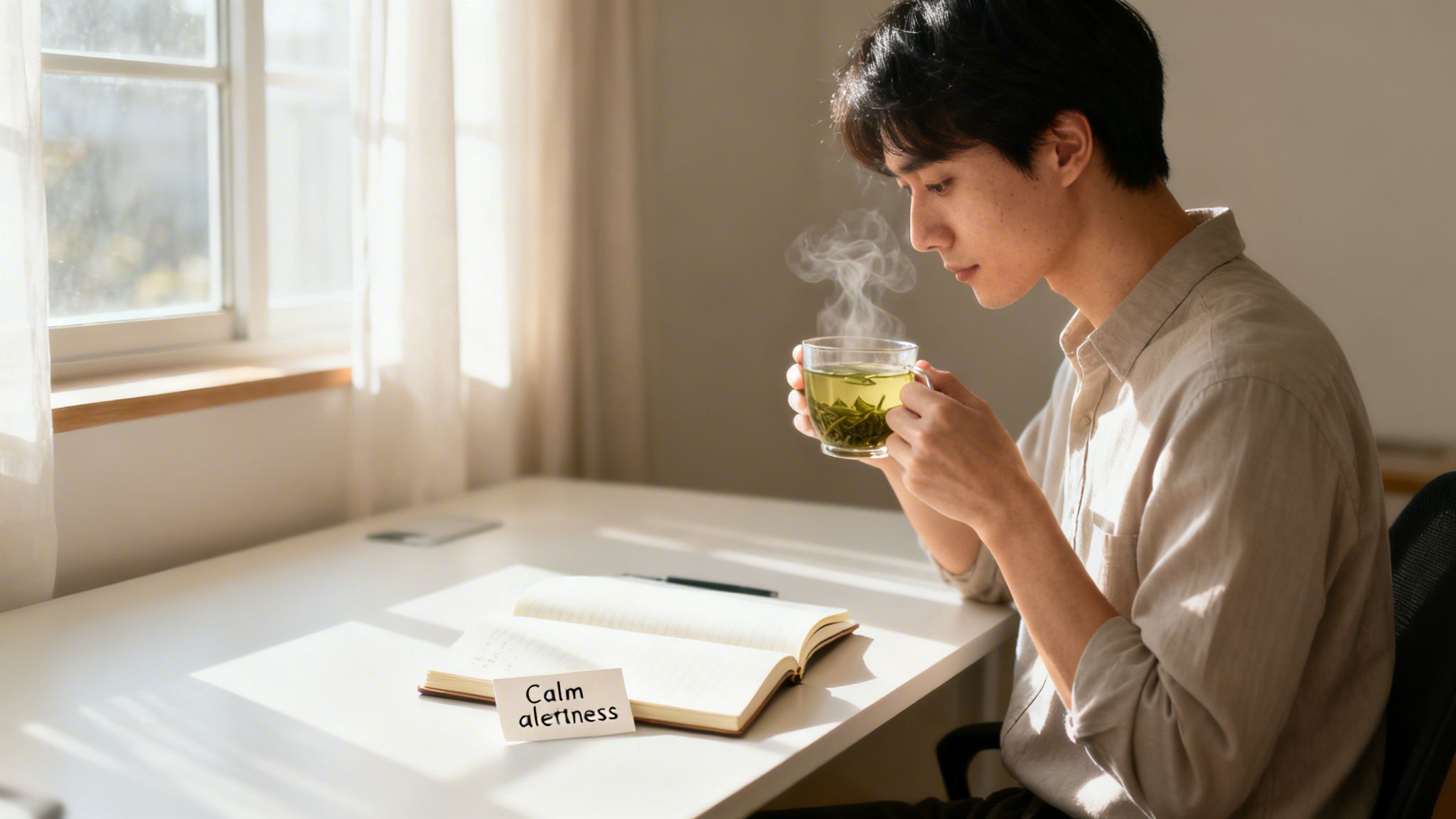
The Science of Calm Alertness
What's happening in your brain is fascinating. L-Theanine is one of the few compounds that can cross the blood-brain barrier, where it helps boost alpha brain wave activity. These are the same brain waves you produce when you are in a relaxed, meditative state.
So, when you sip a cup of sencha, you get two benefits. The focus from caffeine works by blocking adenosine, the neurotransmitter that signals sleepiness. The calm from L-Theanine tempers caffeine's more aggressive effects, leading to a smoother, more sustained energy lift without the afternoon crash.
This balanced approach is a cornerstone of the Japanese view on wellness. It is less about a frantic burst of energy and more about fostering a clear, productive state of mind. A typical 8-ounce cup of sencha contains around 35 mg of caffeine, a moderate amount that provides a gentle lift. You can see more caffeine comparisons over at Caffeine Informer.
Sencha does not just wake you up, it brings your mind into focus. This unique synergy provides a clean energy that supports productivity and mindfulness, making it more than a beverage. It is a tool for a balanced day. This potent combination is a hallmark of high-quality Japanese green teas. If you are interested in a more concentrated source of this focused energy, you can unlock the benefits of drinking matcha for wellness in our guide.
Choosing Authentic Japanese Sencha for the Best Experience
Now that you know what affects the caffeine in sencha, let's talk about choosing a quality tea. That special, focused energy from the caffeine and L-Theanine combination really shines when you are drinking authentic, high-quality leaves shipped directly from Japan.
There is a world of difference between sencha from renowned Japanese producers and the generic green tea bags you find in most supermarkets. Those often contain older, broken, lower-grade leaves, which leads to a flat taste and a much less refined energy boost.
Why Sourcing from Japan Matters
To get the true character of sencha, authenticity is everything. When you buy tea shipped directly from Japan, you are not just getting leaves. You are getting a product backed by centuries of farming knowledge and strict quality control.
Freshness is everything. Tea is a crop, and its quality fades over time. Sourcing directly from Japan cuts down the journey from the tea fields to your cup, preserving those delicate aromas and beneficial compounds.
Japanese tea farmers are masters of their craft. They follow high standards for everything, from which leaves are picked to the exact steaming time, all to create that clean, vibrant, and perfectly balanced brew.
Buying directly from Japan is about receiving the intended experience. You get the fresh flavor and the smooth, focused energy that Japanese artisans work hard to perfect.
At Buy Me Japan, we do the hard work of sourcing for you. We partner with respected producers to curate our tea collection, making sure every bag of sencha we ship from Japan delivers that true, balanced energy. Our direct shipping model ensures you get a fresh, authentic tea that mass-market brands cannot compete with.
To explore some fantastic options, have a look at our guide on the best Japanese green tea brands to try for your next brew.
Wrapping Up: Your Sencha & Caffeine Questions Answered
To finish up, let's answer some of the most common questions we get about sencha and its caffeine. Think of this as a quick, practical guide to help you sip with confidence and get the most out of every cup.
Can I Drink Sencha Green Tea in the Evening?
For most people, it is probably not the best idea. Sencha has a moderate amount of caffeine, typically around 20-40 mg per cup, which is enough to disrupt sleep.
If you are sensitive to caffeine, a good rule is to have your last cup of sencha at least six to eight hours before you plan to go to bed. If you are craving a warm drink in the evening, try a naturally caffeine-free Japanese tea like Mugicha (roasted barley tea) or the very low-caffeine Hojicha (roasted green tea). They are perfect for winding down.
Does the Caffeine in Sencha Cause Jitters Like Coffee?
It is highly unlikely. This is where the magic of green tea really shines. Unlike coffee, sencha contains a wonderful amino acid called L-Theanine.
L-Theanine works together with caffeine to create a unique effect often described as "calm alertness." You get the mental clarity and focus from the caffeine, but the L-Theanine smooths out the rough edges, preventing the anxiety and jitters that a strong cup of coffee can sometimes bring. The result is a much gentler, more sustained energy boost.
Is Organic Sencha Lower in Caffeine?
Not necessarily. Whether a tea is organic has almost no effect on its caffeine levels. What really matters are factors like the harvest time, the specific plant varietal, and how much sunlight the tea plant received.
An organic label is about the farming method, not the final caffeine content. For instance, an organic first-flush sencha, picked from young leaves in the spring, will almost always have more caffeine than a conventionally grown sencha harvested later in the summer from more mature leaves. The age of the leaf is a far more reliable indicator.


Share:
Rice Wine Vinegar Vs Mirin A Complete Pantry Guide
How to Use Fino Hair Mask for Salon-Worthy Hair at Home
1 comment
Ich trinke gerne Grüntee aus Japan. Es ist gut beschrieben… wie die richtig Kocht! Frühe müsste ich überall suchen nach eine echte Japanische Grüntee. Bis ich Ihre Webseite gefunden habe!!!