


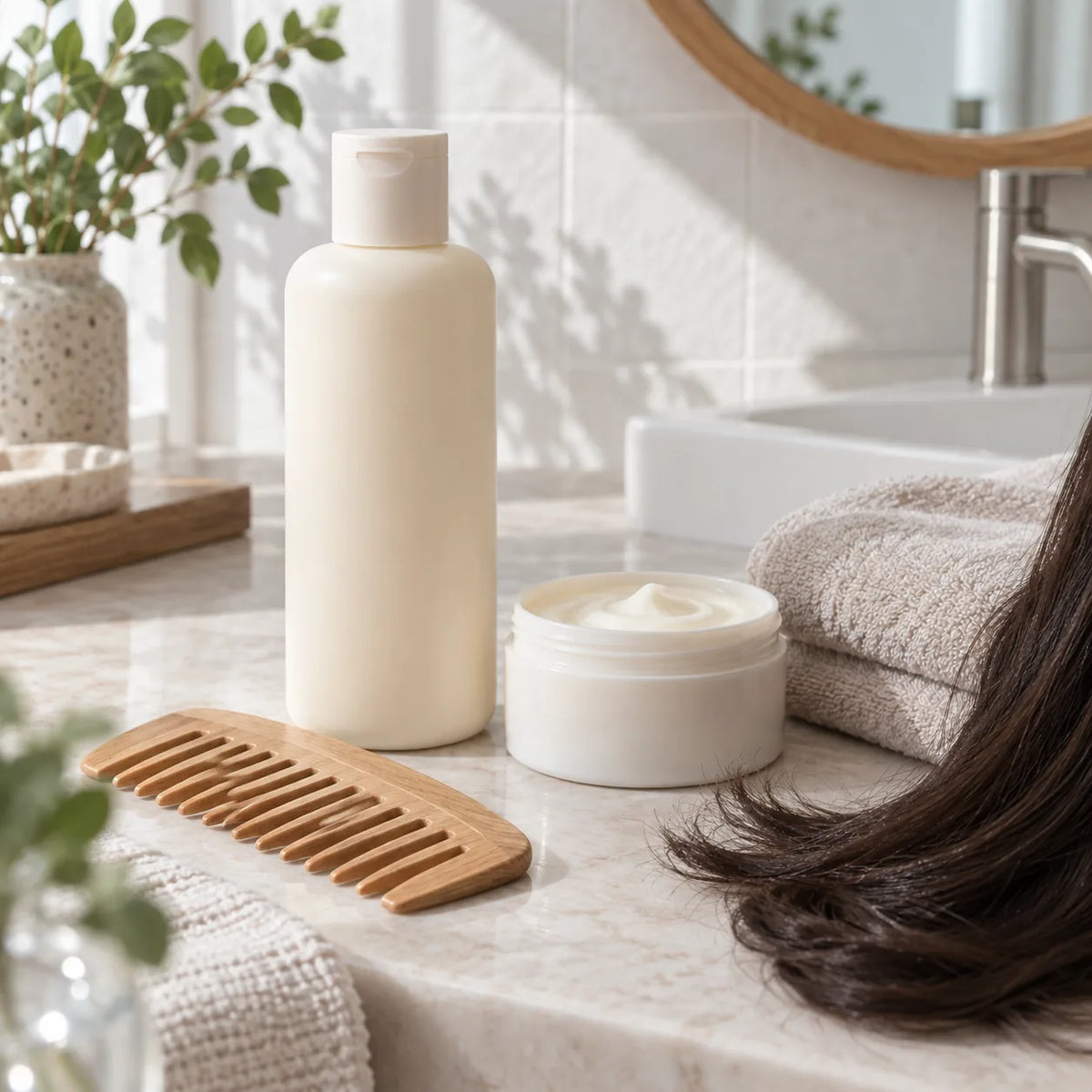
A conditioner can feel luxurious in the shower and still be wrong for your hair by lunchtime. What matters is the dry-down: do the lengths feel easier to comb, or coated and flat? Do the ends still catch on your fingers, or did a little slip make styling less of a fight? Those observations will narrow the search faster than a long ingredient list.
“Japanese hair conditioner” covers a lot of formats, from a regular rinse-out conditioner to a richer treatment mask or a set that pairs shampoo with treatment. The name on the front is a starting point, not a promise that the product will suit every strand.
First, separate the kinds of rinse-out care
An everyday conditioner is the easy partner to shampoo: spread it where you need softness and slip, let it sit for the time on the label, then rinse well. A hair treatment or mask is often marketed as a more intensive step. That may be useful when you want a longer conditioning routine, but “mask” does not mean you must use it every wash or leave it in longer than directed.
Products sold as a set are convenient if you want both steps in one purchase. They can also be less flexible: if a shampoo works well on your scalp but the paired conditioner is too rich for your ends, it is fine to separate the two. Your routine does not need to match the packaging.
Match the finish to your hair, not to a trend
Fine hair often benefits from a lighter hand. Place conditioner below the ears, rinse thoroughly and use a mask only when the ends actually feel rough. If roots go limp by the next morning, that is a sign to reduce the amount or keep the conditioner farther from the scalp—not necessarily to buy a clarifying shampoo immediately.
Coarse, curly or color-treated hair may feel better with more conditioning through the lengths. Try a richer treatment on the ends and see how it behaves after drying. If hair feels waxy or dull, reduce the quantity before blaming the whole formula. On the other hand, if detangling remains difficult after a careful rinse, a richer rinse-out step could be worth comparing.
Ingredient lists can help you rule out a known dislike, but a highlighted oil or botanical does not predict the complete feel. The finished formula, how much you use and how your hair is styled all affect the result. For frizz that changes with weather, our Japanese shampoo guide for frizzy hair offers a useful companion read.
Three ways to shop the current catalog
These active items show the range of formats more clearly than a single “best conditioner” list. Consider the form first, then decide whether the product’s label and directions fit the way you wash.
Shiseido Fino Hair Mask Treatment 230g
A standalone mask-style treatment for someone who wants to add a separate care step after shampoo. It is a more focused choice than buying a full shampoo-and-conditioner set. Start with the directions on the jar and apply to the lengths; there is no need to turn a treatment into an everyday extra if your hair is already comfortable.

Shiseido Ma Cherie Moisture Treatment Ex 180g
This is another individual treatment rather than a matched pair. The moisture wording makes it a reasonable product page to compare if you want a rinse-out step aimed at a softer-feeling finish. If your hair is fine, try a small amount and watch what happens after it dries before making it part of every wash.

8 The Thalasso Smooth Repair & Aqua Serum Shampoo and Treatment Set (475ml Each)
If starting with a coordinated two-step set feels easier, this active listing pairs shampoo with treatment. It is a practical comparison for shoppers who want a matched routine in one order. The product name uses “smooth repair,” but treat that as the line’s positioning rather than a promise to permanently reverse damage.

Technique can change the result
After shampooing, squeeze excess water out of the lengths before applying conditioner. When hair is dripping, product can slide off or spread unevenly. Use enough to coat the areas that tangle, work from mid-length to ends, and smooth it through with your hands or a wide-tooth comb. Rinse until the hair feels clean and flexible, not slick with leftover product.
Detangling starts before you reach for a brush. Press your hair in a towel instead of twisting it tightly, then start at the ends and move upward through knots. Pulling a comb from scalp to tips can turn a small knot into a painful tug. Keep heat tools moving and use a heat-protection product when you need one; do not assume a rinse-out conditioner gives heat protection unless its packaging specifically says so.
A mask can fit into this routine when your lengths need more care, but follow its label and pay attention to your own dry-down. If a mask leaves fine strands heavy, use it less often or only on the last few inches. If a conditioner makes the hair feel rough, adjust the amount and placement before switching every product you own.
What a conditioner can realistically do
A rinse-out product can change how hair feels, detangles and looks after washing. It cannot permanently mend a split end or undo every effect of heat and chemical services. If the ends are visibly splitting, a trim is the practical fix; if you are mainly dealing with surface roughness, a better-matched conditioner may make the daily routine easier.
There is no need to layer a shampoo, conditioner, mask, oil and serum all at once. Pick the smallest routine that leaves your scalp comfortable and the lengths manageable. That is usually a more useful measure of a Japanese conditioner than a dramatic front-label promise.
How to judge the result after a few washes
Do not judge a conditioner only by the feel while it is wet. Notice how easy the hair is to comb once it dries, whether the ends feel soft the next morning, and whether the roots keep their shape. Those are more useful signals than a single first impression. If a product feels too heavy, use less or move it farther down the hair; if it feels too light, try a little more on the ends before buying another formula.
Color-treated hair may make you gravitate toward a product whose name mentions repair, while naturally fine hair may push you toward a lightweight finish. Both are sensible starting points, but neither category guarantees a particular result. Read the label, make one change at a time and keep notes if you are comparing two products over a few weeks.
Finally, use the right amount for your length. A shoulder-length cut typically needs less product than long hair, and a thick head of hair may need more than a short fine style. Adjusting quantity is often the simplest way to get more from the bottle you already own.

Share:
Japanese Hand Cream for Dry Skin How to Choose Wisely
Ichikami Kracie Shampoo Guide to Variants and Care