


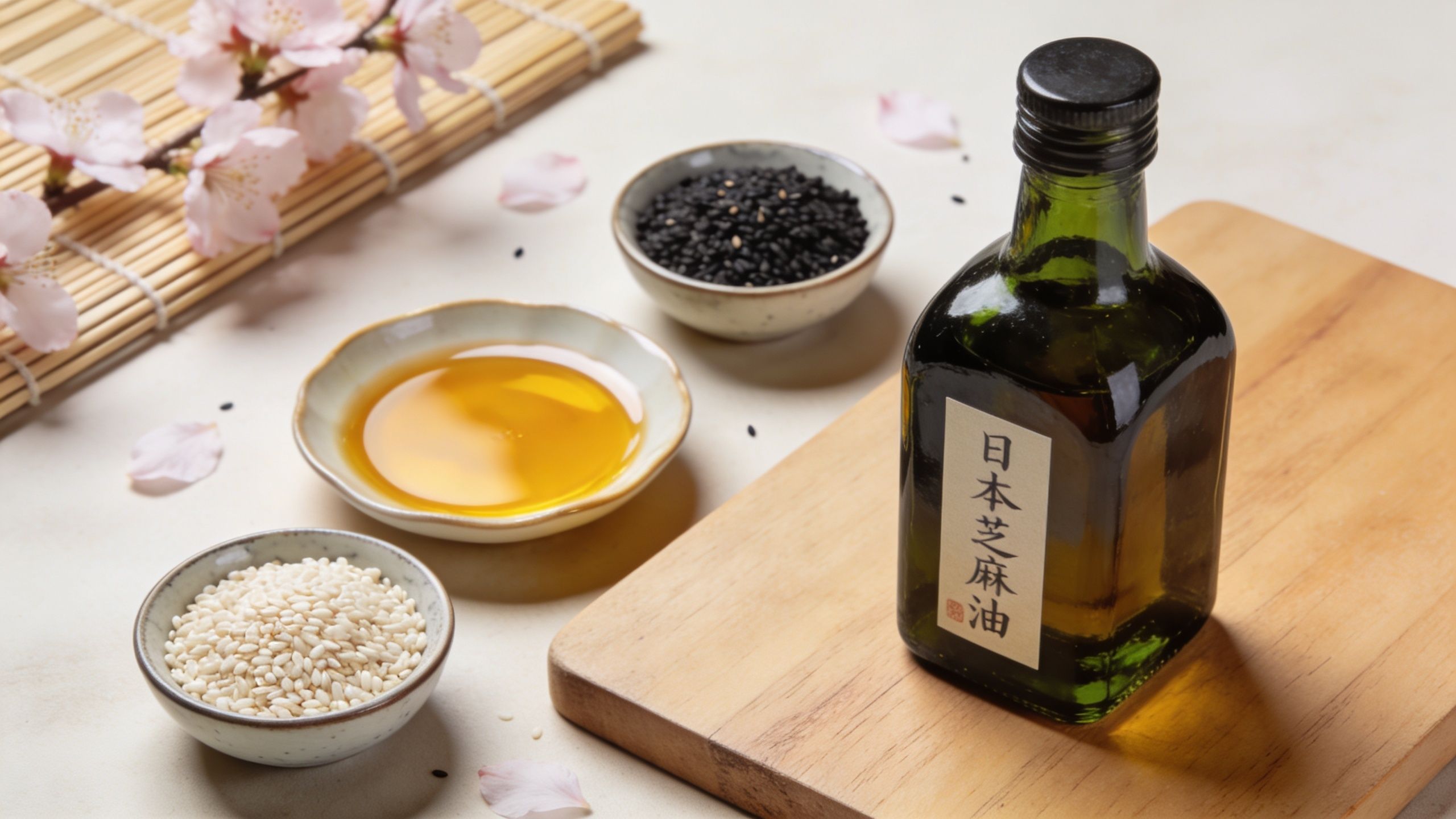
You’re probably here because you’ve tasted a dish in Japan, or at a Japanese restaurant, and noticed that the sesame oil felt different. Rounder aroma. Cleaner finish. More depth from just a few drops.
That difference is real. Japanese sesame oil isn’t just a generic cooking fat. It carries a long culinary history, a very specific production style, and a wider role that reaches beyond the kitchen into Japanese beauty culture.
If you want to understand sesame oil japan from a home cook’s point of view, this guide will help you choose the right type, use it properly, and recognize authentic quality. It will also explain why the same qualities prized in cooking have made sesame oil interesting in J-beauty.
The Soul of Japanese Flavor What Makes It Special
You drizzle a few drops over warm spinach, tofu, or noodles, and the whole dish seems to come into focus. That is part of what makes Japanese sesame oil special. It does more than add richness. It sharpens the outline of a dish the way a pinch of salt can make vegetables taste more like themselves.
Japanese sesame oil carries deep cultural meaning as well as culinary value. During Japan’s Nara period, sesame seeds were important enough to be used in imperial taxation and treated as a high-value commodity, according to the Culinary Institute of America’s history of fats in East Asia. That early status helps explain why sesame oil in Japan has long been judged with unusual care. It was never just an anonymous pantry fat.

A flavor with a clear role
In Japanese cooking, sesame oil is often used like a finishing brushstroke. A neutral oil supplies bulk. Sesame oil supplies aroma, warmth, and a faint roasted bitterness that keeps a dish from tasting flat. That distinction matters because new cooks often assume all sesame oil is used by the spoonful. In many Japanese dishes, a teaspoon is plenty. Sometimes a few drops are enough.
That measured use also explains why the oil can feel refined rather than loud. Good Japanese sesame oil does not need to dominate the bowl. It supports soy sauce, vinegar, miso, and dashi, adding depth without smothering the other flavors. If you want a clearer sense of that balancing effect, this guide to umami flavor in Japanese cooking is a useful companion.
Why quality stands out so quickly
Home cooks usually notice the difference in the finish. Lower-quality sesame oil can smell harsh or one-dimensional. Better Japanese oils tend to smell cleaner and taste more focused, especially when used at the end of cooking.
A simple way to understand it is to compare perfume with incense. Both are aromatic, but one can feel sharp and immediate while the other spreads slowly and stays balanced in the room. Japanese sesame oil often aims for that second effect in food. It lingers without becoming heavy.
The same quality logic appears outside the kitchen. In J-beauty, oils are often judged by purity, feel on the skin, and how well they perform in small amounts. Sesame oil has drawn interest for similar reasons. An oil that feels clean, carefully made, and stable is appealing whether you are dressing greens or smoothing a little onto dry hair ends. Dollhouse Botanicals on cold pressed oils offers helpful background on why pressing style matters when people evaluate oils for skincare use.
Premium status comes from use, not marketing alone
Japan’s strong export position in sesame oil reflects how widely this category is respected abroad. Analysts at IndexBox in its overview of Japan’s sesame oil market describe Japan as a dominant exporter by value, which fits what cooks already notice in the bottle. Japanese sesame oil is usually sold on aroma, balance, and trust in the producer.
That trust matters. A bottle of Japanese sesame oil is often used the way a cook uses a good soy sauce or finishing vinegar. Sparingly, deliberately, and with attention to what it does to the whole dish.
Japanese cooks use sesame oil to add character, shape, and a sense of completion. That is its soul.
From Seed to Bottle The Art of Japanese Production
You open two bottles of sesame oil before dinner. One smells broad and warm, like freshly toasted seeds. The other hits fast and fades just as quickly. That difference usually begins long before the oil reaches your pan. It starts with how the seeds are roasted, pressed, and handled after extraction.
Premium Japanese sesame oil is shaped by restraint. Producers often accept lower output in exchange for a cleaner aroma and a more precise flavor. Sesame Paste Japan’s explanation of first-press sesame oil describes a mechanical first-press method on roasted seeds and explains why makers who use it value quality in the finished oil over maximum extraction.

The key steps that shape the oil
Roasting comes first, and it does far more than darken the seed. It develops the signature nutty fragrance many cooks associate with Japanese sesame oil. Small changes in heat and timing can shift the oil from elegant and rounded to heavy or bitter. A skilled producer treats roasting the way a tea maker treats steaming or a coffee roaster treats the bean. Technique decides character.
Pressing comes next. First pressing aims to collect oil gently, with less force and less emphasis on squeezing out every last drop. For cooks, that often shows up as better clarity in the bottle and better definition on the plate. You taste sesame, but you can still taste the cucumber in a sunomono salad, the tofu under a finishing drizzle, or the broth beneath a few drops in ramen.
Why production style changes how the oil behaves
Good Japanese sesame oil works like a concentrated seasoning. You are not just adding fat. You are adding aroma, depth, and a roasted note that should sit in balance with the rest of the dish.
That is why lower-intervention extraction matters to more than flavor purists. The same qualities people look for in a cooking oil, purity, stable character, and a refined feel, also shape interest in beauty use. If you are curious how oil extraction methods are discussed outside the kitchen, Dollhouse Botanicals on cold pressed oils gives helpful background. Similar questions come up in Japanese hair care as well, especially in conversations about light, traditional oils such as camellia. This guide on how to use camellia oil for hair shows how Japanese beauty culture also values texture, purity, and controlled application.
What to notice as a home cook
If a sesame oil smells loud but not nuanced, production may be the reason. Better-made oils usually open with roasted aroma, then settle into sweetness, warmth, and a clean finish.
Here is what that means in practice:
- A finishing drizzle stays clear: the aroma reads as toasted and nutty, not burnt or muddy.
- Small amounts do more work: a few drops can season a bowl without making it greasy.
- Other ingredients remain visible: the oil supports the dish instead of flattening it.
A useful rule is simple. Strong aroma alone is not proof of quality. The best Japanese sesame oils smell distinct, but they also smell composed.
Why trust often follows process
Japanese producers tend to earn loyalty by being specific. Labels often distinguish roast level, intended use, and pressing style. That kind of precision helps because sesame oil is not one broad category. One bottle may be built for finishing, another for stir-frying, and another for a lighter, cleaner profile.
For the home cook, this production philosophy matters on both the stove and the bathroom shelf. An oil made with care tends to feel more intentional in every use. In food, that means better aroma and cleaner flavor. In beauty, it supports the same preference for purity, control, and using a small amount well.
A Guide to the Types of Japanese Sesame Oil
Most confusion around sesame oil japan comes from the idea that there is one “correct” bottle. There isn’t. Japanese sesame oil comes in several styles, and choosing the right one depends on what you want the oil to do.
Some oils are meant to perfume a dish at the last second. Others stay more restrained and let the rest of the ingredients speak. A few are so distinctive that they change the entire direction of a sauce or finishing drizzle.
Choosing Your Japanese Sesame Oil
| Type | Color & Aroma | Flavor Profile | Best Culinary Use |
|---|---|---|---|
| Standard toasted sesame oil | Amber to deeper brown, fragrant and roasted | Nutty, savory, rounded, noticeable even in small amounts | Finishing oil, dressings, dipping sauces, noodle bowls |
| Untoasted or cold-pressed sesame oil | Paler color, gentler aroma | Mild, clean, softer sesame character | Light cooking, delicate sauces, recipes where you don’t want a heavy roasted note |
| Black sesame oil | Darker tone, more pronounced aroma | Deeper, more robust, often richer tasting | Bold dressings, hearty vegetable dishes, distinctive finishing use |
Toasted sesame oil for familiar Japanese aroma
This is the style many people recognize first. In Japanese, you’ll often hear goma abura, meaning sesame oil. In everyday use, many cooks mean the toasted style unless they specify otherwise.
Use this when you want the oil to announce itself. A few drops over miso soup, cold tofu, cucumber salad, or ramen can make a dish feel complete. It also works beautifully in dipping sauces with soy sauce and a little acid.
The common mistake is using too much. Toasted sesame oil isn’t usually a neutral cooking oil. Think of it more like a seasoning.
Start with drops, not spoonfuls. Taste. Then decide if the dish needs more aroma.
Untoasted and cold-pressed styles for restraint
Some readers are surprised that milder sesame oils exist in Japanese food and beauty conversations. These versions have a softer scent and a less assertive roasted profile.
That makes them useful when you want sesame character without the dark toasted edge. Delicate vegetables, lighter broths, and some beauty-oriented uses often fit better with this style. If you already use plant oils for hair care, this gentle approach may remind you of how Japanese routines value texture and compatibility over heaviness. The same mindset appears in this article on how to use camellia oil for hair.
Black sesame oil for deeper character
Black sesame oil isn’t the default choice for every kitchen, but it has a devoted following. It tends to feel fuller and more dramatic. If standard toasted oil gives a clean roasted accent, black sesame oil can feel moodier and more intense.
Try it in small amounts with:
- Warm noodle dishes: Especially where soy sauce and vinegar already provide structure
- Sesame-forward dressings: Good when you want the oil to be a central flavor, not a background note
- Vegetable sides: Roasted eggplant, mushrooms, or spinach can handle the stronger profile
How to choose without overthinking it
If you cook Japanese food at home only occasionally, begin with one good toasted sesame oil. It’s the most versatile and the easiest to recognize in classic flavor combinations.
If you also care about beauty uses or prefer subtler seasoning, add an untoasted or gentler cold-pressed style later. If you love bold, roasted depth, black sesame oil becomes an interesting specialist bottle rather than an all-purpose one.
The primary goal isn’t building a collection. It’s matching the oil to the dish.
The Culinary Masterstroke Using Sesame Oil in Japanese Cooking
Japanese sesame oil shines when used with intention. Many home cooks either underuse it because they fear overpowering a dish, or overuse it because they want instant flavor. Japanese cooking usually takes the middle path.
A few smart uses will teach you more than any long ingredient list.
As a finishing touch
Think about a simple bowl of noodles. The broth is hot, the toppings are mild, and everything tastes good but slightly incomplete. Add a small drizzle of toasted sesame oil, and the bowl suddenly has aroma that reaches you before the first bite.
That same move works with miso soup, steamed greens, chilled tofu, mushroom dishes, and rice bowls. The oil doesn’t need to dominate. It just needs to bridge the other flavors.
A finishing oil should make the dish smell more alive, not more oily.
In dressings and simple sauces
Japanese sesame oil is excellent in small-format sauces because its aroma survives dilution. Mix it with soy sauce and acid, and you have something balanced almost immediately.
Try these easy frameworks:
- For cucumber salad: Sesame oil, soy sauce, and rice vinegar
- For a dipping sauce: Sesame oil, soy sauce, and a little chili element
- For spinach or green beans: Sesame oil with ground sesame and a savory base
If you cook plant-based meals often, tofu is one of the best ingredients for seeing how sesame oil behaves. This Smokey Rebel tofu seasoning guide is a helpful companion because tofu responds so well to aromatic oils and layered seasoning.
In marinades and stir-fries
Some cooks assume toasted sesame oil should never be heated. That’s too simplistic. It depends on the type and the dish. Refined Japanese sesame oil has a smoke point of 210-230°C, making it suitable for high-heat uses like tempura and stir-fries, according to the Kadoya product technical sheet.
That said, using your most fragrant toasted oil as the primary frying fat can mute the subtle notes you paid for. In home cooking, a common approach is to use sesame oil as part of the flavor base rather than the entire fat source.
Here’s a practical pattern that works:
- Cook the main ingredients as needed.
- Add sesame oil near the end or in a modest amount at the start.
- Finish with another tiny drizzle if the aroma needs lifting.
That gives you depth without flattening the dish.
For readers who enjoy grilled or pan-cooked meats, sesame oil also plays well in Japanese-style marinades built around soy sauce, sweetness, and aromatics. This guide to Japanese marinade for beef shows the kind of balanced seasoning structure where sesame oil can contribute real value.
Tempura and high-heat use
Historically, sesame oil became important in tempura cooking in Japan, especially when blended with other oils for flavor and frying performance, as covered earlier in this guide. For the home cook, the lesson is not that every tempura batch needs a full pot of expensive sesame oil.
The lesson is that Japanese cooks have long understood sesame oil as both aromatic and technical. It isn’t just decorative. The right type can support cooking performance while also contributing flavor.
Three dishes where it makes the biggest difference
- Cold noodle salad: The oil gives fragrance to ingredients that haven’t been browned or thoroughly cooked.
- Goma-ae style vegetable dishes: Sesame flavor becomes the core identity of the dish.
- Weeknight stir-fries: Even a small amount can shift the result from generic to recognizably Japanese.
Used well, sesame oil doesn’t shout. It sharpens the whole dish.
The Unexpected Benefit Japanese Sesame Oil for Skin and Hair
Sesame oil is commonly regarded as a kitchen staple. That’s understandable, but incomplete. In Japan, the same interest in purity, pressing method, and ingredient behavior has also made sesame oil relevant to beauty-minded consumers.

The underexplored part is this: the qualities that make a good sesame oil stable and appealing in food also make sesame-derived oils interesting in personal care. The PMC review discussing sesame oil applications notes that antioxidants such as sesamol and sesamin support its use in cosmetic formulations, and it also notes the APAC sesame oil market valued at USD 1.7 Bn, with cosmetics as a key growth driver.
Why beauty users pay attention to it
For skin and hair, people usually care about slip, softness, and how an oil behaves once applied. Heavy oils can feel suffocating. Poorly processed oils can smell unpleasant or sit awkwardly on the skin.
Japanese beauty culture tends to prefer products that feel elegant and purposeful. That’s why ingredient quality matters so much. A well-made sesame oil or sesame-based formulation can appeal to people who want nourishment without a rough, greasy finish.
This broader mindset is easier to understand if you compare J-beauty with neighboring beauty traditions. Mirai Skin’s expert skincare comparison gives helpful context on how Japanese routines often emphasize simplicity, refinement, and consistency.
Practical ways people use the idea
Pure sesame oil isn’t a universal answer for every skin type, and it shouldn’t replace a full skincare routine. But the ingredient profile helps explain why sesame appears in beauty conversations at all.
Common practical uses include:
- As part of a cleansing step: A small amount can help loosen makeup and sunscreen before a proper wash
- In hair care: Used sparingly on dry ends or as part of a pre-wash treatment
- In body care blends: Especially where a richer oil feel is welcome
If you’re interested in hair oils specifically, it helps to think in terms of texture and finish rather than “stronger is better.” That’s the same logic behind Japanese honey hair oil routines, where shine, softness, and manageability matter more than a heavy coating.
Here’s a useful visual overview of beauty-oriented sesame oil use:
A sensible way to think about it
Don’t treat kitchen sesame oil and cosmetic formulation as identical categories. But do recognize the overlap in what people value: careful processing, ingredient integrity, and a pleasant user experience.
Some ingredients become beauty staples not because they are fashionable, but because they behave predictably and well.
That’s why sesame oil japan is more interesting than it first appears. It belongs to a broader Japanese culture of choosing ingredients for both performance and sensory quality.
How to Choose Buy and Store Authentic Japanese Sesame Oil
If you’ve ever stood in front of a shelf of sesame oils and felt unsure, your instinct was right. Labels can look similar while the oils inside are very different.
The goal is not to find the darkest bottle or the strongest smell. The goal is to find an oil whose production and intended use are clear.
What to look for on the bottle
Start with the basics. Look for language that tells you whether the oil is pure sesame oil, whether it is toasted or more delicate, and whether the producer explains its method.
A useful checklist:
- Clear product identity: Is it toasted, refined, pure, or a milder style?
- Credible producer: Established Japanese brands usually give better category clarity
- Origin transparency: A bottle connected to Japanese production standards is easier to trust
- Intended use: Finishing, general cooking, or high-heat use should be apparent
If a label tells you almost nothing, that’s a warning sign. Better producers usually understand that informed buyers want specifics.
Questions shoppers often ask
One common question is whether authentic Japanese sesame oil has to be expensive. Not necessarily. But it will usually signal care in a way cheap generic oils often don’t.
Another question is whether darker always means better. It doesn’t. Darkness may reflect roast level, but the better question is whether the aroma is balanced and whether the oil suits your cooking style.
A third question is where to buy Japanese pantry staples if local options are limited. For readers building a broader home pantry, this guide to buying Japanese food products online can help you think about authenticity, selection, and product confidence.
Buy sesame oil the same way you buy good tea or soy sauce. Look for clarity, not noise.
How to store it so it keeps its character
Sesame oil is aromatic, and aroma is fragile. Heat, light, and air all work against it.
Store it this way:
- Keep it cool: A cupboard away from the stove is better than a warm counter
- Close it promptly: Repeated air exposure dulls aroma over time
- Use smaller bottles if needed: If you cook with it occasionally, freshness matters more than bulk value
You don’t need complicated storage rituals. You just need to protect the qualities you paid for.
Who should buy which kind
A straightforward rule helps here.
If you want one bottle for classic Japanese home cooking, choose a good toasted sesame oil. If you prefer lighter flavor or want to explore beauty-adjacent uses, a gentler untoasted or cold-pressed style may suit you better. If bold flavor excites you, black sesame oil is the specialist choice.
The best purchase is the one that matches your actual habits. A brilliant bottle that sits untouched in the cupboard isn’t the right bottle for you.
Conclusion Your Gateway to Authentic Japanese Flavor
Japanese sesame oil earns its reputation through history, craft, and everyday usefulness. It can deepen a bowl of noodles, sharpen a dressing, support high-heat cooking, and even open an interesting door into J-beauty thinking. What matters most is choosing the right style and respecting how concentrated the flavor is.
For home cooks and beauty-curious shoppers alike, authentic Japanese sesame oil offers something rare. A product that feels both traditional and practical.
If you’d like to explore authentic Japanese food, beauty, and lifestyle products shipped directly from Japan, Buy Me Japan is a trusted place to browse curated brands and discover the kind of quality that’s often hard to find locally.



Share:
Sour Japanese Candy: Explore Unique & Tart Treats
Japanese Strawberry Milk Tea: Your Authentic Guide