


If you've ever found yourself staring at a skincare aisle, wondering "what is toner used for?" you're not alone. This step is one of the most misunderstood in beauty routines. Is it truly necessary? What does it actually do? The simple answer is that a modern facial toner is a liquid skincare product designed to rebalance your skin after cleansing, deliver an initial wave of hydration, and perfectly prep your skin to better absorb the serums and moisturizers that follow.
For anyone seeking beauty tips and advice, understanding this crucial step can be a game-changer for achieving healthy, glowing skin.
Your Essential Guide to Facial Toners
Skincare routines can feel overwhelming. With countless products promising a miracle glow, the facial toner often causes the most confusion. Many people remember old-school astringents—harsh, alcohol-heavy liquids that stripped every bit of oil, leaving skin feeling tight and dry. However, modern skincare, particularly influenced by Japanese beauty brands, has completely reinvented the toner.
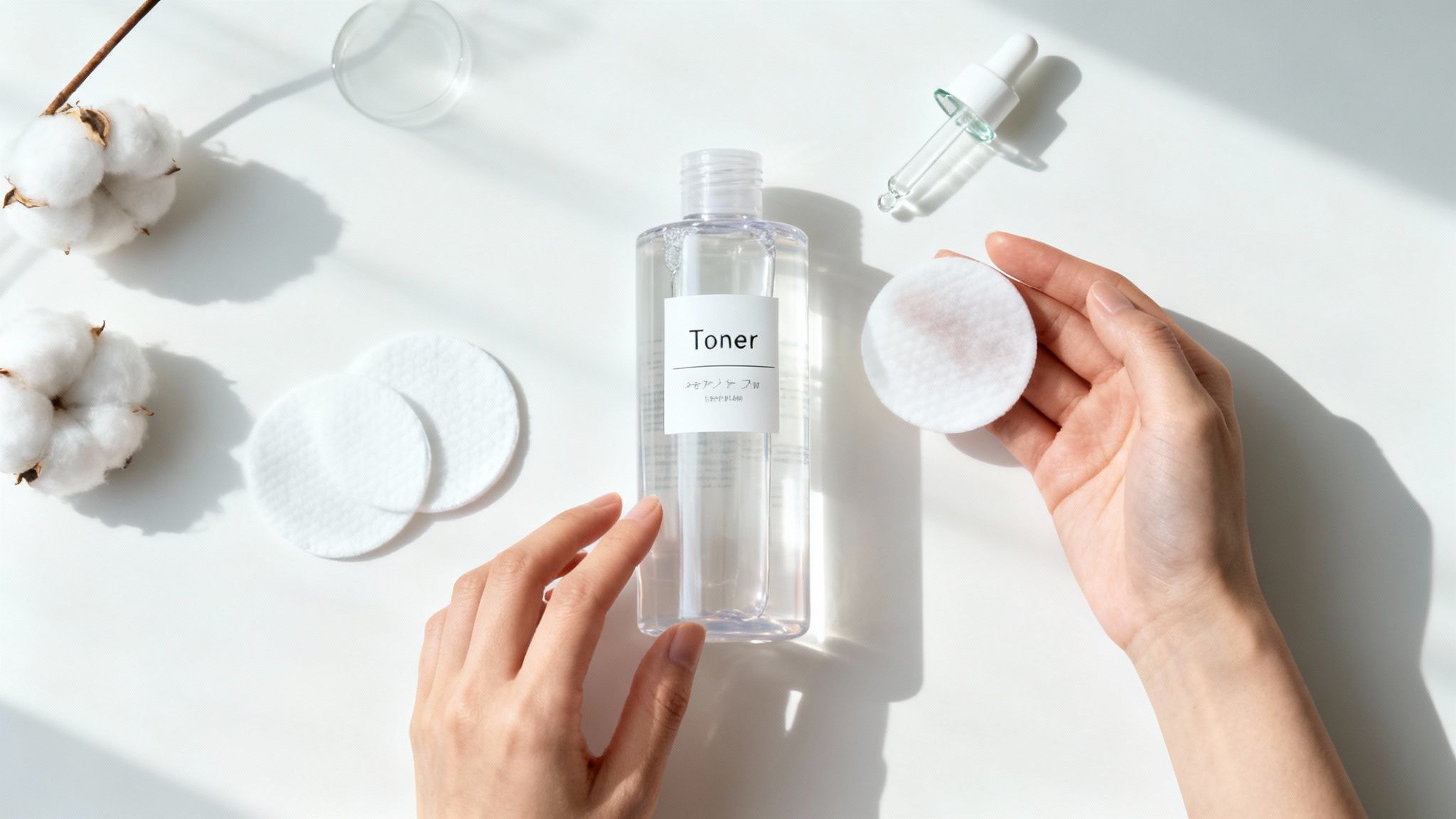
Today’s toners are sophisticated, skin-loving formulas created to support your skin, not punish it. Think of toner as the primer in your skincare routine—it’s the step that makes every product you apply afterward work more effectively. This guide will demystify the modern toner, explaining its benefits and helping you choose the right one for your skin type, with a special focus on gentle yet effective formulas from top Japanese brands like Hada Labo, MUJI, and Shiseido.
What Is a Toner?
At its core, a facial toner is a fast-penetrating liquid that delivers a quick hit of hydration and helps remove any last traces of impurities after cleansing. Its primary role has evolved significantly.
Decades ago, toners were primarily astringents formulated with high concentrations of alcohol. Their main purpose was to remove excess oil and "tighten" pores, which often led to dryness and irritation. Modern formulations have shifted dramatically. Today's skincare toners, especially those from Japanese brands like Kose Sekkisei and MINON, are focused on hydration, soothing, and delivering active ingredients. They are now seen as a foundational step for achieving a healthy, balanced complexion, as detailed in our guide to Japanese skincare steps.
What Is Toner Used For?
A well-formulated toner performs several critical jobs that enhance your entire skincare routine. Let's break down its key benefits.
Rebalancing Skin After Cleansing
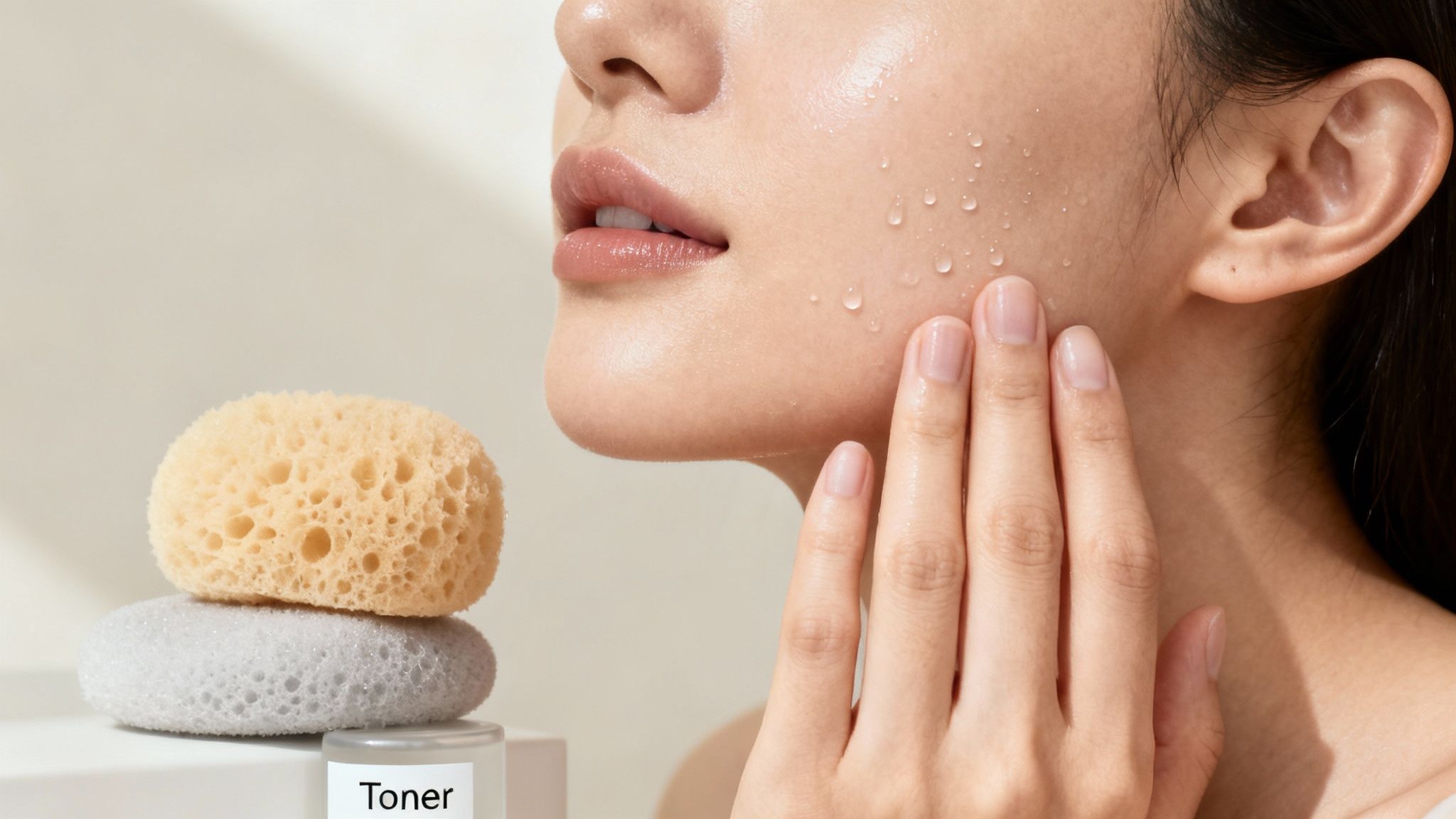
Even gentle cleansers can temporarily disrupt your skin's natural pH level. Healthy skin is slightly acidic, ideally around a pH of 5.5. A good toner helps quickly restore this balance, strengthening your skin's protective barrier and making it less susceptible to irritation and breakouts.
Adding Hydration and Moisture Support
Think of your skin like a dry sponge. If you apply a thick cream, it struggles to absorb. However, a damp sponge soaks up liquid instantly. Toner works the same way. By providing an initial layer of hydration, it makes your skin more receptive to the serums and moisturizers that follow. This is a core principle in Japanese skincare, where toners (often called "lotions") are packed with humectants like hyaluronic acid. Formulas from brands like Hada Labo are famous for delivering this deep, foundational moisture. You can learn more in our guide to Hyaluronic Acid in Japanese skincare.
Prepping Skin to Better Absorb Serums and Moisturizers
Damp skin is more permeable than dry skin. Applying toner first creates the ideal canvas for your active ingredients to penetrate more effectively. This ensures you get the maximum benefit from your entire routine, from your vitamin C serum to your night cream.
Removing Residual Cleanser, Oil, or Impurities
Ever cleansed your face, swiped on toner, and seen leftover makeup on the cotton pad? It happens. A toner acts as a final cleansing step, ensuring your skin is completely free of stubborn impurities and even mineral residue from tap water.
Delivering Active Ingredients
Modern toners are often formulated with beneficial active ingredients. Depending on the product, a toner can deliver antioxidants, gentle exfoliants, or soothing agents directly to your skin as the first leave-on step, setting the stage for targeted treatments. Brands like Transino and Melano CC offer toners that deliver brightening ingredients right from the start.
Types of Toners
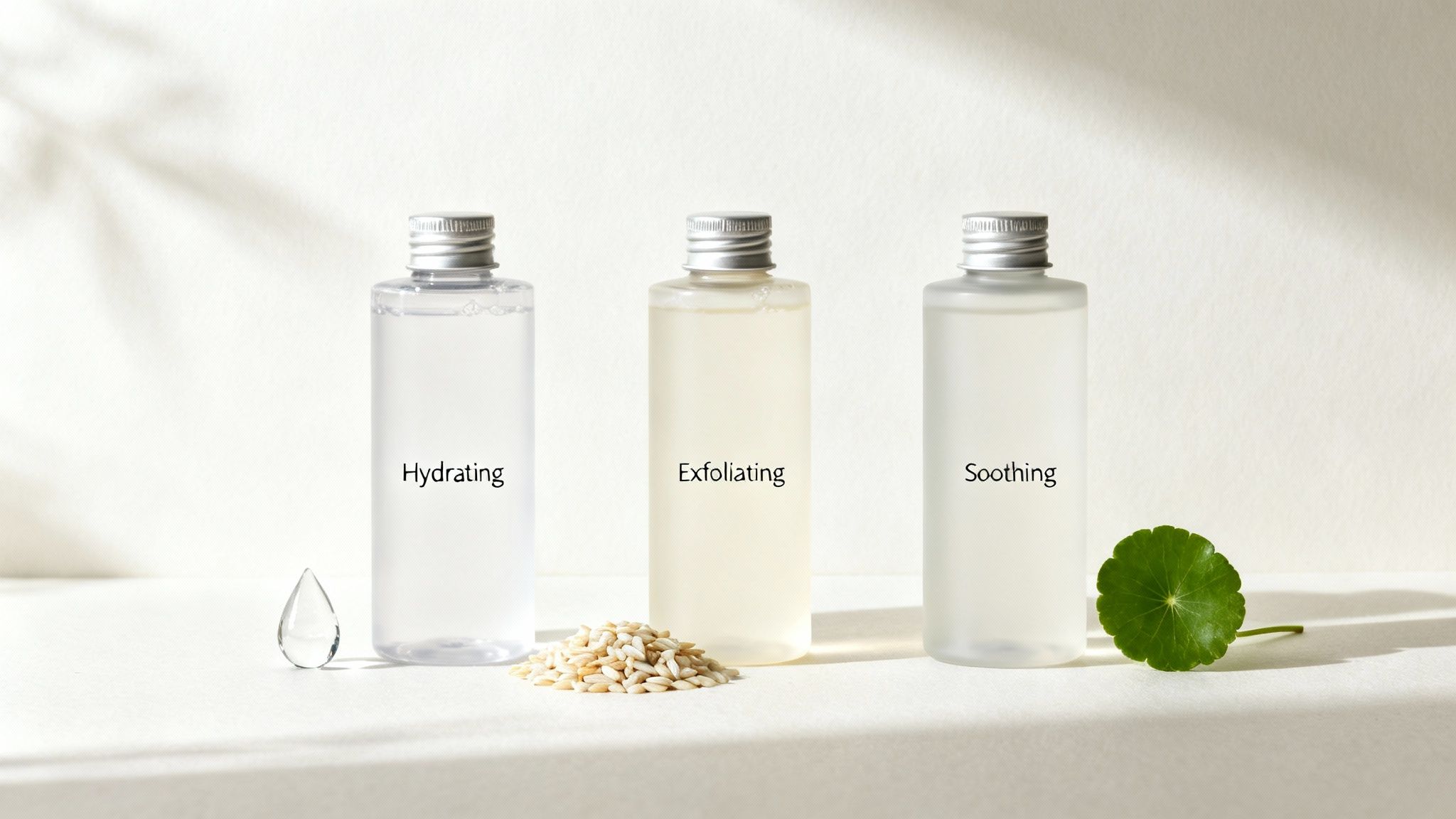
Finding the right toner is about matching a formula to your skin's specific needs. They generally fall into four main categories.
Hydrating Toners
These are the most common and versatile type, especially in Japanese skincare. They are loaded with humectants—ingredients that attract and bind water to the skin.
- Who should use them: Ideal for all skin types, especially dry, dehydrated, and mature skin.
- A great example: The cult-favorite Naturie Hatomugi Skin Conditioner is loved for its lightweight yet deeply hydrating formula.
Exfoliating Toners
These toners contain chemical exfoliants like alpha-hydroxy acids (AHAs), beta-hydroxy acids (BHAs), or poly-hydroxy acids (PHAs). They gently dissolve dead skin cells, unclog pores, and improve skin texture.
- Who should use them: Best for oily, acne-prone, and dull skin. Start by using them only a few times a week to avoid irritation.
Soothing or Calming Toners
Formulated for sensitive or irritated skin, these toners reduce redness and calm inflammation. They are often free of alcohol and fragrance and packed with gentle, plant-based extracts.
- Who should use them: Perfect for those with sensitive, reactive, or redness-prone skin.
- A great example: The Shiseido d Program Moist Care Lotion is designed specifically to support easily irritated skin.
Treatment or Medicated Toners
These are specialized toners designed to target specific concerns like acne, hyperpigmentation, or aging. They contain potent active ingredients to deliver targeted results.
- Who should use them: Suitable for those with specific goals like brightening or acne control.
- Great examples: The Rohto Mentholatum Acnes Medicated Powder Lotion targets breakouts, while the Melano CC Vitamin C Lotion helps with brightening.
How to Use Toner Correctly
Proper application ensures you get the most out of your toner.
When to Apply Toner in a Routine
The golden rule is to apply toner immediately after cleansing, both morning and night. It should be the first leave-on product you apply to your clean, damp skin, before any serums, essences, or moisturizers. This sequence is a key part of building a comprehensive skincare routine.
Application Methods
- With Hands: Pour a few drops into your clean palms and gently pat or press the toner into your skin. This method, popular in Japanese skincare, minimizes product waste and enhances absorption. It’s perfect for hydrating formulas.
- With a Cotton Pad: Soak a cotton pad and gently swipe it over your face and neck. This method provides light exfoliation and is excellent for ensuring every last trace of impurity is removed.
Frequency of Use
- Hydrating and Soothing Toners: Can be used twice daily (morning and night).
- Exfoliating Toners: Start with 2-3 times per week at night to see how your skin tolerates it. Over-exfoliation can lead to irritation.
Toner in a Skincare Routine
In a typical skincare routine, toner fits snugly between cleansing and applying treatments. The order is:
- Cleanser (removes dirt, oil, and makeup)
- Toner (rebalances, hydrates, and preps)
- Serum/Essence (delivers concentrated active ingredients)
- Moisturizer (seals in hydration and protects the skin barrier)
- Sunscreen (in the morning)
Japanese and Korean skincare routines often emphasize layering multiple hydrating products, with the toner (or "lotion") being the essential first step to drench the skin in moisture. Our guide on how to apply hyaluronic acid serum explains how this layering principle works for other products too.
Who Should Use Toner (and Who Might Not)
While nearly everyone can benefit from a toner, its importance varies by skin type and routine goals.
- Dry and Dehydrated Skin: A hydrating toner is a non-negotiable step to boost moisture levels.
- Oily and Acne-Prone Skin: An exfoliating or medicated toner can help control oil and prevent breakouts.
- Sensitive Skin: A soothing, alcohol-free toner can calm redness and irritation. Check our guide to Japanese skincare for sensitive skin.
- Minimalist Routines: If you prefer a very simple routine, you might choose to skip it. However, a good toner can make your moisturizer work more effectively, potentially offering more benefits than an extra serum.
Ultimately, toner is beneficial but not strictly mandatory. Its value lies in its ability to enhance the performance of your other products.
Common Toner Myths
Let's debunk some outdated ideas about toner.
- Myth: Toner is only for oily skin. This stems from the era of harsh astringents. Today's hydrating toners are a lifeline for dry skin.
- Myth: Toner replaces moisturizer. False. A toner provides a light layer of hydration, but a moisturizer is needed to lock that moisture in and protect the skin barrier.
- Myth: All toners contain alcohol. While some astringents still do, the vast majority of modern toners, especially from Japanese brands like Fancl and MINON, are proudly alcohol-free and focus on gentle hydration.
How to Choose the Right Toner
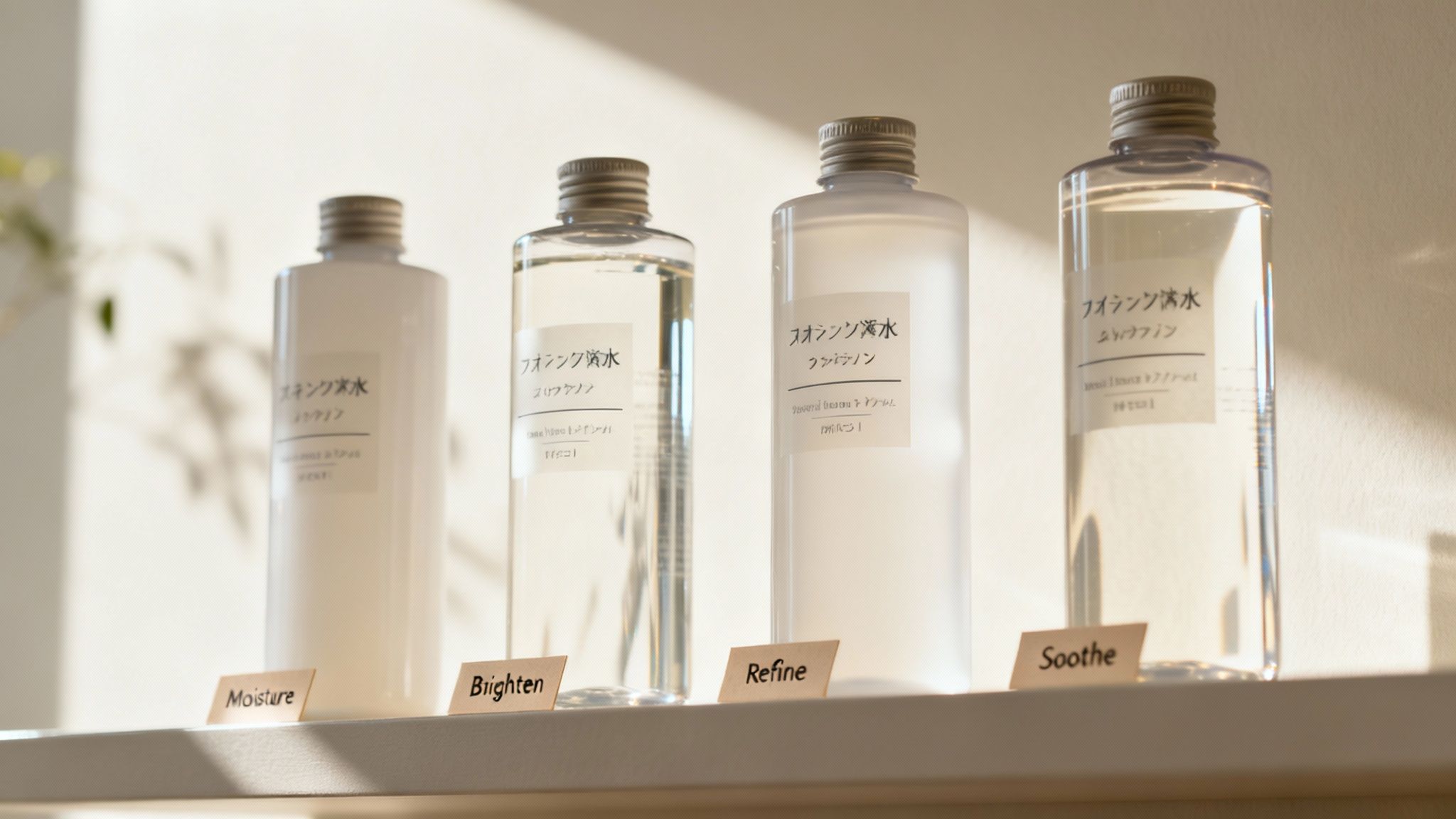
When selecting a toner, consider the following:
- Skin Type: Is your skin dry, oily, sensitive, or combination? Choose a toner category that aligns with your type.
- Skin Concerns: Are you targeting acne, dullness, dehydration, or redness? Look for active ingredients that address these specific issues.
- Ingredient Preferences: Always read the ingredient list. Look for beneficial ingredients high up on the list and avoid potential irritants like alcohol and synthetic fragrance if you have sensitive skin.
For a traditional touch, you can even explore a DIY approach with our rice water toner recipe.
Conclusion
So, what is toner used for? It's a supportive, preparatory step that rebalances, hydrates, and primes your skin. By choosing the right formula for your skin type and concerns, a toner enhances the effectiveness of your entire skincare routine, helping you achieve a healthier, more radiant complexion. It's not just "fancy water"—it's the foundational step that helps every other product shine.
Ready to find the perfect Japanese toner to elevate your skincare game? Shop our full range of Japanese toners today!


Share:
How to Make Dashi Stock: The Secret to Authentic Japanese Flavor
What Is BB Cream vs CC Cream? Key Differences, Benefits, and How to Choose the Right One