

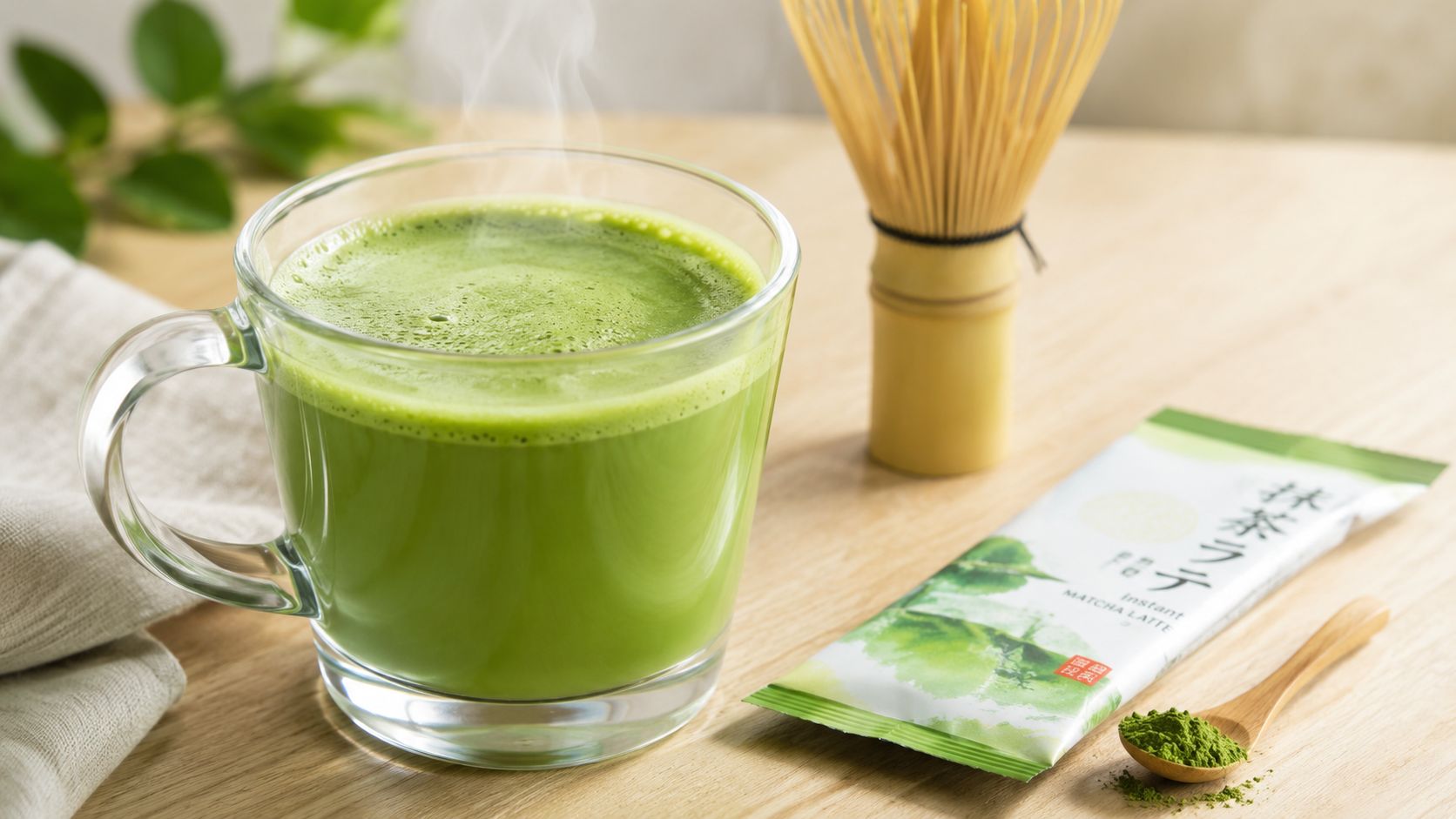
You're standing in your kitchen, craving a smooth matcha latte, but you don't have a bamboo whisk, a tea bowl, or the patience for a careful tea ritual before work. That moment is exactly where instant matcha tea makes sense.
In Japan, we highly respect traditional matcha. We also love practical food design. Instant matcha tea sits at that intersection. It gives you a faster way to enjoy the flavor of matcha, especially in lattes and everyday drinks, without pretending to be the same thing as a bowl of carefully whisked ceremonial matcha.
If you've ever wondered what instant matcha is, why it behaves differently, and how to choose one that tastes good instead of chalky, this guide will make it clear in plain language.
The Modern Way to Enjoy Japanese Matcha
A lot of people first fall in love with matcha outside Japan through café drinks. They order an iced matcha latte, enjoy the color and gentle grassy taste, then try to make it at home and discover that traditional matcha preparation can feel intimidating.
That's one reason convenient formats have grown so quickly. The global matcha tea market is projected to grow from USD 4.04 billion in 2025 to USD 8.79 billion by 2033, and convenient formats are a major part of that growth, with the U.S. market projected to grow at a 12.16% CAGR according to this matcha tea market projection.
Why instant matcha fits modern life
Instant matcha tea is for the weekday version of you. The version that wants something warm, green, and satisfying without turning breakfast into a ceremony.
That doesn't make it fake or lesser in every sense. It means the product is designed for a different job.
Instant matcha tea isn't trying to recreate a tea ceremony. It's trying to make a pleasant, reliable cup quickly.
In Japan, that kind of food thinking is common. We make room for both tradition and convenience. You can admire a hand-whisked bowl of matcha and still keep an instant latte blend in your cupboard.
Where people often get confused
Many shoppers assume “instant” means finely ground matcha that dissolves better. Usually, that's not what it is. It's more like a prepared drink base.
If you already enjoy quick Japanese drink mixes, you might notice a similar idea in products discussed in this guide to instant Japanese coffee. The appeal is the same. Good flavor, less effort, and a format that works in a busy routine.
What Exactly Is Instant Matcha Tea
Instant matcha tea is usually a blend. It commonly includes powdered creamer, sugar, and a smaller portion of actual matcha powder. Pure matcha, by contrast, is 100% stone-ground green tea leaves. Ingredients such as maltodextrin help instant blends dissolve more easily, but they also add a glycemic load that traditional matcha doesn't have, as explained in this ingredient breakdown of instant matcha blends.

Why these extra ingredients are added
This is the part many articles skip. The extra ingredients aren't random. They're there because instant matcha is built to solve practical problems.
Here's what each part usually does:
- Sugar softens bitterness: Matcha can taste grassy, savory, or slightly bitter. Sugar rounds those edges and makes the drink easier for beginners.
- Creamer creates body: Powdered creamer or milk powder gives a latte-style richness even before you add milk.
- Maltodextrin and dextrin improve solubility: These help the powder disperse in liquid instead of floating in stubborn green clumps.
- Emulsifiers support texture: They help water, fat, and fine powder behave more smoothly together.
- Shelf-stable ingredients improve convenience: A blend that stores well and mixes fast suits travel, office use, and single-cup preparation.
Why pure matcha is made differently
Pure matcha has a completely different purpose. It isn't designed to dissolve like a sweet café mix. It is tea leaf powder. Its job is to express the leaf itself.
Traditional matcha asks more from you. You whisk it. You manage water temperature carefully. You accept that preparation is part of the experience.
A simple comparison helps. Instant matcha tea is like an instant café drink mix. Pure matcha is like buying whole specialty ingredients and making the drink from scratch.
Practical rule: If a product says “instant,” expect formulation. If it says “pure matcha,” expect technique.
What this means for taste and expectations
If you buy instant matcha tea expecting the deep umami and clean finish of a high-quality ceremonial bowl, you'll probably be disappointed. If you buy it expecting speed, sweetness, creaminess, and easy mixing, it can be very satisfying.
For readers who enjoy Japanese drinks beyond tea, this broader look at non-alcoholic Japanese drinks helps place instant matcha in a larger culture of convenient, thoughtfully formulated beverages.
Instant vs Ceremonial vs Culinary Matcha
Not all matcha serves the same purpose. Due to this, shoppers often feel lost, because one green powder can look similar to another until you taste it or try mixing it.
Authentic matcha under Japanese standards comes from tea plants shaded for 2–3 weeks before harvest, a process that increases chlorophyll and L-theanine and helps create the vivid color and umami associated with high-quality matcha, as explained in this overview of matcha cultivation and shading.
Matcha types at a glance
| Attribute | Instant Matcha | Culinary Grade Matcha | Ceremonial Grade Matcha |
|---|---|---|---|
| Primary use | Quick drinks, lattes, convenience | Baking, smoothies, mixed drinks | Drinking with water |
| Composition | Blend with matcha plus other ingredients | Pure matcha powder | Pure matcha powder |
| Flavor | Sweeter, softer, often creamy | Stronger, more assertive, better for mixing | More delicate, smoother, more umami-led |
| Color | Depends on blend quality | Usually less vivid than ceremonial | Bright vibrant green |
| Texture | Designed to dissolve easily | Fine powder, may still clump if mishandled | Fine powder, whisked into suspension |
| Best for | Busy mornings, office use, beginners | Recipes and flavored drinks | Traditional preparation and straight drinking |
| Price feel | Usually practical and accessible | Mid-range depending on source | Usually the premium choice |
How to use each one well
Instant matcha tea works best when you want consistency and speed. It's the easiest route to a sweet latte or iced drink.
Culinary grade matcha is useful when milk, sugar, vanilla, or baking ingredients will share the stage. It has enough strength to stay noticeable.
Ceremonial grade matcha is for the leaf itself. If you drown it in syrups, you lose what you paid for.
Some readers like a second opinion when comparing grades and preparation styles, so it can help to explore matcha tea in a dedicated guide focused on taste and brewing differences.
Where instant matcha belongs
Instant matcha tea is not a substitute for ceremonial matcha. It's a different category with a different promise.
If you're curious about the more traditional side, this piece on Ujido ceremonial blend matcha gives a useful contrast. Seeing both categories side by side makes shopping much easier.
How to Prepare Delicious Instant Matcha at Home
The good news is that instant matcha tea is made for ease. Instant blends are engineered for rapid solubility and often include emulsifiers, so they dissolve smoothly in hot water at 80–90°C or in milk alternatives, which makes them practical for quick lattes, as noted in this guide to making homemade instant matcha latte.

A hot cup that tastes smooth
For many instant blends, the easiest method is to dissolve the powder in a small amount of hot water first. This reduces lumps and avoids that muddy texture some people get when they pour powder straight into milk.
Try this approach:
- Start with the powder: Put the instant matcha tea into your cup.
- Add a little hot water first: Use water in the warm, not boiling, range.
- Stir until fully smooth: A spoon is often enough. A small whisk or frother also works.
- Top up with milk or more water: Oat milk is especially forgiving.
- Adjust to taste: If it feels too thick, add more liquid.
If your instant matcha tastes chalky, the problem is often the mixing order, not the powder itself.
If you're building a kitchen setup around quick tea and coffee, it may also help to explore instant hot water tap options so you can get suitable water without waiting on a kettle every time.
An easy iced latte
Cold drinks need a slightly different approach because powder dislikes direct contact with cold liquid.
Use this order:
- Dissolve first: Mix the powder with a small splash of hot water.
- Cool the base: Let it sit briefly.
- Add ice and cold milk: Stir or shake well.
- Taste before sweetening: Many instant blends are already sweet enough.
A shaker bottle works well here. So does a jar with a tight lid.
Here's a visual method if you like watching the process before trying it yourself.
One mistake to avoid
People often prepare instant matcha as if it were ceremonial matcha, or they do the reverse. That's when texture problems start.
Traditional matcha tolerates whisking rituals because that's how it's meant to be suspended. Instant matcha tea is happier when you treat it like a formulated drink mix. Dissolve first, then dilute.
Choosing the Best Japanese Instant Matcha
Good instant matcha tea should taste pleasant and mix easily, but you should still shop carefully. “Instant” doesn't automatically mean poor quality. It does mean you need to read the product for what it is.
When judging matcha quality visually, a bright, spring green color suggests a higher grade, while a brownish or army green tone points toward a lower culinary grade. Even within instant blends, a fresher and more vibrant green is a useful sign, as explained in this matcha quality FAQ.

What to look for on the label
Don't just look at the front of the package. Turn it over.
Check for these points:
- Matcha appears clearly in the ingredients: If tea seems like an afterthought, the flavor probably will too.
- The color looks lively: Even a latte blend should not look dull and tired.
- The product purpose is clear: Some are meant for milk drinks, others for water.
- Additives make sense for the style: Solubility agents in an instant latte mix are normal. Heavy artificial color can be a warning sign.
- The serving format matches your life: Sticks are convenient for travel. Larger bags suit daily home use.
Trust Japanese drink specialists
Japanese brands with a long history in tea or instant beverages often understand texture better than generic trend products. Brands such as Tsujiri, Blendy, and Itoen are familiar names to many shoppers because they make products for daily use, not just gift-shelf packaging.
That's also why reading category-specific guidance helps. If you want a buyer's-eye view of how one matcha product is assessed, this Jade Leaf matcha review is useful as a framework, even when you're comparing another brand.
Who should buy instant matcha tea
Instant matcha tea is a smart fit if you:
- Prefer convenience: You want a quick morning drink.
- Like lattes more than straight tea: Milk and sweetness are part of the appeal.
- Travel or commute often: Sachets and mixes are easy to carry.
- Feel unsure about traditional tools: You want a low-pressure starting point.
If you mainly want to experience the leaf itself, not a formulated beverage, you'll probably be happier with pure matcha instead.
Storing Your Matcha and Final Thoughts
Instant matcha tea is easier to live with than ceremonial matcha, but it still dislikes heat, light, air, and moisture. If the powder absorbs humidity, the flavor dulls and the texture can turn clumpy.
A simple routine works well:
- Seal it tightly: Air is the enemy of freshness.
- Keep it dry: Don't store it near steam from the kettle.
- Avoid bright light: A cupboard is better than an open shelf.
- Use a clean, dry spoon: Moisture sneaks in faster than people expect.
Store instant matcha like a delicate pantry ingredient, not like a rugged tin of cocoa.
The same common-sense habit applies to many beauty and wellness products too. If you're interested in a simple freshness mindset, this guide on how to store vitamin C serum shares similar storage logic in a different category.
Instant matcha tea is worth enjoying for what it is. It gives you speed, easy mixing, and a friendly path into Japanese tea culture. The key is not to confuse it with ceremonial matcha. Once you understand the purpose behind the formulation, the category stops feeling vague and starts making sense.
That's the secret. Better expectations lead to better cups.
If you'd like to explore authentic Japanese drink mixes, matcha products, and everyday finds shipped directly from Japan, Buy Me Japan is a practical place to browse curated options with confidence.
Share:
Best Shampoo for Oily Scalp: A Japanese Beauty Guide
Momori Peach Hair Cream: A Guide to Silky Japanese Hair