

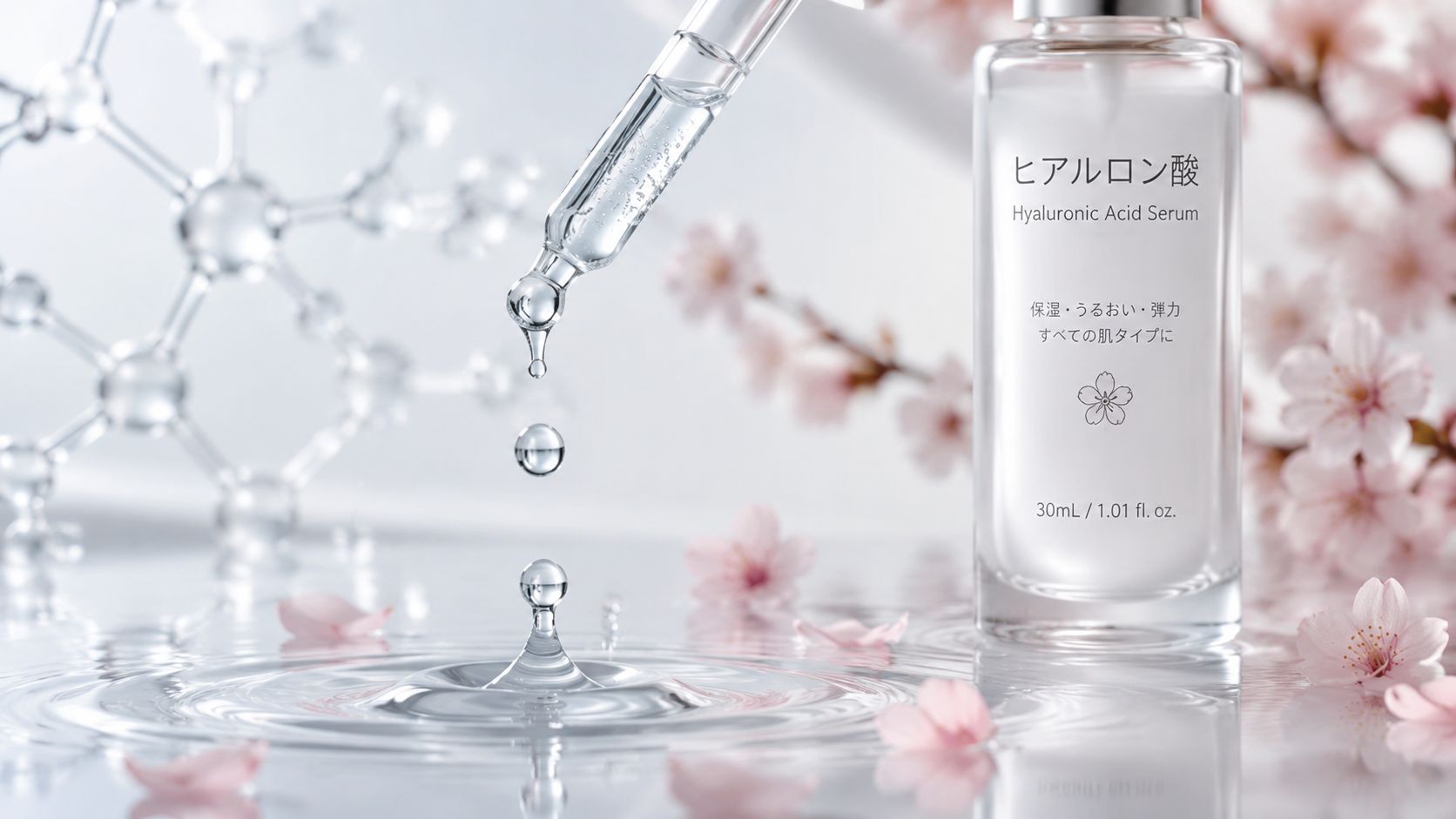
You've probably seen “hyaluronic acid” on serum bottles, sheet masks, and even makeup labels, then wondered if it's an exfoliating acid, a moisture booster, or just another skincare buzzword. That confusion is normal. The name sounds intense, but the role is very gentle.
In Japanese skincare, hydration is often treated as a daily layering practice rather than one heavy step. That's why hyaluronic acid appears so often in Japanese lotions, essences, gels, and serums. If you've browsed Japanese beauty and felt unsure where to start, this guide will help make it simple, especially if you're curious about how authentic Japanese formulas approach moisture differently.
Your Introduction to Hyaluronic Acid
A reader usually reaches this topic in the same situation. Their skin feels tight after cleansing, their makeup sits poorly by midday, and every second product promises “deep hydration.” Somewhere in that search, hyaluronic acid serum appears again and again.
So what is Hyaluronic Acid serum, really? In plain language, it's a hydrating skincare product built around hyaluronic acid, an ingredient known for helping skin attract and hold water. The goal isn't to scrub, peel, or force dramatic change overnight. The goal is to help skin feel softer, look smoother, and stay comfortably hydrated.
Japanese beauty philosophy is especially helpful here because it tends to focus on lightweight layers that build hydration gradually. Instead of relying only on a thick cream, many Japanese routines use watery hydrating steps first, then seal them in. If you're new to J-beauty, this overview of Japanese cosmetic brands gives useful background on why Japanese skincare has earned such a loyal global following.
Skincare gets easier when you stop chasing “stronger” products and start understanding what your skin is missing.
The Science of a Super Hydrator
Hyaluronic acid sounds like something that might sting. It usually doesn't. In skincare, it acts as a humectant, which means it helps attract water.
More specifically, hyaluronic acid is a substance naturally found in the body, including the skin, eyes, and joints. In topical skincare, its job is hydration. That's why it shows up so often in products meant to support bouncy, comfortable skin.
Why people call it a water magnet
The easiest way to understand it is to think of hyaluronic acid as a tiny sponge network spread across the skin. It doesn't behave like a scrub or a peel. It behaves more like a moisture catcher.
According to Harvard Health's explanation of hyaluronic acid, hyaluronic acid is a powerful humectant capable of binding over 1,000 times its own weight in water, meaning that just 1 gram of pure hyaluronic acid can retain a full 1-liter bottle of water. This extraordinary hydrating capacity is why it is often referred to as a “water magnet” in skincare.

That image helps explain why skin often feels more comfortable soon after application. When skin is holding water better, it can look fresher and feel less rough. Many people use HA products specifically to achieve a hydrated, supple look, especially when dehydration makes the face look dull or tired.
Molecular weight matters
Many guides oversimplify the topic. They talk about hyaluronic acid as if it's one single thing. In practice, formulas can contain different molecular weights, and that changes how the product behaves.
Here's the practical version:
| Type | What it tends to do |
|---|---|
| High molecular weight HA | Stays closer to the skin surface and supports a moisture-sealing feel |
| Medium molecular weight HA | Helps bridge surface hydration and a smoother skin feel |
| Low molecular weight HA | Can go deeper into the upper skin layers for a more flexible, plumped look |
A useful summary from SkinDeva's breakdown of HA benefits explains that high molecular weight HA supports surface barrier protection and reduced transepidermal water loss, while low molecular weight HA can penetrate further to support elasticity and firmness.
Why this fits Japanese skincare so well
Japanese skincare has long favored lightweight, layered hydration. That's why many Japanese “lotions” look more like watery essences than Western toners. They're designed to be patted in, often in multiple layers, so hydration builds gradually without feeling greasy.
This approach makes hyaluronic acid especially useful. A heavy cream can sit on top. A well-made HA lotion or serum can give you that fresh, soaked-skin feeling underneath, which is one reason J-beauty hydration routines often feel elegant rather than heavy.
Real Benefits for Every Skin Type
The biggest question isn't whether hyaluronic acid is popular. It's whether it will help your skin. In many cases, yes, because dehydration can affect almost any skin type, not only dry skin.
A published review on topical HA formulations reported that topical hyaluronic acid serum formulations increase skin hydration by exactly 55% as measured by corneometry. That's one reason the ingredient has stayed relevant for so long. It gives a measurable hydration effect, not just marketing language.
If your skin is dry
Dry skin often lacks both water and protective oils. Hyaluronic acid won't do every job by itself, but it can help the skin feel less tight and more cushioned. Many people notice that flaky areas look calmer when hydration is added consistently.
What matters is texture pairing. A hydrating serum or lotion works best when followed by a cream or emulsion that helps keep that moisture from escaping.
If your skin is oily or acne-prone
Oily skin can still be dehydrated. That's one of the most common points of confusion.
When skin feels stripped, people often keep using stronger cleansers and skip hydration, which can leave the face feeling unbalanced. A lightweight HA product can be useful here because it adds water without automatically adding heaviness. Japanese brands are especially good at making these thin, fast-layering textures.
For readers dealing with that tight-but-shiny feeling, this guide on how to treat dehydrated skin helps distinguish dehydration from simple oiliness.
If your skin is sensitive
Hyaluronic acid is generally well tolerated across skin types, including sensitive skin, because it's a substance naturally found in the body. That doesn't mean every formula will suit every person, since fragrance, alcohol, or botanical extras can still be an issue. But the ingredient itself is usually considered a gentle hydration support.
Practical rule: Sensitive skin often does best with short ingredient lists, soft textures, and steady use rather than aggressive product switching.
If your skin is showing early signs of aging
Dehydrated skin tends to show fine lines more clearly. When skin is better hydrated, those lines often look less noticeable because the surface appears smoother and a bit fuller.
That's why hyaluronic acid products are often described as “plumping.” They aren't changing your face shape. They're helping the skin hold moisture better, which can improve the look of texture and softness.
How to Use Hyaluronic Acid Serum Correctly
Knowing what hyaluronic acid does is helpful. Using it correctly matters even more. Many people try an HA serum once, feel underwhelmed, and assume the ingredient doesn't work for them. Usually the problem is application.

According to Rodan + Fields' skincare guidance on hyaluronic acid, for best results, hyaluronic acid should be applied twice daily, once in the morning and once before bed, after cleansing and toning but before heavier moisturizers to seal in the hydration.
The two rules that change everything
If you remember only two things, make them these:
-
Apply it to damp skin
Not dripping wet. Just slightly damp. This gives the humectant water to work with. -
Seal it in with moisturizer
A cream, gel-cream, or emulsion helps hold that hydration in place.
Those two habits explain why Japanese layering routines often work so well. The hydrating step comes first, then a soft sealing step follows.
Where it fits in a Japanese routine
In many Japanese routines, hyaluronic acid doesn't only appear in a bottle labeled “serum.” It often shows up in a lotion, which in J-beauty usually means a watery hydrator rather than an astringent toner.
A simple order looks like this:
-
Cleanser first
Start with a gentle face wash or cleansing oil, depending on your routine. -
Hydrating lotion or essence next
This is often the main HA step in Japanese skincare. -
Serum if needed
You might add a targeted product after the lotion. -
Emulsion or cream last
This helps keep hydration from escaping.
For readers who get confused by the lotion-emulsion distinction, this explanation of skin care emulsion is very useful.
A short demonstration can help make the layering order feel more intuitive:
Common routine mistakes
People usually run into trouble in one of these ways:
-
Using too much product
More isn't always better. A thin, even layer is usually enough. -
Applying it on a completely dry face
This is the mistake behind many “it made me drier” complaints. -
Skipping the final moisturizer
HA attracts water, but it doesn't replace the sealing role of a cream or emulsion.
When skin still feels tight after hyaluronic acid, the issue often isn't the ingredient. It's the missing step after it.
Choosing Your Ideal Japanese HA Product
If you're shopping across Japanese skincare, one thing becomes clear very quickly. The most effective HA product might not be called a serum at all. It may be labeled a lotion, essence, milk, gel, or concentrate.
That difference matters because Japanese hydration products are often built for layering. They're usually lighter in texture and designed to sink in fast, which makes them very practical for humid climates, combination skin, and people who dislike sticky finishes.

Japanese lotion versus Western serum
A simple comparison helps:
| Product style | Texture | Usual role |
|---|---|---|
| Japanese hydrating lotion | Watery to lightly viscous | First hydration layer after cleansing |
| Japanese essence or gel | Light but cushioned | Added hydration or treatment step |
| Western-style serum | Often more concentrated feeling | Targeted treatment before moisturizer |
That's why products from brands such as Hada Labo, Minon, Shiseido AQUALABEL, Kanebo DEW, and MUJI often feel different from heavier Western hydration serums. The Japanese approach tends to focus on how the product layers into a full routine, not just how rich it feels on first touch.
What to look for on the label
Recent Forbes Vetted reporting on the best hyaluronic acid serums notes that projected 2025 to 2026 expert consensus favors formulas that combine low, medium, and high molecular weights to hydrate multiple skin layers simultaneously. That's a useful buying clue when you compare products.
Look for signs that a formula is more advanced than a basic one-note hydrator:
-
Multiple forms of HA
If a product uses more than one type of sodium hyaluronate or related HA form, it may be aiming for layered hydration. -
Light texture with a sealing partner
Japanese products often assume you'll follow with an emulsion or cream. -
A formula that fits your skin feel preference
Dry skin may enjoy richer gels. Oily skin may prefer watery lotions.
For a broader practical guide on building a skincare routine with hyaluronic acid, that resource gives a helpful routine-centered perspective.
Strong Japanese options to know
A few names come up again and again in hydration-focused J-beauty:
-
Hada Labo
Often the first brand people think of for hyaluronic acid. Its hydrating lotions are iconic for a reason. -
Minon
Popular with people who want a gentler, comfort-first hydration style. -
Shiseido lines such as AQUALABEL and Elixir
Known for refined textures and elegant layering. -
MUJI skincare
A good option for people who prefer simple, understated formulations.
If you already use an oil cleanser and want your hydration steps to layer more smoothly afterward, this look at Hada Labo Gokujyun Cleansing Oil gives useful context.
Common Myths and Important Facts
Some hyaluronic acid advice is so repeated that people stop questioning it. A few of the most common ideas are either incomplete or completely wrong.
Myth one: HA can replace moisturizer
It can't. Hyaluronic acid helps attract and hold water, but your routine still needs something that helps seal that hydration in. If you skip that step, skin may not stay comfortable for long.
Myth two: higher concentration is always better
That sounds logical, but skincare doesn't work that way. The verified guidance available here notes that the optimal and maximum recommended concentration for topical hyaluronic acid serums is 2%, and going higher can dry the skin out rather than hydrate it when the formula pulls water the wrong way. In daily use, texture, formulation, and how you layer it matter more than chasing the biggest number on the box.
Myth three: HA is automatically foolproof for everyone
It's gentle, but technique still matters. The most overlooked caution is this one: HA serums can cause “paradoxical dehydration” if applied to dry skin without occlusives; this nuance is missing in 90% of mainstream guides that simply label HA as “safe” for all.
That sounds alarming, but the fix is simple. Use it on damp skin, then follow with a moisturizer.
The ingredient isn't the problem. The routine around it decides whether it feels comforting or disappointing.
Embrace Hydration the Japanese Way
Once you understand the basics, hyaluronic acid becomes much less mysterious. It's not a peeling acid. It's a hydration-supporting ingredient that helps skin hold water more effectively and feel more comfortable.
The Japanese approach adds an important layer of wisdom. Instead of depending on one thick product, it often builds hydration through lightweight steps such as lotions, essences, and emulsions. That's why Japanese HA routines often feel fresh, elegant, and easy to live with every day.
If you're comparing topical skincare with in-office procedures, it also helps to separate the two clearly. For readers who want that context, ProMD Health's insights on fillers can help explain how injectable treatments differ from a hydrating serum or lotion at home.
For extra hydration support, a finishing step like a mask can also complement an HA-centered routine. This overview of a hydro jelly mask is a useful next read if you enjoy moisture-focused skincare.
The simple takeaway is this. Apply hyaluronic acid to damp skin, seal it in, and choose textures that fit your skin rather than chasing hype. That's the heart of what is hyaluronic acid serum, and it's also very close to the heart of Japanese skincare itself.
If you want to explore authentic Japanese hydration products from brands like Hada Labo, Minon, Shiseido, MUJI, and more, Buy Me Japan makes it easy to shop products shipped directly from Japan. It's a practical place to find the lightweight lotions, essences, emulsions, and masks that define the Japanese approach to layered hydration.

Share:
Calbee Potato Chips Flavors a Complete Guide to Every Taste
How to Store Vitamin C Serum to Maximize Its Power