


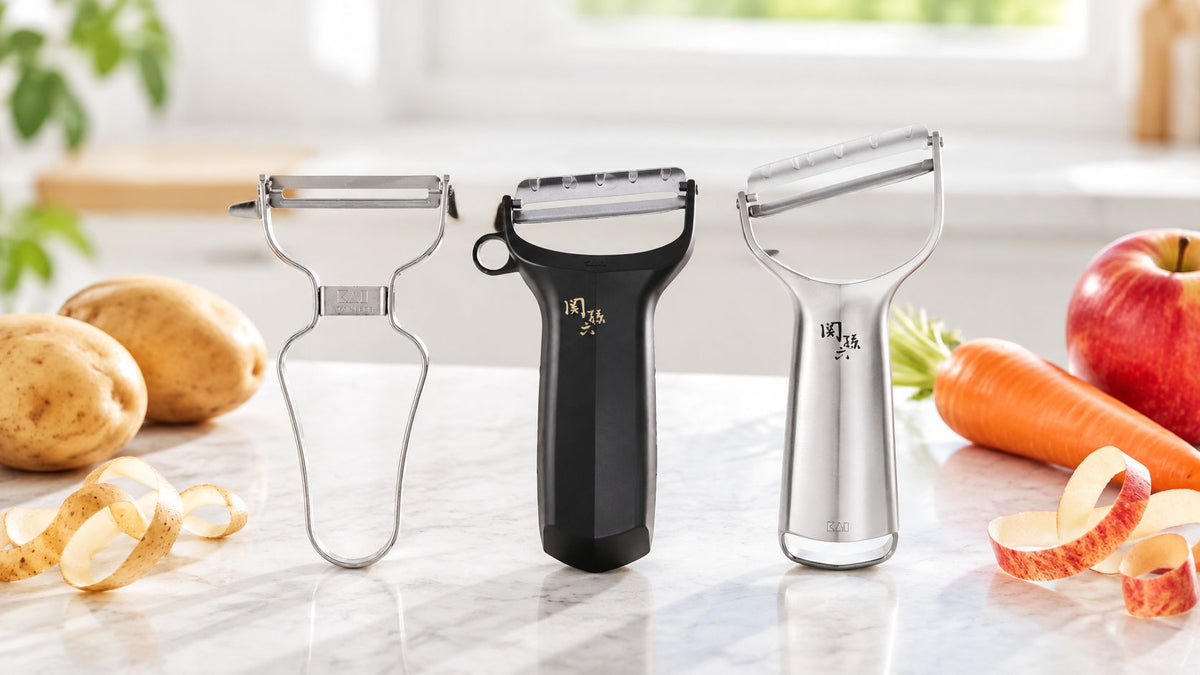
The standard advice on Japanese peelers is short, confident and half wrong. Buy the all-stainless one, the reasoning goes, because stainless steel resists rust, wipes clean and never needs replacing. That holds for the body. It says nothing about the blade, which does the actual work and sets how long the tool stays useful.
There's a second flaw in the usual advice. It treats DH3341, DH6501 and DH3356 as one product in three packages because they share a maker and a blade material. They don't share a size, a weight, a handle angle or a feature set, and the differences change how each one feels after ten minutes of carrots.
Choosing between KAI peelers DH3341 vs DH6501 vs DH3356 comes down to four practical things, which are size, weight, handle geometry and whether the blade can outlast the body. Two of those are printed on the product page. One you can only judge by holding the tool. The last one is the question almost nobody asks before buying.
Compare the Three KAI Peelers at a Glance
The model numbers matter: DH3341, DH6501 and DH3356 differ in size, construction and extras, so they are not interchangeable. The table separates listed specifications from details that are not published.
| Model | Size | Weight | Construction | Handle and Extras |
|---|---|---|---|---|
| KAI Sekimagoroku Compact Peeler (Model: DH3341) | 14.1 × 7.2 × 2.5 cm, about 5.6 in long, according to the product listing | 57 g, per product listing | High-carbon stainless steel blade with dimpled surface; body material not listed here | Diagonal blade setting |
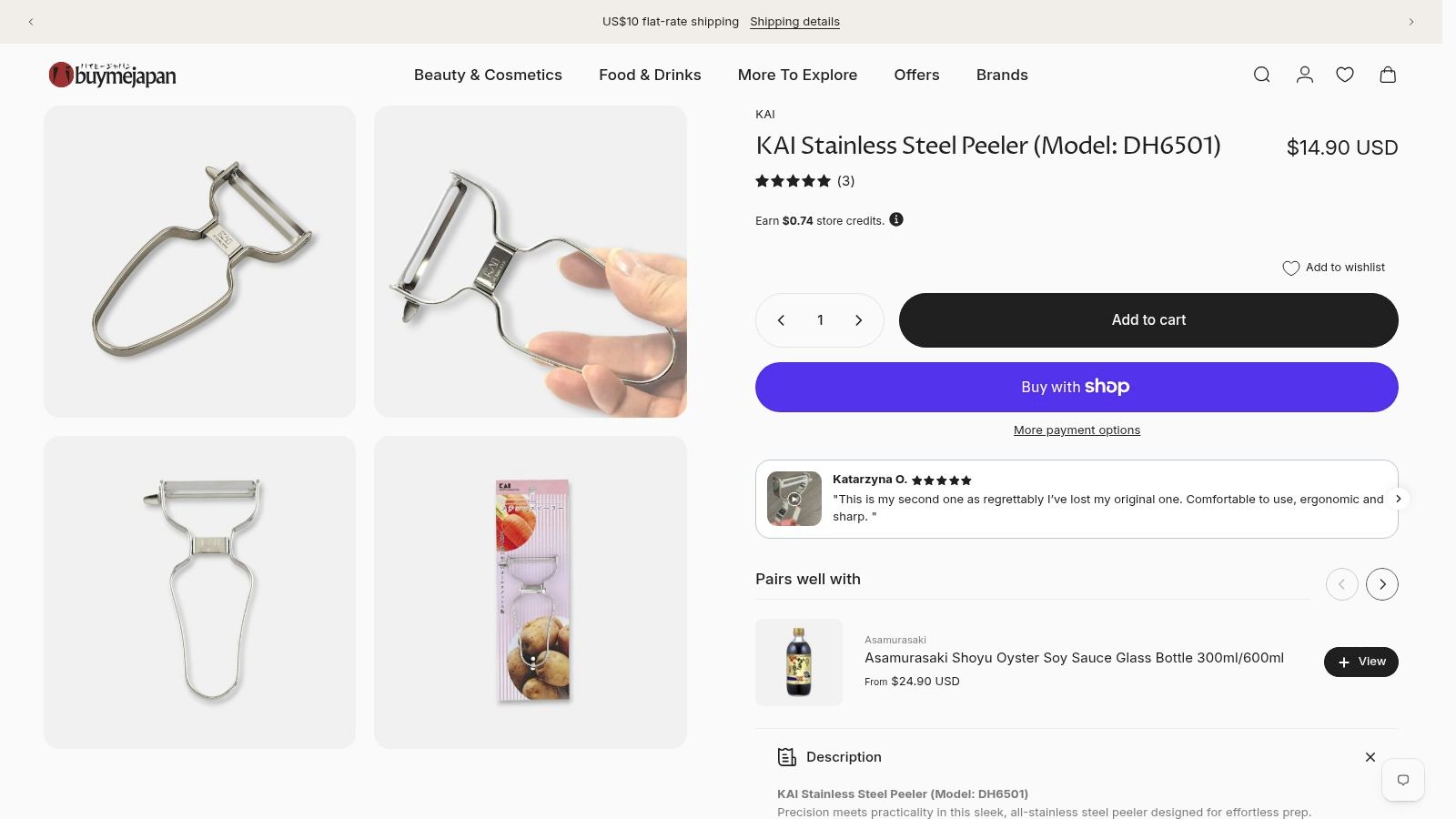
| DH6501 | Not published on the product page reviewed | 45 g | Full stainless steel | Angled handle and built-in potato sprout remover |
| DH3356 | 152 × 20 × 70 mm | Not published in the official specification set | All-stainless steel | Angled blade configuration; hangable |
The KAI Seki Magoroku all-stainless range page lists the DH3356 at 152 mm long, 20 mm high and 70 mm wide, with a Japanese retail price of ¥2,420 including tax. Its angled blade configuration distinguishes it from a straight-blade design, but dimensions alone do not establish which angle will feel more comfortable in your hand.
The DH3341 is the shortest listed option, while the DH3356 measures 152 mm. The published weights span 45 g for the DH6501 and 57 g for the DH3341. Those figures give a useful comparison, but they do not show how each handle will feel during a full prep session.
Only the DH6501 lists a built-in potato sprout remover. The DH3356 is hangable, and the DH3341 listing describes a dimpled blade surface. These are distinct features, not evidence that one model peels better.
Some specifications remain unpublished: the DH6501's size and the DH3356's weight are not given in the available product details. For the DH3341, the listed dimensions and weight come from its product listing. Compare the published figures with the features you will use, and weigh blade replacement and upkeep against the purchase price before choosing.
Weight and Grip Determine Which Peeler Feels Right
The lightest peeler is not automatically the easiest to use. The DH6501 is listed at 45 g, while the DH3341 is listed at 57 g. That difference may matter during repeated strokes, but grip, wrist position and blade resistance also affect comfort. The DH3356's documented dimensions are 152 × 20 × 70 mm; those measurements do not establish how it will feel in your hand.
What the angled handle is meant to do
The DH6501's angled handle changes the position of your hand relative to the blade and work surface. Whether that feels more natural depends on your wrist position, the handle's fit in your palm and the pressure needed to move the blade through the produce. The listed specifications do not establish which handle will suit every user.
Three checks before you commit
- Dry-run a stroke. Hold the peeler and mimic the movement without produce. Check whether you can keep the blade level without bending your wrist awkwardly.
- Check the palm fit. The handle should rest securely in your hand. If your fingertips have to curl tightly to keep hold, try another shape.
- Watch the blade line. Hold the peeler as you would during prep and check whether you can see where the edge meets the surface. A clear view helps you control the cut on curved produce.
For extended prep, compare the lighter DH6501 with the DH3341 in your hand rather than choosing by weight alone. If you peel occasionally, prioritize a comfortable grip and a clear view of the blade.
Peeling Technique and Basic Care for KAI Peelers
A wrist that cocks sideways to keep the blade flat is a sign to adjust your hold before peeling. Set a stable board, keep a bowl or bin close for scraps, and hold the peeler with a relaxed grip.
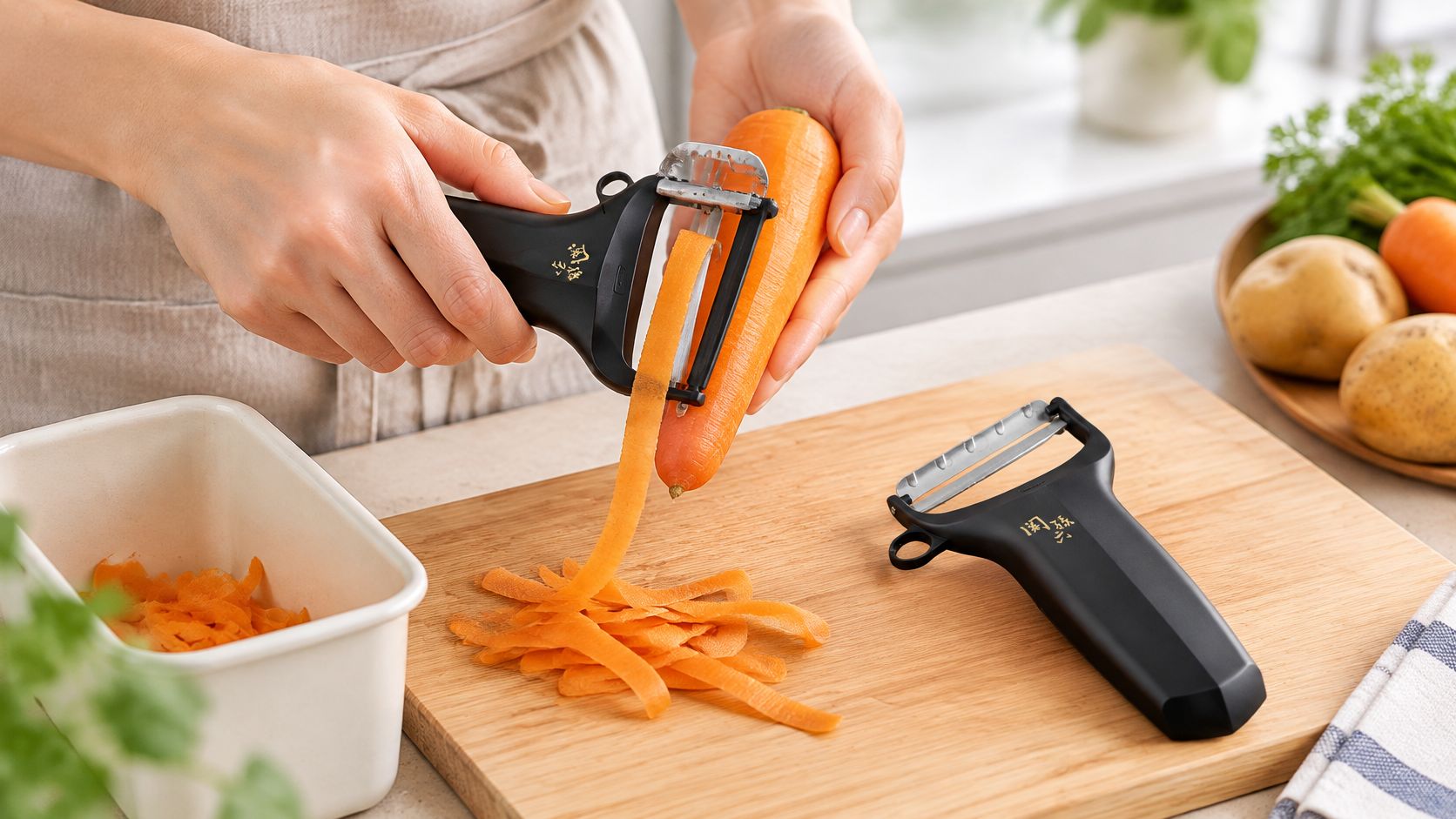
- Grip it loosely. Rest the handle in your palm, with your index finger along the body. A tight grip makes the hand work harder and can press the blade into the produce.
- Start at the top and stroke away from your body. Use light, even pressure to lift the skin. Keep the blade's contact steady rather than forcing a deep cut.
- Rotate the vegetable between strokes. Short passes follow the surface more easily and remove less flesh than one long, forceful cut.
- Follow the curve on apples and other firm fruit. Short strokes help you track the shape and check the peel's thickness as you go.
- Use the sprout remover for shallow spots. The DH6501's scoop suits sprouts and small eyes. Use a paring knife for deeper damage to avoid gouging the flesh.
- Rinse and clear the blade after use. Remove any peel caught near the edge, then dry the tool before putting it away.
Care that keeps an edge
Store the peeler in a drawer divider or dedicated slot. Loose utensils can knock against its blade, leaving small chips along the edge.
If your prep regularly expands beyond peeling, apply the same task-first approach when you choose food processor accessories for baking.
What a century of blade making tells you
KAI traces its origins to 1908, when Saijiro Endo began making folding knives in Seki City, Gifu Prefecture. The company says it produced Japan's first replaceable-blade razor after establishing Seki Safety Razor Manufacturing Co. in 1932, according to KAI's corporate history. By 2023, the group had reached its 115th anniversary.
That history provides context for KAI's cutting-tool background, but it does not establish that the DH3341, DH6501 and DH3356 share a blade, grind or edge life. Assess each model by its own specifications and how its handle fits your hand.
How the Three Peelers Handle Carrots, Potatoes and Apples
These three peelers suit different jobs, so match the blade and handle to the produce you prepare most. The DH3341's listing describes a diagonal blade setting intended to help it start cutting smoothly.
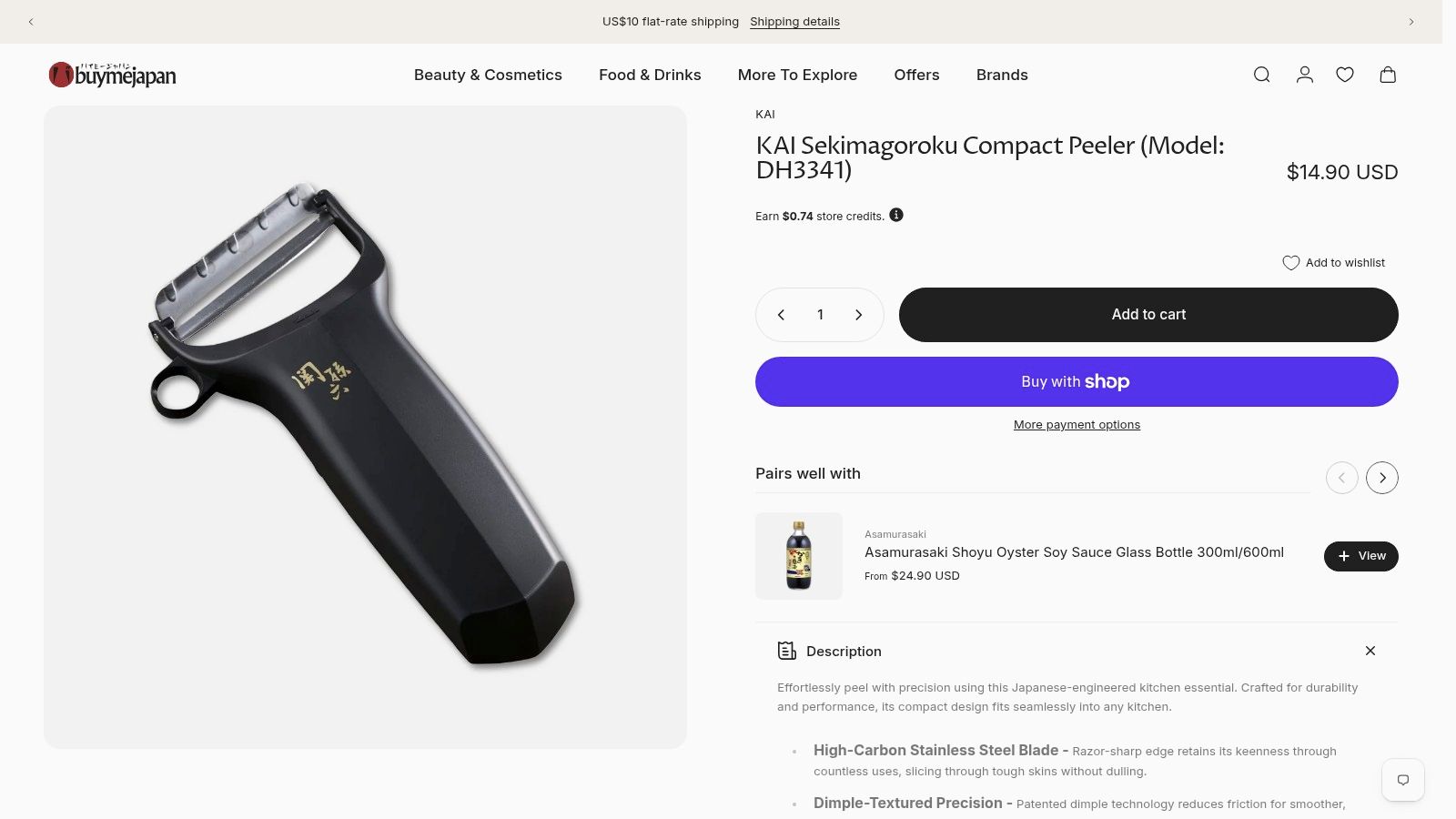
Carrots on a weeknight. The DH3341's compact 14.1 × 7.2 × 2.5 cm body suits a small drawer, while its diagonal blade setting may help with the first stroke on a tapered, uneven carrot. Its listed weight is 57 g, a detail that may matter during a longer peeling session.
Potatoes with sprouts. The KAI Stainless Steel Peeler (Model: DH6501) is listed with a stainless-steel construction, built-in potato sprout remover and angled handle. That combination lets you peel and remove shallow eyes with one tool. Use a paring knife for deep damage.
Apples and firm fruit. The DH3356's angled blade meets the skin at a different stroke angle than a straight peeler. Whether that feels natural depends on how you hold the apple, so the specification alone cannot settle the choice. Its all-stainless body is designed to hang, offering an alternative to storing it in a drawer.
A useful comparison is to peel the produce you cook with most. For Japanese home cooking, carrots, potatoes and burdock in a simmered nishime-style recipe offer a mix of firm and irregular shapes to work through.
A kitchen demonstration provides another way to consider how a peeler moves through produce.
Blade Care, Replacement and Long-Term Value
The purchase price is only part of a peeler's value. Blade replacement matters too: a low-cost model with a fixed blade may need replacing when its edge wears, while a model with available replacement blades can be refreshed. The available product details do not establish replacement-blade compatibility for the DH3341, DH6501 or DH3356.
The DH3356's all-stainless construction is described as rust-resistant and hangable. An independent review of vegetable peelers reports that its blade cannot be replaced. That makes the blade's useful life a key consideration, but the available sources do not include long-term data for these three models, so they do not establish how often any of them needs replacing.
The question worth asking: Is the DH3356's fixed-blade design worth its purchase price compared with a peeler whose blade can be replaced? The answer depends on your budget and how long the blade stays effective in your kitchen.
A five-point comparison you can actually run
- Purchase price. Compare the listed prices of the three models before choosing based on finish or construction.
- Replacement-blade availability. Check whether the maker lists a compatible blade for the exact model. Do not assume replacement parts fit across KAI peelers.
- Sharpening practicality. The available details do not establish whether any of these blades can be sharpened at home. Treat sharpening as an unknown rather than a feature.
- Care instructions. Follow the instructions for the specific model. Dishwasher compatibility is not established here for these three peelers.
- Corrosion resistance. Stainless construction is described for the DH6501 and DH3356, but that alone does not establish how their edges hold up over time.
Construction and upkeep affect value
Material is only one part of upkeep. Check the blade-to-frame junction for places where peel can collect, and consider whether the handle can dry easily after washing. These details affect routine cleaning; they do not prove that one model will last longer.
Compare the price with the evidence available for replacement and care. For the DH3356, the reported non-replaceable blade makes eventual replacement of the whole peeler a relevant possibility. For the DH3341 and DH6501, replacement-blade availability is not established here, so confirm it for the exact model before treating replaceability as a buying advantage.
Matching Each KAI Peeler to Your Kitchen and Checking Before You Buy
Choose by the job the peeler needs to do, then confirm the details that affect upkeep. The DH6501 suits buyers who value a light tool and a sprout remover. The DH3356 is the all-stainless option, while the DH3341 offers a dimpled blade and compact listed dimensions. These are distinct designs, not interchangeable model numbers.
| Kitchen situation | Model | Deciding feature |
|---|---|---|
| Frequent peeling, with weight and control in mind | DH6501 | Lightweight build and angled handle |
| Potatoes often need sprout removal | DH6501 | Integrated sprout remover |
| Preference for an all-stainless body | DH3356 | Stainless-steel construction |
| Compact storage and a dimpled blade | DH3341 | Dimpled blade and compact listed size |
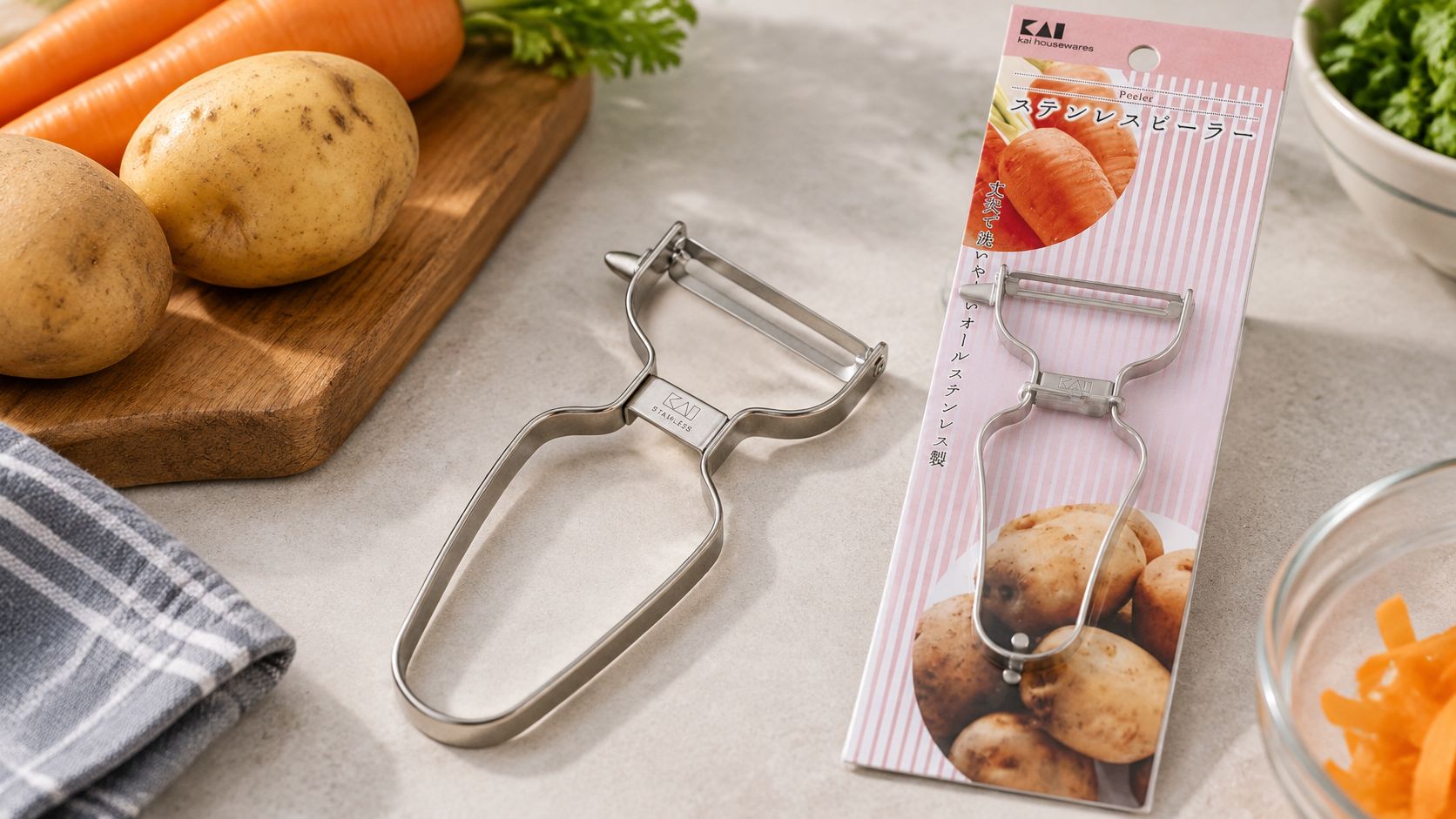
The DH6501 is listed at $14.90 USD; the DH3356 has a sale price of $25.41 USD. Check the product pages for current details, including the DH3341 listing, before ordering.
The pre-order checklist
- Check the dimensions and weight on the product page to judge storage fit and handling.
- Confirm the blade and handle details, including whether the listing specifies a handle temperature rating.
- Compare the purchase price with your preference for a fixed or replaceable blade.
- Decide whether the sprout remover would see regular use, or whether compact storage matters more.
If two models still seem close, prioritize the feature that will matter in your routine: handling, storage, or blade upkeep. For other home projects, product selections for bathroom renovations offer a separate example of comparing items by fit and specifications.
Buy Me Japan's KAI collection lists 22 products, including kitchen and grooming items. Compare the individual peeler listings and choose the model whose stated features fit your kitchen. First-time shoppers who sign up get a 10% off coupon.
Buy Me Japan offers secure transactions and a curated selection of Japanese products. Review the current listings, then choose the peeler that best matches your priorities for use, storage, and upkeep.



Share:
Canmake Cream Cheek vs Powder Cheeks: Texture and Application Guide 2026
ReFa Aile Brush: Choosing, Cleaning and Caring for Your Hairbrush in 2026