

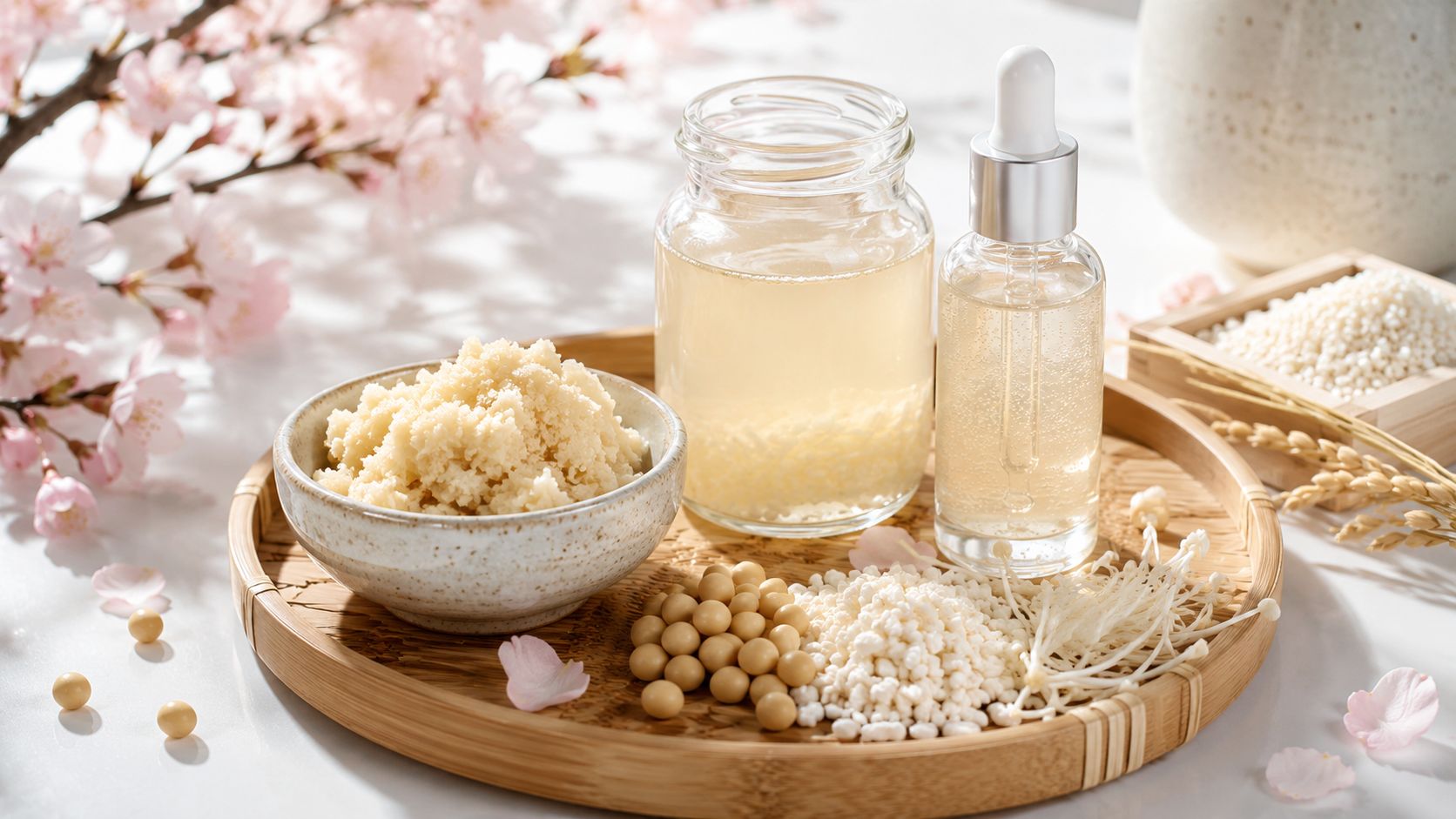
You've probably seen “fermented” on a skincare label, paused for a second, and wondered whether it means anything real or whether it's just another beauty buzzword. That confusion makes sense. In food, fermentation is easy to picture. Miso, soy sauce, and sake all come from time, microbes, and careful transformation. In skincare, the idea sounds less familiar.
Japanese beauty makes this trend easier to understand because fermentation isn't a borrowed marketing concept. It sits naturally within a culture that has long valued fermented foods, refined ingredient handling, and patient craftsmanship. That's why fermented ingredients in skincare can feel especially coherent in Japanese formulations. They connect old techniques with modern cosmetic science in a way that feels purposeful, not decorative.
The Rise of Fermented Skincare in Japanese Beauty
Japanese beauty lovers didn't arrive at fermentation by accident. The logic was already there in everyday life. When a culture understands the value of miso, soy sauce, rice vinegar, natto, and sake, it's not a big leap to ask what similar transformation might do for cosmetic ingredients.
That's part of why fermented ingredients in skincare have become so compelling. They aren't only associated with trend-driven “clean beauty” language. In Japanese beauty, they fit into a broader idea that ingredients can become more elegant, skin-friendly, and effective through careful processing.
Many readers first meet the term in an essence, lotion, or sheet mask and assume it means “probiotic skincare.” Sometimes it does overlap with that world, but not always. Fermentation is a process. It changes an ingredient. The finished cosmetic ingredient may then deliver hydration, softness, or a smoother skin feel without containing live bacteria at all.
Why the idea feels familiar in Japan
Think about sake brewing. Rice starts as one thing and becomes something much more complex through enzymes, yeast, and time. That same basic principle helps explain why a fermented rice extract or yeast filtrate may behave differently on skin than the raw ingredient alone.
Japanese formulations often stand out because they combine that traditional ingredient logic with textures that are easy to use every day. A watery lotion can feel light but still leave skin comfortable. A gel cream can feel simple yet refined. That balance is one reason J-beauty has earned long-term trust.
If you enjoy beauty history and ingredient traditions, ancient Japanese beauty secrets offers helpful context for how these ideas connect to wider Japanese skincare practices.
Fermentation in skincare makes more sense when you stop treating it as a trend and start treating it as a transformation method.
What people usually want to know
Most beginners aren't asking for a chemistry lesson. They want practical clarity:
- What fermentation does: It changes raw materials into forms that may be easier for skin to use.
- Why it matters: Many people choose it for hydration, softness, and a more balanced skin feel.
- Why Japanese products stand out: They often build fermented ingredients into elegant, daily-use textures rather than heavy or overly complicated formulas.
Understanding the Science of Skin Fermentation
Fermentation sounds technical, but the core idea is simple. Microorganisms such as yeast or bacteria help break down an ingredient into smaller components. In skincare terms, you can think of that as a kind of pre-processing step that changes the final material before it ever touches your face.
A useful analogy is food preparation. Raw cabbage becomes kimchi. Soybeans become miso. Grapes become wine. The original material is still important, but fermentation changes the character of that material. In cosmetics, that can mean an extract with a different texture, different byproducts, and a different way of interacting with skin.

Think of it as pre-digestion
When people say fermented skincare is easier for skin to absorb, they usually mean that the ingredient has been broken down into forms that are simpler or more bioavailable. You don't need to memorize the chemistry to understand the practical point. The ingredient has already gone through a transformation stage.
That's one reason fermented essences often feel thin, smooth, and deceptively light. They can sink in quickly without feeling greasy. Japanese skincare users often love this because layering is central to the routine. A product can be subtle in texture but still feel active and supportive.
There's also a nice parallel between beauty and nutrition here. If you're curious about how fermentation supports wellness more broadly, this article on boosting gut health with beneficial foods gives a helpful food-based perspective.
Fermented ingredients, probiotics, and postbiotics
Many shoppers often find themselves confused. These terms sound related because they are related, but they don't mean the same thing.
| Term | Plain-English meaning | What it usually means in skincare |
|---|---|---|
| Fermented ingredient | An ingredient changed by fermentation | A filtrate, extract, or lysate used for hydration, skin feel, or barrier support |
| Probiotic | Live microorganisms | Less common as a true live form in standard skincare products |
| Prebiotic | Food for beneficial microbes | Ingredients intended to support a healthy skin environment |
| Postbiotic | Helpful byproducts from microbial activity | Compounds created during fermentation that may help support skin comfort |
The word you'll often see on labels is ferment filtrate. “Filtrate” tells you the ingredient has been processed and filtered. That matters because many products don't contain live cultures in the way yogurt does. They contain the useful result of fermentation.
Practical rule: If a label says “ferment filtrate,” “lysate,” or a yeast name such as Saccharomyces, you're usually looking at the output of fermentation, not a jar full of live microbes.
A related Japanese ingredient story appears in how to use rice vinegar, which shows how fermentation is tied to Japanese ingredient culture beyond cosmetics.
Why Fermented Ingredients Work Wonders on Skin
Fermented ingredients aren't magical. They're useful because fermentation changes what an ingredient can offer and how it behaves in a formula. The visible payoff often shows up as skin that feels more comfortable, looks fresher, and responds well to daily use.
Better hydration and a softer feel
One of the clearest reasons people stay loyal to fermented skincare is hydration. Fermented formulas often feel less heavy than rich creams, yet they can leave skin looking plumper and feeling more flexible.
There's one verified data point worth knowing here. A 2023 Journal of Cosmetic Dermatology study found that skincare products containing Saccharomyces ferment filtrate significantly improved skin hydration by 25% and elasticity by 15% after four weeks of use. That's a strong reason yeast-derived ferments keep appearing in modern skincare.
For beginners, the practical translation is simple. If your skin feels dull, tight, or papery after cleansing, fermented products may help deliver a more cushioned feel without making your routine overly rich.
More elegant absorption
Raw ingredients can be useful, but fermentation can make a formula feel more refined. Products with fermented extracts often spread easily, disappear quickly, and fit well into layered routines.
That matters in Japanese skincare because people rarely depend on a single heavy product. They build comfort through steps such as lotion, essence, serum, and cream. A fermented step can slide into that sequence without causing pilling or heaviness.
- Lighter texture: Many fermented liquids feel watery or silky rather than dense.
- Faster layering: They usually work well before richer serums and creams.
- Daily comfort: They can suit people who want hydration without a coated finish.
Barrier support and calmer-looking skin
A healthy skin barrier helps skin hold water and stay resilient. Many people choose fermented skincare because it seems to support that balanced, less reactive state.
This doesn't mean every ferment is ideal for every face. Sensitive skin can still react to fragrance or other formula choices. But well-made fermented products often appeal to people who want skin to feel less stressed and more settled over time.
Some of the best fermented skincare results don't look dramatic. Skin simply starts behaving better.
A brighter, smoother surface
Fermentation can also create byproducts that contribute to a smoother-looking surface. In practice, that often means skin looks a little more polished, less rough, and more even in tone.
That effect helps explain why fermented ingredients are often discussed alongside radiance. If you're also interested in the role protective ingredients play in overall skin appearance, BotoxBarb's antioxidant insights are a useful companion read.
Discover Japan's Most Powerful Fermented Ingredients
Japan has a long habit of turning humble staples into something more nuanced. That cultural habit shows up beautifully in skincare. Rice, sake, soy, and tea are not random ingredient stories. They come from materials that already carry meaning in Japanese daily life.

Sake and sake lees
Sake is one of the easiest ways to understand Japanese fermentation in beauty. During brewing, rice, water, koji, and yeast go through a precise process that transforms simple ingredients into something layered and complex. The byproducts of that tradition have inspired skincare for years.
In cosmetic language, you may see sake ferment filtrate, rice ferment filtrate, or references to sake lees, sometimes called sake kasu. These ingredients are usually associated with softness, moisture, and glow. They feel Japanese because they come from a fermentation tradition that's already central to Japanese food culture.
If you want a broader look at how fermented rice culture sits inside Japanese cooking, where can I get miso paste gives useful cultural background.
Koji and fermented rice
Koji is a foundational fermenting agent in Japan. It's used in foods such as miso, soy sauce, and sake, and it plays an important role in how starches are transformed. In beauty, that same idea of conversion and refinement makes koji-linked ingredients especially interesting.
Fermented rice ingredients are commonly associated with:
- Softening the skin surface: They're often found in lotions and essences meant for daily use.
- Supporting radiance: Many people reach for them when skin looks tired or flat.
- Layer-friendly hydration: They fit well into the light, buildable style of J-beauty.
Japanese skincare often expresses these benefits through texture. Rather than making a product feel medicinal, brands tend to make it feel calm, clean, and effortless.
Fermented soy
Soy has deep roots in Japanese food, from tofu to miso to soy milk. In skincare, fermented soy ingredients are often linked with moisture and comfort. Fermentation can make soy-derived components feel more skin-friendly and more elegant in a formula.
This category appeals to people whose skin wants nourishment without grease. A fermented soy lotion or emulsion can feel especially good in routines that need softness but not heaviness.
Fermented tea and yeast-derived filtrates
Tea culture also matters in Japan, so it makes sense that fermented tea ingredients appear in cosmetic formulas. These tend to be associated with a fresher, more refined complexion and are often chosen by people who enjoy lightweight skincare.
Yeast-derived ferments such as Saccharomyces filtrates also deserve attention because they're among the most recognizable fermentation ingredients in modern skincare. They appear in essences, serums, and lotions where the goal is usually hydration, suppleness, and smoother texture.
A few Japanese brands worth exploring when you're ingredient shopping include Hada Labo, Minon, Shiseido Elixir, Shiseido AQUALABEL, Kose Sekkisei, Fancl, and MUJI. Product formats vary, but fermented ingredients most often show up in:
| Product type | Why it suits fermented ingredients |
|---|---|
| Essence | Delivers light hydration early in the routine |
| Treatment lotion | Helps prep skin after cleansing |
| Serum | Targets texture and moisture in a concentrated step |
| Sheet mask | Gives a short-contact boost when skin feels tired |
Adding Fermented Products to Your Skincare Routine
The easiest mistake with fermented skincare is overcomplicating it. You don't need a full routine built around fermentation. One well-chosen step is enough to see whether your skin enjoys it.

Often, the best entry point is a watery product such as a lotion or essence. Japanese skincare uses the word “lotion” differently from many Western routines. In J-beauty, a lotion is often a hydrating liquid applied after cleansing.
A beginner-friendly routine might include a fermented lotion, a simple serum if needed, and a moisturizer to seal things in. If you already use hydrating Japanese staples from lines such as Hada Labo or soothing masks from Minon Amino Moist, a fermented step can fit naturally between cleansing and richer products.
Where it goes in the order
A fermented product usually works best early in the routine.
- Cleanse first: Start with clean skin so the product can contact the skin evenly.
- Apply the fermented step: Use your lotion, essence, or light serum while skin is still slightly damp if that suits your routine.
- Follow with treatment products: Add serums for concerns such as dryness or uneven texture.
- Seal with moisturizer: Finish with cream or emulsion.
- Use sunscreen in the morning: Daytime routines still need UV protection.
This is also where rice water skin benefits becomes relevant. Many people are drawn to fermented rice skincare for the same reason they're curious about rice water. They want softness, hydration, and a smoother-looking surface.
Start slow and patch test
Fermented ingredients are often gentle, but “often” doesn't mean “always.” The formula around the ferment still matters. Fragrance, exfoliating acids, or a very active serum can change how the product feels on your skin.
Start with one fermented product, use it several times a week, and let your skin tell you whether it wants more.
Here's a simple compatibility guide:
- Yes with simple hydrators: Pair with basic moisturizers, ceramide creams, and hydrating toners.
- Usually yes with Vitamin C: Many people use them together, especially when the fermented product is a light hydrating step.
- Maybe with retinoids: This can work well, but add slowly if your skin is sensitive.
- Maybe with AHAs and BHAs: If both products are active, alternate nights instead of stacking everything at once.
- No to rushing: Don't introduce several new actives on the same week if you want clear feedback from your skin.
If you want a visual walk-through of layering and product feel, this short video is helpful:
Who tends to like fermented skincare most
Fermented products often appeal to a few specific groups:
- Dry or dehydrated skin: Especially if heavy creams feel too rich.
- Dull-looking skin: When the goal is a fresher, more rested appearance.
- Layering fans: If you enjoy the Japanese approach of building hydration in thin steps.
- Texture-conscious users: People who care as much about product feel as ingredient lists.
How to Choose Authentic Japanese Fermented Skincare
Shopping for fermented skincare gets easier once you know what to look for on a label. The front of the package may say “fermented,” but the ingredient list tells you whether fermentation is really central to the formula.

Label words that matter
Scan for terms such as:
- Ferment filtrate
- Saccharomyces
- Galactomyces
- Lysate
- Yeast extract
- Rice ferment
These words signal that the formula likely includes a fermented component rather than using the term as decoration. Ingredient order also matters. If a ferment appears higher on the list, it's generally playing a more meaningful role in the formula than if it appears near the end.
Authenticity matters with Japanese formulas
Japanese skincare is often admired for texture balance, product stability, and disciplined formulation style. That's one reason many experienced shoppers prefer products made for the Japanese market. The formula you want is often the one developed for local expectations around feel, layering, and daily use.
This matters even more with ingredient-led categories. Fermented skincare can sound similar from one brand to another, but the actual user experience depends on the complete formulation. A trusted Japanese version may feel lighter, absorb better, or align more closely with the brand's intended design.
A product's country of origin isn't just a label detail. It often tells you where the formula was developed to perform as intended.
There's an interesting cultural parallel in Japanese rice wine cooking. The same respect for source ingredients and traditional processes applies in beauty. Authenticity affects quality, texture, and trust.
Smart shopping checks
Before buying, run through this short checklist:
| Check | Why it helps |
|---|---|
| Read the full ingredient list | Confirms whether fermentation is actually present |
| Know the product type | Essences and lotions usually showcase ferments better than heavy cleansers |
| Match it to your skin goal | Hydration, comfort, radiance, or a smoother surface |
| Prefer clearly Japanese formulations | Helps preserve the intended formula and quality standard |
Brands such as Shiseido Elixir, Fancl, Hada Labo, Minon, Kose Sekkisei, and MUJI are worth watching because they're known for thoughtful formulation styles, even when the packaging looks understated.
Embrace the Power of Japanese Fermented Beauty
Fermented ingredients in skincare become much less mysterious once you connect them to something familiar. Japan has long understood fermentation through food. Skincare applies that same transformation mindset to cosmetic ingredients.
That's why this category has such lasting appeal. It isn't only about hype. It's about ingredients that have been changed in a purposeful way, then placed into formulas designed to feel elegant on the skin. For many people, that translates into better hydration, a smoother surface, and a routine that feels more balanced.
Japanese beauty gives this trend unusual depth because the cultural roots are real. Sake, rice, soy, and koji are not borrowed symbols. They are part of a wider tradition of care, craft, and ingredient respect. When those ideas show up in modern lotions, essences, serums, and creams, the result feels coherent.
You don't need to chase every ferment on the market. Start with one product, read the label carefully, and pay attention to texture as much as claims. That's usually how people find the formulas they stay loyal to.
Buy Me Japan makes it easier to explore authentic Japanese skincare from the source, including trusted beauty names such as Hada Labo, Minon, Shiseido Elixir, Kose Sekkisei, Fancl, and MUJI. If you're ready to try fermented Japanese skincare with confidence, Buy Me Japan offers a practical way to shop curated products shipped directly from Japan.

Share:
Best Ramen Noodle Flavor: A Guide to Japanese Broths
Japanese Vinegar Drink: Your Guide to This Healthy Habit