


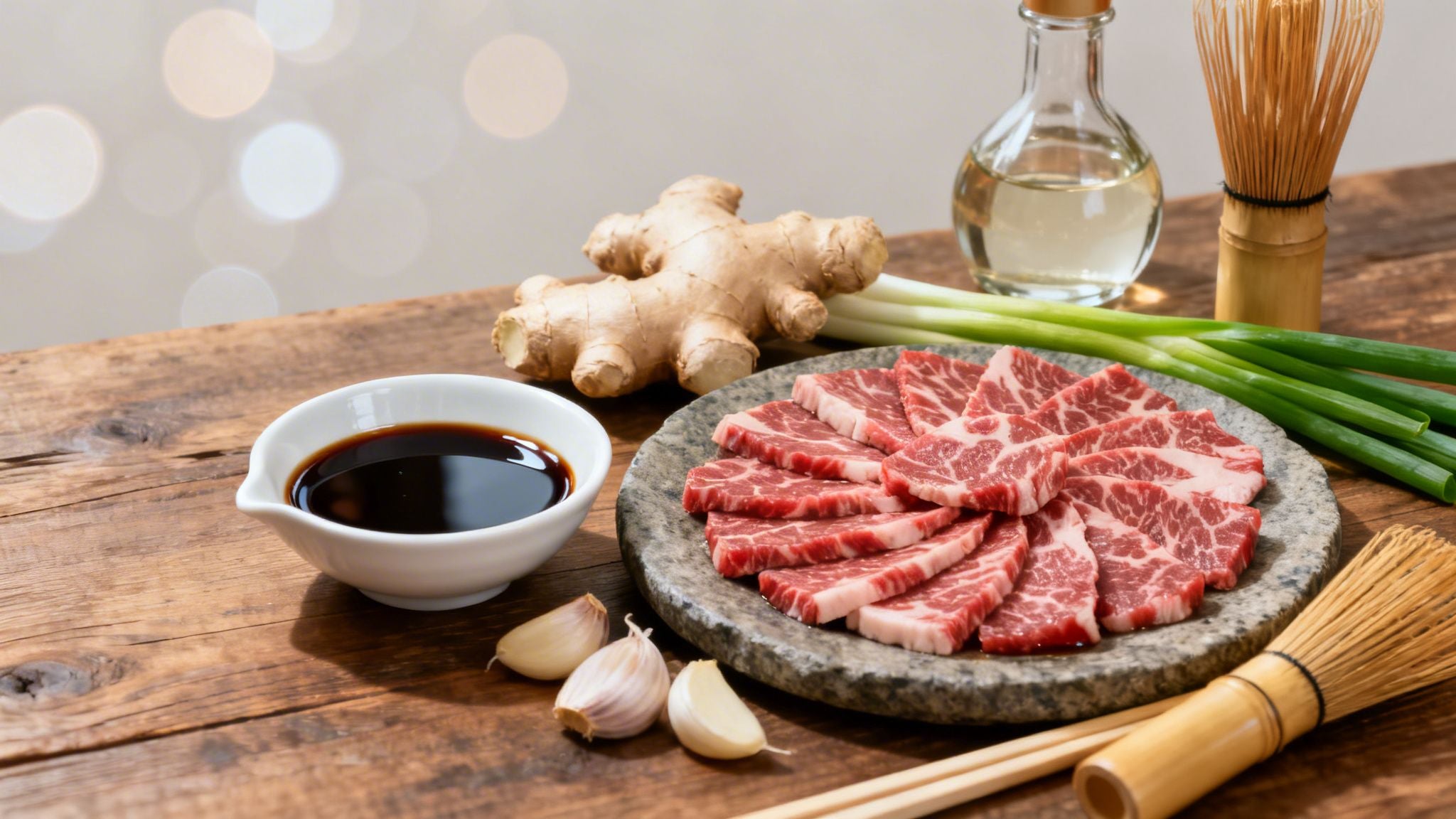
If you've ever tried to recreate the incredible, savory-sweet flavor of beef from a Japanese restaurant at home, you know it can be a challenge. Whether it's for a sizzling yakiniku grill or a comforting beef bowl, getting that perfect taste is all about the marinade. A real japanese marinade for beef is a masterclass in balancing salty, sweet, and umami flavors with just a handful of key ingredients.
This guide will show you how to craft a genuine Japanese beef marinade from scratch. You will learn about the essential building blocks—from rich, savory soy sauce to sweet mirin—and the right techniques to get that tender, flavorful result every time.
By the end, you'll understand why sourcing authentic ingredients makes all the difference. When you use products shipped directly from Japan, like those from Buy Me Japan, you're not just buying food—you're importing a taste of true authenticity. It’s what takes a good dish and makes it truly exceptional.
The Secret to Restaurant-Quality Japanese Beef at Home

Many home cooks feel let down when their homemade dishes lack the same depth you find in Japan. The problem usually isn't your cooking technique—it's the ingredients. Generic, mass-market sauces cannot capture the authentic, nuanced flavor of products made to Japanese standards.
That’s where this guide comes in. We’re going to walk through how to build a genuine japanese marinade for beef from the ground up. You’ll get to know the essential building blocks—from rich, savory soy sauce to sweet mirin—and the right techniques to get that tender, flavorful result every time.
We'll cover classic recipes for Yakiniku and Teriyaki, show you how to marinate different cuts for perfect tenderness, and even give you ideas for building a complete meal. It’s all about giving you the confidence to master these flavors yourself.
A great marinade does more than just add flavor; it fundamentally changes the texture and character of the beef. The real magic happens in the interplay of salty, sweet, and umami, which tenderizes the meat while infusing it with that rich, savory essence you only find in Japanese cooking.
Ultimately, you’ll see why sourcing authentic ingredients makes all the difference. When you use products shipped directly from Japan, like those from Buy Me Japan, you're not just buying food—you're importing a taste of true authenticity. It’s what takes a good dish and makes it truly exceptional.
If you’re ready to dive in, you might also find some great ideas in our guide on how to host a Japanese BBQ at home, which is the perfect way to put these marinades to the test.
Getting the Core Ingredients Right for Authentic Flavor

To create a truly authentic Japanese beef marinade, you must start with the holy trinity of Japanese cooking: soy sauce (shoyu), mirin, and sake. These three liquids are non-negotiable. They create that incredible balance of salty, sweet, and deep umami that makes these marinades so addictive. Getting to know what each one does is the secret to getting that restaurant-quality flavor in your own kitchen.
Soy sauce, or shoyu, is the soul of the marinade. It provides the salt and the savory foundation. Do not just grab any old bottle off the shelf. Real Japanese shoyu is brewed and fermented, giving it a complex, aromatic flavor that’s worlds away from the harsh saltiness of generic brands. It gives the beef that beautiful deep color and an umami kick that also helps tenderize the meat.
When you're ready to level up your pantry, exploring options for a high-quality soy sauce is a great place to start. You’ll be surprised at the difference a good brew makes.
The Essential Sweetness and Sheen
Next up is mirin, a sweet rice wine that’s responsible for the marinade's subtle, complex sweetness and glossy finish. We are talking about hon-mirin (true mirin), not the corn-syrup-based "aji-mirin." The real stuff has a natural sweetness that perfectly complements the salty shoyu, and its alcohol content helps to tenderize the beef and cut through any gaminess.
Sake, Japanese rice wine, rounds out the liquid base. It adds another layer of umami and is fantastic at neutralizing any unwanted "meaty" smells. Its flavor is clean and subtle, so it enhances everything else in the marinade without stealing the show. If you're curious about how these ingredients work in other contexts, explore our guide to Japanese cooking sauces to see their versatility.
Aromatics and Other Flavor Boosters
Beyond that core trio, a few aromatics are essential for building a marinade with real depth and character.
- Fresh Ginger: Always use freshly grated ginger. It adds a warm, zesty spice that cuts beautifully through the richness of the beef.
- Fresh Garlic: A must-have for its pungent, savory bite. Grate it or mince it finely to release all that flavor.
- Miso Paste: For an even richer, earthier flavor, try adding a spoonful of miso paste. This fermented soybean paste delivers an incredible umami punch and a unique, salty complexity.
The demand for marinades is booming in the Asia-Pacific region, thanks in large part to the growing appetite for meat in countries like Japan. The Japanese meat market is expected to jump from USD 19.1 billion in 2022 to USD 27.7 billion by 2032. It’s no surprise that authentic, flavorful beef marinades are a huge part of that growth.
For those of us cooking outside of Japan, using authentic ingredients is what separates a good marinade from a great one. Sourcing Japanese-made shoyu, hon-mirin, and quality sake will make your food taste the way it's supposed to. Using a service like Buy Me Japan is a reliable way to get genuine products shipped directly from Japan, so you can cook with confidence.
Classic Japanese Beef Marinade Recipes You Can Master

Let's make some incredible marinades. Once you have your core ingredients, crafting these authentic Japanese flavors is surprisingly simple. These are not fussy, complicated recipes—these are tried-and-true combinations you can master quickly and then tweak to make your own.
We’ll cover a smoky yakiniku sauce for grilling, a classic sweet-and-savory teriyaki, and a deeply flavorful miso marinade. The real secret to success is using quality Japanese ingredients. A true Kikkoman soy sauce brewed in Japan, for example, has a roundness and depth of flavor that many international versions cannot match.
The love for beautifully marinated beef isn't just a trend; it's a huge part of modern Japanese food culture. With fresh meat making up a massive portion of the market, it's clear that people are all about that pure, authentic taste that a proper marinade brings out.
Japanese Marinade Flavor Profiles
Feeling unsure which marinade to try first? This quick guide breaks down the flavor profile and best use for each one, so you can match the marinade to your meal perfectly.
| Marinade Type | Primary Flavor | Best For | Recommended Beef Cuts |
|---|---|---|---|
| Yakiniku | Savory, garlicky, slightly sweet | Grilling, high-heat searing | Thinly sliced sirloin, ribeye, short ribs |
| Teriyaki | Sweet, savory, glossy | Pan-searing, broiling, stir-frying | Thicker steaks, beef skewers, meatballs |
| Miso | Earthy, savory, rich umami | Marinating tougher cuts, slow-cooking | Flank steak, skirt steak, chuck roast |
Each of these marinades offers a completely different experience. Think of them as tools in your kitchen arsenal, ready to transform a simple piece of beef into something special.
Savory Yakiniku Marinade For Grilling
Yakiniku literally means "grilled meat," and this marinade is built to complement the smoky char of a hot grill. It’s savory, packed with fresh garlic and ginger, and has just enough sweetness to create a perfect crust.
Here's what you'll need to whisk together:
- 1/2 cup authentic Japanese soy sauce
- 1/4 cup mirin
- 2 tablespoons sake
- 1 tablespoon toasted sesame oil
- 2 cloves garlic, grated
- 1 inch ginger, grated
- 1 tablespoon white sugar
- 1 teaspoon toasted sesame seeds
Just mix everything in a bowl until the sugar dissolves. Because this marinade is so potent, it works fast—it’s perfect for thinly sliced cuts like sirloin or ribeye. A quick 30-60 minute soak is all you need for incredible flavor. If you're short on time, a high-quality pre-made sauce like Ebara Yakiniku Sauce gives you that authentic Japanese BBQ taste right out of the bottle.
Sweet And Glossy Teriyaki Marinade
Teriyaki is probably the most famous of the bunch, known for that beautiful shine (teri) and grilled (yaki) flavor. This is your go-to for creating a thick, glossy glaze that clings to the beef, making it ideal for pan-searing or broiling.
For this iconic sauce, you’ll combine:
- 1/2 cup soy sauce
- 1/2 cup mirin
- 1/4 cup sake
- 1/4 cup brown sugar
Pour all the ingredients into a small saucepan. Bring it to a simmer over medium heat and let it bubble gently for 5-10 minutes, stirring every so often. You'll know it's ready when it has thickened just enough to coat the back of a spoon. Let it cool completely before you use it to marinate your beef.
The mirin is a critical ingredient here for that signature sweetness and shine. To learn more about its role, check out our guide on what mirin sauce is and how to use it.
This sauce does double duty as a finishing glaze. Once your beef is cooked, you can brush on some extra teriyaki sauce during the last minute of cooking to build up a gorgeously sticky and caramelized coating.
Rich Miso Marinade For Umami Depth
If you want to explore a completely different side of Japanese flavor, miso is the answer. This marinade delivers an incredible, funky, savory depth that’s pure umami. The enzymes in miso paste are also fantastic meat tenderizers, making this the perfect choice for flavorful but tougher cuts like flank or skirt steak.
To make the paste, simply mix:
- 1/2 cup white or red miso paste
- 1/4 cup sake
- 2 tablespoons mirin
- 1 tablespoon sesame oil
- 1 tablespoon honey or sugar
Whisk it all together until it forms a smooth, consistent paste. Slather it all over your beef, making sure it's fully coated. Miso needs time to work its magic, so let it marinate for at least four hours, or even better, overnight. The result is exceptionally tender, juicy beef with a profound flavor you won't soon forget.
Perfecting Your Marinating Technique for Tender Beef
Having a great recipe for a japanese beef marinade is one thing, but your technique is what really brings the magic to the meat. It’s so much more than just letting beef sit in a sauce. Think of it as a bit of kitchen science—the ingredients are actively working for you.
Ingredients like sake, mirin, and soy sauce don't just add flavor on the surface. They are actually tenderizing the beef by breaking down tough muscle fibers. The salt in the soy sauce and the alcohol in the sake and mirin kickstart a process that pulls that savory marinade deep into the meat. At the same time, this helps the beef hold onto its own natural juices when it hits the heat. The end result? Beef that’s incredibly moist, tender, and seasoned perfectly from the inside out.
Marinating Times For Different Beef Cuts
One of the biggest mistakes people make is over-marinating. Longer is not always better. If you leave beef in a salty or acidic marinade for too long, it can ruin the texture, making it tough or even mushy. The sweet spot for marinating really comes down to the cut of beef you're using.
-
Thinly Sliced Beef (for Yakiniku or Stir-fry): For those paper-thin slices of sirloin or ribeye, you don’t need much time at all. Just 30 to 60 minutes is plenty. Any longer and you risk overwhelming the delicate texture of the meat.
-
Medium-Thick Steaks (1 to 1.5 inches): Cuts like flank steak, skirt steak, or a thicker sirloin need more time for the marinade to penetrate. 4 to 8 hours is the ideal window to tenderize these denser cuts effectively.
-
Large Roasts (Chuck or Brisket): For the big, tough cuts you plan to slow cook, a longer soak is essential. You can go for a full 24 hours here. This gives the marinade ample time to work its way through all that connective tissue, guaranteeing a rich, deep flavor in every bite.
Always pat your beef completely dry with a paper towel before adding the marinade. Any extra water on the surface will dilute the sauce and keep it from clinging to the meat, creating a barrier to flavor.
Essential Tips For Success And Safety
A few simple habits can make a huge difference in your final dish. First, make sure the beef is totally submerged in the marinade. A zip-top bag is perfect for this—just squeeze out all the air before sealing. If you're using a dish, be sure to flip the meat every so often so it marinates evenly.
Safety is non-negotiable. Always marinate your beef in the refrigerator, never on the counter. Room temperature is a prime breeding ground for bacteria. And once you take the meat out, throw away any leftover marinade that the raw beef was sitting in. If you want to use it as a sauce, you absolutely must bring it to a full, rolling boil for at least a minute to make it safe to eat.
Getting to know your ingredients helps, too. For example, sake isn't just there for flavor; its enzymes are fantastic natural tenderizers. You can learn more about the importance of sake in cooking and see just how much it can elevate your dishes.
Choosing the Right Beef and Perfect Meal Pairings

Even the most incredible Japanese marinade can't work its magic on the wrong cut of beef. The quality of your meat is just as important as the sauce, and the right choice can elevate your meal from good to unforgettable. The cut's texture, fat content, and thickness all dictate how it will take on the marinade and behave once it hits the heat.
For fast, high-heat cooking like yakiniku (Japanese BBQ), you’re looking for cuts with beautiful, intricate marbling. That intramuscular fat is key—it melts as it grills, basting the meat from the inside out and creating that incredibly juicy, flavorful bite. This is exactly why cuts like ribeye and sirloin are stars of the grill. When sliced thin, they soak up a savory yakiniku marinade in no time and cook in just a few seconds.
Selecting Beef Cuts for Your Marinade
The best beef for your dish really depends on what you're making. A rich, funky miso marinade, for example, is fantastic for tenderizing a slightly tougher cut, while a lighter teriyaki marinade is better suited for a delicate, fatty slice.
Here’s a quick rundown of some go-to choices:
- For Grilling (Yakiniku): You can't go wrong with beautifully marbled ribeye, sirloin, or short ribs (karubi). The fat content is your friend here, keeping everything tender and succulent over the hot grill.
- For Stir-Fries: Flank steak or skirt steak are perfect. They’re leaner, but when you slice them thinly against the grain, they absorb marinades like a sponge and cook up wonderfully tender.
- For Slow-Cooking (Nikujaga): This is where more economical cuts get their moment. Something like chuck roast or brisket becomes melt-in-your-mouth tender after simmering away in a sweet and savory broth.
High-quality beef is central to Japanese cuisine. The demand is enormous—Japan’s beef market alone generates tens of billions of dollars in revenue each year. Loin cuts, the top choice for yakiniku, make up the largest slice of that pie, while brisket, a slow-cooking favorite, is also a fast-growing segment.
Creating a Complete Japanese Meal
Once your beef is perfectly cooked and glistening, it's time to build the rest of the meal. A truly authentic Japanese dining experience is all about balance, and the supporting dishes are just as important as the main event. Think in terms of ichiju-sansai—a traditional meal structure of one soup and three sides.
A complete Japanese meal is about creating a harmony of flavors, textures, and colors. The goal is to balance the rich, savory beef with refreshing, simple accompaniments that cleanse the palate.
A bowl of fluffy, slightly sticky Japanese short-grain rice is non-negotiable. It’s the perfect neutral canvas for soaking up every last drop of the flavorful beef and its sauce.
Next, you need something sharp and crunchy to cut through the richness. A side of tsukemono (Japanese pickled vegetables) is essential. Whether it’s pickled daikon, cucumber, or ginger, that crisp, acidic bite provides a refreshing contrast.
A simple bowl of miso soup rounds everything out, adding another layer of umami and comforting warmth. These elements work together to turn a single, delicious component into a truly satisfying and complete meal. If you're looking for even more ways to complement your dish, you could explore beverage pairings, like in this guide on The Art of Pairing Wine with Steak.
Common Questions About Japanese Marinades
Once you start making your own Japanese marinades, a few questions always pop up. Getting the details right is what separates a good meal from a truly great one. Here are the answers to some of the most common things people ask.
How Long Can I Keep My Homemade Marinade?
This is a big one. To keep your marinade fresh and flavorful, the key is proper storage. If you have any leftover marinade that has not touched raw meat, pour it into an airtight jar or container and pop it in the fridge. It will be perfect for up to one week.
For a longer-term solution, your freezer is your best friend. A great trick is to pour the marinade into an ice cube tray. Once frozen solid, toss the cubes into a freezer bag. This way, you can just grab a few cubes for a quick weeknight stir-fry or a single steak. Stored this way, the marinade will keep its best quality for up to three months.
Can I Use These Marinades on Chicken or Pork?
Absolutely. While these recipes are designed to make beef shine, their beautiful balance of sweet and savory works wonders on other proteins. The marinating process is the same, but you’ll want to tweak the timing.
- Chicken: For chicken breasts or thighs, a 2 to 4-hour soak is plenty.
- Pork: Give pork chops or a tenderloin a good 4 to 6 hours to absorb all that flavor.
- Tofu: For a fantastic vegetarian dish, press a block of extra-firm tofu to get the water out, then let it marinate for at least 30 minutes.
Japanese vs. Korean Marinades: What's the Real Difference?
This is a point of frequent confusion, as both create unbelievably delicious food. The difference really comes down to their flavor foundations.
A classic japanese marinade for beef, like the ones we've covered, builds its flavor on a backbone of soy sauce, mirin, and sake. The result is a taste that's deeply savory and subtly sweet, with a huge focus on umami. It tends to be more refined and nuanced.
A classic Korean marinade, on the other hand (think bulgogi), often starts with soy sauce but brings in bolder, spicier ingredients. You'll taste gochujang (fermented chili paste), gochugaru (chili flakes), and a generous amount of toasted sesame oil. Many recipes also use grated pear or apple as a natural tenderizer, which adds a distinct sweetness. The final flavor is robust, often spicy, and has a signature nuttiness from the sesame.
Why should I buy my ingredients from Japan? The simple answer is authenticity. Ingredients like shoyu (soy sauce) and mirin are crafted in Japan with specific brewing and aging processes that are hard to replicate. You can learn more about this foundational ingredient in our article on what shoyu is and why it's different.
When you use ingredients made to traditional Japanese standards, you get the precise balance of flavors that makes these dishes so special. Ordering from a trusted source like Buy Me Japan means you're not just getting a bottle of sauce; you're getting genuine ingredients shipped from Japan, guaranteeing that authentic taste you're looking for.
At Buy Me Japan, we bring the authentic flavors of Japan directly to your kitchen. Explore our curated selection of genuine Japanese sauces and ingredients to elevate your home cooking.



Share:
Your Guide to Authentic Japanese Curry Spices
The Ultimate Guide to Japanese Gluten Free Udon