


Ever wondered what gives authentic Japanese dishes their unique depth and richness? More often than not, the secret ingredient is sake. Far more than just a popular beverage, sake is a cornerstone of Japanese cooking, acting as a powerful flavor enhancer that is as essential to a Japanese kitchen as wine is to French cuisine.
This guide will explain everything you need to know about using sake in your cooking. We will explore how this versatile fermented rice beverage adds a serious punch of umami, tenderizes proteins, and balances flavors in everything from simple marinades to complex broths. For a closer look at how chefs use this traditional ingredient, you can learn more about Japanese sake for cooking.
Sake’s role in the culinary world has grown alongside the global passion for authentic Japanese food. In 2022, Japan’s sake exports hit a record 47.5 billion yen, a massive 452% increase since 2013, driven by its reputation as a powerhouse ingredient in professional and home kitchens.
Here is what you will learn:
- The key differences between cooking sake (ryorishu) and regular drinking sake.
- The science behind how sake adds flavor and tenderizes meat.
- Practical tips for choosing the right bottle for your dishes.
- Simple and effective substitutes for when you run out.
Understanding how to use sake will help you bring the authentic taste of Japan into your own cooking. To build a great foundation, start with our guide on Japanese cooking basics.
Cooking Sake vs Drinking Sake Unpacked
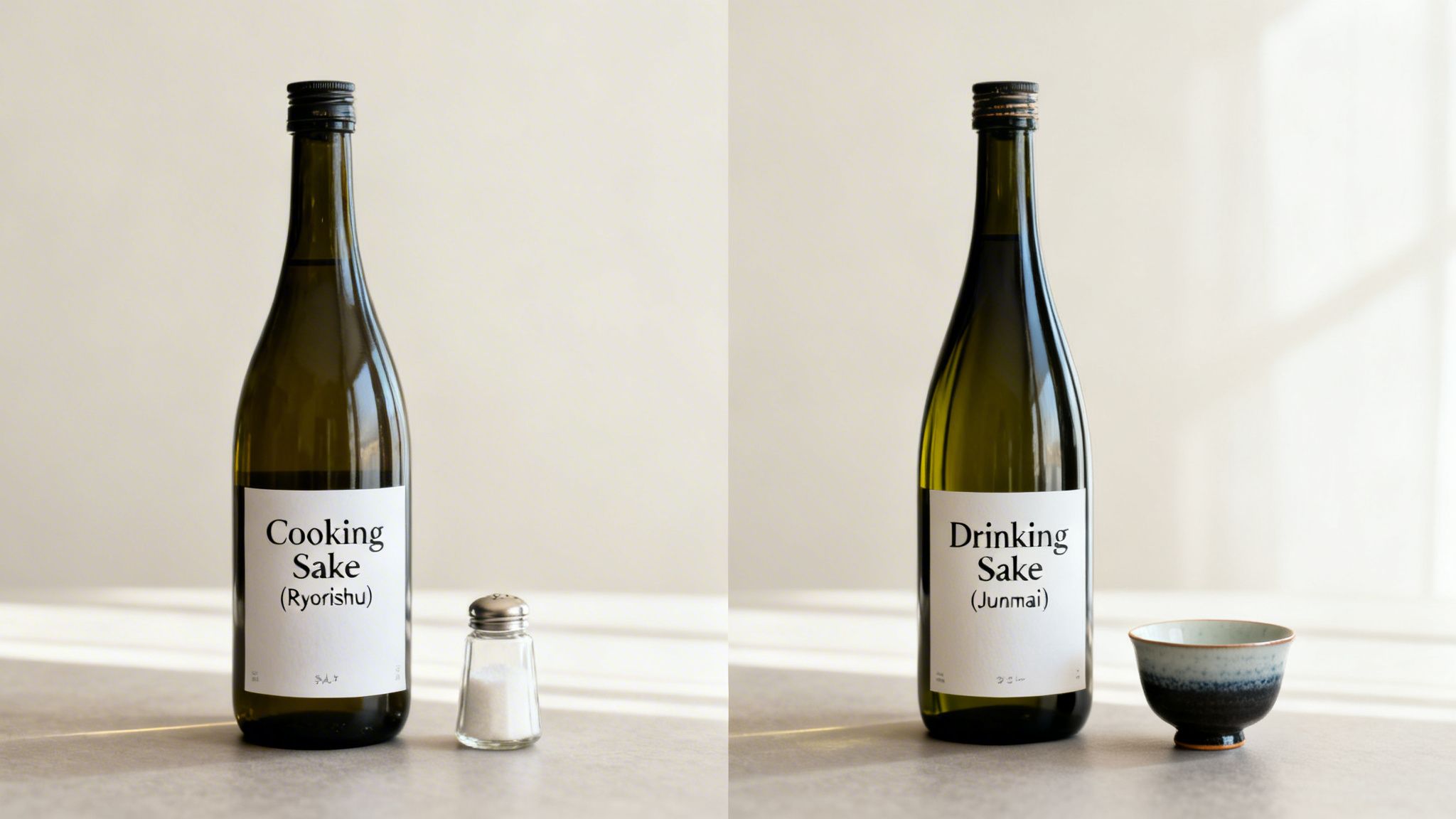
One of the first things to learn about cooking with sake is that not all bottles are the same. In a Japanese grocery store, you will find two main types: dedicated cooking sake (ryorishu) and regular drinking sake (seishu). Choosing the right one is the secret to achieving authentic flavors in your kitchen.
Cooking sake is made specifically for culinary use. To make it unfit for drinking and avoid alcohol taxes in Japan, brewers add salt, typically around 2-3% by volume. This simple addition makes it an affordable pantry staple for daily Japanese cooking and also gives it a longer shelf life.
Drinking sake, on the other hand, is crafted for its flavor, aroma, and clean finish. It contains no added salt, so its taste is more refined and complex. Using a quality drinking sake in your cooking can elevate a dish by adding a subtle, nuanced flavor without extra saltiness. Learning about the different varieties is as enjoyable as exploring any other popular Japanese drink.
Cooking Sake vs Drinking Sake A Quick Comparison
So, what is the real difference when you are standing in front of the stove? This quick table breaks it down.
| Feature | Cooking Sake (Ryorishu) | Drinking Sake (Seishu) |
|---|---|---|
| Salt Content | Contains 2-3% added salt | No added salt |
| Alcohol Content | Typically 13-14% ABV | Varies, usually 14-16% ABV or higher |
| Flavor Profile | Stronger, savory, and salty | Clean, nuanced, and can range from dry to sweet |
| Price | Generally more affordable | Price varies widely by quality and type |
| Best For | Braises, marinades, glazes, and stews | Delicate soups, sauces, and steamed dishes |
Ultimately, choosing the right one depends on your recipe. Ryorishu is perfect for robust, everyday dishes like teriyaki glazes or hearty marinades where its flavor blends with other strong ingredients. For more delicate cooking, like clear soups or steamed fish where every flavor matters, a simple drinking sake is almost always the better choice.
A good rule to follow is: if you would not enjoy drinking it, you should not cook with it. This does not mean you need to use a premium sake, but it highlights the importance of quality. Cooking sake is your reliable tool for bold dishes, while a decent drinking sake adds a touch of clean, refined elegance.
The Magic of Sake in the Kitchen: How It Transforms Food
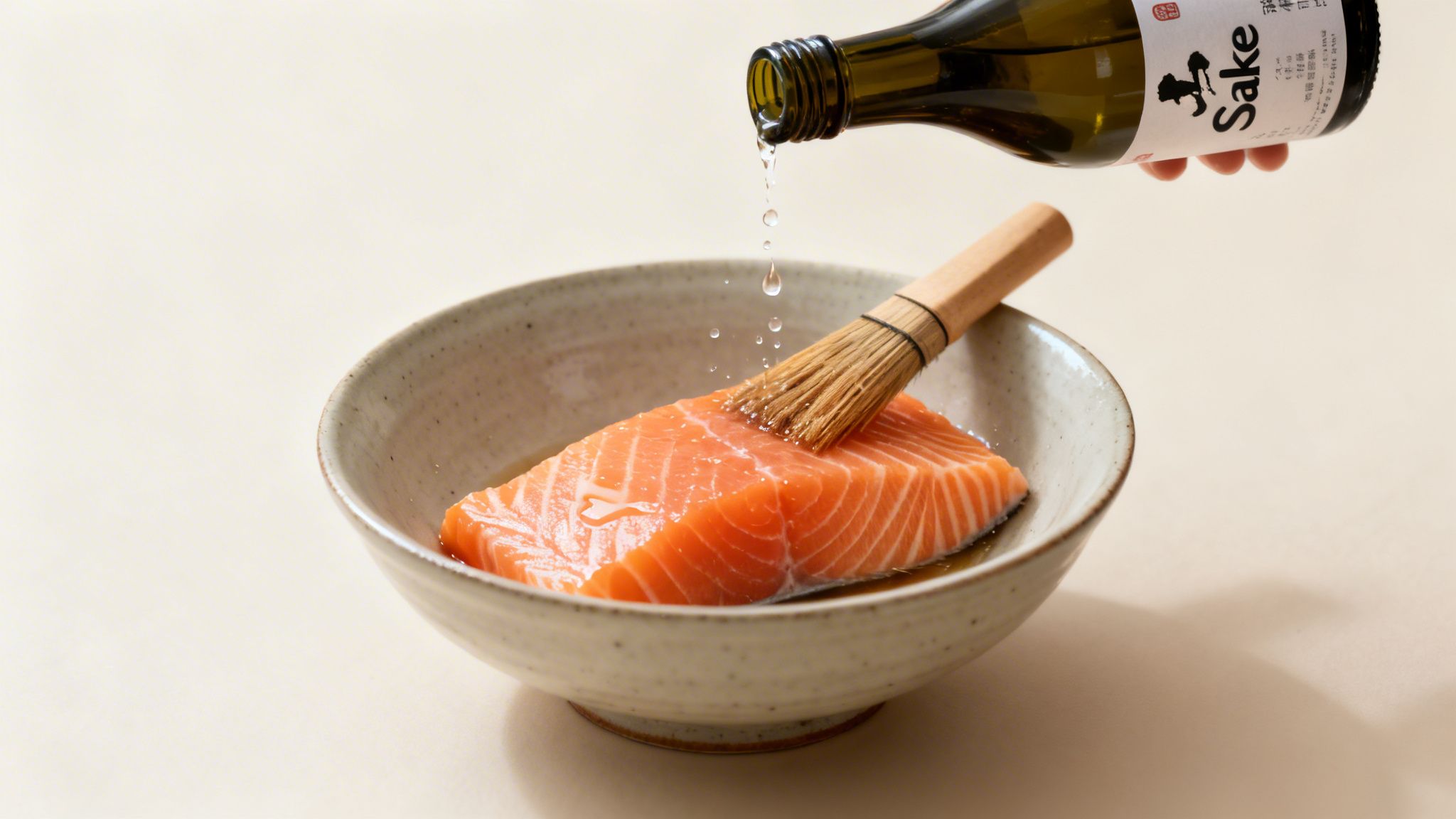
When you add a splash of sake to a dish, you are initiating a series of chemical reactions that transform the flavor, texture, and aroma of your food. It is a secret weapon that top chefs use to elevate their cooking, and understanding how it works is the key to mastering it at home.
The primary reason sake is so valued in the kitchen is its power to create and enhance umami, the deep, savory taste that makes Japanese food so satisfying. Sake is naturally rich in amino acids, especially glutamic acid, which are the source of umami. Adding it to a broth or marinade instantly lends a complex, savory depth. It's the essential ingredient that gives dishes like sukiyaki and authentic ramen broths their character. You can see how this works alongside other umami-rich ingredients in our guide on how to make dashi stock.
A Natural Meat Tenderizer and Deodorizer
Beyond flavor, sake is an excellent tenderizer. The alcohol and natural enzymes break down the tough fibers in meat and seafood, resulting in a more succulent and tender texture. This works whether you are marinating chicken for karaage or simmering pork belly.
In fact, some studies show that sake's enzymes can tenderize meats 20-30% faster than wine. At the same time, its amino acids can boost the savory notes in a broth by up to 40%. Sake is also a gentle deodorizer, neutralizing strong odors from fish, seafood, and gamey meats. Its organic compounds bind to the molecules causing these smells, leaving you with a cleaner, more appetizing aroma.
Sake's Three Big Jobs in the Kitchen
Sake performs three essential jobs in cooking, each complementing the others to create that authentic, well-rounded Japanese flavor.
- Flavor Enhancement: It adds a subtle sweetness and a significant boost of umami, creating a deeper, more sophisticated taste.
- Texture Improvement: Its enzymes and alcohol tenderize proteins, making meat and fish incredibly juicy and soft.
- Aroma Balancing: It neutralizes any harsh or unwanted smells, especially from fish, leading to a cleaner and more appealing dish.
This triple-action effect is what makes sake such a vital tool. It’s what turns a simple teriyaki glaze or a basic stew into something truly memorable.
How to Choose the Right Sake for Your Kitchen
Walking into the sake aisle can feel intimidating, but picking the right bottle for cooking does not have to be complicated. If you want a great all-purpose sake that is just as good for sipping as it is for cooking, look for a Junmai. Junmai is a "pure rice" sake with no added brewer's alcohol. This gives it a full, rice-forward flavor that holds up well when heated, adding depth to your dish without overpowering it.
Another great option is to buy a high-quality, dedicated cooking sake from a trusted Japanese brand. You can explore a variety of authentic Japanese food products online to find one that is perfect for your pantry. Choosing a genuine brand from a trusted source like Buy Me Japan ensures you are getting an authentic product shipped directly from Japan.
Selecting the Best Bottle
A simple rule chefs often share is: if you would not want to drink it, you probably should not cook with it. This does not mean you need an expensive bottle. It just means that avoiding very cheap cooking wines with a harsh, salty taste will make a huge difference in your final dish. A slightly better bottle brings cleaner, more balanced flavors.
Sake's journey from a Japanese staple to a global cooking essential is remarkable. Exports increased by 452% from 2013 to 2022, reaching 47.5 billion yen. This growth is due to its versatility. Its mild acidity is perfect for deglazing a pan to build silky sauces, while its natural enzymes work wonders in marinades. You can learn more about the global growth of the sake market.
For another versatile, high-quality option that works in almost any recipe, look for a Honjozo sake. It is light, fragrant, and delivers consistent results without being too expensive.
Essential Tips and Simple Sake Substitutes

Here is the most important technique to remember with sake: add it early. Letting it simmer at the beginning of the cooking process gives the alcohol time to cook off. This simple step unlocks sake's magic. The harshness of the alcohol evaporates, leaving behind that wonderful, complex umami and subtle sweetness that deepens the flavor of your dish.
But what if you run out? You have a few options, though each substitute will slightly alter the final flavor. The best choice depends on what you are making.
Common Substitutions for Sake
If you need a close match, your best options are dry sherry or Chinese rice wine (Shaoxing). Both have a similar dry, savory character that works well in marinades or simmered dishes. Be aware that Shaoxing wine is often salted, so you may need to reduce the soy sauce or salt in your recipe to compensate.
A common mistake is using mirin as a direct substitute for sake. Mirin is a sweet rice wine intended for creating glazes and shiny sauces. If you use it as a 1-for-1 replacement for sake, your dish will likely become too sweet. If mirin is all you have, you must account for its sugar. A good rule is to reduce or eliminate any other sugar, like honey, that the recipe calls for.
While these substitutes work in a pinch, nothing truly replaces the real thing. For authentic Japanese flavor, using a proper cooking sake provides the intended balance and depth that makes it a cornerstone of Japanese cuisine.
Your Top Questions About Cooking With Sake
Here are answers to some of the most common questions about using sake in the kitchen. Understanding these basics will give you the confidence to create incredible Japanese dishes.
Does The Alcohol Actually Cook Off?
For the most part, yes. When you add sake to a hot pan or simmering pot, the alcohol begins to evaporate quickly. The longer it cooks, the more alcohol burns away, leaving behind its savory, umami-rich flavor. A quick sauce might retain a small trace of alcohol, but in dishes that simmer for a while, the alcohol content becomes practically zero. The goal is to capture the sake's flavor, not its alcohol.
How Do I Store Sake After I've Opened It?
This depends on the type of sake you are using. A bottle of dedicated cooking sake (ryorishu) is easy to store. Thanks to the added salt, which acts as a preservative, you can simply put the cap back on and store it in a cool, dark pantry for months. If you are using regular drinking sake for your recipe, you should seal it tightly and keep it in the fridge. This will help preserve its flavor for a few weeks. Even when refrigerated, the delicate aromas of a good drinking sake will fade, so try to use it within a month.
Can I Just Use Mirin Instead Of Sake?
While they are often used together, mirin is not a good substitute for sake. They are different tools for different jobs. Mirin is a sweet rice wine with higher sugar and lower alcohol content; its primary role is to add sweetness and a glossy shine to glazes. Sake adds depth, savory umami, and tenderizes meat and fish. If you swap mirin for sake, your dish will likely be too sweet. Fermentation is a key part of what makes Japanese ingredients so unique, and you can learn more about the world of Japanese fermented foods.
Do I Need To Buy Expensive Sake For My Recipes?
Definitely not. There is no need to use a premium bottle for your teriyaki sauce. A good, affordable cooking sake or an entry-level drinking sake (like a basic Junmai) is all you need. The subtle, complex notes that make an expensive sake special are lost in the heat of cooking. Save the fancy bottles for sipping, where you can truly appreciate their quality.


Share:
Asian Smokey Eye: A Guide to the Modern Smokey Eye Look
Rice Wine Vinegar Vs Mirin A Complete Pantry Guide