


The most common advice in the Japanese hair treatment vs conditioner debate is also the least useful: just choose the treatment because it's stronger. That skips the actual decision. A conditioner is usually a routine maintenance step for slip, detangling, and surface smoothness, while a treatment is a more intensive option for hair that needs extra cosmetic conditioning. Neither category automatically repairs structural damage, and a richer formula can leave fine hair flat or coated.
The better question is: what does your hair need, and how often can it tolerate that level of conditioning? Japanese hair-care terminology generally treats conditioner and treatment as different levels of care, not identical products. Conditioners are intended for regular post-shampoo use, while treatments are positioned for dry, damaged, chemically processed, or heat-styled hair.
Why the Treatment vs Conditioner Question Is More Nuanced Than It Looks
A Japanese treatment isn't automatically a superior conditioner. It may contain a richer blend of oils, proteins, amino acids, or film-forming ingredients, and it may be designed to remain on the hair longer. That makes it useful for persistent roughness or porosity, but it doesn't make daily intensive care appropriate for every head of hair.
A conventional conditioner earns its place through repetition. Used after shampooing, it helps reduce friction, improve wet detangling, smooth the cuticle surface, and make hair easier to manage. A treatment earns its place through targeted use, especially when lengths feel porous, brittle, tangled, or rough after coloring and heat styling.
Practical rule: Use conditioner to make ordinary wash days easier. Use treatment when ordinary conditioning no longer gives enough slip or softness.
Hair porosity matters because porous hair tends to lose moisture and feel rough more readily. Density matters because fine or low-density hair can lose movement under high-deposit formulas. Styling habits matter too. Frequent blow-drying, straightening, coloring, and exposure to humidity can increase the value of a periodic treatment without proving that the hair fiber has been restored.
Readers with low-porosity hair can also benefit from a more personalized routine, rather than assuming that every rich mask is helpful. Buy Me Japan's guide to Japanese hair care for low-porosity hair is useful when your hair feels coated easily or takes a long time to absorb products.
The market itself reflects this separation. Japanese hair-care research tracks conditioners, oils, serums, masks, and treatments as distinct segments, which supports a simple conclusion: conditioner and treatment are usually complementary categories. Start with the lighter product you can use consistently, then add intensity only where your hair shows a genuine need.
What Conditioners and Hair Treatments Actually Do
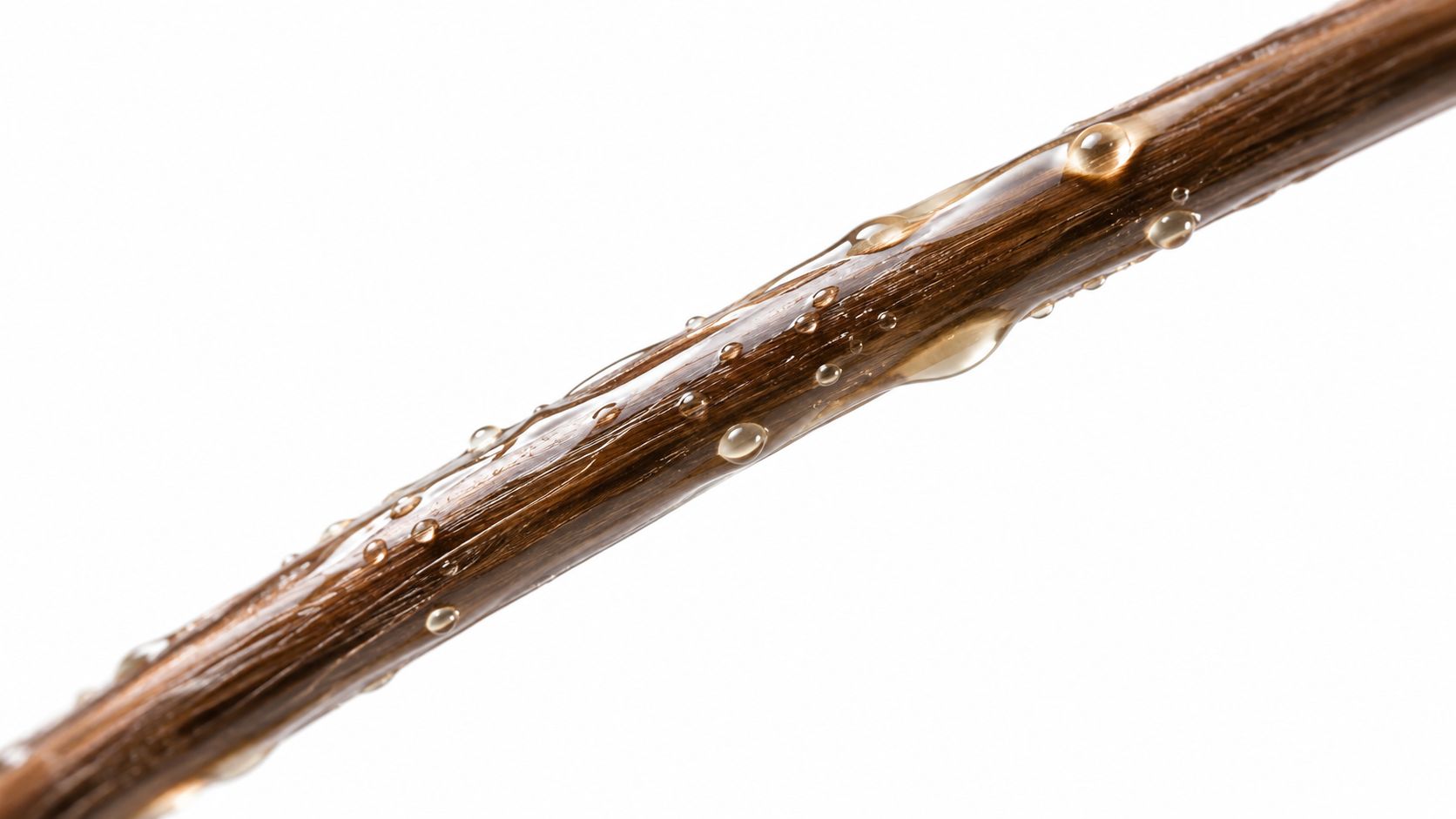
Hair feels smoother after conditioning because the formula changes how strands move against one another. Shampoo removes oil and residue, but it can also leave the hair surface more negatively charged and harder to comb. Conditioning agents deposit onto that surface and reduce the friction that creates tangles and roughness.
The everyday role of conditioner
Most rinse-out conditioners rely on combinations of:
- Cationic conditioning agents, which adhere to the hair surface and improve slip.
- Silicones and polymers, which form a smoother-feeling film and reduce friction.
- Fatty alcohols and oils, which add softness and help strands move past one another.
- Light film-formers, which support manageability without requiring a long treatment session.
The result is cosmetic, but useful. Conditioner can reduce wet-combing force, tame static, smooth the cuticle surface, and make brushing less aggressive. Earlier cosmetic-science evidence also links conditioning with lower interfiber friction, reduced combing force, and less weathering rather than biological rebuilding of hair.
Why treatments feel more substantial
Treatments and masks often use a higher concentration or wider combination of conditioning materials. A richer formula may include hydrolyzed proteins, amino acids, oils, ceramides, and film-forming polymers, with a longer leave-on period to encourage more deposition.
Ingredient names can help you understand the intended feel:
- Hydrolyzed keratin consists of smaller protein fragments used in conditioning formulas.
- Hydrolyzed silk is a lighter film-forming protein associated with slip and shine.
- Ceramides are lipid ingredients used to support the feel of the outer hair barrier.
- Camellia oil, known in Japan as 椿油 or tsubaki abura, is a traditional hair-care oil used for softness and shine.
None of these ingredients guarantees repair. A treatment can feel richer because it leaves more material on the fiber, not because it has restored the original internal structure. Your best comparison is therefore practical: how easily does the hair comb, how smooth does it feel after drying, and does the formula preserve movement?
For product terminology and use instructions, compare the guidance in this Japanese hair conditioner guide with the directions on the current product listing. The label and application method matter as much as the category name.
Side by Side Comparison
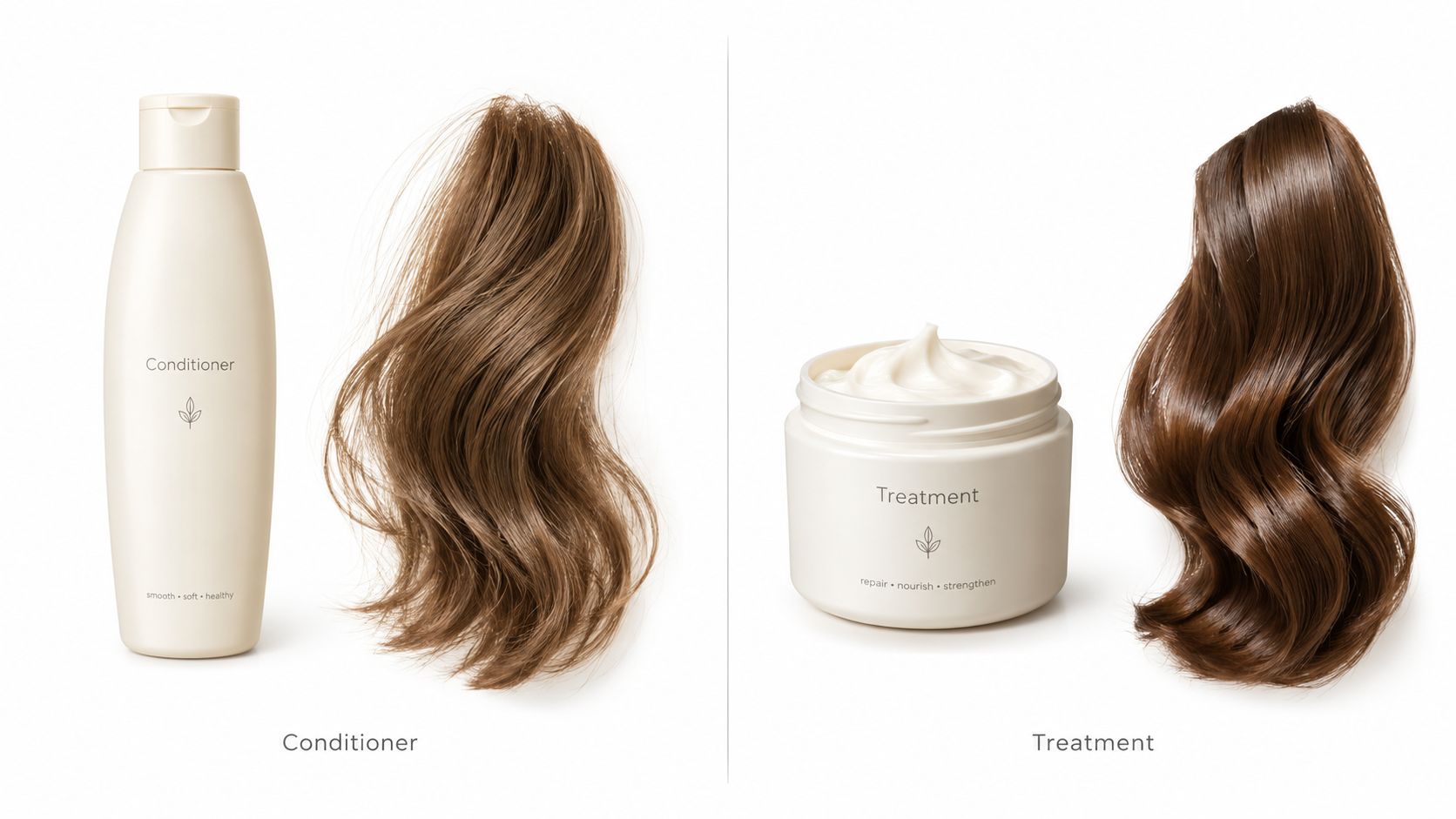
The useful distinction is intensity, not a promise of structural repair. Conditioner supports regular detangling and surface smoothness after shampooing. A treatment delivers a heavier or broader conditioning effect when the lengths feel rough, porous, or difficult to manage.
| Factor | Japanese Conditioner | Japanese Hair Treatment |
|---|---|---|
| Main job | Routine detangling, softness, and surface smoothing | Periodic intensive conditioning for rough or damaged-feeling lengths |
| Formulation | Usually lighter, with cationic agents, silicones, polymers, and fatty materials | Often richer or broader, with oils, proteins, amino acids, ceramides, and film-formers |
| Contact time | Brief rinse-out use after shampoo | Often left on longer, according to the product directions |
| Typical frequency | Commonly after every shampoo | Commonly periodic, based on hair condition and formula |
| Expected feel | Lightweight slip and easier combing | More substantial softness, coating, gloss, or smoothing |
| Best suited to | Healthy, fine, normal, or easily weighed-down hair | Porous, dry, bleached, chemically processed, heat-styled, coarse, or persistently tangled hair |
| Main risk | May not provide enough care for severely rough lengths | Can flatten fine hair or feel coated when overused |
| Price tier in Japan | Often available as an affordable everyday product | Often positioned as a more specialized or premium care step |
These are category tendencies, not guarantees. Some conditioners are rich, while some treatments are light. Check the directions, ingredient list, and stated claims for the exact formula. The word treatment alone does not prove stronger performance or true repair.
Japanese market structure supports this two-level buying pattern. Mass-market products held 74.93% of Japanese hair-care market share in 2025, while premium products were forecast to grow at a 5.41% CAGR through 2031, according to Mordor Intelligence's Japan hair-care market analysis. Use an affordable conditioner for regular maintenance, then reserve richer care for lengths that need it. That approach limits unnecessary spending and reduces the risk of over-conditioning fine hair.
Finishing products belong to a separate step. A leave-in milk or oil-serum hybrid can soften mid-lengths and ends, but it does not replace a rinse-out treatment. Use this guide to Japanese hair milk versus hair oil to distinguish post-wash conditioning from finishing and sealing.
Does Japanese Treatment Actually Repair Hair
The word repair causes most of the confusion. In everyday beauty language, it often means hair feels smoother, looks glossier, tangles less, or breaks less readily during handling. In a structural sense, however, repair would mean reversing oxidative changes inside the fiber. A rinse-out cosmetic product shouldn't be assumed to do that.
Independent electrokinetic and spectroscopy testing found that conditioning improved surface manageability and deposition, but it did not reverse oxidative structural damage or reduce cysteic-acid markers. In plain English, the hair became easier to comb and feel smoother without returning to its original chemical condition. The findings are discussed in this cosmetic-science study on conditioning performance.
What controlled testing can and cannot prove
A separate plant-based keratin-repair study illustrates why formulas and protocols matter. A 0.5% active complex increased tensile strength by approximately 30% in a leave-on immersion protocol, by more than 13% after a single application in a conditioner formulation, and by 9% after one shampoo-cycle treatment. Gloss increased by 105% after five wash cycles in that study (the published keratin-repair research).
Those numbers aren't a promise for ordinary home use. Immersion and leave-on exposure can place more active material in contact with the fiber than a short rinse-out application. Different formulas, hair samples, application times, and washing conditions produce different results.
The honest promise of a treatment is improved feel and manageability, not restoration of the original hair fiber.
At home, assess outcomes that you can observe. Track wet-combing ease, brushing breakage, tactile roughness, and gloss after several washes. Keep the shampoo, water temperature, and heat-styling habits reasonably consistent so you can tell whether the treatment is helping.
If your hair is dry or damaged-looking, use this guide to caring for dry and damaged hair as a routine reference, but keep expectations realistic. A treatment can reinforce the surface and improve cosmetic performance. It can't permanently seal split ends or reverse every effect of chemical oxidation.
Building a Japanese Style Hair Care Routine
A Japanese-style routine works through layers of intensity, not one rich product at every wash. Shampoo cleans the scalp and lengths, conditioner improves immediate slip, and treatment adds targeted support when the hair needs more than cosmetic conditioning.
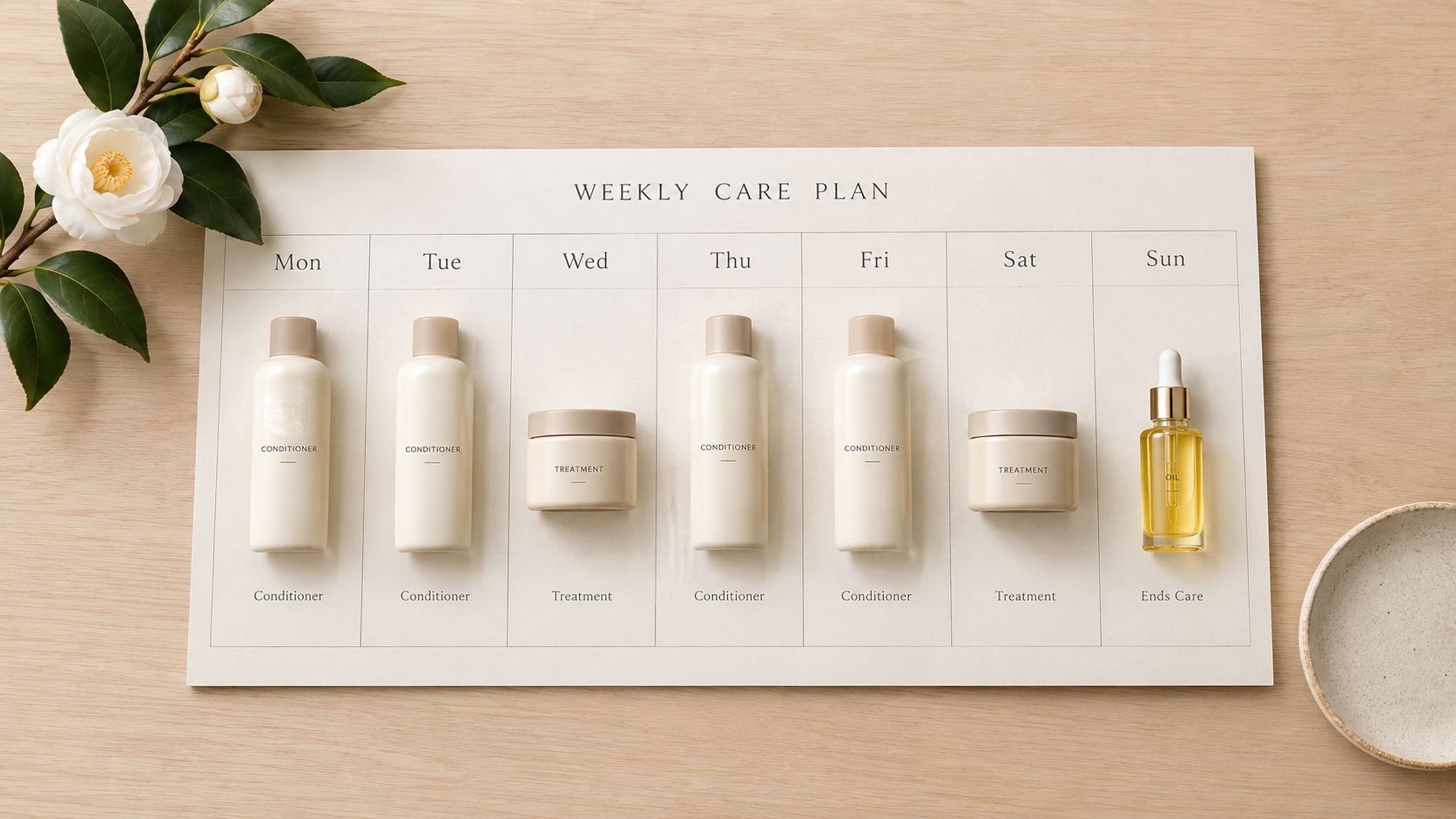
A practical three-tier routine
Tier one, regular conditioning. Apply conditioner from mid-lengths to ends after shampooing, concentrating on areas that tangle. Rinse thoroughly. Make this the default step because it improves combability without adding intensive deposits every day.
Tier two, periodic treatment. Use a richer mask or treatment when the lengths remain rough, porous, hard to comb, or affected by coloring and heat styling. Follow the product directions and start conservatively. Applying treatment after every shampoo can leave fine hair flat, coated, or less responsive.
Tier three, finishing protection. Add a small amount of leave-in milk, serum, or oil to damp or dry ends when extra smoothness is needed. More product usually creates more coating, not proportionally better results.
Adjust the routine for humidity. Surface smoothing can reduce frizz and improve manageability, while heavy layering can make hair look flat. Use a lighter conditioner or less finishing product before reaching for a richer mask. Climate calls for a technique change, not automatic over-conditioning.
For broader lifestyle context, readers can review these diet and scalp care strategies. Nutrition and scalp habits address different concerns from cosmetic hair products, so keep those roles separate.
A pre-shampoo treatment suits hair that becomes weighed down by post-wash products. Use it only when the directions allow that application, keep it off the scalp if it is intended for lengths, and wash thoroughly afterward. For scalp-focused product selection, consult Buy Me Japan's Japanese scalp care products guide. This layered approach controls both cost and buildup: conditioner handles routine softness, treatment addresses specific roughness, and finishing products stay limited to the areas that need them.
Matching the Right Intensity to Your Hair Type
The right answer depends less on whether your hair looks “damaged” and more on how it behaves after washing. Use the following profiles as starting points, then adjust according to bounce, residue, tangling, and combability.
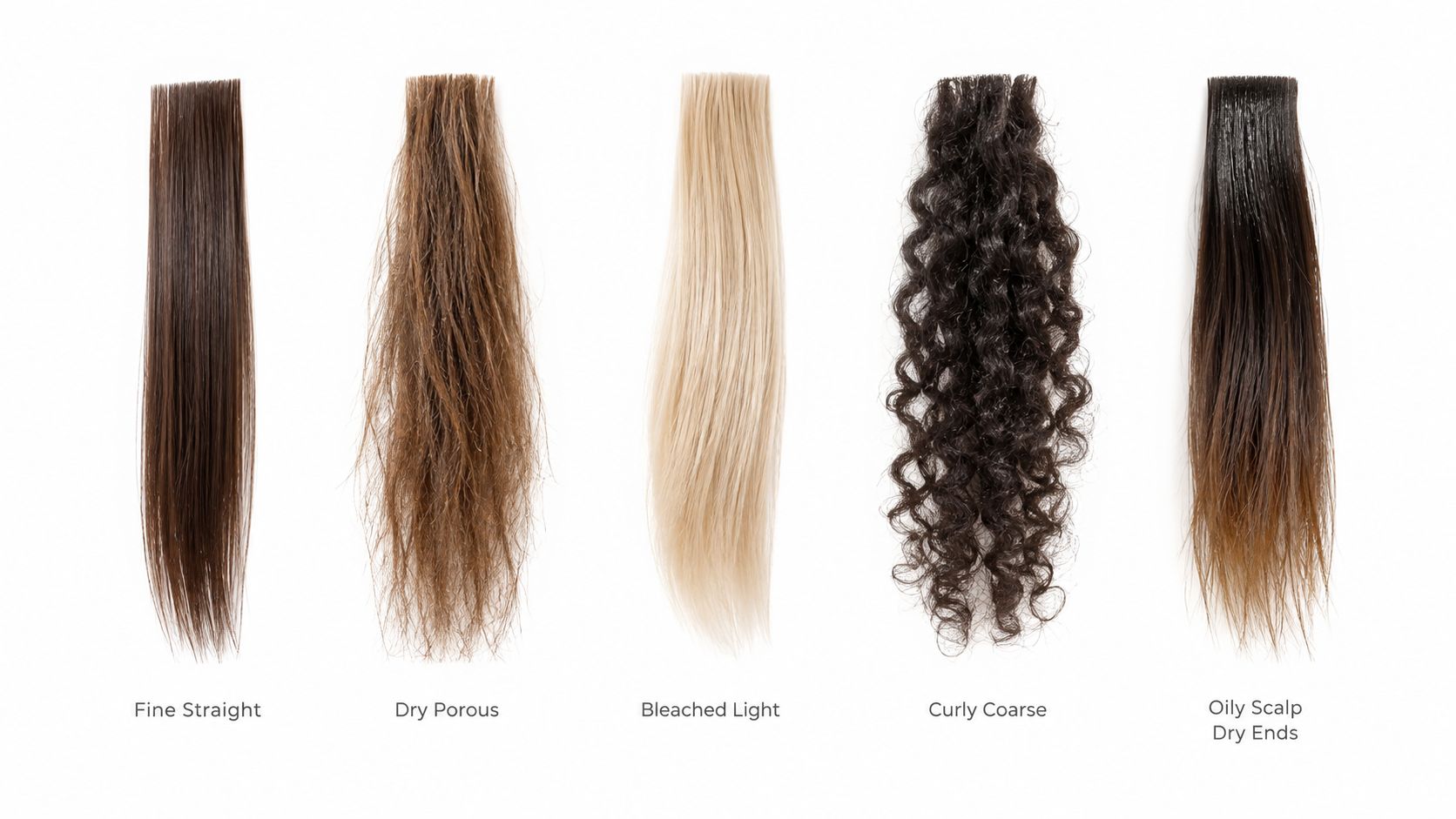
Fine or limp hair
Choose a lightweight conditioner after washing. Keep richer treatments on the ends and use them periodically rather than automatically after every shampoo. If your roots lose lift or your hair stops swinging naturally, reduce the amount before changing products.
Dry or porous hair
Use conditioner consistently, then add a richer treatment when the lengths still feel rough or absorb products quickly. Porous hair often benefits from a formula with film-formers, oils, or proteins, but the product should still be tested gradually. A treatment that leaves the hair soft and flexible is useful. One that leaves it stiff or waxy is too much.
Bleached or frequently heat-styled hair
This is the clearest case for combining both categories. Use conditioner for routine detangling and reserve treatment for intensive care on the most processed lengths. A leave-in product may also help reduce friction during styling, but it doesn't turn heat exposure into a harmless process.
Curly or coarse hair
A richer treatment may be more comfortable because coarse or curly hair often benefits from additional slip and lubrication. Apply it where the hair is driest, and avoid treating the scalp unless the product specifically directs you to do so. Humidity can increase frizz, but adding more layers isn't always the answer. Distribution and rinse quality matter.
Oily scalp with dry ends
Separate the two problems. Cleanse the scalp according to your routine, then apply conditioner or treatment from the mid-lengths downward. Don't compensate for dry ends by coating oily roots.
Reduce intensity when your hair loses bounce, feels waxy, or stops responding to products.
That self-check is more reliable than chasing a stronger label. If you're comparing routines for textured or region-specific hair needs, this resource on choosing Africa hair products offers useful context for matching product richness to hair characteristics rather than relying on category names alone.
How to Choose on Buy Me Japan Without Overbuying
Start with the Japanese label, not the English translation. Japanese products may use terms such as コンディショナー for conditioner, リンス for rinse, and トリートメント for treatment. A treatment is commonly positioned as the more intensive step, but the exact directions and formula determine how it should be used.
A simple product-page checklist
- Read the directions first. Confirm whether the product is rinse-out, leave-in, pre-shampoo, or intended for use after conditioner.
- Check the ingredient list. Japanese ingredients are listed in descending order, so the earlier ingredients generally make up more of the formula.
- Look for package details. Japanese cosmetic packaging or inserts identify information such as the primary distributor's name and address, brand name, manufacturing code, ingredient list, and expiration date where applicable.
- Separate claims from evidence. Words such as “repair,” “smooth,” or “intensive” describe positioning, not proof that the original fiber structure has been restored.
- Compare the format. A bottle, pump, tube, or jar doesn't determine performance. Contact time and application amount matter more.
- Patch test unfamiliar formulas. Stop using a product if it causes irritation, and follow the current package instructions.
Japanese cosmetic labeling requires ingredients to be expressed in Japanese and listed in descending order, while false or potentially misleading efficacy statements are prohibited. That makes the current packaging and verified listing more useful than a generic translation. Details can change, so check the product page for the exact directions, size, ingredients, and claims before ordering.
For international shoppers, the practical decision is straightforward. Buy a conditioner when you need dependable post-shampoo slip. Add a treatment when your lengths remain rough, porous, or difficult to manage. If fine hair becomes flat or coated, step back to conditioner and use the treatment less often.
Buy Me Japan presents Japanese products through a convenient online shopping experience, with current product information intended to help international customers compare authentic Japanese beauty and lifestyle goods. Review the listing and packaging for the exact item before purchasing, especially when the formula or directions are unfamiliar.
Buy Me Japan offers access to Japanese hair-care products for shoppers who want to compare everyday conditioners with more intensive treatments in one convenient store. Start with the relevant Buy Me Japan hair-care options, choose a conditioner for regular maintenance, and add a treatment only when your hair shows it needs more.


Share:
Japanese Shampoo for Fine Hair Guide
Hada Labo Lotion, Milk or Cream? A Simple Routine Guide