


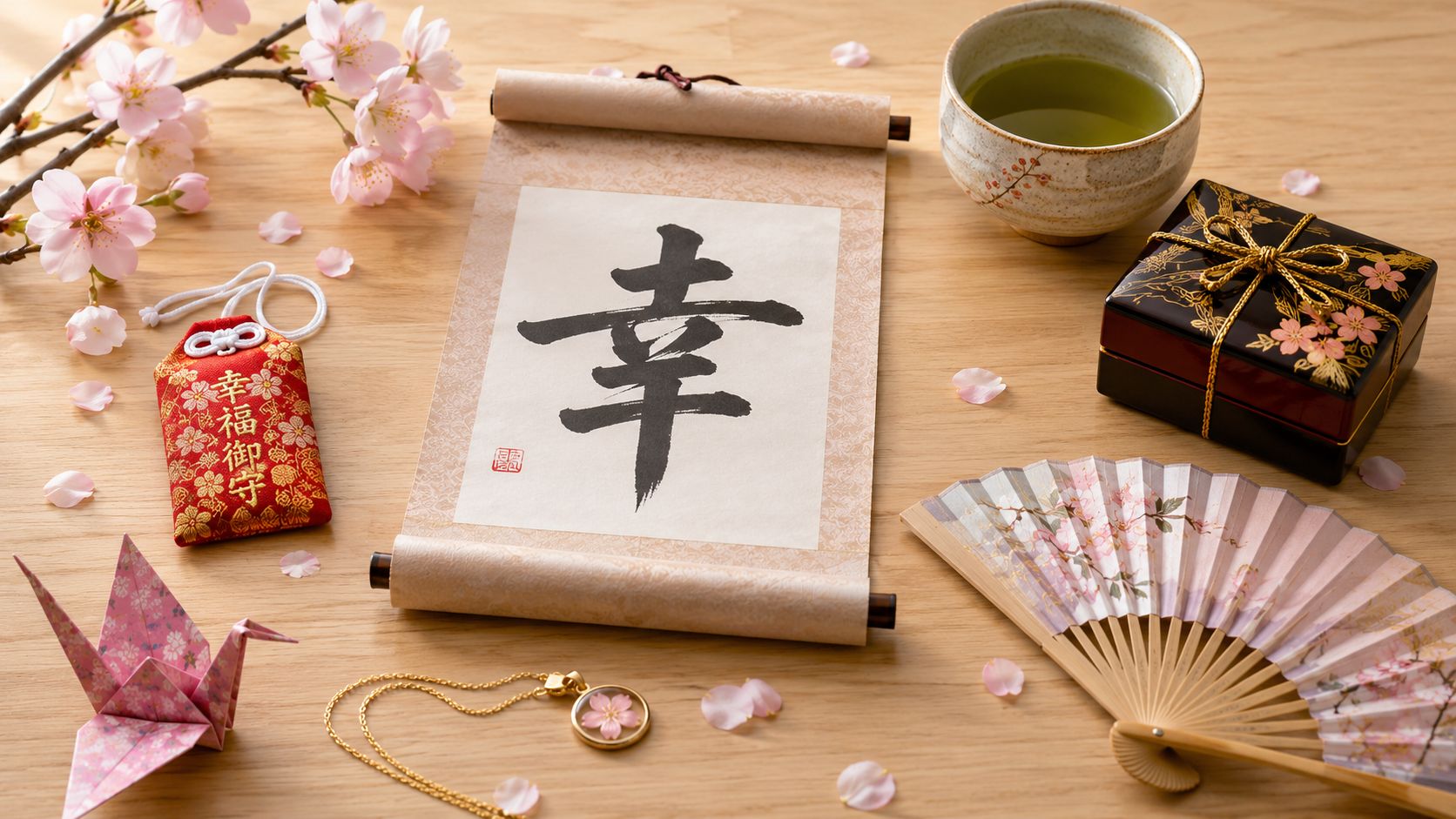
Have you ever noticed the common expectation that happiness in Japanese culture can be represented by one perfect symbol, as if joy can be reduced to a single character? In practice, Japanese symbols for happiness are richer than that. Some point directly to happiness, some lean toward luck or fortune, and others express harmony, peace, resilience, or the kind of contentment that grows through daily life.
That nuance is part of what makes Japanese aesthetics so appealing. A charm, a flower motif, or a kanji on packaging can feel small, yet it can carry a clear emotional message. If you enjoy Japanese self-care, thoughtful gifts, or meaningful decor, these symbols can help you choose items that feel authentic rather than generic.
This guide introduces seven well-known Japanese symbols for happiness and explains what they mean in plain English. You'll also see how these ideas connect to modern beauty rituals, gift giving, and lifestyle choices, along with a helpful look at popular Japanese tattoo designs for readers who want to wear meaning as well as display it.
1. 幸 (Sachi/Kō) - The Kanji of Happiness
If you want the closest direct answer to “what is the Japanese symbol for happiness,” start with 幸. This kanji is the clearest written symbol for happiness, good fortune, and a blessed kind of well-being.
It also has real weight in modern Japanese writing. Kanshudo identifies 幸 as an 8-stroke kanji, the 545th most common kanji, with 4 readings. The same entry notes that it appears 6 times among the most useful 10,000 Japanese words and 59 times across all Japanese words in its database, which shows that this isn't an obscure decorative mark but a living part of everyday language in Japanese Kanshudo's kanji entry for 幸.

Why 幸 feels timeless
Because 幸 appears in ordinary vocabulary as well as names and visual culture, it feels both personal and public. You might see it in calligraphy art, small charms, stationery, or design details that aim to suggest warmth, luck, and emotional comfort.
That makes it especially appealing for self-care spaces. A bathroom shelf, vanity tray, or gift box with a happiness motif feels intentional without being loud. In beauty culture, that same quiet positivity fits well with Japanese routines that focus on consistency, calm, and care.
Practical rule: Choose 幸 when you want a direct happiness symbol, not a vague “good vibes” motif.
For a modern ritual, pair that mindset with products that turn everyday care into something grounding. A nourishing hair treatment like Shiseido Fino Premium Touch Hair Mask works well in this context because it supports the Japanese idea that small repeated acts of care can shape a happier daily life.
A thoughtful gift set could also include a soft, joyful makeup item such as Canmake Cream Cheek. That pairing makes sense culturally. The symbol says happiness. The ritual helps you feel it.
2. 笑顔 (Egao) - The Smiling Face Symbol
Not every Japanese symbol for happiness is a single character. 笑顔 means “smiling face,” and it points to a lived expression of joy rather than a standalone emblem.
That distinction matters. Some symbols are best for calligraphy, tattoos, or decor. Egao is better understood as a cultural ideal. It suggests approachable warmth, visible joy, and the kind of happiness other people can immediately recognize.
Happiness you can see
In beauty and skincare, egao connects naturally with the results people want. Not perfection. Not a forced image. A face that looks comfortable, refreshed, and confident enough to smile naturally.
That's why this concept fits Japanese beauty so well. A healthy-looking complexion, smooth lips, or polished but soft makeup often supports an overall expression rather than trying to dominate it.
A simple example is a routine built around skin clarity and comfort. Products like Hada Labo Gokujyun Premium Lotion or Mentholatum Acnes Medicated Foaming Face Wash fit the idea of egao because they support the kind of everyday confidence that makes smiling easier.
Here's another easy way to understand this:
- For daily makeup: Choose soft, friendly colors that brighten the face instead of masking it.
- For gifting: Pick products that feel uplifting and easy to use, especially for someone building a self-care routine.
- For branding or decor: Use smile imagery or language when you want to express human warmth more than traditional symbolism.
A cheerful lip tint or blush also suits this mood. Cezanne Watery Tint Lip is the kind of item that supports a fresh, smiling look without feeling overdone.
A lot of Japanese happiness symbolism isn't about dramatic luck. It's about visible ease, social warmth, and feeling good in your own skin.
3. 七福神 (Shichifukujin) - The Seven Gods of Fortune
Some Japanese symbols for happiness work best as a group. The Seven Gods of Fortune, or Shichifukujin, represent a broader idea of a happy life. Instead of one emotion, they suggest abundance, protection, talent, longevity, prosperity, and contentment.
That layered meaning is useful if you're choosing a symbol for a gift, a seasonal display, or a premium product theme. Rather than saying “happy” in a narrow sense, the Seven Gods imply that happiness comes from many kinds of good fortune working together.
Why this symbol still resonates
Japanese culture keeps many happiness symbols alive because they remain meaningful, not because they're a passing novelty. That stability shows up in broader attitudes too. In a long-range academic analysis of Japanese survey data, average reported life satisfaction stayed between 2.47 and 2.82 over roughly 50 years, and the authors concluded that Japanese respondents had not become any happier over the last half-century Erasmus University's summary of the study.
That doesn't make Shichifukujin gloomy. It makes them enduring. They reflect a culture where happiness is often treated as something to cultivate steadily through luck, harmony, health, and everyday blessings.
For modern shoppers, this symbolism works beautifully in curated gift sets. A collection built around renewal, hydration, radiance, and rest feels more meaningful when framed as total well-being instead of a single beauty goal.
Try that approach with premium items such as Shiseido Elixir Superieur Enriched Wrinkle Cream and LuLuLun Face Mask. Together, they create a giftable ritual that feels abundant and caring.
Best use cases for Shichifukujin
- For New Year gifting: Choose this motif when you want to wish someone a full year of blessings.
- For premium presentation: It suits elegant boxes, collector-style packaging, and meaningful seasonal themes.
- For lifestyle decor: It works well in entryways, shelves, or workspaces where prosperity and protection feel welcome.
4. 招き猫 (Maneki-neko) - The Beckoning Cat Charm
The Maneki-neko might be the most recognizable Japanese good-luck symbol in the world. Even people who know little Japanese culture usually recognize the cat with the raised paw.
Its appeal is simple. It doesn't just symbolize luck in the abstract. It invites good fortune in. That active, welcoming feeling is why it's so popular in shops, homes, and gift items.

A happiness symbol with personality
The Maneki-neko is warmer and more playful than many formal symbols. If 幸 feels direct and elegant, the beckoning cat feels cheerful and social. It's a good choice when you want happiness to feel inviting rather than solemn.
That makes it especially good for gifts. A small lucky cat near a vanity, desk, or skincare shelf can make a routine feel lighter. It's also a natural match for cute Japanese beauty products, especially items that make self-care feel fun.
Pairing matters here. A charming, everyday set such as Canmake Marshmallow Finish Powder with Fiancee Body Mist Pure Shampoo creates exactly that mood. You're not just giving cosmetics. You're giving a cheerful ritual.
If you want a happiness symbol that feels instantly friendly, Maneki-neko is hard to beat.
This symbol also works well for people who aren't comfortable with kanji tattoos or calligraphy decor. A cat figurine, pouch, sticker, or print is easier for many international shoppers to use in everyday life.
For product styling, the beckoning cat pairs best with things that feel giftable, playful, and visibly Japanese. It's less about quiet introspection and more about joy with a welcoming face.
5. 梅 (Ume) - The Plum Blossom Symbol
The plum blossom represents a different kind of happiness. It isn't carefree. It's resilient.
Ume blooms early, often while the weather is still cold, so it has long been associated with endurance, hope, and renewal. That makes it one of the most moving Japanese symbols for happiness because it suggests joy that survives hardship and comes back stronger.

Why ume suits self-care so well
A lot of modern self-care is really about restoration. People want to feel reset, softer, calmer, and more themselves again. Ume fits that emotional territory beautifully.
This is the symbol to choose when you want happiness with depth. It works for someone recovering from stress, starting a new season, or rebuilding confidence through small daily rituals.
A renewal-focused beauty routine can reflect that symbolism naturally. Consider items that support comfort and recovery, such as Minon Amino Moist Charge Milk or Yuskin Cream. They fit the emotional language of ume because they emphasize protection, softness, and care.
When to choose plum blossom over other symbols
- Choose ume for resilience: It's ideal when happiness means recovery, patience, or hope.
- Choose ume for seasonal gifts: It feels especially fitting for late winter and early spring.
- Choose ume for elegant design: Floral motifs can look refined without losing symbolic meaning.
Some people confuse plum blossom with cherry blossom because both are beautiful and seasonal. Their moods are different. Cherry blossom often suggests fleeting beauty. Ume leans toward endurance and renewal.
That difference is useful when choosing decor or a gift. If you want beauty with emotional strength, ume is often the better fit.
6. 富士 (Fuji) - Mount Fuji Symbol
Mount Fuji isn't a direct symbol for happiness in the same way as 幸, but it does represent aspiration, beauty, steadiness, and a sense of higher perspective. For many people, that translates into a mature kind of happiness. Not excitement, but fulfillment.
That's why Fuji appears so often in art and design. It suggests something larger than mood. It speaks to balance, endurance, and a life oriented toward higher ideals.

The peak version of happiness
Fuji is a good symbol for people who connect happiness with purpose and self-development. In beauty language, that can mean taking your routine seriously enough to choose quality, consistency, and authenticity.
The importance of shopping directly from Japan becomes evident. When you buy Japanese skincare and cosmetics through a specialist retailer, you're closer to the original product experience, packaging, and product standards. That matters for people who see self-care as a meaningful ritual rather than impulse shopping.
A premium example would be Shiseido AQUALABEL Special Gel Cream EX or Kose Sekkisei Lotion. These are the kinds of products people often choose when they want their routine to feel polished and intentional.
Happiness symbols don't always point to luck. Sometimes they point to the kind of life you're trying to build.
Fuji also works especially well in home spaces. A print, tray, notebook, or mirror detail featuring Mount Fuji can make a daily routine feel a little more grounded and uplifted at the same time.
7. 恵比寿 (Ebisu) - The God of Prosperity & Smiling Fortune
Ebisu is one of the Seven Gods of Fortune, but he deserves his own place because he carries a particularly approachable kind of happiness. He's often shown smiling, and that smile matters. Ebisu represents prosperity, successful work, abundance, and enjoyment of life's rewards.
For merchants and shopkeepers, he has long been a welcome figure. For modern readers, he's useful because he bridges material success and emotional warmth. He doesn't suggest greed. He suggests enough. Enough work, enough blessing, enough joy to smile.
A practical symbol for modern life
Ebisu is ideal when your idea of happiness includes comfort, generosity, and the pleasure of sharing good things with others. That makes him a natural symbol for thoughtful shopping, gift giving, and curated personal care.
There's also an important nuance here. Many search results blur direct happiness symbols with luck or peace symbols. That can leave readers unsure whether they should choose happiness itself, luck and fortune, or a broader harmony motif. One cultural reference point highlights this confusion by noting multiple candidates such as 幸 for happiness, 幸い for luck or fortune, and related symbols like 平, 和, and 泰 for peace or harmony this discussion of kanji choices for peace and related meanings.
That's exactly why Ebisu is useful. He doesn't compete with 幸. He complements it. If 幸 is the written essence of happiness, Ebisu is happiness with prosperity and a smiling human face.
Good pairings for an Ebisu mood
- For self-care gifting: Choose generous, comforting products that feel abundant.
- For home rituals: Pair the symbol with bath, body, or hydration items that create a sense of ease.
- For business-related gifts: Ebisu feels fitting for openings, milestones, or thank-you gifts.
A practical beauty pairing might include Biore UV Aqua Rich Watery Essence for daily protection and & Honey Deep Moist Hair Oil for a polished finishing touch. Together they create a routine that feels generous, useful, and easy to enjoy.
Comparison of 7 Japanese Symbols of Happiness
| Symbol / Motif | Implementation complexity | Resource requirements | Expected outcomes | Ideal use cases | Key advantages |
|---|---|---|---|---|---|
| 幸 (Sachi/Kō) - The Kanji of Happiness | Low, single character, simple layout | Minimal, typography, engraving or print | Clear cultural signal of happiness and luck | Packaging, labels, charms, minimalist branding | Immediately recognizable in Japan, elegant and versatile |
| 笑顔 (Egao) - The Smiling Face Symbol | Low–Medium, requires authentic imagery | Photography, UGC, influencer partnerships | Strong emotional resonance and social engagement | Social campaigns, testimonials, cosmetics ads | Universal, relatable, highly shareable |
| 七福神 (Shichifukujin) - The Seven Gods of Fortune | High, complex multi-figure artwork | Illustration, cultural research, premium printing | Premium authenticity, collectible appeal | Limited editions, New Year collections, luxury gift sets | Rich heritage, broad representation of good fortune |
| 招き猫 (Maneki‑neko) - The Beckoning Cat Charm | Medium, character motif with variants | Product moulding/illustration, color options | Welcoming, commercial-luck association | Storefronts, mascots, packaging, promotions | Globally recognized, photogenic, versatile |
| 梅 (Ume) - The Plum Blossom Symbol | Medium, floral motif, seasonal styling | Botanical imagery, seasonal design assets | Message of renewal, resilience, natural beauty | Spring collections, skincare renewal lines, elegant packaging | Elegant, nature‑based symbolism, fits minimalist design |
| 富士 (Fuji) - Mount Fuji Symbol | Medium, landscape or stylized icon | High‑quality photography/illustration, premium layout | Aspirational, conveys excellence and stability | Premium/aspirational product lines, limited editions | Iconic Japanese imagery, strong aspirational appeal |
| 恵比寿 (Ebisu) - The God of Prosperity & Smiling Fortune | Medium–High, figurative deity depiction | Illustration/statue production, cultural context | Convey prosperity, friendly commerce-oriented image | E‑commerce, retail promotions, loyalty programs | Direct association with business success, approachable persona |
Embrace Your Own Happiness, Shipped from Japan
Japanese symbols for happiness are beautiful because they don't all say the same thing. 幸 gives you the clearest direct expression of happiness. 笑顔 reminds you that joy is often visible in the face and carried through human connection. Shichifukujin broadens the idea into a full life of blessings, while Maneki-neko adds warmth and welcome.
Ume shows that happiness can grow through resilience. Fuji points toward fulfillment and a higher sense of purpose. Ebisu brings prosperity into the picture, but in a way that still feels friendly, smiling, and human.
There's also a practical lesson in all this. If you're choosing a Japanese happiness symbol for a tattoo, a gift, decor, or product styling, don't settle for the first character you see online. Some symbols mean direct happiness. Others lean toward luck, harmony, peace, renewal, or thriving. Knowing the difference helps you choose something more personal and more authentic.
That same principle applies to Japanese self-care products. The best items don't just look Japanese. They carry the genuine feeling of Japanese design culture. Thoughtful packaging, trusted brands, refined textures, and a focus on daily ritual all contribute to the experience. When you buy authentic products shipped from Japan, you're getting closer to that original context.
Buy Me Japan is especially useful for that kind of shopping because it brings together recognizable Japanese beauty and lifestyle brands in one place, with direct shipping from Japan and a clear focus on authenticity. Whether you're building a calming skincare routine, choosing a meaningful gift, or looking for products that make everyday care feel more joyful, the cultural connection is part of the value.
Happiness in Japanese culture isn't always loud. Often, it's quiet, steady, and beautifully intentional. A kanji, a flower, a lucky cat, or a skincare ritual can all express it in different ways. The right choice is the one that matches the kind of happiness you want to invite into your life.
If you'd like to bring that feeling into your daily routine, explore Buy Me Japan for authentic Japanese skincare, hair care, cosmetics, snacks, and gifts shipped directly from Japan. It's a simple way to discover products that don't just look beautiful, but reflect the care, quality, and cultural meaning that make Japanese self-care so satisfying.


Share:
Ujido Ceremonial Blend Matcha: A Complete Buyer's Guide
Where Can I Get Miso Paste? Your 2026 Buying Guide