


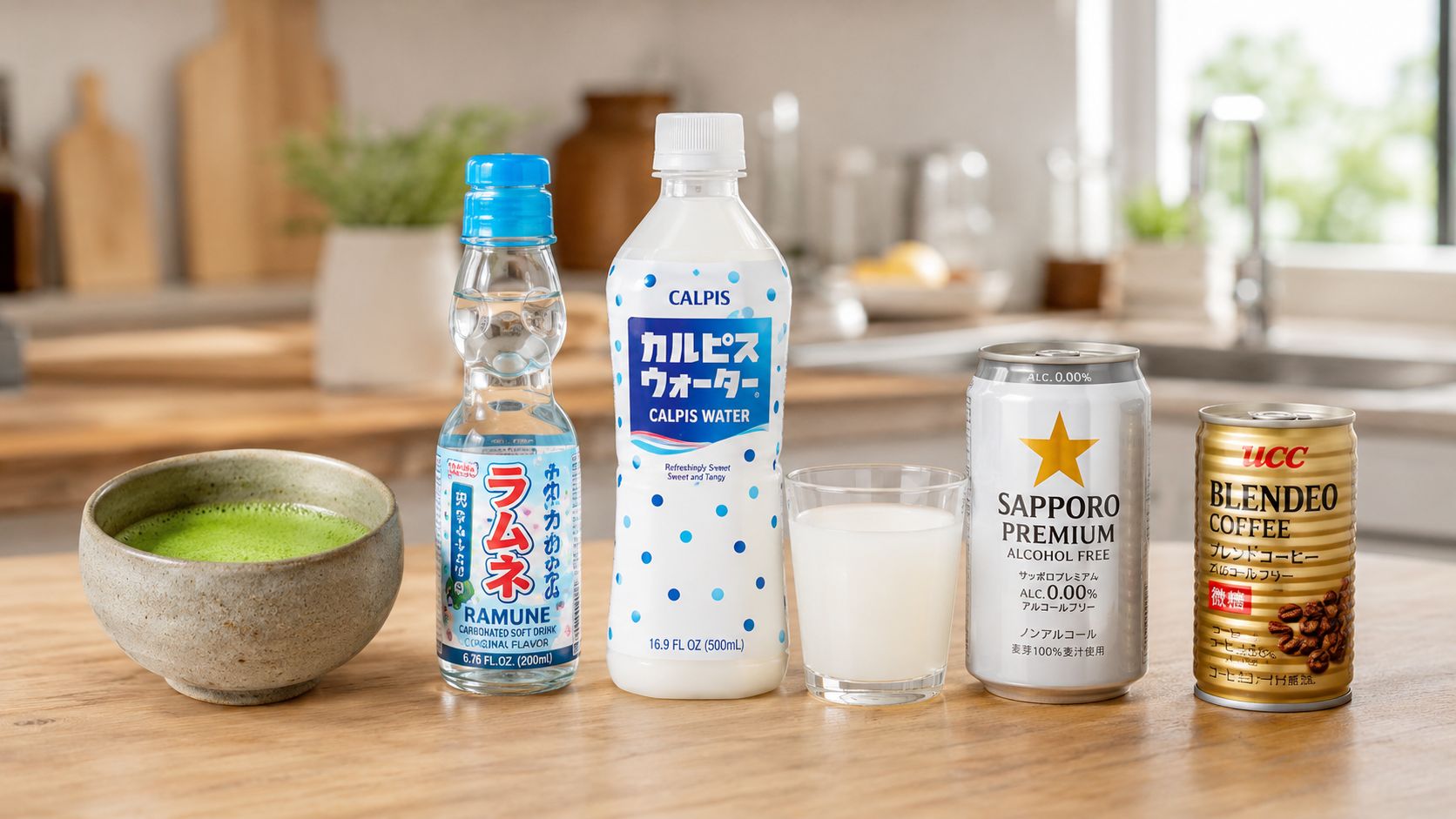
Japanese drink shelves can feel like a puzzle the first time you see them. You spot bottled green teas, milky drinks, roasted grain teas, bright sodas, canned coffees, alcohol-free beers, and labels full of Japanese words that all seem important. If you're visiting Japan, standing in a convenience store, or trying to shop from abroad, it's easy to wonder where to start.
Matcha, perhaps Ramune, and occasionally sake are recognized outside Japan. But the everyday world of non alcoholic Japanese drinks is much wider than that. In Japan, this isn't a small niche. Suntory estimated the category reached 46 million cases in 2024, up 11% year on year, and projected 47 million cases in 2025, with the market about 1.6 times the size it was a decade earlier, according to Nippon.com's market summary.
If you already love Japanese food, snacks, skincare, or tea culture, drinks are one of the easiest ways to understand daily life here. And if you want to get more comfortable with matcha itself before branching out, this practical guide on how to brew matcha is a useful starting point.
Welcome to the World of Japanese Drinks
Walk into a Japanese convenience store and the first surprise is how normal great drinks feel here. They aren't tucked into a tiny “specialty” corner. They're everywhere. Chilled tea by the door, canned coffee by the register, seasonal fruit drinks in the fridge, and alcohol-free options lined up beside familiar soft drinks.
That variety makes sense once you spend a little time in Japan. Drinks here are tied to routine. A cold bottle of mugicha on a hot afternoon. A can of black coffee before a train ride. A warming cup of amazake in winter. A bottle of zero-alcohol beer with dinner when someone still wants the social feel of a drink but not the alcohol.
Japanese drink culture makes room for habit, season, convenience, and taste at the same time.
The easiest way to understand non alcoholic Japanese drinks is to group them by how people choose them in real life.
- Daily teas: Sencha, hojicha, genmaicha, and mugicha are staples in homes, vending machines, and supermarkets.
- Traditional comfort drinks: Amazake and kelp-based kombucha connect drinks to older food culture and seasonal customs.
- Modern soft drinks: Ramune, Calpis, and melon soda are playful, nostalgic, and instantly recognizable.
- Alcohol-free social drinks: Non-alcoholic beer-like beverages and mocktail-style drinks fit the growing sober-curious lifestyle.
- Convenience classics: Canned coffee and milk tea show how seriously Japan takes ready-to-drink quality.
If you're shopping from outside Japan, the hard part isn't finding any Japanese drink. It's finding the right one, in the right style, from the domestic market it was made for. That's where a little background helps.
Exploring Japanese Teas Beyond Matcha
Matcha gets most of the attention overseas, but in Japan, many people drink other teas more often in daily life. These are the bottles and packets you see in supermarkets, office kitchens, and family homes.

Sencha for everyday green tea
If someone in Japan says “green tea” in a normal daily context, they often mean sencha. It's steamed green tea, usually fresh-tasting, slightly grassy, and more direct than matcha. It can be comforting hot, but bottled cold sencha is also everywhere.
Sencha is a good entry point if matcha feels too intense or ceremonial. It gives you the clean green tea character in a lighter, easier format. If you're unsure how its taste and caffeine profile compare with other teas, this guide to sencha green tea and caffeine helps explain it in plain language.
Hojicha and genmaicha for softer flavors
Not everyone wants the bright, vegetal side of green tea. That's where hojicha and genmaicha come in.
Hojicha is roasted, which changes the whole mood of the tea. Instead of grassy notes, you get a toasty, warm aroma that many people find gentler and more relaxing. It's common after meals or later in the day when you want tea without that sharper green edge.
Genmaicha blends green tea with roasted brown rice. The rice adds a nutty, almost popcorn-like aroma that makes it especially friendly for beginners. If someone tells you they “don't usually like green tea,” genmaicha is often the tea that changes their mind.
Practical rule: If you like coffee's roasted notes, start with hojicha. If you like nutty, savory flavors, start with genmaicha.
Mugicha for summer and family tables
Then there's mugicha, roasted barley tea. This one confuses many first-time shoppers because it looks like tea, but it doesn't taste like green tea at all. It's darker, roasted, and very refreshing when served cold.
Mugicha is a summer staple in Japan. Families often make a big pitcher at home and keep it in the fridge. It feels familiar even to kids because it's a household drink, not a “special occasion” tea.
Here's a simple way to remember the four:
| Tea | Flavor | Typical feel | Common use |
|---|---|---|---|
| Sencha | Fresh, green, lightly grassy | Classic Japanese tea | Daily drinking |
| Hojicha | Roasted, mellow, warm | Cozy and gentle | After meals |
| Genmaicha | Nutty, toasty, soft green tea | Easy for beginners | With snacks or light meals |
| Mugicha | Roasted grain, clean, refreshing | Summer-friendly | Chilled at home |
If you're building a first mixed order, these four teas give you a much better picture of Japan than buying matcha alone.
A Taste of Tradition and Wellness
Some Japanese drinks don't just quench thirst. They carry memory. You find them at shrines, winter gatherings, family celebrations, and in small moments when people want something soothing rather than flashy.
Amazake and the comfort of rice fermentation
Amazake often gets translated as “sweet sake,” which immediately causes confusion. Many visitors assume it must be alcoholic. In Japan, though, amazake can be made in low-alcohol or non-alcoholic styles depending on how it's produced, and it's widely treated as a comfort drink.
Its taste surprises people. It's naturally sweet, softly grainy, and often a little creamy in texture. The sweetness doesn't feel like soda sweetness. It feels closer to the sweetness of rice and fermentation.
Amazake is especially common in colder months and around New Year traditions. If you visit a shrine or seasonal event in winter, warm amazake is one of those drinks that seems to match the air, the crowd, and the time of year perfectly.
A simple way to enjoy that same cozy flavor profile at home is with ginger-based Japanese drinks. If that sounds appealing, this article on brown sugar ginger tea is a helpful companion.
Japanese kombucha means kelp tea
The word kombucha creates one of the biggest misunderstandings in Japanese food and drink. In many Western countries, kombucha usually means a fizzy fermented tea drink. In Japan, kombucha traditionally refers to a drink made from kelp, not the sparkling fermented beverage many international shoppers expect.
That matters because the flavor, use, and cultural context are different. Japanese kombucha is more savory and rooted in kelp's umami character. It sits much closer to traditional food culture than to the trendy bottled probiotic drinks sold in many Western markets.
If you buy “kombucha” from Japan expecting a sweet, tangy, sparkling drink, you may get something much more seaweed-based and savory.
Why these drinks still matter
Traditional drinks remain important because they show how Japanese beverage culture values seasonality and function. People don't always choose a drink only for excitement. They choose it because it suits winter, pairs with a quiet afternoon, or feels right after a meal.
That mindset helps explain why non alcoholic Japanese drinks are so broad. In Japan, “drink culture” includes festival nostalgia, household routine, wellness habits, and convenience store discovery all at once.
Modern and Fun Fizzy Favorites
Not every Japanese drink is subtle or old-fashioned. Some are pure fun. These are the bottles people remember from childhood, travel photos, summer festivals, and family restaurants.

Ramune and the marble bottle
Ramune is probably the most instantly recognizable Japanese soda because of its bottle. Instead of a normal cap, it uses a glass marble. Opening it is part of the experience, and that's a big reason people love it.
The flavor of classic Ramune is light, lemon-lime-like, and refreshing, but the bottle gives it personality. It feels playful in a way modern packaging often doesn't. At summer festivals, that bottle is almost as important as the drink itself.
If you've ever bought one and hesitated because the opening method looked strange, this guide on how to open a Ramune makes it easy.
Calpis and melon soda
Calpis is another drink that often needs explanation for international buyers. It's a cultured milk drink with a sweet, tangy taste. Some versions are ready to drink, while others are sold as concentrate. If you've never tried it, imagine a smooth, lightly creamy sweetness with a yogurt-like brightness.
Melon soda sits at the opposite end of the spectrum. It's vivid green, sweet, unmistakably retro, and closely tied to kissaten and family restaurant culture. It's less about subtlety and more about joy. In Japan, it often appears in desserts too, especially in ice cream floats.
Japanese Soft Drink Profile Comparison
| Drink | Flavor Profile | Sweetness Level | Key Feature |
|---|---|---|---|
| Ramune | Light, citrus-like, crisp | Moderate | Marble-stopper bottle |
| Calpis | Sweet, tangy, lightly creamy | Moderate to high | Cultured milk base |
| Melon Soda | Bright, candy-like melon | High | Retro café favorite |
These drinks work well for different moods.
- Choose Ramune if you want a fun gift, a festival-style drink, or something iconic.
- Choose Calpis if you enjoy creamy tartness and want a drink that feels uniquely Japanese.
- Choose melon soda if you're leaning into pop culture, desserts, or nostalgic café flavors.
A quick visual makes the difference even clearer.
Why these drinks travel so well
These soft drinks are some of the easiest entry points into non alcoholic Japanese drinks because they don't require background knowledge. You don't need to understand tea processing or fermentation to enjoy them. You just need curiosity.
They're also useful when shopping for other people. Tea can be personal. Traditional drinks can be unfamiliar. But a marble soda, a tangy milk drink, or a bright green café soda usually sparks instant interest.
The Rise of Sophisticated Sober Options
One of the most interesting shifts in Japan isn't just about what people drink. It's about what they skip. Alcohol-free beers, beer-taste drinks, and mocktail-style options have moved into everyday mainstream shopping rather than staying in a tiny “substitute” category.
What non-alcoholic means in Japan
In Japan, beverages at 0.05% ABV or below are treated as non-alcoholic, while drinks at 0.05% to 1% ABV are classified separately as low-alcohol drinks, as explained in this overview of Japanese non-alcoholic drink definitions. That sounds technical, but it matters.
If you're buying for strict alcohol avoidance, you shouldn't assume every alcohol-free-looking label means exactly the same thing. Retailers and shoppers need to check the actual product definition and label claim, especially for settings like pregnancy-related abstinence, designated driving, or workplace events.
Check the ABV line, not just the front-of-package language.
Beer-like drinks without alcohol
Japanese producers have spent years refining beer-like drinks that still feel satisfying. This isn't only about removing alcohol. The better products try to preserve dryness, bitterness, aroma, foam, and body.
A good example is Asahi Dry Zero, which Asahi describes as a 0 alcohol / 0 sugar / 0 calories beer-like beverage on its product development page for Asahi Dry Zero. That wording helps explain why these drinks appeal to people who don't just want fruit juice in a beer glass. They want beer-like sensory cues without alcohol.
The sober-curious angle is more practical than trendy
Some people buy these drinks because they don't drink at all. Others buy them because they want flexibility. Dinner on a work night, a long drive home, a health goal, or not wanting alcohol that evening.
That's why the behavior side matters. A Japanese study reported in 2025 found that offering non-alcoholic beers and cocktails to drinkers reduced alcohol consumption by an average of 11.5 grams per day, compared with 2.7 grams per day in the control group, according to this write-up on the Japanese study on non-alcoholic drinks and moderation. The most useful takeaway isn't that alcohol-free drinks are a miracle tool. It's that they can support moderation in real life.
If you're interested in alcohol-free Japanese alternatives more broadly, including cooking and pairing contexts, this guide to a substitute for sake is worth reading too.
Convenience Culture in a Can
A vending machine in Japan can teach you a lot about the country in less than a minute. You'll see black coffee, café au lait, milk tea, lemon drinks, sports drinks, and sometimes both hot and cold options in the same machine. That small detail feels unforgettable the first time you notice it.

Coffee on the go, Japanese style
Canned coffee is one of the everyday heroes of Japanese drink culture. People grab it on the way to work, after lunch, before a train, or during a long drive. Some like it black and bitter. Others prefer a softer latte style or sweetened milk coffee.
What stands out isn't just the existence of canned coffee. It's the range. Even within one convenience store cooler, you'll usually find very different personalities. Straight black, rich milk coffee, lighter café au lait, and seasonal options that rotate with the weather.
Milk tea and the softer side of convenience
Japanese milk tea deserves just as much attention. Bottled and canned milk tea often has a smooth, rounded flavor that sits somewhere between tea and dessert. It feels polished rather than heavy.
You'll also find “Royal Milk Tea,” a style associated with a richer milk presence and a more luxurious café feel. It's a common choice for people who want something comforting but easier than brewing tea at home.
A simple way to think about this category:
- Black canned coffee suits people who want bitterness and no fuss.
- Milk coffee suits shoppers who like a sweeter, creamier drink.
- Milk tea is ideal if you want something gentle and aromatic.
- Hot can options are perfect for cold weather walks and station platforms.
Japan turned ready-to-drink beverages into part of daily rhythm, not just emergency convenience.
Why this category matters
For international shoppers, canned drinks often seem less romantic than tea or festival drinks. But they're one of the clearest windows into ordinary Japanese life. They show how much attention Japan gives to portability, packaging, and reliable flavor.
If you want to understand what people here drink on a random Tuesday, this category matters just as much as the more famous traditional options.
How to Buy and Enjoy Authentic Japanese Drinks
The biggest mistake international shoppers make is treating all Japanese drinks as souvenirs. Some are playful gifts, yes. But many are everyday products with a specific role. A summer tea, a breakfast drink, a dinner pairing, or a no-alcohol social option.

How to choose the right style
A good first order usually mixes familiarity and discovery. If you buy only unusual drinks, you may not know what you enjoy. If you buy only familiar ones, you miss what makes Japan special.
Try choosing by situation instead of by hype.
- For daily drinking: Pick sencha, hojicha, or mugicha.
- For cultural interest: Add amazake or a traditional kelp-based kombucha.
- For fun sharing: Choose Ramune, Calpis, or melon soda.
- For low-alcohol social occasions: Look at zero-alcohol beer-like drinks.
- For convenience lovers: Add canned coffee or milk tea.
Easy pairings that work
Japanese drinks often shine through uncomplicated pairings.
| Drink | Good pairing | Why it works |
|---|---|---|
| Genmaicha | Rice crackers or savory snacks | Nutty tea matches roasted flavors |
| Hojicha | Simple sweets | Roasted notes soften sweetness |
| Amazake | Small dessert or winter snack | Feels rich and comforting |
| Ramune | Festival snacks or salty treats | Light fizz refreshes the palate |
| Non-alcoholic beer-like drinks | Fried foods or grilled dishes | Dryness balances richer food |
Storage is usually straightforward, but a few habits help. Keep bottled and canned drinks in a cool place before opening. Chill teas and sodas well if they're meant to be refreshing. Shake only if the label tells you to. With concentrates like Calpis, read the instructions carefully so you don't end up with something much stronger or sweeter than intended.
Why sourcing matters
Here's the part many people don't realize. Japan's non-alcoholic beverage market was estimated at about $40 billion in 2022, and roughly 97% of supply was domestic production, according to the USDA report on the Japanese non-alcoholic beverage market. That means the most authentic range is built first for the Japanese market itself, not for export shelves.
So if you want the drinks Japanese shoppers purchase, direct-from-Japan sourcing matters. One practical option is browsing Japanese food products online, where Buy Me Japan curates domestic Japanese items and ships from Japan. For this category, that matters because local-market drinks and seasonal variations often don't show up consistently through general overseas retailers.
If you're also planning a broader Japan-themed order, not just drinks, a travel-focused local Japanese finds guide can help you think beyond beverages and spot products that pair naturally with them.
What authenticity looks like in practice
Authenticity doesn't always mean the oldest or fanciest product. Sometimes it means the bottle of mugicha families keep in the fridge, or the canned milk tea someone grabs before work.
Look for products that preserve their original Japanese labeling, brand identity, and intended style. Read the alcohol classification carefully for zero-alcohol categories. And don't assume the export version of a famous drink gives you the full picture of what's sold in Japan.
That's the distinct pleasure of exploring non alcoholic Japanese drinks. You're not just buying refreshments. You're tasting how Japan handles season, routine, comfort, and design in one of the most ordinary parts of daily life.
If you want to explore authentic Japanese drinks, teas, snacks, and pantry items shipped from Japan, Buy Me Japan is a practical place to start. You can use what you've learned here to choose by taste, season, and drinking occasion, then build an order that feels closer to what you'd pick up in a Japanese convenience store or supermarket.


Share:
Kokuho Rose Rice: Your Guide to This Premium Japanese Rice
Cute Makeup Styles: Japanese Beauty Guide