


At its heart, the difference between rice wine vinegar and mirin is a classic tale of sour versus sweet. Vinegar brings the acidity, and mirin brings the sweetness. That’s the simplest way to think about it.
While both are non-negotiable staples in any Japanese pantry and both begin their life as rice, they play completely opposite roles in the kitchen. Rice wine vinegar has a sharp, tart kick that’s essential for things like properly seasoned sushi rice and zesty dressings. Mirin, on the other hand, is a sweet cooking wine that gives sauces a beautiful, glossy finish and a deep, complex umami flavor.
This guide will break down everything you need to know about these two powerful ingredients, ensuring you can cook authentic Japanese dishes with confidence.
Understanding The Core Difference Instantly
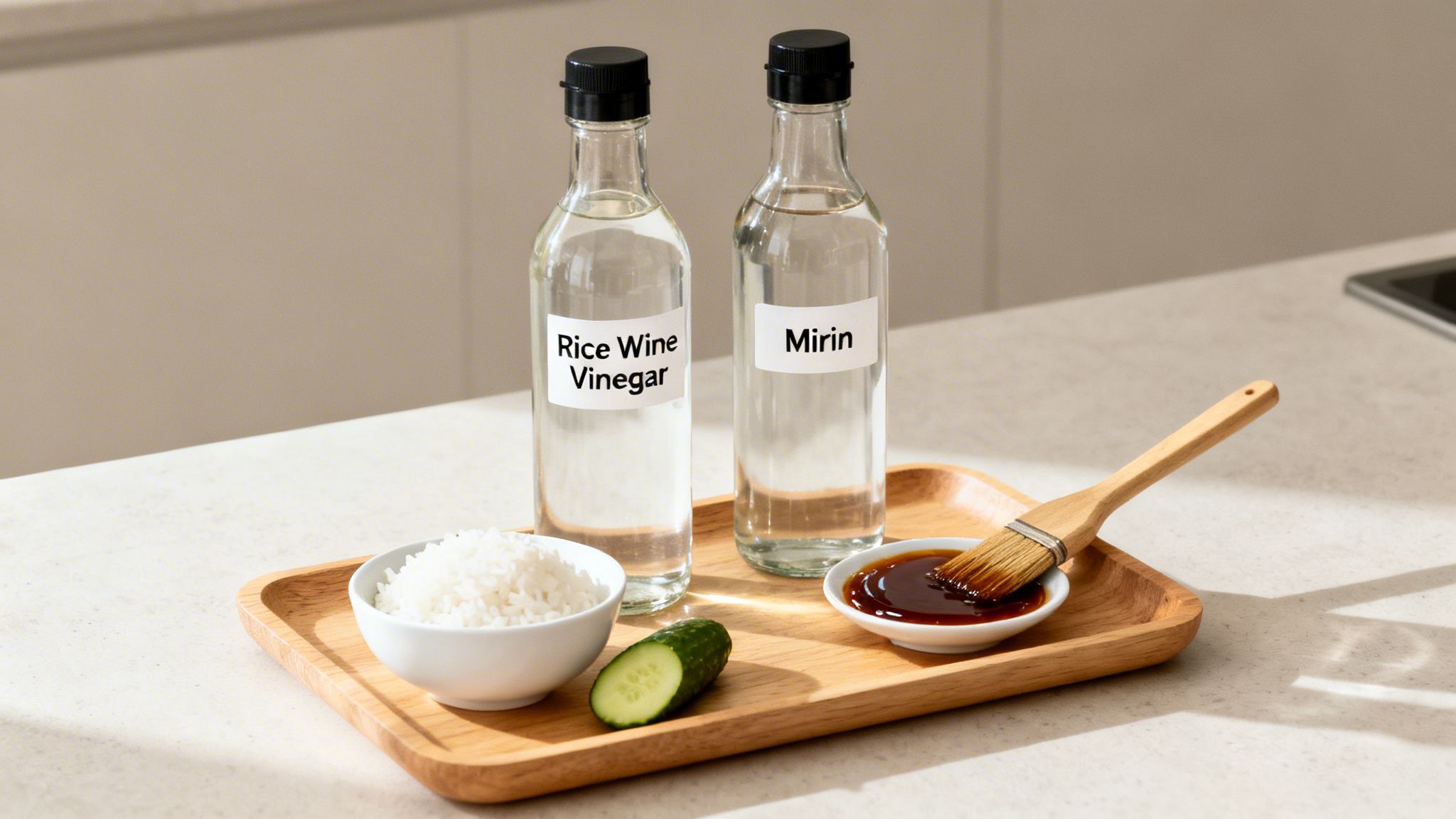
It’s easy to get these two confused. They often sit next to each other on the grocery store shelf, both are liquids made from rice, and you absolutely need both for authentic Japanese cooking. The key to mastering Japanese flavors at home, though, is knowing exactly what each one does.
Reach for rice wine vinegar when you want to add a bright, tangy lift to a dish. Grab the mirin when you’re looking for a gentle sweetness and that signature glossy sheen you see in dishes like teriyaki. One is an acid, the other is a sweetening agent. They are not interchangeable, and figuring out when to use each will make a world of difference in your cooking.
This guide will break down everything you need to know about these two powerful ingredients.
Rice Wine Vinegar Vs Mirin Quick Comparison
To get a quick handle on their distinctions, here’s a simple side-by-side look at what sets these two Japanese essentials apart. This table neatly summarizes their flavor, ingredients, and most common kitchen roles.
| Attribute | Rice Wine Vinegar | Mirin |
|---|---|---|
| Primary Flavor | Sour, acidic, tangy | Sweet, rich, umami |
| Main Role | Adds brightness, acidity, and preserves | Adds sweetness, glaze, and depth |
| Alcohol Content | None (fermented into acid) | Varies (1% to 14%) |
| Key Ingredients | Fermented rice, water | Glutinous rice, koji, shochu |
| Common Uses | Sushi rice, pickles, salad dressings | Teriyaki sauce, glazes, broths |
As you can see, even though they both start out as rice, their production paths diverge completely, leading to these totally unique profiles. Mirin gets its signature sweetness from a very specific fermentation process involving koji mold, which is also used to make another famous Japanese rice wine. You can dive deeper into what is sake in cooking in our detailed guide. This background explains why mirin provides a complex sweetness that you just can't get from adding regular sugar.
A Deep Dive Into Rice Wine Vinegar
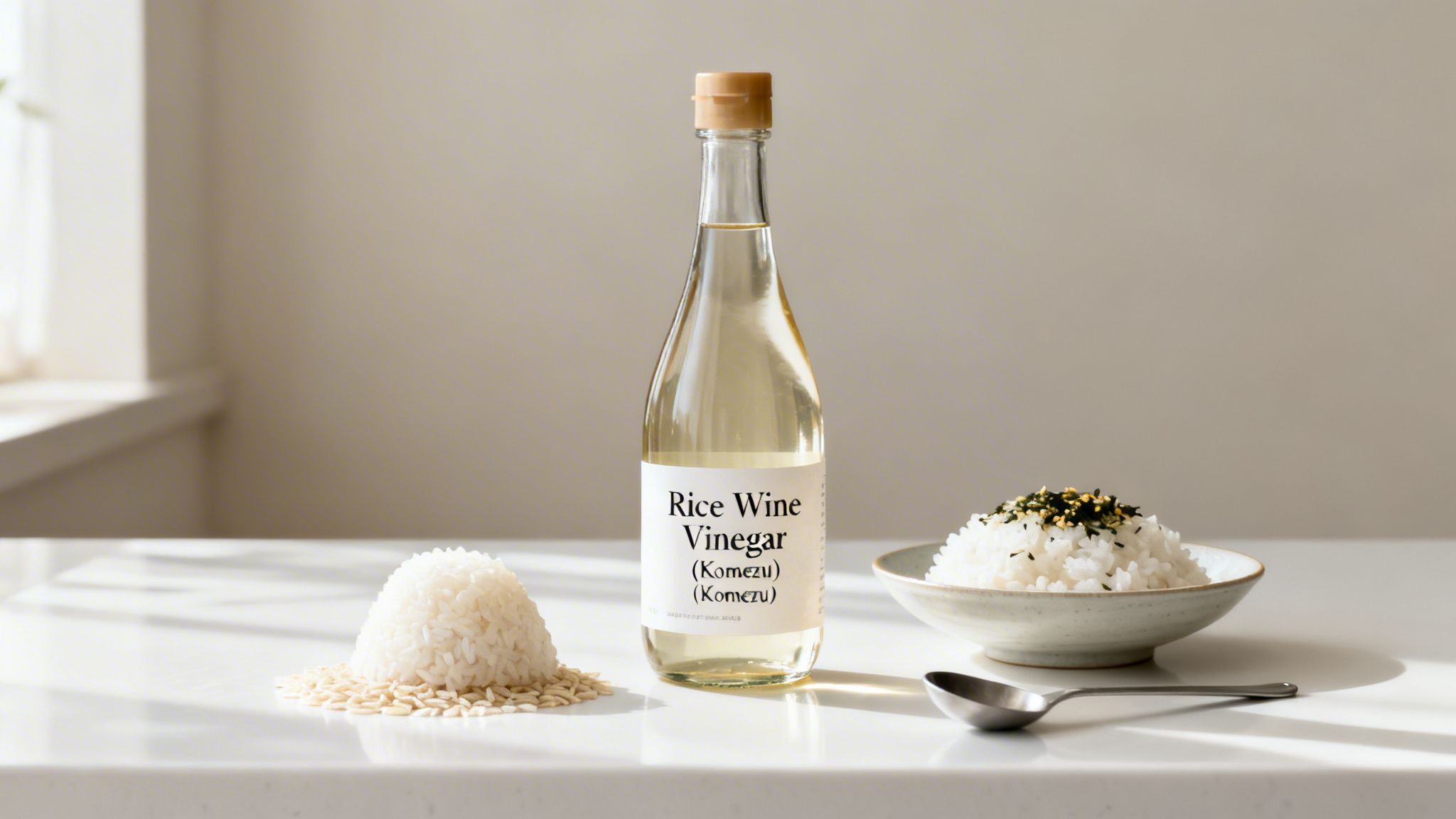
In Japan, it’s called komezu—and it's the bright, acidic soul of so many classic dishes. Rice wine vinegar is a cornerstone ingredient, bringing a clean, delicate tang that’s worlds away from the aggressive punch of Western vinegars like distilled white or even apple cider. Its genius lies in its subtlety; it elevates flavors without overpowering them.
Authentic Japanese rice vinegar comes from a patient, two-stage fermentation. First, steamed rice is carefully fermented into a rice wine (sake). Then, a second fermentation kicks in, where that alcohol is converted into acetic acid. This is what gives vinegar its characteristic sourness, but the slow, traditional method ensures the final product is mellow, complex, and carries just a whisper of sweetness from the original rice.
This transformation is a beautiful example of how fermentation is at the heart of Japanese cuisine. If you're curious about this ancient craft, you can discover more about traditional Japanese fermented foods and their incredible ability to build deep, savory flavors.
The Role Of Rice Vinegar In Japanese Cooking
When you cook Japanese food, rice wine vinegar isn't just another bottle in the pantry; it's a fundamental flavor architect. Its most famous role, of course, is in making perfect sushi rice, or shari. A seasoned mixture of rice vinegar, sugar, and salt gets gently folded into warm, steamed rice, which not only seasons it perfectly but also helps to preserve it.
But its influence extends far beyond the sushi mat. You'll find it indispensable for achieving that authentic taste in countless other dishes.
Sunomono (Vinegared Salads): It’s the key to the light, crisp dressings you find on cucumber and seaweed salads.
Tsukemono (Pickles): Rice vinegar is the go-to for pickling everything from ginger (gari) to daikon radish, giving them that signature tang and crisp bite.
Dressings and Sauces: That mild acidity makes it the ideal base for crafting dipping sauces and vinaigrettes that need a clean, sharp finish without any harshness.
When you choose a rice vinegar, you're choosing the acidic backbone of your dish. An authentic Japanese vinegar will provide a rounded, nuanced flavor that mass-produced alternatives simply cannot replicate.
Why Authentic Japanese Brands Matter
Here's a simple tip that will instantly improve your Japanese cooking: invest in a high-quality rice wine vinegar made in Japan. Many of the generic international brands you see on grocery store shelves take shortcuts, leading to a vinegar that tastes one-dimensionally sharp and lacks the subtle complexity of a traditionally brewed product.
Look for historic brands like Marukan or Mizkan, companies that have spent centuries perfecting their craft. When you purchase authentic vinegar shipped directly from Japan, you're not just buying an ingredient; you're buying expertise and quality control. The flavor is clean, balanced, and precisely what you need for genuine Japanese cooking. It's a small change that makes a huge difference.
Decoding Mirin and Its Different Forms
Mirin is the secret behind that signature sweet-savory balance you find in so much of Japanese cooking. It's a sweet rice wine made exclusively for the kitchen, and it does things simple sugar just can't. It adds a gentle, complex sweetness, gives sauces a beautiful gloss, and introduces a subtle umami depth. This is what makes it so essential for authentic teriyaki, glazes for grilled fish, and rich broths.
Making traditional mirin is a fascinating and careful process. It all starts with just three ingredients: steamed glutinous rice, cultured rice called koji, and a distilled rice spirit, shochu. As it ferments, the enzymes in the koji get to work breaking down the rice starches into complex sugars. This natural process is what gives real mirin its deep, nuanced sweetness and sets it worlds apart from the imitations.
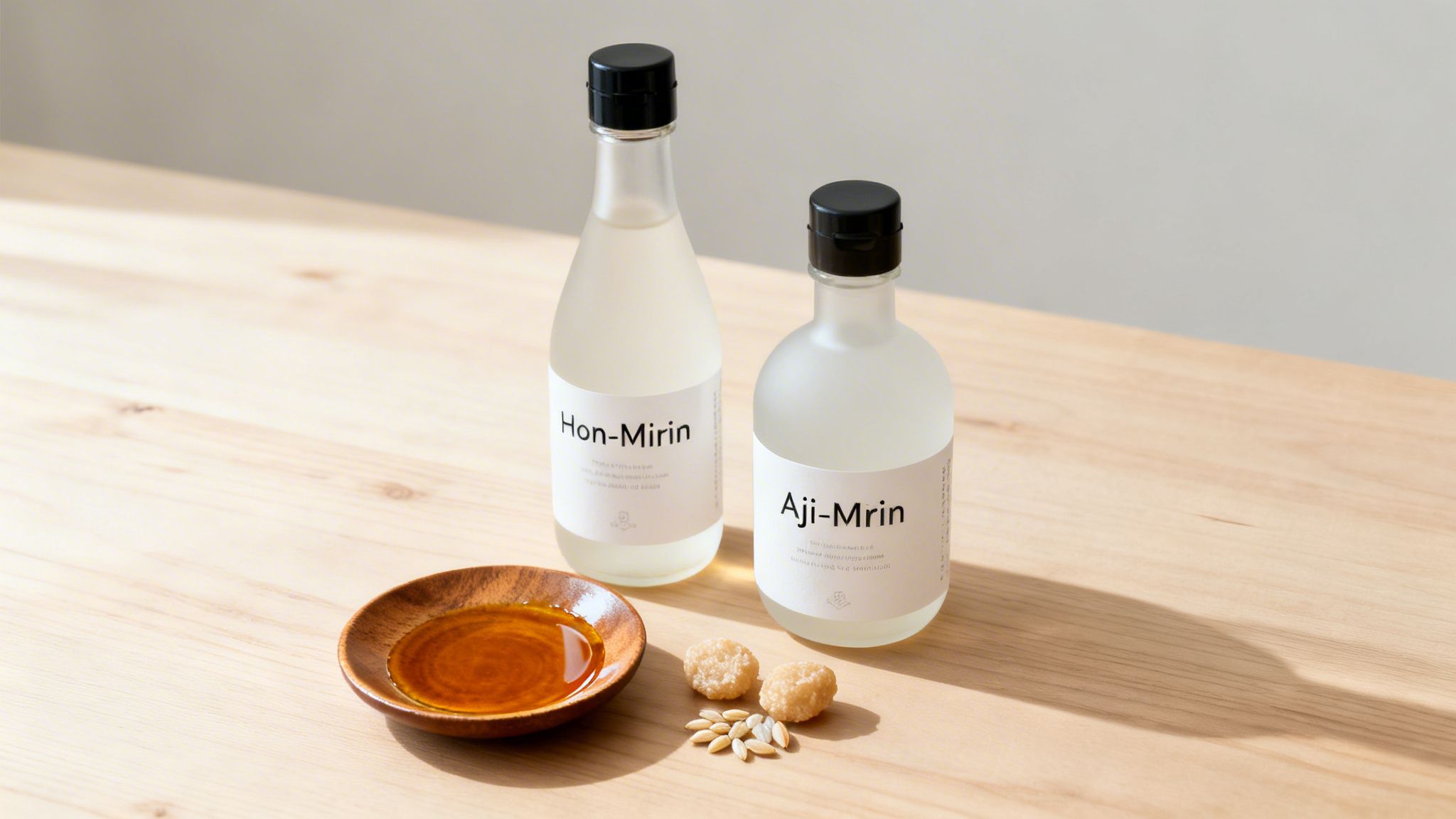
If you’re serious about Japanese cooking, you need to know the difference between the types of mirin you'll find on the shelf. There are really two main categories to look for.
Hon-Mirin: The True Sweet Rice Wine
Hon-mirin, which literally means "true mirin," is the real deal—the highest quality version you can get. It’s made using that traditional fermentation method and has a natural alcohol content of around 14%. This alcohol isn't just there by accident; it's a key player, helping to mellow out any fishy or gamey odors in food and allowing other flavors to penetrate more deeply into meats.
Because of its alcohol content, authentic hon-mirin can sometimes be a bit trickier to track down outside of Japan. But its complex, naturally-derived sweetness brings an unmatched depth of flavor to your cooking. When you get a bottle of true hon-mirin, you’re using the same ingredient that Japanese chefs have relied on for centuries to create genuine flavor.
Aji-Mirin: The Convenient Alternative
The other bottle you’ll commonly see is aji-mirin, which translates to "tastes like mirin." This is a mirin-style seasoning, but with a huge difference: the alcohol content is much, much lower, often less than 1%. To make up for the lack of natural sweetness from a proper fermentation, manufacturers add sweeteners like glucose or corn syrup.
Aji-mirin is a convenient and widely available option, and it works fine for simple glazes or when you just need a hint of sweetness. But for dishes where mirin is a central flavor, you’ll definitely notice the lack of complexity. You can learn more about essential seasonings in our guide to Japanese cooking basics.
The key takeaway is simple: Hon-mirin offers a rich, complex sweetness from natural fermentation, while aji-mirin is a sweetened, low-alcohol substitute. For the most authentic flavor profile, choosing hon-mirin is always the superior option.
How They're Made and Why It Matters for Flavor
The real story behind rice wine vinegar and mirin—and the reason they taste so different—lies in how they are made. One is born from a two-part fermentation that creates sharp acidity, while the other uses a unique process to develop natural sugars and deep umami. This is the key to understanding their distinct roles in the kitchen.
Making rice wine vinegar is a classic two-act play. First, rice is fermented into an alcoholic liquid, similar to making sake. Then, a specific bacteria (acetobacter) is introduced. This microbe gets to work, kicking off a second fermentation that eats up the alcohol and turns it into acetic acid. That acid is exactly what gives vinegar its signature tangy bite.
Mirin, however, takes a completely different route. It’s made by combining steamed glutinous rice, koji mold (Aspergillus oryzae), and a distilled spirit called shochu. The powerful enzymes in the koji bypass the alcohol stage and break down the rice starches directly into complex sugars. This creates a deep, natural sweetness and savory umami notes. The shochu is there to stop the fermentation process cold, locking in those sugars and giving authentic hon-mirin its syrupy texture and 14% alcohol content.
What This Means for Your Cooking
The science behind how they're made directly translates to how they perform in your dishes. The acetic acid in rice wine vinegar is a precision tool for flavor.
Cuts Through Richness: A splash of its bright acidity slices through the fat in fried dishes like tempura or karaage, keeping them from feeling greasy or heavy.
Wakes Up Flavors: In a simple cucumber salad (sunomono), the vinegar's tang makes the delicate flavors of the vegetables pop.
Tenderizes: When used in a marinade, the acid gently breaks down proteins, resulting in more tender meat.
Mirin's contribution is all about its unique trio of sugar, umami, and alcohol.
Builds a Perfect Glaze: When you heat mirin, its sugars caramelize beautifully, creating that irresistible glossy sheen on teriyaki or grilled unagi.
Balances Salty Flavors: The subtle sweetness is the perfect counterpoint to the saltiness of soy sauce, which is why they are so often used together.
Adds Savory Depth: The amino acids created during production lend a rich, savory quality that enhances broths, sauces, and simmered dishes. This is a key component you'll notice when you learn how to make dashi stock.
It really boils down to this: vinegar adds a sour note to brighten and cut through richness. Mirin adds sweetness and umami to build depth and create balance. One is for lifting flavors up, the other is for rounding them out.
You can even see this difference reflected in their global popularity. The rice vinegar market on dataintelo.com was valued at an impressive USD 1.3 billion in 2023, showing just how widely its versatile acidity is used around the world. Mirin, on the other hand, is often grouped with other specialty Japanese condiments, a nod to its more specific, yet essential, role in creating authentic flavor.
When To Use Each Ingredient In Your Kitchen
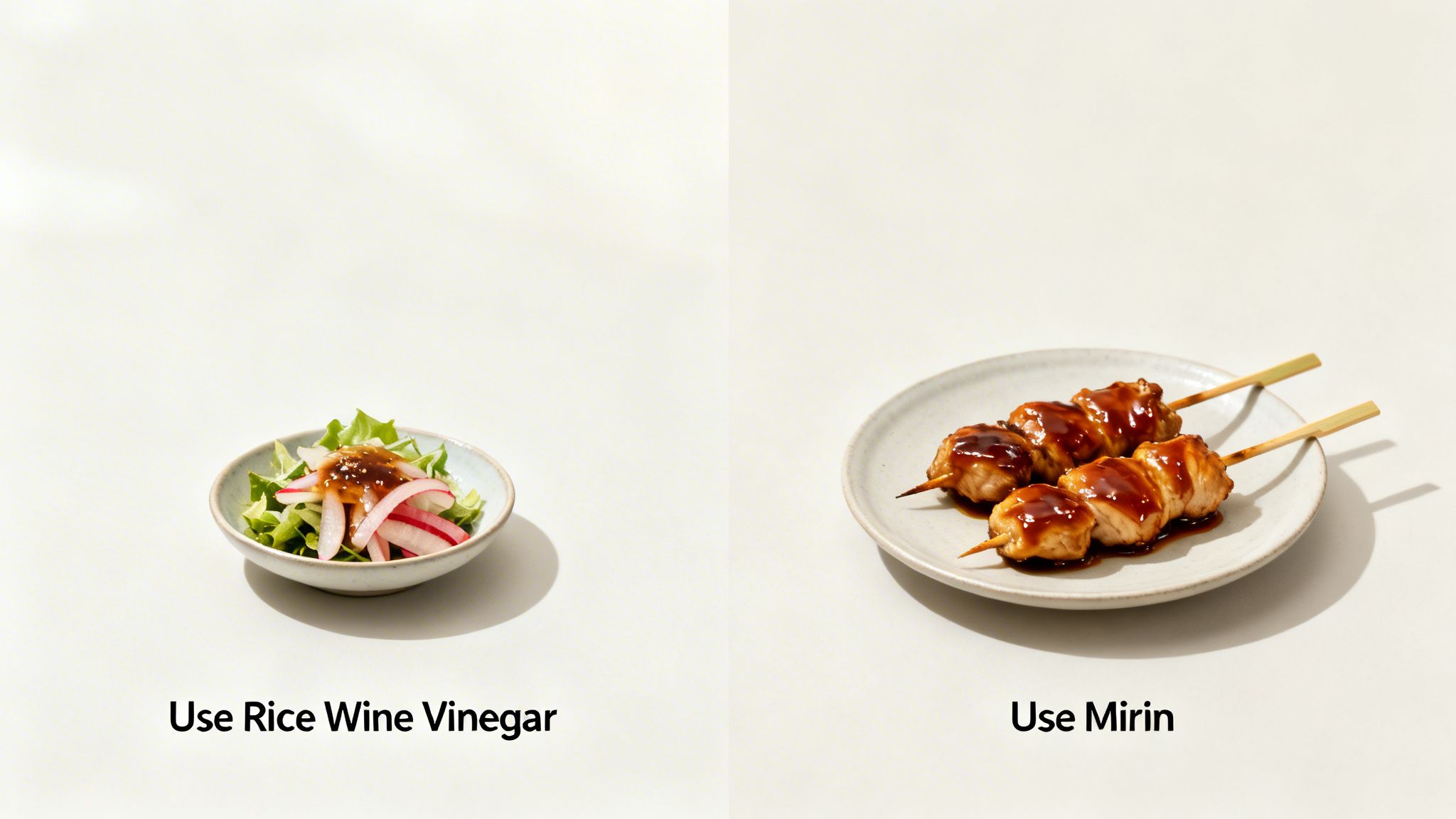
Knowing the difference between rice wine vinegar and mirin is one thing, but knowing exactly when to reach for each bottle is what really elevates your cooking. This is where the theory hits the kitchen counter, and luckily, the choice is pretty straightforward. It all boils down to what you want to achieve in your dish: a bright, acidic kick or a gentle, glossy sweetness.
Think of it this way: grab the rice wine vinegar when you need to add a sharp, clean tang. Its acidity is fantastic for cutting through rich flavors and making everything taste brighter. On the other hand, mirin is your secret weapon for adding sweetness, a beautiful sheen, and a subtle umami depth that plain sugar just can't replicate.
Best Uses for Rice Wine Vinegar
Rice wine vinegar truly shines in dishes that need a vibrant lift. Its acidity is mild enough that it enhances other flavors instead of overpowering them, which makes it an incredibly flexible ingredient.
Vinaigrettes and Salad Dressings: Whisk it with a neutral oil, a splash of soy sauce, and a little sesame oil for a quintessential Japanese-style dressing. It creates a zesty, clean foundation.
Pickling Vegetables: It’s the perfect base for quick Japanese pickles (tsukemono). Thinly sliced cucumbers, daikon, or carrots are transformed into crisp, tangy bites after a quick soak.
Tangy Marinades: For proteins like chicken, pork, or fish, the vinegar not only infuses them with a bright flavor but also helps to tenderize the meat before it hits the grill or pan.
Seasoning Sushi Rice: This is its most famous job. A simple blend of rice vinegar, sugar, and salt is what gives sushi rice its signature taste and helps preserve it.
Best Uses for Mirin
Mirin is the soul of so many of Japan's most beloved sweet-and-savory dishes. The complex sugars it contains caramelize beautifully, adding layers of flavor and that incredible visual appeal.
Glazes for Grilling and Broiling: It’s the key player in teriyaki sauce, responsible for that irresistible sticky, glossy coat you see on everything from chicken skewers (yakitori) to broiled salmon.
Simmered Dishes and Broths: In recipes like nikujaga (a comforting meat and potato stew) or noodle soup broths, mirin provides a gentle sweetness that perfectly balances the saltiness of soy sauce and the umami of dashi.
Tenderizing and Flavoring: The small amount of alcohol in authentic hon-mirin works wonders. It helps mellow out any strong fishy or gamey odors and allows the other flavors to sink deeper into the meat.
Dipping Sauces: It adds a complex, sweet dimension to sauces like tentsuyu, the classic dip for tempura.
The pantry decision is simple: reach for vinegar when you need sharpness and brightness. Grab the mirin when your dish calls for sweetness and shine. Mastering this distinction is a key step toward confident Japanese cooking.
Getting a feel for these two ingredients also helps you appreciate the broader role of acidity in cooking. Learning about classic combinations, like the art of pairing olive oil and vinegar, can give you a deeper understanding of how different flavors play off each other in the kitchen.
How To Choose And Store Authentic Products
If you want to capture genuine Japanese flavors in your cooking, choosing high-quality rice wine vinegar and mirin is non-negotiable. The first step is learning to read the labels so you can sidestep the imitations. Authentic products bring a depth of flavor that mass-market versions, often packed with corn syrup and preservatives, just can't deliver.
When you invest in the real deal, you're not just buying an ingredient; you're elevating your entire cooking experience. Shopping with a trusted retailer that ships directly from Japan means you get access to the same fresh, high-quality brands that are staples in homes across Japan.
Reading The Labels For Authenticity
For the best quality, keep an eye out for a few key terms on the bottle. These words are your clues to traditional production methods and top-notch ingredients.
For Rice Wine Vinegar: Look for the word junmai (純米), which translates to "pure rice." This tells you the vinegar was brewed from rice alone, with no other alcohol sources added. The result is a much cleaner and more mellow flavor.
For Mirin: The most important term here is hon-mirin (本みりん), or "true mirin." This is your guarantee that it was naturally brewed from glutinous rice, koji, and shochu, with an alcohol content right around 14%. If you see "aji-mirin" or "mirin-fu" (mirin-style), steer clear if you want authentic flavor—those are typically just sweetened substitutes.
Sourcing genuine hon-mirin and junmai rice vinegar is the single most effective way to make your Japanese cooking taste more authentic. The complex, nuanced flavors are impossible to replicate with imitation products.
Storage Tips For Lasting Freshness
Proper storage is key to preserving the integrity of these essential ingredients. Fortunately, both are pretty resilient and have a generous shelf life.
Rice wine vinegar is incredibly stable thanks to its high acidity. You can keep it in a cool, dark pantry for years, even after it's been opened. Hon-mirin, on the other hand, contains both sugar and alcohol, so it's best to store it tightly sealed in a cool, dark spot. Once you open it, popping it in the fridge will help maintain its flavor quality for several months.
The global popularity of rice vinegar has made it a pantry staple worldwide, and you can see its consistent growth in market data. While mirin's availability can sometimes be tricky due to alcohol regulations, authentic versions remain a prized ingredient for anyone serious about Japanese cooking. You can find more insights on the edible rice vinegar market's growth on marketreportanalytics.com.
Ready to build your pantry? Check out our guide on finding the best Japanese food products online to get started.
Your Questions, Answered
When you're stocking a Japanese pantry, a few questions always pop up. Let's clear up the common queries about rice wine vinegar and mirin so you can cook with confidence.
Can I Substitute One For The Other?
The short answer? Not really. Think of them as opposites: rice wine vinegar brings the sour, while mirin brings the sweet.
If you're in a pinch and need a mirin substitute, you could mix a tiny bit of rice vinegar with some sugar. But be warned: this only fakes the sweet-and-sour part. You'll completely miss out on the deep umami and complex flavor that real, brewed mirin brings to a dish. It’s a last-resort trick, not a true replacement.
What Is The Shelf Life Of These Ingredients?
Good news. Both are fantastic pantry staples with a very long and stable shelf life.
Rice Wine Vinegar: Thanks to its high acidity, rice wine vinegar is basically its own preservative. An unopened bottle can sit in your pantry for years. Even after you open it, it will stay good almost indefinitely as long as you keep it in a cool, dark place.
Hon-Mirin: Real mirin (hon-mirin) is preserved by its alcohol and sugar content. Unopened, it's good for a year or more. Once opened, pop it in the refrigerator to keep it at its best. It will easily last for several months in there.
Is There A Good Non-Alcoholic Substitute For Mirin?
If you're avoiding alcohol, you can make a simple sweet syrup. Just gently heat some water (or even the water from cooking rice) with sugar until it's fully dissolved.
This will give your recipe the sweetness it needs. However, it’s important to know that this substitute won't have the rich, savory umami or depth of flavor you get from traditionally brewed hon-mirin.
At Buy Me Japan, we believe authentic ingredients are the key to incredible food. Explore our curated collection of genuine Japanese seasonings shipped directly to you from Japan. https://buymejapan.com



Share:
What Is Sake In Cooking A Guide to Japanese Flavor
Sencha Green Tea Caffeine Your Guide to Balanced Energy