

You've probably seen a Japanese skin care routine that goes cleanser, lotion, serum, emulsion, cream, sunscreen and thought, “Wait. Why are there two moisturizers?”
That confusion is normal. For many people outside Japan, the word emulsion sounds technical, vague, or easy to skip. In J-beauty, though, it's often one of the most useful steps in the whole routine.
A skin care emulsion is the quiet middle layer that helps skin feel hydrated, soft, and comfortable without the heavy finish some creams leave behind. If you've ever wanted moisture that feels light, especially in warm weather, under sunscreen, or on combination skin, this may be the missing step.
Your Guide to the World of Japanese Emulsions
Japanese skin care often focuses on layering thin, elegant textures instead of relying on one thick product. That's one reason emulsions matter so much. They fit naturally between watery prep steps and richer sealing steps.
That routine style also makes sense in a market where skin care is part of everyday life. The global skincare market was valued at USD 131.2 billion in 2022 and is projected to reach USD 212.96 billion by 2032. Consumer-use data also shows that 72% of consumers regularly use facial cleansers, which points to daily routines becoming mainstream and helps explain why lightweight hydration layers like emulsions have such a clear role in modern regimens, according to skin care market statistics.
Why beginners get stuck
Most readers run into the same questions:
- What is it really: Is it a toner, serum, lotion, or moisturizer?
- Where does it go: Before cream, after serum, or instead of moisturizer?
- Who needs it: Oily skin, dry skin, sensitive skin, or everyone?
Japanese brands have spent years refining textures so that hydration can feel clean, smooth, and easy to layer. That's why emulsions show up so often in Japanese routines and in guides to Japanese cosmetic brands.
A good emulsion often solves a very simple problem. Your skin wants moisture, but you don't want heaviness.
What you'll notice first
When you use the right emulsion, the biggest difference usually isn't dramatic. It's comfort. Skin feels less tight, makeup sits better, and your routine becomes easier to customize.
That's the practical beauty of Japanese emulsions. They're flexible. You can use one alone in humid weather, or layer it under cream when your skin needs more support.
What Exactly Is a Skin Care Emulsion
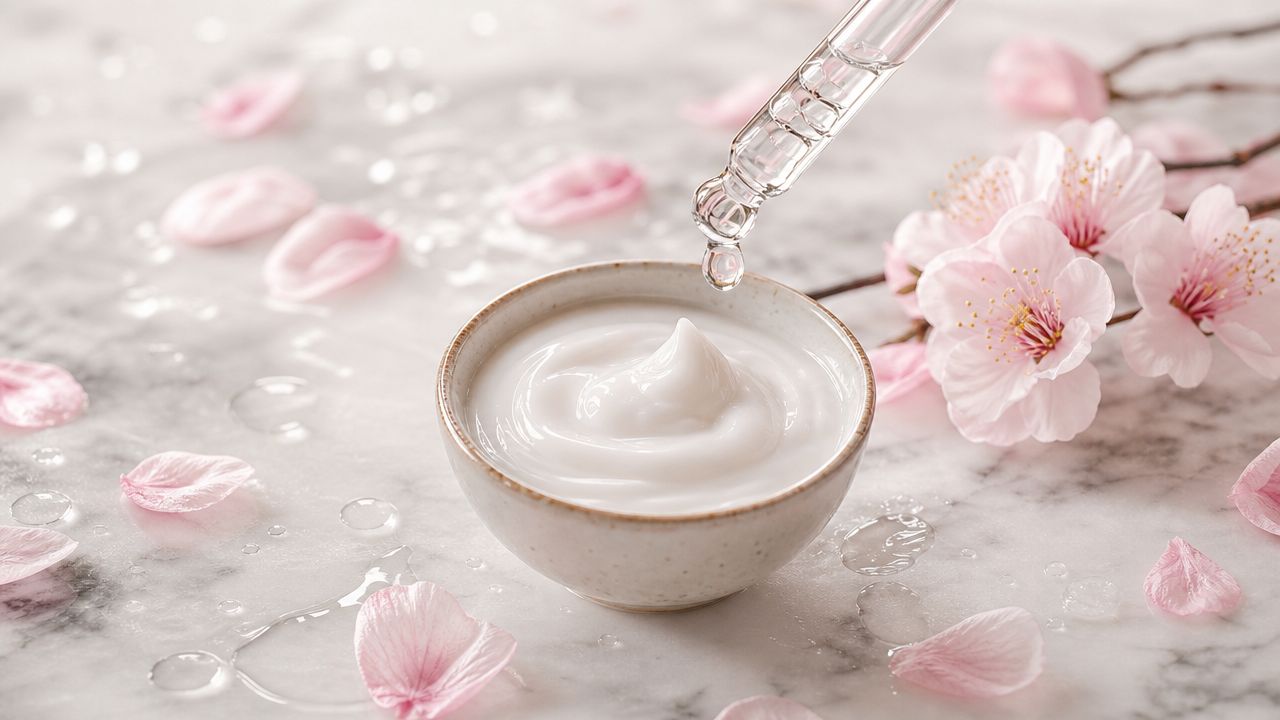
A skin care emulsion is a lightweight moisturizer made by blending oil and water into one stable formula. Instead of feeling thick and buttery like a heavy cream, it usually feels milky, soft, and quick to spread.
In simple terms, it's a way to get water-based freshness and oil-based softness at the same time.

A simple way to picture it
Think of an emulsion like a well-mixed dressing. Oil and water normally separate, but with the right formulation they stay blended into a smooth, even texture. On skin, that creates a product that feels lighter than a cream while still helping reduce that dry, tight feeling.
In many routines, an emulsion sits between serum and moisturizer. It acts like a soft cushioning layer that helps seal in earlier hydration without making skin feel coated.
Oil in water and water in oil
Not all emulsions feel the same. The structure matters.
The type of emulsion determines which skin types it tends to suit best. Oil-in-water (O/W) emulsions are the most common and are usually better for normal-to-oily skin because they contain more water. Water-in-oil (W/O) emulsions are richer and usually better for dry skin, though advanced Japanese formulations can make W/O textures feel unexpectedly light, as explained in Kiehl's guide to emulsions.
Here's the easy version:
- O/W emulsions: Feel fresher, lighter, and faster-absorbing
- W/O emulsions: Feel more protective and comforting
- Advanced formulas: Can blur that old divide and make richer systems feel elegant
Practical rule: If creams often feel too much on your face, start with an O/W emulsion.
Why people like the texture so much
Texture is not a small detail in J-beauty. It's part of performance. A product that feels pleasant is easier to use consistently, and consistency usually matters more than buying the richest formula on the shelf.
If you want to compare emulsions with richer options, this guide to Japanese face moisturizer choices helps show where they fit.
Emulsion vs Serum vs Lotion vs Cream
Most skin care confusion comes from product names. The tricky part is that Japanese and Western naming don't always match.
In Japanese skin care, “lotion” often means a watery hydrating prep product, not a cream-like moisturizer. That's why many people buy the right product but use it in the wrong order.

Skincare Hydrators Compared
| Product | Texture | Primary Function | Routine Step |
|---|---|---|---|
| Lotion | Watery | Preps skin with hydration | After cleansing |
| Serum | Light to slightly viscous | Targets a specific concern | After lotion |
| Emulsion | Milky, light | Adds balanced moisture and soft sealing | After serum or after lotion |
| Cream | Rich, dense | Seals in moisture with a heavier finish | Final moisturizing step |
The quick difference in plain language
A serum is usually more treatment-focused. You use it when you want to target concerns like dullness, dehydration, or uneven texture.
A Japanese lotion is usually the first leave-on hydration step. It softens the skin and adds water, but it usually doesn't give the cushioned finish of an emulsion.
An emulsion is the middle ground. It moisturizes in a more complete way than a watery lotion, but it doesn't feel as thick as a cream. For many people, that makes it the most wearable product in the routine.
A cream is the richest layer. It's helpful when your skin loses moisture easily, feels flaky, or needs extra comfort at night.
When to choose an emulsion
Choose an emulsion if any of these sound familiar:
- Your skin gets dehydrated easily: It feels tight, but heavy creams sit on top.
- You live somewhere humid: You want moisture that doesn't feel greasy.
- You layer sunscreen and makeup: You need hydration that won't pill as easily.
- You have combination skin: Dry cheeks and an oily T-zone often do well with a milky layer.
If you still mix up the treatment step and the moisturizing step, this article on how to layer serums and moisturizers gives a useful outside perspective. For readers exploring treatment products, this guide to what is niacinamide serum also helps clarify where a serum belongs.
If serum is the specialist and cream is the coat, emulsion is the light knit layer you can wear almost every day.
The Unique Benefits of Using a Japanese Emulsion
Japanese emulsions have a strong reputation for one reason above all. They feel refined. That smooth, weightless finish isn't accidental. It comes from formulation work that Japanese beauty companies have taken seriously for a long time.

Why they feel lighter
For cosmetic emulsions, performance depends on emulsion type, droplet size, and internal structure. Shiseido reports that high-pressure emulsification can shrink dispersed oil particles to 1/500th of ordinary emulsion size, with a minimum size of about 30 nm, which helps improve lightness, clarity, and stability in the formula, according to Shiseido's formulation research.
That sounds technical, but the skin-level effect is easy to understand. The formula spreads thinly, feels elegant, and doesn't leave the same heavy film many older moisturizers did.
Why Japan made emulsions a core step
Japanese skin care often values buildable layers rather than one oversized product trying to do everything. Emulsions fit that philosophy perfectly. They can hydrate, soften, and support comfort while keeping the routine flexible.
That's especially useful if your skin changes with season, climate, or irritation level. On some days, an emulsion is enough. On other days, it becomes the middle layer that helps a richer cream sit better.
Smaller droplets don't just change the science on paper. They change how willingly people use the product every day.
Barrier care is changing the category
One of the most interesting shifts is that emulsions aren't just being treated as “light moisturizers” anymore. They're increasingly used as delivery formats for barrier-focused formulas.
That matters for people with skin that feels stressed, reactive, or easily dehydrated. Instead of choosing between a thin product that feels nice and a thick product that feels protective, newer emulsions aim to offer both comfort and support.
For readers dealing with skin that feels thirsty rather than oily, this guide on how to treat dehydrated skin is a helpful companion.
How to Use an Emulsion in Your Skincare Routine
Using an emulsion is easier than people expect. The basic rule is simple. Apply it after your watery steps and treatment steps, then decide whether you need a heavier final layer.
For most routines, the order looks like this:
- Cleanser
- Japanese lotion or toner
- Serum
- Emulsion
- Cream if needed
- Sunscreen in the daytime
How much and how to apply
You don't need a thick mask of product. A small amount spread across the face is usually enough. Press or smooth it over the skin rather than rubbing aggressively.
If you're unsure about application order in general, this outside guide on the best way to apply skincare is a useful reference.
Different skin types use it differently
- Oily or combination skin: An emulsion may be enough on its own, especially in daytime or in hot weather.
- Dry skin: Use it as a softening layer under cream. It helps build hydration without relying on only one rich product.
- Sensitive skin: Look for simple, comforting formulas that focus on barrier support and avoid anything your skin already dislikes.
- Acne-prone skin: Lightweight emulsions can work well because they often moisturize without the dense finish that some people find uncomfortable.
Don't judge an emulsion by how thin it looks in your hand. Judge it by how balanced your skin feels an hour later.
Where people go wrong
The most common mistake is using an emulsion too early, before watery hydration has been applied. Another is assuming it must replace cream for everyone.
If your skin still feels dry after emulsion alone, that doesn't mean the product failed. It may mean your skin wants a second sealing layer.
If you're still unsure about the first hydration step, this article on what toner is used for helps clarify the role of Japanese lotion and toner-style products.
Choosing Your Perfect Japanese Skin Care Emulsion
You wash your face, apply your hydrating lotion, and then pause in front of a page full of Japanese bottles labeled milk, emulsion, and nyueki. They can look similar, but they are not all built for the same skin feel.
A better way to choose is to focus on the finish you want on your skin after application. Some emulsions sink in fast and sit comfortably under sunscreen. Others leave a softer, more cushioned layer that helps skin stay comfortable through dry weather or a stressed barrier phase.

Japanese skincare brands are especially good at this middle step. Instead of forcing you to choose between a watery product and a heavy cream, many Japanese lines offer several emulsion textures within the same range. That makes it easier to match your skin without overcomplicating your routine.
Good Japanese options to look for
A few reliable directions stand out:
- Hada Labo milky formulas: A simple place to start for skin that mainly needs hydration and a comfortable, low-fuss finish.
- MINON Amino Moist milk-style moisturizers: Often a smart pick for skin that feels easily irritated and prefers gentle, cushioning care.
- Shiseido Elixir emulsion products: Better suited to people who enjoy a more refined texture and a polished finish on the skin.
- Shiseido d Program or IHADA lines: Helpful names to know for reactive skin types that need barrier-conscious formulas.
- Kao Curél emulsions and milk-type moisturizers: Often chosen by people dealing with dryness, sensitivity, or both.
Match the formula to your skin
Reading the bottle gets easier once you know what problem you are trying to solve.
- Go lighter if your skin gets shiny quickly, makeup slips, or rich moisturizers feel stuffy.
- Go barrier-focused if your skin stings, flushes easily, or feels uncomfortable after cleansing.
- Go richer if your skin feels fine right after skincare but turns tight again by midday.
One easy analogy helps here. A light emulsion works like a thin cotton shirt. It feels breathable and comfortable. A richer emulsion feels closer to a soft knit layer. You still get flexibility, but with more protection from dryness.
Modern formulas also show how Japanese skincare keeps refining this category. Lines such as Curél and IHADA are known for pairing lighter textures with skin-comforting ingredients, so an emulsion does not have to feel heavy to support a dry or delicate barrier.
Buying authentic Japanese skin care
For international shoppers, the product itself is only part of the decision. Authenticity matters too, especially with Japanese skincare, where packaging details, formula versions, and freshness can vary by seller.
A practical habit is to check the product name for words like milk, emulsion, or nyueki. In Japanese skincare, those labels usually point to the moisturizing step that sits between watery hydration and cream. That small detail can save you from buying a lotion when you wanted a softening moisturizer instead.
Frequently Asked Questions About Emulsions
Can I use an emulsion instead of a moisturizer
Yes, many people can. If you have oily, combination, or humidity-sensitive skin, an emulsion may work perfectly well as your main moisturizer.
Are emulsions good for acne-prone skin
They can be. Many people with acne-prone skin prefer a milky, lighter texture over a dense cream. The key is choosing a formula your skin tolerates well and keeping the rest of the routine simple.
Is a Japanese emulsion different from a Western lotion
Often, yes. Japanese emulsions are usually designed around layering. They tend to sit between watery lotion and richer cream, so they act like a dedicated middle moisture step.
Do dry skin types still need a cream
Sometimes. If your skin feels comfortable with emulsion alone, you may not need one every day. If your skin still feels tight later, add a cream on top, especially at night or in cold weather.
If you're ready to try a Japanese skin care emulsion, start with the texture your skin is most likely to enjoy, then build from there. Browse authentic Japanese skin care at Buy Me Japan to find emulsion, milk, lotion, and cream options shipped directly from Japan.

Share:
Oolong and Jasmine Tea: A Guide to Flavor and Brewing
Mastering Sashimi Soy Sauce: Your Guide to Authentic Shoyu