


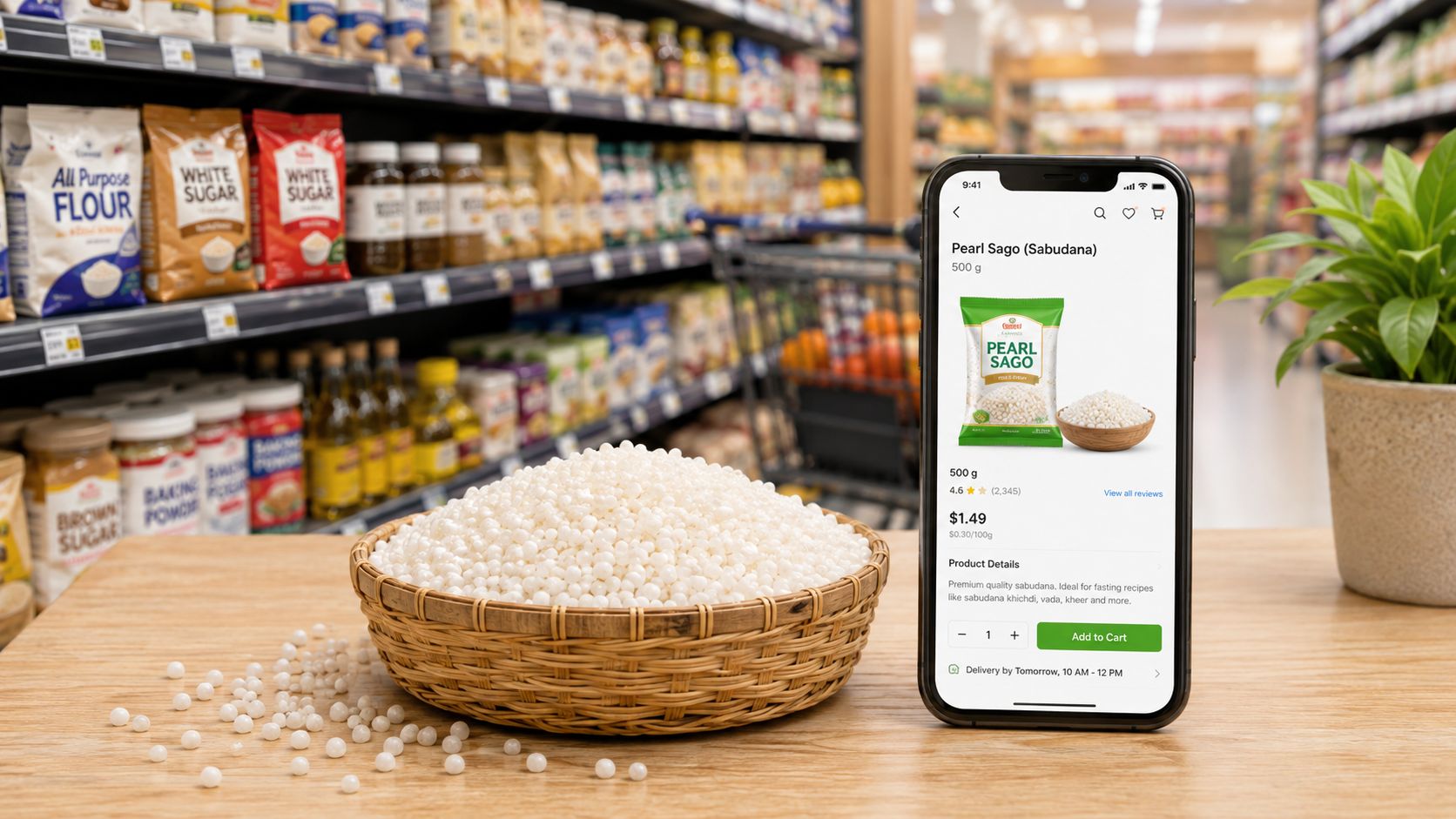
If you've ever stood in a supermarket aisle wondering whether the tiny white pearls in front of you are the right ones for dessert, you're not alone. Where to buy pearl sago is no longer a simple local question, because the ingredient now sits in a strange middle ground between ethnic grocers, mainstream e-grocery, and importers that ship pantry staples across borders.
That's good news, but it also means you need to buy with a clear plan. The right channel depends on what you care about most, speed, unit price, pack size, and origin quality. If you choose badly, you can end up overpaying for a small bag, waiting too long for delivery, or buying a product that doesn't match the texture you wanted.
Why Pearl Sago Is Easier to Find Than Ever
A home cook in London, Toronto, or Sydney can now chase pearl sago the same way they shop for rice or coconut milk, by checking a supermarket app, an Asian grocer, or a delivery platform before leaving the house. That shift matters because it removes the old dependence on a single neighborhood store. In the U.S., Instacart shows tapioca pearls available for delivery or pickup within 2 hours through mainstream grocery infrastructure, which tells you how embedded this ingredient has become in same-day retail systems Instacart.
The old search pattern is gone
For years, shoppers treated sago as a specialty errand. You'd visit one ethnic market, hope the shelf wasn't empty, and settle for whatever bag happened to be there. That's no longer the only play. A reader in Singapore can find pearl sago in consumer-friendly packs, while online platforms also carry larger formats and discounted options, so the ingredient now behaves like a standard pantry item instead of a one-off import.
Practical rule: start with the channel that matches your cooking habit, not the channel that merely has stock.
That's why the search for where to buy pearl sago should begin with a simple question, do you need the fastest local pickup, or do you want a better pack size and more origin choice. If you cook often, local access is convenient. If you cook occasionally or in batches, online buying usually gives you more control.
What changed for international buyers
The practical change is distribution, not just availability. Pearl sago has moved from a product associated mainly with niche food shops to one sold through broader grocery systems and rapid-commerce platforms. That makes it easier to source from abroad, especially if you're willing to compare local store shelves with online marketplace listings before you click buy.
The smartest buyers don't ask whether pearl sago exists online. They ask which channel gives them the cleanest balance of freshness, cost, and delivery radius.
Comparing Supermarkets and Asian Specialty Stores
Mainstream supermarkets are the easiest place to start because they're built for routine grocery shopping. In Singapore, a shopping guide points readers to supermarkets such as NTUC FairPrice and Cold Storage, and it says sago is often found in the baking or dessert section Singapore shopping guide. That matters more than people think, because plenty of shoppers waste time scanning rice aisles when the product is shelved beside dessert ingredients.

Supermarket convenience versus specialty depth
Supermarkets usually win on predictability. They're the right choice when you need a straightforward packet for a single dessert and don't want to make a special trip. They also tend to suit first-time buyers who just want to test a recipe without buying in bulk.
Asian specialty stores are better when you care about variety. Shops such as Mustafa Centre, Phoon Huat, and Kwong Cheong Thye in Singapore are useful because they often carry a wider spread of origins and formats. That wider selection helps if you're looking for a specific brand, a larger bag, or a product that feels closer to the version you used in another country.
If you cook sago rarely, buy the smallest clean pack you can find locally. If you cook it often, specialty shops usually give you more choice and less guesswork.
A store like where to buy miso paste often teaches the same lesson, the best store is not always the biggest store, it's the one that stocks the version you need.
If you like shopping pantry items alongside Japanese lifestyle goods, Cezanne Pearl Glow Highlight 2.4g (Various Shades) is a separate example of how curated importers can bundle different categories in one place. It's a pearlescent highlighter with serum ingredients and multiple shades, which shows the kind of assortment a broad Japanese catalog can support.
Navigating Online Marketplaces and E-Grocery Platforms
Online buying is where pearl sago becomes a logistics decision. A supermarket app, an Asian-focused delivery service, and a general marketplace all solve different problems, and the cheapest-looking listing can become expensive once you factor in shipping, minimum order size, and the need to buy a second item just to qualify for checkout.
Weee's sago pearls page is a useful benchmark because it says the platform offers nationwide free shipping options with low minimums and contactless free delivery, while also claiming its Asian market has no markups and prices are “most often cheaper than retail stores” Weee. That combination tells you what online convenience should look like when the platform is doing its job.
What to compare before you order
Buyers should look at the total package, not just the listing price. A small bag with fast shipping can be better than a larger bargain pack if you only need a handful of servings. On the other hand, if you're restocking for family use or a small food business, a platform with broader pack sizes often makes more sense.
The practical split is simple.
- Need it tonight or tomorrow: choose a mainstream e-grocery or rapid-delivery platform.
- Need the lowest handling effort: choose a platform with free shipping or contactless delivery.
- Need a broader pantry order: choose an importer or marketplace that lets you combine dry goods in one shipment.
A store like where to buy shirataki rice points to the same buying logic, shopping online works best when the platform reduces friction instead of creating it.
The biggest mistake is assuming every online marketplace is interchangeable. Some are good for speed, some are better for inventory depth, and some are only useful when you already know exactly which pack you want. If your goal is clean convenience, the right platform should tell you quickly whether the item is local stock, imported stock, or a special-order listing.
Understanding Pearl Sago Pricing Across Channels
Pearl sago pricing shifts by country, pack size, and seller type, so the sticker price alone tells you very little. A small bag can be the right buy in one market and a bad deal in another once shipping, stock freshness, and repacking are included. In Singapore, a supermarket platform lists a 200 g pack at S$1.35 Cold Storage. In the Philippines, marketplace listings show ₱60 to ₱135 depending on size and seller, while Indonesian marketplace listings show small packs around Rp9,000 to Rp13,000, with larger 500 g or 1 kg options priced much higher.
Read the price in context
A cheap small pack can still be the wrong buy if you pay for repeated shipping or end up with stale stock. A larger pack can look expensive and still be the better value if you use sago regularly and store it correctly. Judge the listing by unit cost, shipping, and how quickly you will use the bag.
| Market | Pack Size | Price Range | Channel Type |
|---|---|---|---|
| Singapore | 200 g | S$1.35 | Supermarket platform |
| Philippines | Varies by size and seller | ₱60 to ₱135 | Marketplace |
| Indonesia | Small packs | Rp9,000 to Rp13,000 | Marketplace |
| Indonesia | 500 g or 1 kg | Higher than small packs | Marketplace |
The spread is wider than many shoppers expect. A local Asian grocer may carry a better-origin pack, but the shelf price can run higher than a mainstream e-grocery listing, especially once the grocer's import and handling costs are built in. Direct importers can reduce the gap for buyers who already know which brand they want, but they usually make more sense when you are ordering alongside other pantry items. If you already shop across Asian food categories, where to buy Japanese snacks follows the same buying logic, because pack size, shipping, and freshness often matter more than the listed item price.
For commercial buyers, the spec sheet matters as much as the price tag. Marketplace and supplier listings commonly use 1.8 to 2.5 mm granulation, 11% max moisture, 0.2 to 0.5% max ash, and about 99% minimum purity for food-grade product. Those figures tell you whether a bag is likely to cook evenly and hold up in storage.
Cost rule: buy the bag that matches your usage rate, not the bag with the flashiest discount.
How to Evaluate Sago Quality Before You Buy
Buy pearl sago like you expect to cook it, not like you expect to admire the label. A good bag should cook evenly, stay intact, and arrive dry. If a seller only offers vague language and glossy photos, treat that listing as a weak buy. You want clear product details, a seller with a track record, and packaging that looks ready for storage, not rescue.
Look at the cooked result first. Pearl sago should turn tender with a clean bite, not collapse into glue or stay chalky in the center. That matters more than a polished listing title, because a bag can look fine online and still give you a dull, uneven texture in the pot. For buyers who also care about grain quality in other pantry items, a product page like Kokuho Rose rice details shows the kind of clear origin and handling information worth looking for.
Brand reputation helps, but only if it is backed by repeat buying signals. I trust a seller more when the brand appears in specialty food channels, when product pages explain origin plainly, and when buyer reviews mention how the pearls cooked rather than just saying the parcel arrived. That is the sort of evidence that separates a steady pantry staple from a random import lot.
What to check beyond the spec sheet
Skip listings that rely on only technical numbers. The useful questions are practical.
- Read the cooking feedback. Look for comments on texture after boiling, steaming, or soaking, depending on how you plan to use it.
- Check review language. Buyers who mention clean beads, even swelling, and no off smell usually give you better clues than star ratings alone.
- Study seller consistency. A shop that handles Asian dry goods well is more likely to ship sago in decent condition.
- Look for origin clarity. A named origin and a clear packer are better than a generic import claim.
- Favor sellers with turnover. Fresh stock matters because dry goods still suffer when they sit too long in heat or humid storage.
That review habit matters most if you shop across channels. A local Asian grocer may offer a better chance of seeing the pack before you buy, while a mainstream e-grocery platform can be easier for repeat orders. Direct importers make sense if you already know the exact brand you want and you value origin consistency over instant pickup. Buy the channel that matches your standard for texture, freshness, and convenience, not the one with the loudest listing.
A clean bag should also feel clean before you open it. If the pack looks dusty, the beads are stuck together, or the seal looks weak, move on. Good pearl sago should not demand guessing.
Storage and Shelf Life Best Practices
Pearl sago is easy to damage after purchase, so storage matters more than most buyers expect. Keep it cool, dry, and away from heat and light Schwarzenbach. That simple rule preserves clean beads and helps stop the pack from pulling moisture out of the air before you get around to cooking it.
How to store it once it's home
Use an airtight container as soon as the bag is opened. Glass jars, food-safe plastic tubs, or tightly sealed tins all work, as long as they close well and stay out of direct sunlight. If your kitchen runs warm or humid, move the sago to the coolest pantry shelf you have, or store it with other dry goods in a cupboard that stays stable through the day.
Pack size matters too. Smaller retail packs are easier for home cooks to finish before quality slips, while larger bags make sense only if you use sago often or divide it into sealed portions right away. Once the pack is open, keep the extra beads protected from air and moisture instead of leaving the original bag loosely folded.
Shelf life can vary with processing and packaging, so read the pack date and storage guidance carefully. Even a well-made product can lose quality if it sits in a hot warehouse, rides through damp transit, or gets stored next to a stove. Dry goods do not forgive lazy handling.
Watch for these warning signs.
- Clumping: usually means moisture exposure.
- Weak aroma or flat texture: often points to age or poor storage.
- Broken, dusty beads: suggests rough handling before sale.
A mesh pantry basket or open shelf is the wrong place for pearl sago. Keep it sealed, keep it shaded, and keep it away from steam, sinks, and windows. If you live in a humid climate, add a tighter inner container after opening the pack, then use the sago sooner rather than letting it sit through a wet season.
Why Sourcing from Trusted Asian Importers Matters
I'd rather buy one solid bag from a trusted importer than gamble on three unknown sellers. Pearl sago is too sensitive to humidity and handling to treat every listing as equal. A curated importer gives you clearer product data, better inventory control, and fewer surprises when the bag lands at your door.
That's also why shopping from a platform that handles both pantry staples and lifestyle items can be practical. If you're already placing an order for Japanese food, snacks, or beauty products, combining items in one shipment reduces the friction of international checkout. Buy Me Japan is one example of a curated Japanese product platform that brings together food and beauty categories, which can make a mixed household order easier to manage.
My rule: pay a little more for traceable stock, then avoid the cost of a bad batch.
The decision framework is straightforward. Buy locally when you need the bag fast. Buy from a specialty store when you want better selection. Buy from a trusted importer when you care most about origin clarity and packaging discipline. That's the cleanest answer to where to buy pearl sago if you're shopping across borders and don't want to waste time on poor-quality stock.
If you want a cleaner, more reliable way to shop Japanese pantry items alongside beauty and lifestyle goods, visit Buy Me Japan and compare the catalog before your next order. It's a practical way to bundle authentic Japanese products into one shipment and make your pantry shopping simpler, faster, and easier to trust.



Share:
Stainless Steel Carafe Buyer's Guide for Hot Drinks
How Do You Cook Bean Threads Made Simple and Perfect