


You've got two bottles on the shelf, both 150 mL, both from ReFa, and no obvious rule about which one to pick up first. Maybe you bought one for the frizz and the other for the rough ends, and now they sit side by side waiting to be sorted out.
The decision isn't about which mist is stronger or newer. It's about the moment in your routine when you reach for it, and what you want the hair to do next.
ReFa Heart Mist Airy vs Base comes down to whether you're building a shape before heat or finishing a style that's already dry. Get that order right and the two products stop competing and start working as a pair.
ReFa Heart Mist Base and Airy at a Glance
ReFa Heart Mist Base and ReFa Heart Mist Airy launched in Japan on the same day, May 22, 2025, as two 150 mL styling mists from MTG's ReFa brand, as ReFa's launch announcement sets out. Same volume, same launch date, same shelf position. What separates them is the moment each one enters the routine.
Each has a different job.
Base prepares the hair before blow-drying, straightening or any shaping step, when the problem is waves, frizz or a starting point that will not lie flat. Airy finishes the hair once the style is dry and set, when the problem is roughness, flyaways or lengths that lost their softness after heat styling or color work.
Both are cosmetic conditioners: they smooth the surface, support styling and wash out. Neither one changes hair structure, so read every repair-sounding word on the label as a conditioning claim and the two products get far easier to place.
Two ingredient names worth knowing
- Hydrolyzed keratin is protein broken into fragments small enough to sit on hair as a conditioner. It is the smoothing, film-forming part of both formulas.
- Chitosan hydroxypropyltrimonium chloride is a conditioning agent derived from chitin, the material in shellfish shells. Its positive charge helps it cling to negatively charged hair and stay where you sprayed it.
| Feature | ReFa Heart Mist Base | ReFa Heart Mist Airy |
|---|---|---|
| Styling stage | Before blow-drying, straightening or shaping | After hair is styled and fully dry |
| Main concern | Waves, frizz and an uneven base | Rough or damaged areas that need softness and a lighter finish |
| Key conditioning ingredients | 11 amino acids, keratin coating, hydrolyzed silk and hydrolyzed keratin | Hydrolyzed keratin and chitosan hydroxypropyltrimonium chloride |
| Dose for long hair | Larger amount, roughly double the Airy dose | Smaller amount, roughly half the Base dose |
| Application | Distribute with a brush or hands, then style | Spray onto dry styled hair, let dry, then comb through |
The exact pump count for each version sits on the bottle's label and in ReFa's usage instructions, and it can shift between versions, so dose by the label in your hand rather than a number remembered from a review.
If you are mapping out ReFa's styling range more widely, the ReFa Lock Oil vs Light comparison explains how their oils split by weight and finish.
Which Mist to Reach for by Hair Goal
Match the mist to the situation in front of you and the decision takes about five seconds.
| Hair situation | Start with | Add | Why |
|---|---|---|---|
| Wavy or frizzy hair before blow-drying | Base | Airy if softness or flyaways remain after styling | Base prepares shape before heat; Airy finishes the dry style |
| Sleek straight blowout | Base | Airy in a light amount if the finish feels rough | Base targets smoothness during styling |
| Rough or heat-styled lengths that need no reshaping | None | Airy | Airy is positioned for roughness and damage-focused care after styling |
| Styled curls or waves that need humidity control | None | Airy | Airy forms a flexible film on dry styled hair |
| Fine or easily weighed-down hair | Base at a smaller dose than the standard | Airy at a smaller dose than the standard | Start low and add only if the hair still looks rough |
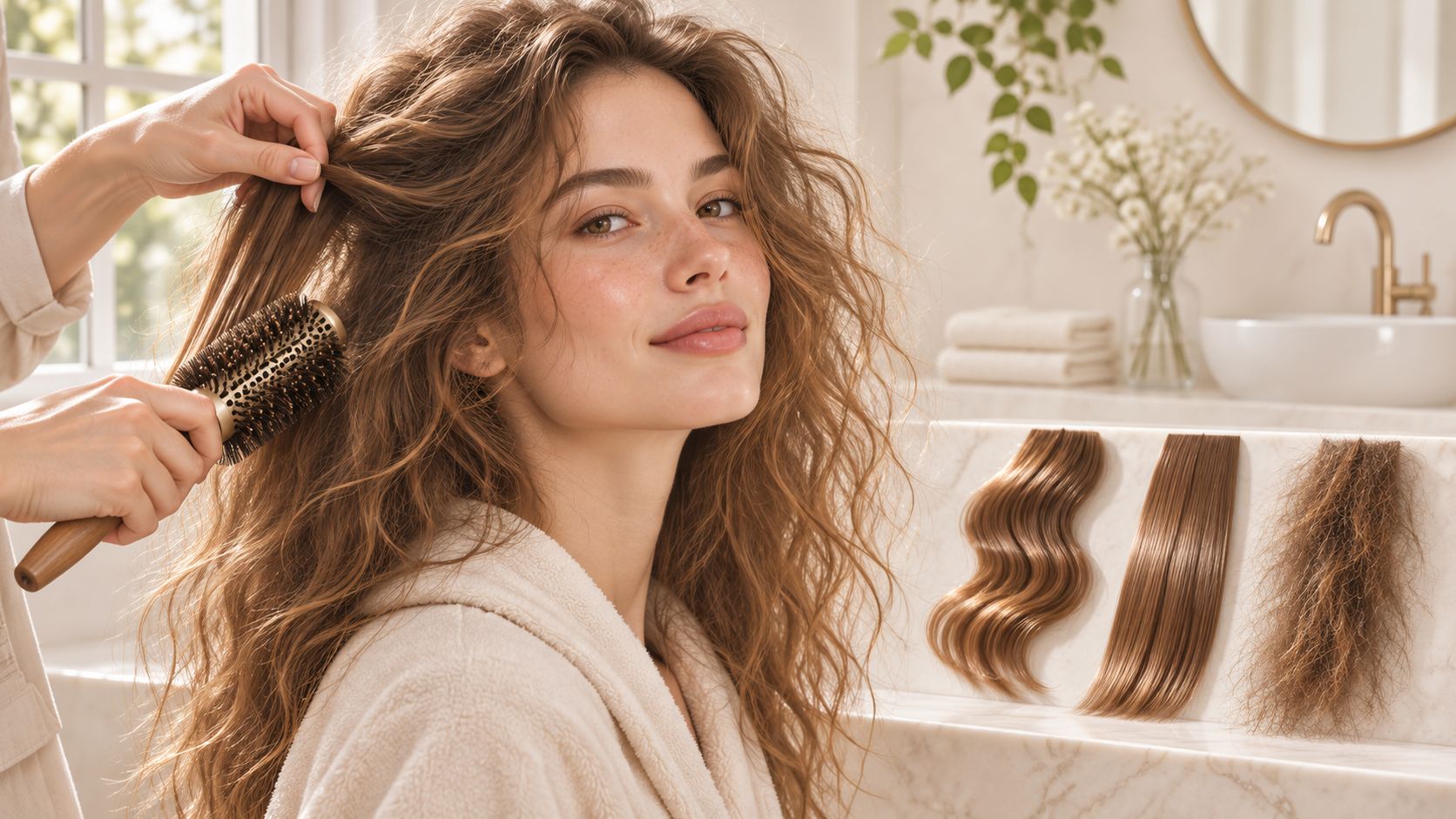
Two rows end with Airy alone, and the reason is timing: once a style is finished, the shaping window has closed. To see the kind of texture both products are aimed at, the image below shows a stylist working a brush through long, wavy lengths.
How to Read the Split
Read the symptom by when it appears. Wave and frizz that show up while the hair is still damp, or that spring back as soon as a brush passes through during blow-drying, come from uneven moisture uptake in the base layer. A finishing film laid over that later will soften the surface and leave the uneven shape underneath untouched. Roughness, dull ends and flyaways that appear only after the hair is fully dry sit on the cuticle, which is where a light film does its work.
ReFa frames the same division. The brand describes Base as a product that “resets” wavy hair and builds a long-lasting smooth base, with 11 amino acids and a keratin coating behind it, while Airy is positioned around concentrated damage care for lengths exposed to heat or chemicals, as the ReFa product news page explains. Neither mist changes hair texture permanently, and neither one works as a structural repair treatment.
The failure case worth knowing: if lengths still look frizzy once Airy has dried, the shape went wrong during the blow-dry, and the fix is Base on the next wash day rather than another pass of Airy today. The reverse also holds. A smooth blowout that turns fuzzy at the ends by afternoon calls for a few pumps of Airy, because the shape underneath is already right.
A worked example makes the order obvious. Say your hair is naturally wavy and you blow-dry it every morning. You spray Base on damp hair, comb it through, dry it smooth. If the crown still lifts by mid-afternoon or the ends look fuzzy once everything has cooled, a few pumps of Airy over the finished style settle it. Nothing goes back under the dryer.
The one-line rule: if the hair is still wet and about to be shaped, use Base. If the hair is dry and already shaped, use Airy.
Some hair needs neither. If yours dries smooth, holds its shape and doesn't fuzz in humidity, you already have a working routine, and adding a mist mostly adds something to wash out.
Fine hair is where dose matters more than product. Start below the standard pump count on both bottles, one or two pumps short, and add only if the hair still looks rough after it dries. A light hand keeps the movement you'd otherwise spray away, and no mist can restore bounce it has already flattened.
If you're weighing other leave-ins against these two, the La Sana hair essence Moist vs Smooth comparison covers how a heavier essence differs from a styling mist.
The Two-Mist Routine and the Slips That Undo It
Order matters more than pump count, and each step has one mistake that ruins it.
- Start on damp hair, not dripping hair. Blot with a towel until the hair feels cool and slightly heavy rather than wet. The slip here is spraying onto soaking hair, which dilutes the product and sends most of it down the drain with the water.
- Spray Base from roots to ends, about ten pumps for long hair. ReFa's guidance specifies approximately ten pumps, equivalent to about 0.8 g, for long hair, as the ReFa Base usage guide states, with less on shorter hair. The common slip is adding two or three extra pumps to fight frizz; that deposits more film instead of more control.
- Distribute with a brush or your hands, then comb through. Work from mid-length to ends and keep the scalp from getting saturated. Skipping this leaves uneven coverage, so one section gets smooth and the next keeps snagging.
- Style while the conditioning layer is still in place. Blow-dry, straighten or shape now, because this is the stage where Base does its work. Spraying it on after styling wastes it.
- Let the style cool and dry completely. Hair that still feels cool to the touch is damp somewhere, and misting over damp hair traps the water you just spent ten minutes removing. Check the crown and the nape; those are the spots that dry last.
- Finish with Airy on dry, styled hair. ReFa's guidance specifies approximately five pumps for long hair, per the ReFa Airy usage guide, sprayed from a short distance with the hand moving. Treating Airy as a substitute for a high-hold hairspray on a humid day is the slip here; it leaves a flexible finish, and a wet commute can push past it.
- Let it dry, then comb through gently. Brush only after the film dries. Touching the hair while the finish is still wet drags the surface and creates the frizz you were trying to remove.
Two slips account for most failed routines: reaching for extra product, or reaching for it earlier than the hair can take it. Extra Base pumps buy film rather than frizz control, and Airy misted over hair that's still damp at the nape locks water under the finish.
Some days the goal is shine and heat protection, and the shape already holds on its own. A spray like Kurobara Tsubaki Oil Hair Water 180ml covers that slot, with camellia seed oil, hydrolyzed silk and birch seed extract in a format aimed at a glossy finish.
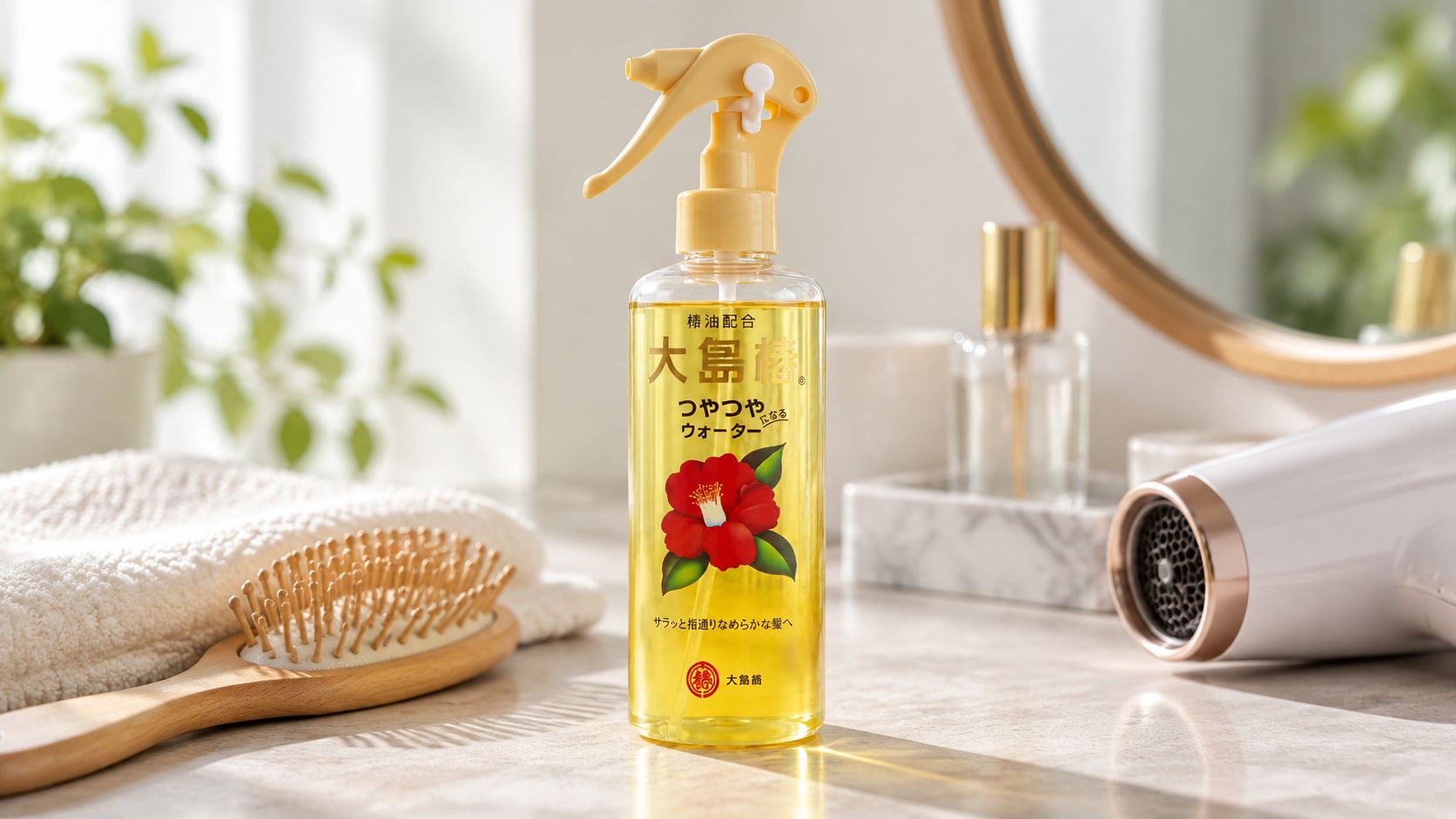
A finished routine should feel like soft, smooth hair that still moves, free of stiffness and heavy residue. Hold that survives a windy commute calls for a different product at the end of the routine. If you're weighing a milk against an oil for that finishing step, this Japanese hair milk vs hair oil comparison sets out which texture suits which hair type.
Why Airy Belongs After the Style
Airy leaves a thin film on the cuticle, and that film is what limits flyaways. Its hydrolyzed keratin and chitosan hydroxypropyltrimonium chloride form a lightweight layer intended to reduce the effects of humidity and static electricity while keeping a soft, non-stiff feel, according to the ReFa Airy usage guide.
The film earns its place at the end of styling for two reasons. It limits moisture exchange between the strand and the air, and it reduces friction between neighbouring hairs. Those are the two forces that turn a smooth blowout into surface frizz by early afternoon, so the payoff is shape retention without weight.
Where the Film Stops Working
Water-soluble styling films soften as the air gets more humid, becoming more pliable rather than more rigid. That is ordinary film behaviour. On a rainy morning, a blowout finished with Airy stays smooth at the surface, though the film will not hold a hard, architectural shape through a wet commute. On diffused waves, a light spray keeps the movement and tames the halo, which is exactly the job you want it doing.
Dosing is where styling mistakes happen. Excess product builds up on the surface and dulls the airy movement the mist is named for. The effect shows up fastest on low-porosity hair that takes up water and product slowly, and on hair that weighs down easily.
Spray one section first, let it dry, then move the hair. If it still swings, you're at the right dose.
That test costs thirty seconds and one section. Run it before treating the whole head, and adjust from there. For a targeted fix on the hairline between washes, the technique in this guide to using Momori Point Hair Mascara for flyaways and a neat part works alongside a finishing mist rather than replacing it.
Patch Testing and Checking the Label
Before the first full application, spray a small amount of each mist on the inner forearm and leave it for 24 hours. Run the two tests on different days so any redness or itching points to one product rather than both.
Then make the test match the routine:
- Test Base under real conditions. Base goes on damp hair, so patch test it right after a shower or on slightly damp skin. That gives the closest read on how your skin handles it at the hairline and the nape, where it sits.
- Test Airy the way you will wear it. Airy lands on dry, styled hair, so the skin it touches is the forehead, temples and back of the neck once the style is set. Apply the patch on clean, dry skin to reflect that timing.
- Check the label on your bottle. Dose, cautions and ingredient lists can change between versions, so the packaging in your hand outranks any pump count you read online. ReFa's official instructions are the reference each time you restock.
- Respect a leave-on product's exposure. Both mists sit at the hairline for hours rather than rinsing away, so a mild reaction can build across the day. Stop use at the first sign of irritation and wash the area.
- Confirm the listing before ordering. If you are unsure which version is currently sold or what the latest label says, the Buy Me Japan customer service team can check the product page with you.
Pick the Right Mist and Start the Routine
Both bottles hold the same 150 mL, so size alone never settles this choice. The decision comes down to where each mist sits in the styling sequence.
- Base goes in before heat, on damp hair, for waves, frizz and an uneven starting point.
- Airy goes on dry, styled hair, for finish, roughness and flyaway control.
- Dose scales with length and density, so a long, thick head of hair needs the full pump count while fine or short hair needs noticeably less.
Start with whichever mist targets your most frequent styling problem. Run the routine for one week and judge it twice: once when the hair is fully dry, and again in the evening after humidity and movement have had their chance. A style that holds to evening means you picked the right bottle. A style that collapses points to a hold problem, and a different product category is the answer.
The current label and ReFa's official instructions remain the reference for dose and use, so check them each time you restock.
If you're still building the rest of the routine around these two, this guide to using hair serum correctly covers where a serum sits relative to a pre-styling mist and a finishing spray.
Buy Me Japan carries a curated range of Japanese hair care, with secure payments, a 10% off coupon for first-time shoppers who sign up, and a customer service team that answers product questions before you order. If you've been weighing up ReFa Heart Mist Airy vs Base, start with the stage your routine is missing. Visit Buy Me Japan to browse the current hair care range and check each product page for the latest label information.


Share:
Canmake Marshmallow Finish Powder vs Abloom: How to Choose