


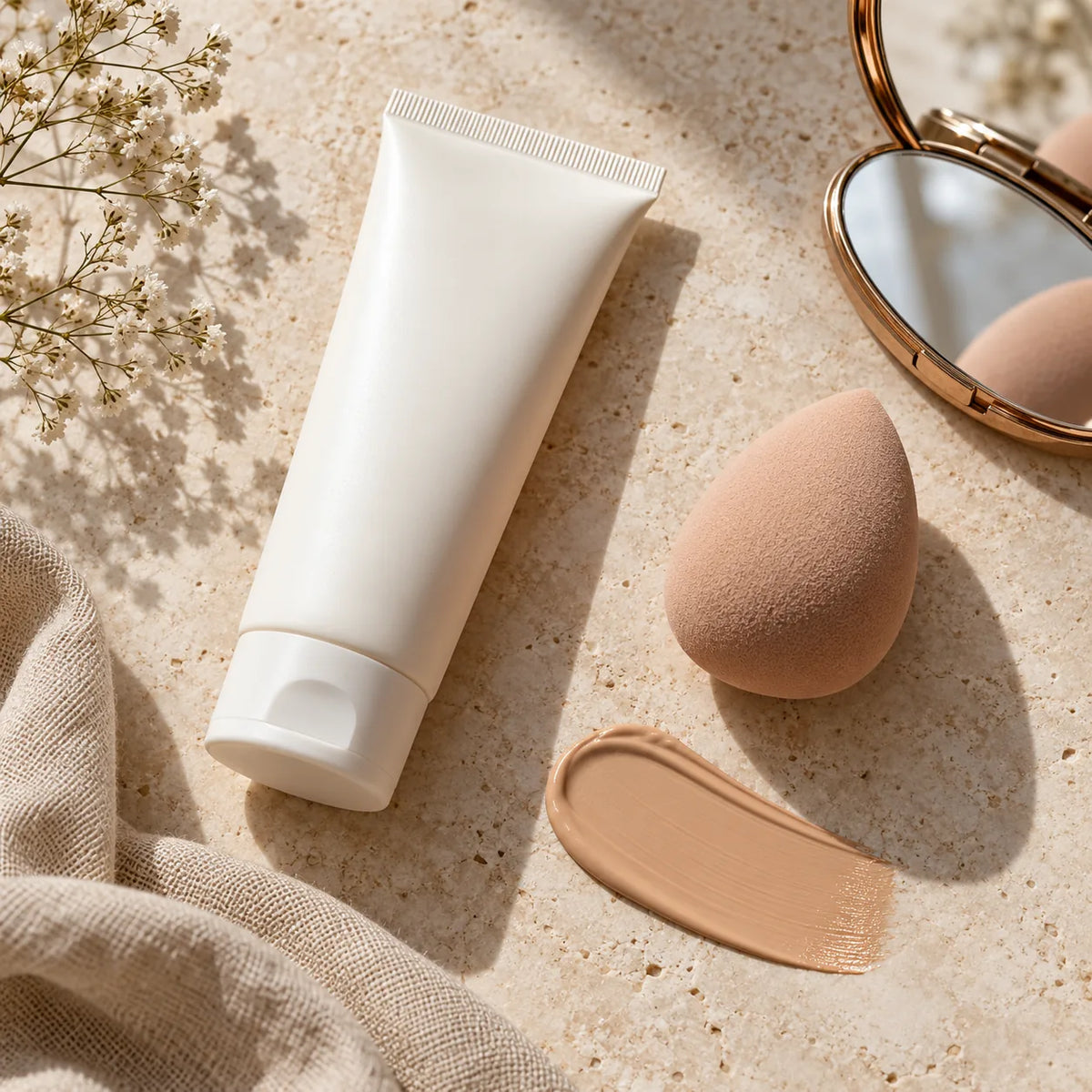
If your sunscreen pills under foundation, the instinct is often to keep switching products. Sometimes the better fix is slower layering. Sunscreen needs a continuous, even layer; makeup should sit on top of it, not replace it or thin it out.
The American Academy of Dermatology recommends applying sunscreen after skin-care products and before makeup. It also advises broad-spectrum SPF 30 or higher and reapplication as directed. See the AAD’s guide to product order. This order is simple, but it gives the sunscreen a chance to form an even layer before you add complexion products.
A low-fuss morning sequence
Start with whatever cleansing your skin actually needs. Apply moisturizer only if you use one, then give it a moment to settle. Apply sunscreen evenly and generously according to its directions; let it set before foundation, concealer or powder. Press or stipple makeup gently instead of rubbing across the sunscreen layer.
If you are running short on time, do not solve the problem by using too little sunscreen. Allowing a few minutes for the layers to settle can help, but there is no single wait time that guarantees success across every formula. Try your routine at home before an important day and note where pilling starts.
Why makeup sometimes rolls up
Pilling can come from applying too much skincare, rubbing repeatedly, or combining textures that do not sit well together. It may also be related to how quickly the layers dry. Simplify: test the sunscreen with fewer layers underneath, use a gentle tapping motion, and avoid layering several primers. If the sunscreen itself irritates you, discontinue it rather than trying to cover the reaction.
A primer with an SPF rating can be part of a routine, but do not assume that the thin layer used for makeup provides the amount of sunscreen protection shown on its label. If you rely on a makeup product with SPF, applying enough for the rated protection may affect how it looks. For dependable coverage, use a dedicated sunscreen layer first and treat foundation or tinted makeup as an additional step.
Three catalog options, with different jobs

Bioré UV Aqua Rich Watery Essence SPF 50+ PA++++ 70g/100g
A sunscreen essence is a useful candidate when you want to see how a lighter sunscreen texture behaves under your foundation. Give it time to settle and test it with your actual makeup rather than relying on claims about a perfect base.

Kanebo ALLIE Chrono Beauty Lasting Primer UV SPF 50 PA++++ 25g
This listing is explicitly a primer UV product, so it is a direct option for readers interested in combining the sunscreen step with makeup preparation. Follow its package directions and do not under-apply in pursuit of a sheer primer finish.

Orbis Perfect UV Liquid Foundation SPF 50 PA++++ 30ml
A foundation with an SPF rating can be convenient, but makeup is easy to apply too thinly to stand in for your full sunscreen layer. Consider this for complexion coverage after sunscreen, not as a reason to skip adequate sun protection.
Keeping protection practical once makeup is on
Reapplication over makeup can be awkward. Plan around the day: if you will be outside for long periods, follow your sunscreen’s reapplication instructions and consider shade, a hat and sunglasses. A powder or setting product should not be assumed to deliver labeled SPF unless you can apply the amount specified.
For a first test, pair one sunscreen with the foundation you already own. If it pills, change one variable at a time—the amount of moisturizer, the application motion or the makeup formula—so you can identify the cause. A comfortable sunscreen that layers well is helpful, but an attractive finish should not come at the cost of adequate coverage.
Try the full combination before an important day
Layering is personal because sunscreens and foundations use different textures and set at different speeds. Try the complete sequence on a regular morning: your usual moisturizer, the sunscreen, then the makeup you plan to wear. Take a photo in daylight if you want to compare shine or pilling later. Change one thing at a time so you can tell whether the issue comes from the moisturizer, sunscreen, primer or foundation.
Use enough sunscreen to cover exposed skin evenly, including the hairline, ears and other areas that are easy to miss. Makeup application is usually much thinner than the amount needed to reach an SPF label, which is why foundation with SPF should not be treated as the sole protection layer. A separate sunscreen step also makes it easier to reapply protection without trying to recreate the entire makeup look.
When reapplying over cosmetics, use the method that the sunscreen label supports and that lets you apply a sufficient amount. Some people remove or touch up makeup and apply sunscreen again; others use a suitable reapplication product alongside shade and a hat. Do not assume a light dusting of powder provides the labeled protection. For long outdoor periods, plan before leaving rather than improvising after the first layer has worn off.
If your skin stings, flushes or develops a rash under makeup, stop the products that trigger it and keep the routine simple. Persistent reactions deserve medical advice. Good layering should make sun protection easier, not turn the morning into a test of how many products you can stack.
A note on sensitive eyes and touch-ups
Makeup can make reapplication feel like a chore, but skipping it all afternoon is not the only option. Plan for the day before you leave: consider a break in the shade, carry your sunscreen, and decide how you will refresh it without dragging tools across the skin. If sunscreen irritates your eyes, check the label and consider a different formula rather than layering more makeup over the area.
For weddings, work events or travel, do a full practice run. Test the sequence in daylight, then see how it looks after several hours. The most useful routine is one you can repeat without rushing, rubbing or cutting down on protection.
Product details and availability can change; follow the current package directions and listing.


Share:
Japanese Sunscreen No White Cast: A Practical Guide
Japanese Sunscreen for Oily Acne Prone Skin: How to Choose