


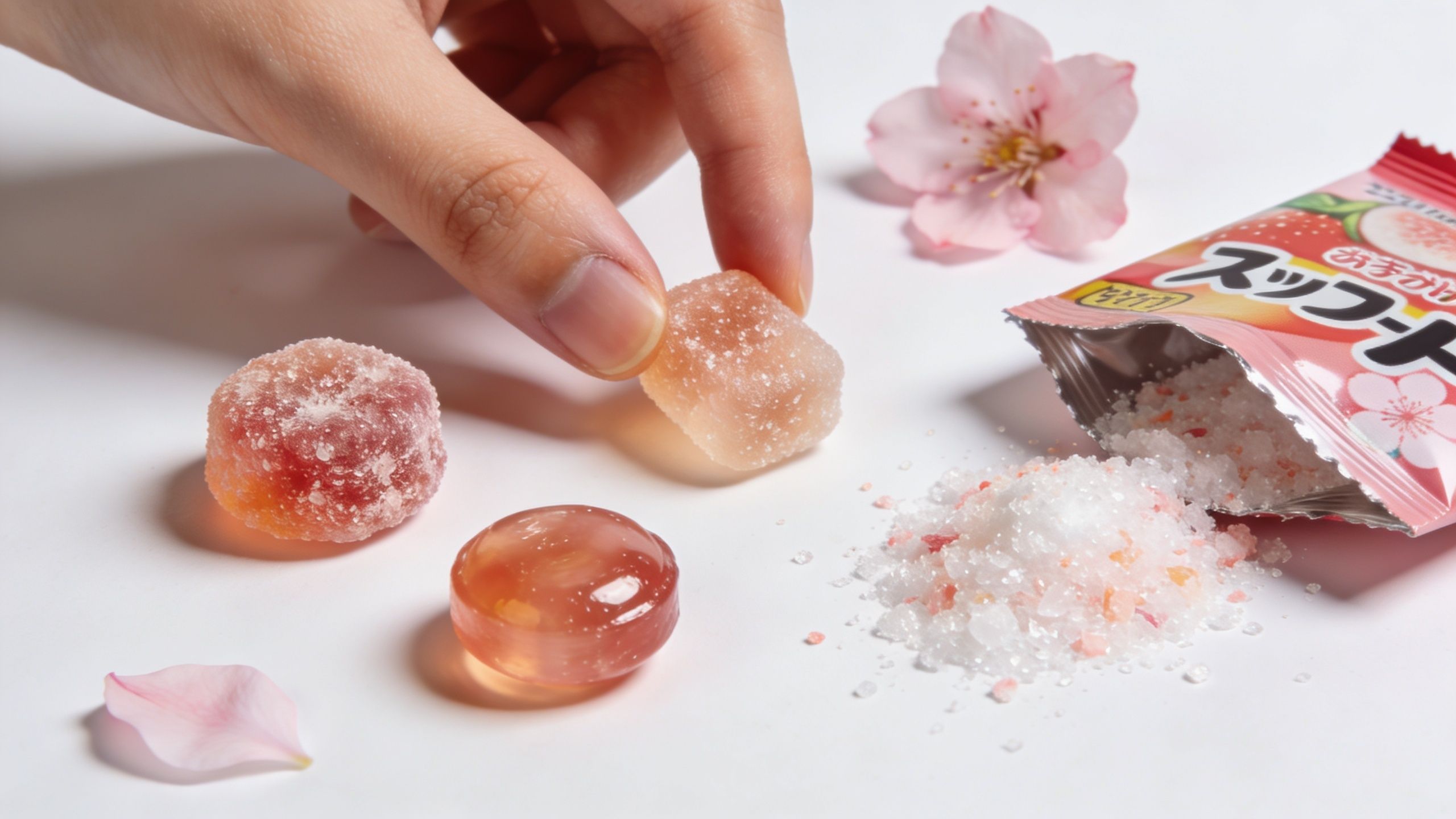
You’re probably here because you’ve seen a brightly colored Japanese candy pack online, noticed the word “sour,” and wondered what kind of sour it really is. Is it a quick lemony tang, the kind that makes your cheeks tighten, or the full mouth-puckering shock that sour candy fans chase?
I had that exact feeling the first time I stood in front of a convenience store candy shelf in Japan. The packages looked playful, but the flavors were surprisingly serious. Some were crisp and sharp like fresh citrus peel. Others carried the deep, salty-tart character of ume, Japanese pickled plum. A few started with a blast of acid and then turned juicy and sweet in the center.
This guide is for anyone who wants to understand sour japanese candy beyond a simple “top picks” list. You’ll get a clear feel for the main candy types, why Japanese sourness tastes so layered, how traditional flavors shape modern sweets, and how to choose one that matches your own sour tolerance.
A Journey into Japan's World of Sour Candy
The first time I wandered into a Japanese convenience store late at night, I only meant to grab tea. Instead, I froze in front of the candy aisle. There were neat rows of gummies, glossy hard candies, fizzy powders, and fruit-shaped sweets in flavors I already knew, like lemon and grape, sitting beside flavors that felt much more local, like ume and ramune.

What struck me wasn’t just variety. It was intention. Japanese sour candy often feels designed as a little tasting experience. The outer layer might sting first, then soften into fruit sweetness, then finish with a clean tart note that makes you reach for another piece.
That layered experience helps explain why this category keeps attracting attention around the world. The global sour candy market was valued at $1.7 billion in 2023 and is projected to reach $2.7 billion by 2030, with Asia Pacific showing the fastest growth, according to IndustryARC’s sour candy market research.
Why Japanese sour candy feels different
A lot of international candy aisles separate sweets into simple camps. Fruity, minty, chocolatey, sour. In Japan, those lines blur a bit more.
You’ll find sour candy that focuses on:
- Texture first by making the chew part of the flavor journey
- Cultural flavor memory through plum, citrus, and soda-inspired profiles
- Controlled intensity so the sourness changes as you eat
Sour candy in Japan often feels less like a dare and more like a crafted progression.
That’s helpful if you’re new to the category. Not every pack is trying to overwhelm you. Some are gentle and refreshing. Some are serious puckering challenges. Some sit right in the middle and balance sweet fruit with a very focused tart edge.
What to pay attention to on your first try
If you’re shopping from outside Japan, the package alone can be confusing. A candy that looks cute can still be aggressively sour. A plain-looking hard candy can hide the strongest acid hit of the bunch.
Three things matter most:
- Format. Gummies, hard candies, and powders deliver sourness differently.
- Flavor family. Lemon, plum, and ramune all create very different impressions.
- Intensity style. Some candies hit all at once. Others build slowly.
That’s where sour japanese candy becomes fun rather than random. Once you know how those pieces fit together, choosing gets much easier.
A Tour of Sour Japanese Candy Types
If you’ve only tried one kind of sour candy before, it’s easy to assume they all work the same way. They don’t. In Japan, the form of the candy changes the entire experience, from the first second on your tongue to the finish.

Gummies that unfold slowly
Japanese sour gummies are often the easiest place to begin. They usually feel less abrupt than hard candy and give you more time to notice the fruit character.
Their texture isn’t accidental. As explained in this technical guide to sour candy production, gummies are commonly made with gelatin or pectin. Gelatin creates an elastic chew that can trap and release sour acids over 45 to 60 seconds, while pectin gives a firmer snap and is 30% more resistant to moisture, which helps export stability.
That difference matters in your mouth. A gelatin gummy feels bouncy and lingering. A pectin gummy feels cleaner and firmer, often with a sharper bite up front.
Common gummy experiences include:
- Juicy fruit gummies with sour sugar on the outside and a sweeter interior
- Dense chewy pieces that hold the tartness longer
- Soft jellies with a gentler, more fragrant finish
If you enjoy texture as much as flavor, gummies are usually the most rewarding starting point.
Hard candies that hit fast
Hard sour candies are where many people meet the strongest end of the category. They often begin with a powdery or crystal-like coating that lands immediately on the tongue.
The sensory pattern is different from gummies:
- sharp opening
- slower dissolve
- sweeter center or base
- lingering tart finish
This style suits people who want that classic cheek-tightening jolt. Japanese brands are especially good at making the transition from intense outer layer to pleasant fruit sweetness feel deliberate rather than messy.
For a nice contrast with other traditional snack textures, it’s also fun to compare them with Japanese rice snacks, which show another side of how Japan builds flavor through texture.
Powders and playful candy kits
Powder-based sour sweets are more interactive. Sometimes you dip a gummy or candy stick into the powder. Sometimes the powder itself fizzes and dissolves quickly. Sometimes the candy asks you to mix or assemble elements before eating.
These are less about endurance and more about play. You taste them in short bursts, and the sourness can feel bright, fizzy, and immediate.
A quick visual helps if you haven’t seen these styles before.
Which format suits your taste
An easy way to understand is:
| Type | Texture | Sour timing | Good for |
|---|---|---|---|
| Gummies | Chewy to firm | Gradual and lingering | Readers who like fruit flavor and texture |
| Hard candy | Smooth with sour coating | Fast opening shock | Fans of strong first-impact sourness |
| Powders and kits | Fizzy, loose, interactive | Quick bursts | Shoppers who want novelty and fun |
Practical rule: If you’re unsure where to start, choose gummies first. They’re usually easier to read, easier to share, and easier to match to your own sour limit.
The Science of Suppai Unpacking the Sour Sensation
In Japan, people often use the word “suppai” to describe something sour. It can mean pleasantly tart, sharply acidic, or wonderfully mouth-wrinkling depending on context. That range is exactly why sour japanese candy can confuse first-time buyers. Two candies may both be labeled sour, but they can behave very differently once you eat them.
Why your mouth puckers
The strongest Japanese sour candies usually rely on a coating of food-grade acids. According to Salon’s report on Japan’s sourest sweets, top products use malic acid and citric acid in a dual-layer approach, with surface pH reaching as low as 2.2. Malic acid creates the first strong shock, while the more water-soluble citric acid extends the tartness after that opening hit.
You don’t need to remember the chemistry names to notice the effect. You feel it as stages:
- First contact brings the sharpest pucker
- A few seconds later the sourness spreads and softens
- After that fruit flavor, sugar, or a sweet center starts to show
That’s why some Japanese candies feel more controlled than blunt. The sourness is built in sequence.
Why lemon and plum don’t sting the same way
Even when two candies are equally “sour” in a broad sense, their flavor shape can be very different. Lemon usually feels bright and direct. Plum often feels deeper, rounder, and sometimes almost savory depending on the formula.
The acid blend works with the flavor profile, not apart from it. A lemon candy may lean into crispness. A grape gummy might use sourness to make the fruit feel juicier. A plum hard candy can push tartness into something more mature and lingering.
Why texture changes the science you taste
People often get confused. They assume sourness comes only from ingredients, but texture changes how fast those acids hit your tongue.
A hard candy delivers sourness right on the surface. A gummy slows release because your chewing gradually exposes more of the coating and interior. That’s one reason the exact same acid family can feel intense in one candy and balanced in another.
If a candy seems “less sour” than expected, it may not have less acid. It may just be releasing it more slowly.
Japanese confectionery makers are especially skilled at this part. The result is a category where flavor, acid, and texture often feel tightly coordinated rather than thrown together.
From Umeboshi to Ramune Iconic Japanese Sour Flavors
If the science explains why sour candy puckers, the flavors explain why Japanese versions are so memorable. Many of them don’t just copy global fruit candy standards. They borrow from drinks, preserved foods, and everyday tastes that are familiar in Japan.

Ume and the appeal of savory tartness
One of the most distinctive flavor families is ume, often linked to umeboshi, the salty-sour pickled plum that many visitors try for the first time in rice balls or traditional meals.
That flavor has deep roots. As noted in Accio’s overview of sour holiday candy brands, umeboshi dates back to the 8th century and was valued by samurai for preservation and digestion. In candy, that heritage gets translated into something smaller and more playful, but the core personality stays. Ume candies often taste tart, slightly salty, and more complex than straightforward lemon sweets.
If you like snacks that feel a little more grown-up, ume is worth trying first.
Yuzu and clean citrus brightness
Yuzu doesn’t always shout. It’s a citrus flavor with a fragrant, almost elegant character that many people notice first in sauces, hot drinks, or desserts rather than candy.
In sour sweets, yuzu tends to feel:
- Aromatic rather than aggressively zesty
- Refined rather than sugary
- Refreshing in a way that works well after meals
For readers who love Japanese beauty and wellness culture, yuzu often has the same appeal as lightly scented bath or skincare products from Japan. It feels bright, clean, and distinctly local.
Ramune and nostalgic soda tang
Ramune is the flavor of one of Japan’s most iconic soft drinks, famous for its marble-stopper bottle and fizzy, candy-like taste. In sour candy form, ramune often brings a soft soda note with tartness that feels airy rather than dense.
If you’ve never opened one of those bottles before, this guide on how to open a ramune gives helpful context for why the flavor carries so much nostalgia.
Ramune sour candy usually suits people who want:
- a lighter, playful profile
- a candy that feels tied to summer festivals
- sweetness balanced by a gentle soda-like tang
Some Japanese sour flavors don’t aim to taste “real fruit” in the strict sense. They aim to recreate a memory, like a cold bottle from a summer matsuri, or festival.
Lemon, grape, and the Japanese twist on familiar flavors
Not every classic flavor is unfamiliar. Lemon remains one of the stars of the category, especially in intense hard candies and chewy gummies. Grape is another favorite, often richer and more perfumed than what many non-Japanese shoppers expect.
The difference is usually in balance. Japanese versions often put more attention on the shift between outer sourness and inner sweetness. Even familiar flavors can feel more precise.
That’s what makes sour japanese candy so enjoyable to explore. You’re not only tasting fruit. You’re tasting how Japan interprets fruit, soda, and preserved flavors through its own snack culture.
Navigating the Top Sour Candy Brands
When people first shop for sour japanese candy, they often search by flavor. That works, but brand style matters just as much. Two lemon candies from different makers can feel completely different in shape, texture, and intensity.
Nobel and the hard candy shock school
If you enjoy the classic “brace yourself” kind of sour candy, Nobel is one of the names to know. Its reputation is closely tied to bold coatings and a strong opening impact, especially in lemon and plum styles.
Nobel’s sour plum profile is also a good example of how Japanese candy can connect modern sweets to older food traditions. You get something playful, but also something rooted in a taste many people in Japan already understand.
Meiji and the juicy gummy approach
Meiji tends to appeal to shoppers who want fruit expression and chew, not just acid intensity. Products in this lane often feel more rounded, with a sour edge that supports the juicy center rather than overpowering it.
That makes Meiji a useful starting point for beginners and for anyone who wants candy that’s sour but still easy to snack on casually.
Kanro and a more polished fruit feel
Kanro is often associated with gummies that feel carefully textured and fruit-led. The sourness is present, but it usually serves the overall experience rather than dominating it.
If you care about mouthfeel, Kanro is the sort of brand that can make you notice details like:
- how the coating dissolves
- how quickly sweetness appears
- how firm or tender the chew feels
Why these brands matter globally
Japanese brands aren’t just niche curiosities anymore. The global sour candy market was valued at $1.7 billion in 2023 and is projected to reach $2.7 billion by 2030, with the Asia Pacific region leading growth, according to IndustryARC’s market research. Brands such as Nobel and Meiji are part of that momentum because their products stand out for distinct flavor design and consistency.
Here’s a quick brand-style snapshot:
| Brand | Best known for | Typical experience |
|---|---|---|
| Nobel | Intense hard candies, strong plum and lemon styles | Fast sour hit, memorable pucker |
| Meiji | Fruit-forward gummies | Juicy center, approachable tartness |
| Kanro | Refined gummies and fruit balance | Controlled sourness, texture focus |
For shoppers browsing Japanese snack stores online, this is often a better way to choose than chasing popularity alone. Think of brands as different sour personalities. One is sharp and challenging. Another is juicy and easygoing. Another feels polished and balanced.
How to Choose and Enjoy Your Sour Candy
A good sour candy match depends less on hype and more on how much sourness you prefer. That sounds obvious, but many people buy the strongest-looking pack first and end up disappointed. The better approach is to use a simple sour scale and choose from there.

As noted in this guide to Japanese sour candies, many guides flatten the category into one broad idea even though taste preferences can vary by region in Japan. Choosing by intensity is often more useful than choosing by trend.
A simple sour scale
- Mild tang Choose softer gummies, especially citrus or ramune styles. These usually give you tartness without overwhelming the fruit.
- Serious pucker Try sugar-coated gummies with firmer texture or hard candies that open sharp and mellow later. This is the sweet spot for many sour candy fans.
- Extreme challenge Go for acid-coated hard candies, especially strong lemon or plum profiles. These are the ones that make you pause after the first few seconds.
Pairings that make the flavor clearer
Sour candy doesn’t have to be eaten on its own. Pairing changes what you notice.
A few easy ideas:
- Yuzu with green tea for a clean, refreshing finish
- Ume candy after a savory snack because the tartness feels deeper
- Ramune candy with sparkling water if you want the soda note to stand out
- Lemon hard candy on a warm day when that sharpness feels extra crisp
For readers who like lighter snack habits, this article on healthy Japanese snacks is a useful companion because it shows how Japanese snacking often includes variety and portion awareness.
Small habits that improve the experience
Don’t rush the first piece. Let it sit for a second and notice whether the sourness is surface-heavy, chew-driven, or aroma-led.
That one habit can tell you almost everything about a candy’s style.
Also check the ingredient list if you have dietary preferences. Gummies may use gelatin or pectin, which can affect both chew and suitability for different diets. Storage matters too. Keep sour candies sealed and away from heat so the coating stays dry and the texture doesn’t soften too much.
Your Guide to Buying Authentic Sour Candy from Japan
When you buy Japanese candy from outside Japan, the main question isn’t only which flavor to choose. It’s whether you’re getting an authentic domestic product, in good condition, with the texture and packaging the maker intended.
That matters more with sour candy than many people expect. Coatings can clump if storage is poor. Gummies can lose their ideal bite. Seasonal or harder-to-find flavors may never appear in local stores abroad.
One practical route is using a specialist retailer that ships from Japan and focuses on Japanese goods across food, beauty, and lifestyle categories. Buy Me Japan is one example. If you’re browsing there, search by specific candy brand names such as Meiji, Nobel, Kanro, Glico, Lotte, or UHA Mikakuto, and compare product descriptions closely.
A broader overview of shopping options can also help. This guide on where to buy Japanese snacks is useful if you’re deciding between marketplaces, specialty importers, and Japan-based stores.
A few buying habits make the process smoother:
- Search by brand first if you already know whether you prefer gummies or hard candy
- Read flavor names carefully because plum, soda, and citrus styles can sound similar in translation
- Check pack type since sharing bags and individually wrapped candies create different experiences
- Buy a small mix on your first order instead of committing to one extreme flavor
Authentic Japanese candy is most enjoyable when you can compare styles, not just chase the sourest option.
Frequently Asked Questions About Japanese Sour Candy
Are Japanese sour candies suitable for vegetarians
Some are, but not all. Gummies may use gelatin, while others use pectin. Check each product listing and ingredient label carefully before buying.
How should I store sour japanese candy
Keep it sealed in a cool, dry place away from heat and humidity. That helps preserve the sour coating and keeps gummies from becoming too soft.
Do these candies stay fresh for a long time
Shelf life varies by product. Hard candies usually keep their quality well, while gummies are more sensitive to heat and moisture. Always check the package date details on the listing or label.
Are they okay for children
That depends on the child and the candy style. Some sour Japanese candies are mild and fruity, while others are very sharp. It’s better to start with gentler gummies than intense hard candies.
For more ideas on shopping for authentic pantry and snack items, you can browse this guide to Japanese food products online.
If you’re ready to try sour japanese candy for yourself, Buy Me Japan is a practical place to browse authentic Japanese snacks shipped from Japan. Start with a mix of gummy and hard candy styles, compare flavors like lemon, ume, and ramune, and choose based on the sour level that matches your taste.


Share:
Japanese Whiskey Brands: An Expert Buying Guide (2026)
Explore Sesame Oil Japan: Types, Uses & Quality