


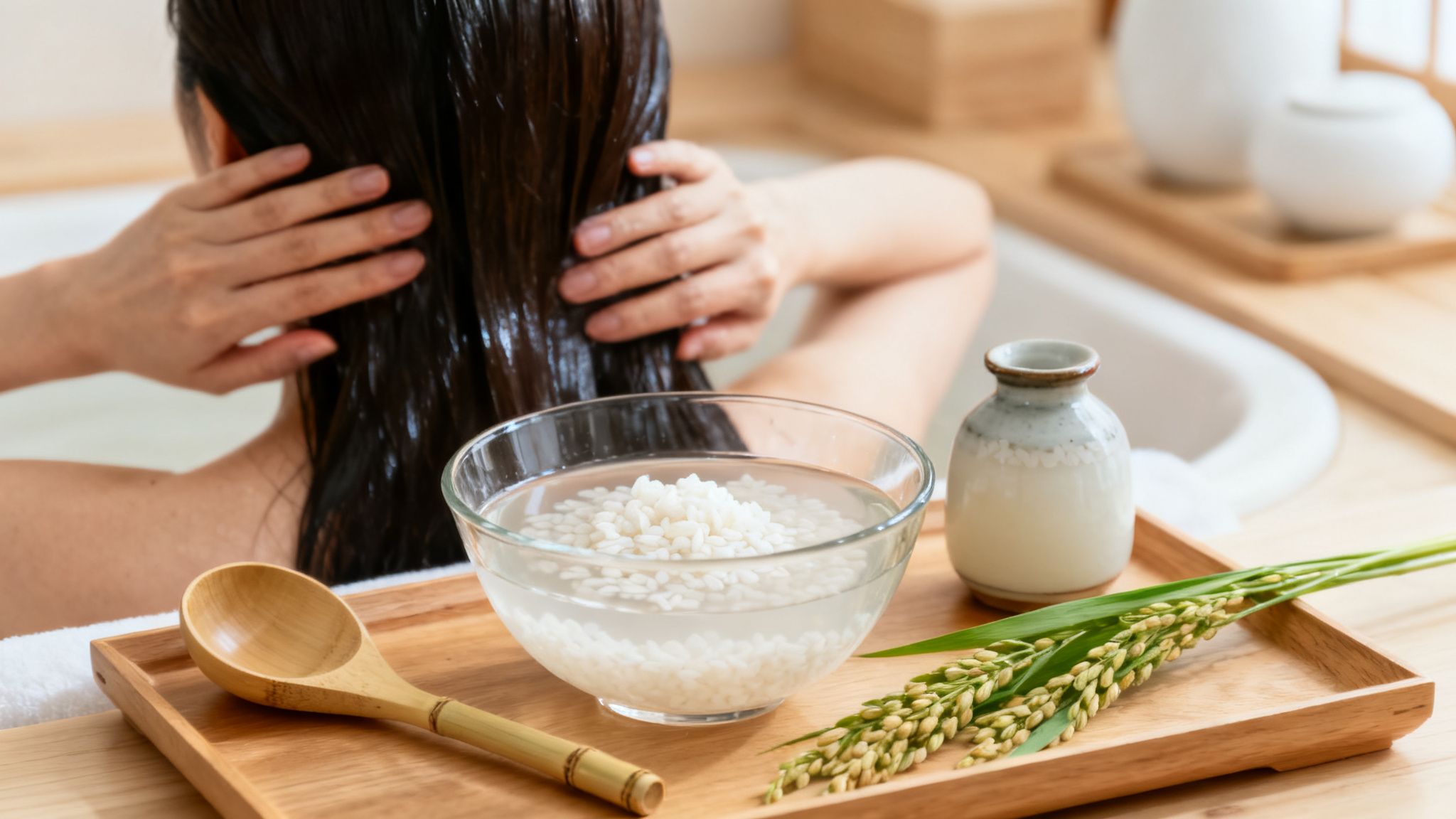
The tradition of using rice water for hair, a secret to the smooth, shiny locks seen in Japanese beauty for centuries, is surprisingly simple. At its core, it involves rinsing or soaking rice, collecting the starchy water, and applying it as a hair treatment. For those trying it at home, the process usually involves a brief 10-15 minute application after shampooing, followed by a thorough rinse.
This guide will explain how to use rice water for hair safely, exploring its deep roots in Japanese culture. You will learn about the potential benefits, the correct way to make and apply it, and the common mistakes to avoid. Most importantly, we'll compare the popular DIY method to modern, expertly formulated Japanese hair care products, which offer a safer and more effective way to achieve beautiful hair.
What Is Rice Water?
Rice water is the cloudy liquid left behind after rice has been soaked or rinsed. This seemingly simple byproduct is rich in nutrients that are released from the rice grains, including amino acids, vitamins B and E, minerals, and antioxidants. These components are what make rice water a popular natural treatment for hair care.
There are two main types of rice water you will hear about: plain and fermented. Plain rice water is made fresh and used immediately, offering a mild treatment. Fermented rice water is left to sit for a day or two, allowing it to sour. This fermentation process lowers the pH and may increase the concentration of some nutrients, but it also carries significant risks of bacterial growth and scalp irritation when made at home.
The key nutrient often associated with rice water is inositol, a carbohydrate that can penetrate damaged hair and leave a protective coating, even after rinsing. This is one of the primary reasons it is used to improve hair's texture and shine.
Traditional Japanese Use of Rice in Hair Care
The practice of using rice water is deeply embedded in Japanese history, dating back to the Heian period (794 to 1185 AD). Court ladies of this era were renowned for their beautiful, floor-length black hair, known as kurokami. Their secret was bathing their hair in the starchy water left from rinsing rice, a ritual that kept their hair strong, smooth, and healthy.
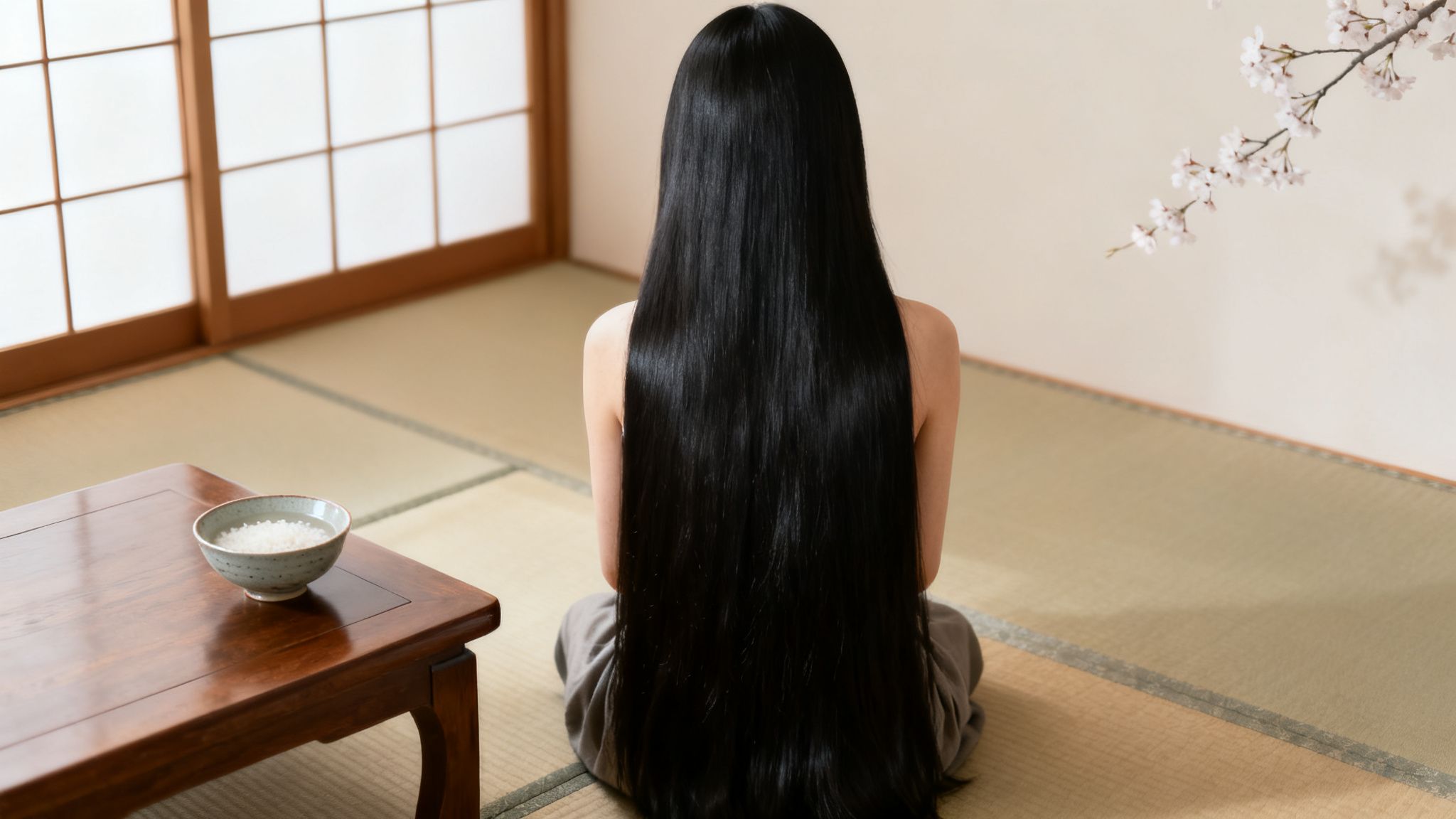
This ancient wisdom has been passed down through generations, forming a cornerstone of traditional Japanese beauty. Over time, this simple, natural practice has evolved. Modern Japanese beauty brands have harnessed the essence of this tradition, transforming the simple rice rinse into sophisticated, scientifically formulated hair care products. This transition honors the past while providing the safety, stability, and consistent results that modern users expect.
Potential Benefits of Rice Water for Hair
While individual results can vary, rice water is commonly used in hair care routines for several potential benefits. It's important to approach these with realistic expectations, as DIY treatments are not a guaranteed solution for everyone. Using cautious wording like "may help" is key, as scientific backing for many claims is still emerging.
Here are some of the commonly reported rice water hair benefits:
- Smoother hair feel: Inositol, found in rice water, can coat the hair strand, which helps to reduce friction and makes hair feel smoother to the touch.
- Improved manageability: By smoothing the hair cuticle, rice water can make hair easier to detangle and comb through, reducing breakage from brushing.
- Temporary shine enhancement: A smoother hair surface reflects more light, which may give your hair a temporary boost in shine and luster.
- Support for moisture balance: The amino acids in rice water may help support the hair's protein structure, which plays a role in retaining moisture.
How to Make Rice Water at Home (Safe Method)
If you wish to try a traditional rice water hair rinse, it is essential to prioritize safety. The simplest methods are the best, as they minimize the risk of bacterial contamination and scalp irritation.
Simple Rinse Method
This is the fastest and most straightforward way to prepare rice water, ideal for beginners.
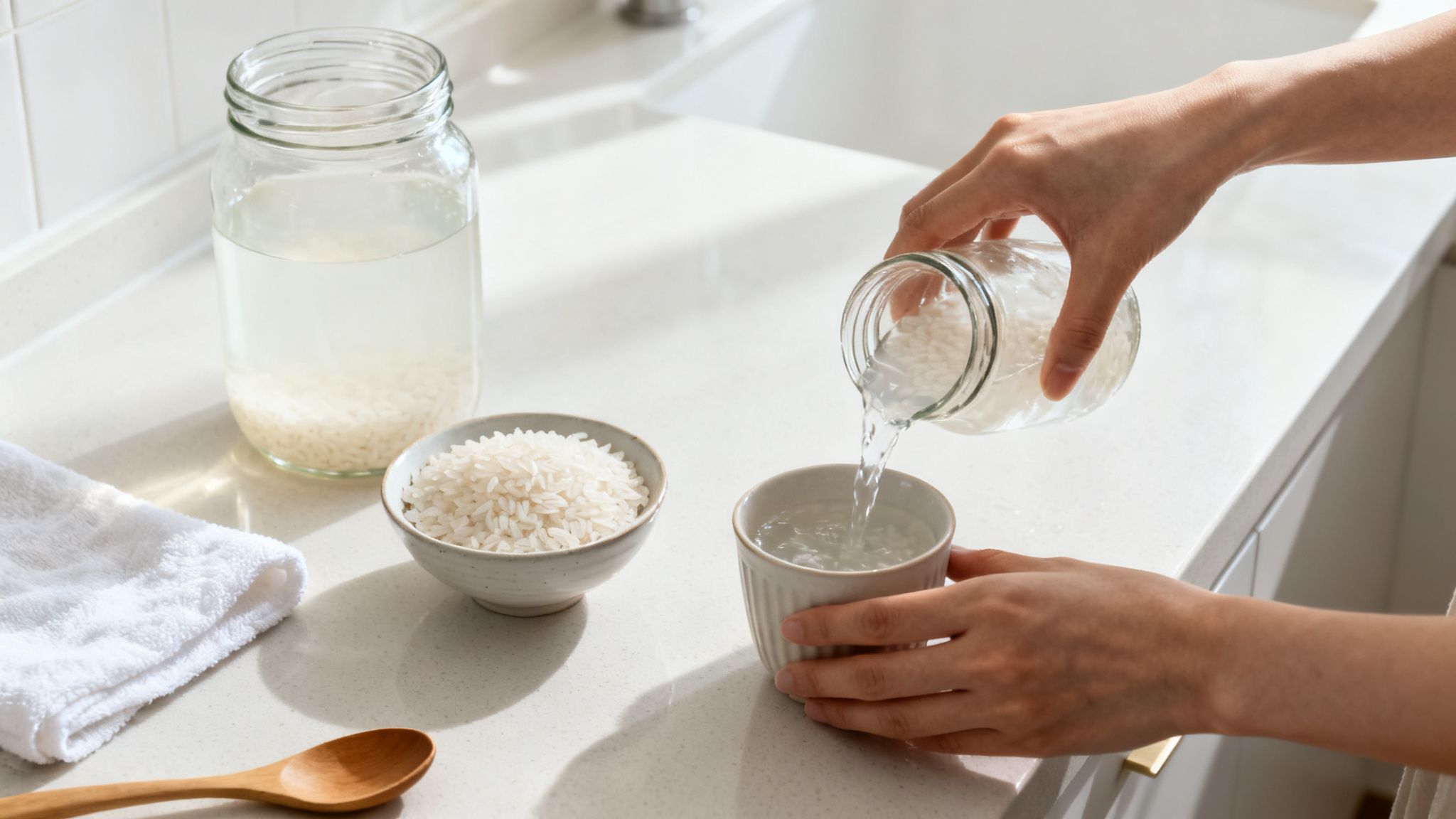
- Take half a cup of uncooked rice and rinse it once under cool water to remove any surface dirt.
- Place the rinsed rice in a bowl with two cups of fresh water.
- Let it sit for up to 30 minutes, swirling it occasionally until the water becomes milky.
- Strain the water into a clean jar or spray bottle.
Short Soak Method
This method is very similar and extracts slightly more nutrients.
- Follow the same steps as the rinse method, but allow the rice to soak for up to two hours.
- After soaking, stir the rice and strain the water into a clean container.
Fermentation Overview with Warnings
Fermented rice water is made by leaving the strained rice water at room temperature for 12 to 48 hours. While some believe this enhances its properties, it dramatically increases the risk of harmful bacteria growth. The strong sour smell is a clear indicator of this process. Due to the potential for scalp irritation and other issues, we recommend sticking with fresh preparations.
Safety Notes
- Risk of protein overload: Using rice water too frequently can lead to a buildup of protein, making hair feel dry and brittle. This is especially true for low-porosity hair.
- Scalp sensitivity: The pH and concentration of homemade rice water can be inconsistent. Always do a patch test, and avoid using it on an irritated or sensitive scalp.
- Storage limitations: Fresh rice water is perishable. It must be used immediately or stored in an airtight container in the refrigerator for no more than 24 hours. If it smells sour, discard it.
How to Use Rice Water for Hair
Correct application is crucial for achieving positive results and avoiding damage. Follow this step-by-step guide for a safe rice water rinse hair treatment.
- Wash Your Hair: Start by shampooing your hair as you normally would and rinse it thoroughly.
- Apply the Rice Water: Gently pour the freshly made rice water over your hair, focusing on both the scalp and the lengths. A spray bottle can make this application more even.
- Massage and Wait: Gently massage the rice water into your scalp and hair for a minute or two. Let it sit for no longer than 15-20 minutes.
- Rinse Thoroughly: Rinse the rice water out completely with cool or lukewarm water. It is important not to leave any residue, as this can lead to stiffness.
- Condition if Needed: Follow up with your regular conditioner if your hair feels like it needs extra moisture.
How Often to Use
For most hair types, using a rice water rinse once a week is sufficient. Overuse can lead to protein overload. Those with very fine or low-porosity hair may find that once every two weeks is a better frequency.
Who Should Avoid Frequent Use
Individuals with very dry, brittle, or protein-sensitive hair should use rice water with caution. If your hair feels stiff or straw-like after a treatment, it's a sign that you should use it less often or focus more on moisturizing products.
Common Mistakes When Using Rice Water
A DIY rice water rinse can be a beneficial addition to your routine, but several common mistakes can lead to undesirable results. Understanding these pitfalls can help you avoid damaging your hair.
- Using it too often: The most common mistake is overuse. Applying rice water more than once a week can cause protein overload, making hair stiff and prone to breakage.
- Leaving it on too long: Letting rice water sit on your hair for longer than 20 minutes does not increase its benefits. Instead, it increases the risk of dryness and protein buildup.
- Applying to sensitive scalps: If your scalp is already irritated or sensitive, applying an inconsistent, unpreserved DIY treatment can make the problem worse.
- Improper storage: Using rice water that has been left out at room temperature or stored too long in the fridge is unsafe. The risk of bacterial growth is high, which can lead to scalp issues.
These challenges are why many people turn to professionally formulated Japanese hair products as a more reliable and safer alternative.
Japanese Rice-Based Hair Products vs DIY Rice Water
While a homemade rinse can be a fun experiment, modern Japanese rice-based hair products offer a superior alternative in terms of safety, consistency, and effectiveness. Brands in Japan have perfected the art of using rice extract for hair, creating balanced formulations that international users can rely on.
Here’s a clear comparison:
| Feature | DIY Rice Water | Japanese Rice-Based Hair Products |
|---|---|---|
| Stability and Safety | High risk of bacterial spoilage. Must be used within 24 hours. | Formulated in sterile labs with safe preservatives for a long shelf life. |
| Balanced Formulations | A single-ingredient treatment that can be harsh or drying. | Blended with other hydrating and nourishing ingredients for complete care. |
| Consistency of Results | Nutrient concentration and pH level vary with every batch. | Scientifically balanced to deliver predictable and reliable results every time. |
| Convenience | Requires fresh preparation for each use. | Ready to use straight from the bottle, saving time and effort. |
Choosing a professionally formulated product from a trusted source like Buy Me Japan ensures you receive an authentic, high-quality item shipped directly from Japan. This eliminates the guesswork and risks associated with DIY methods.
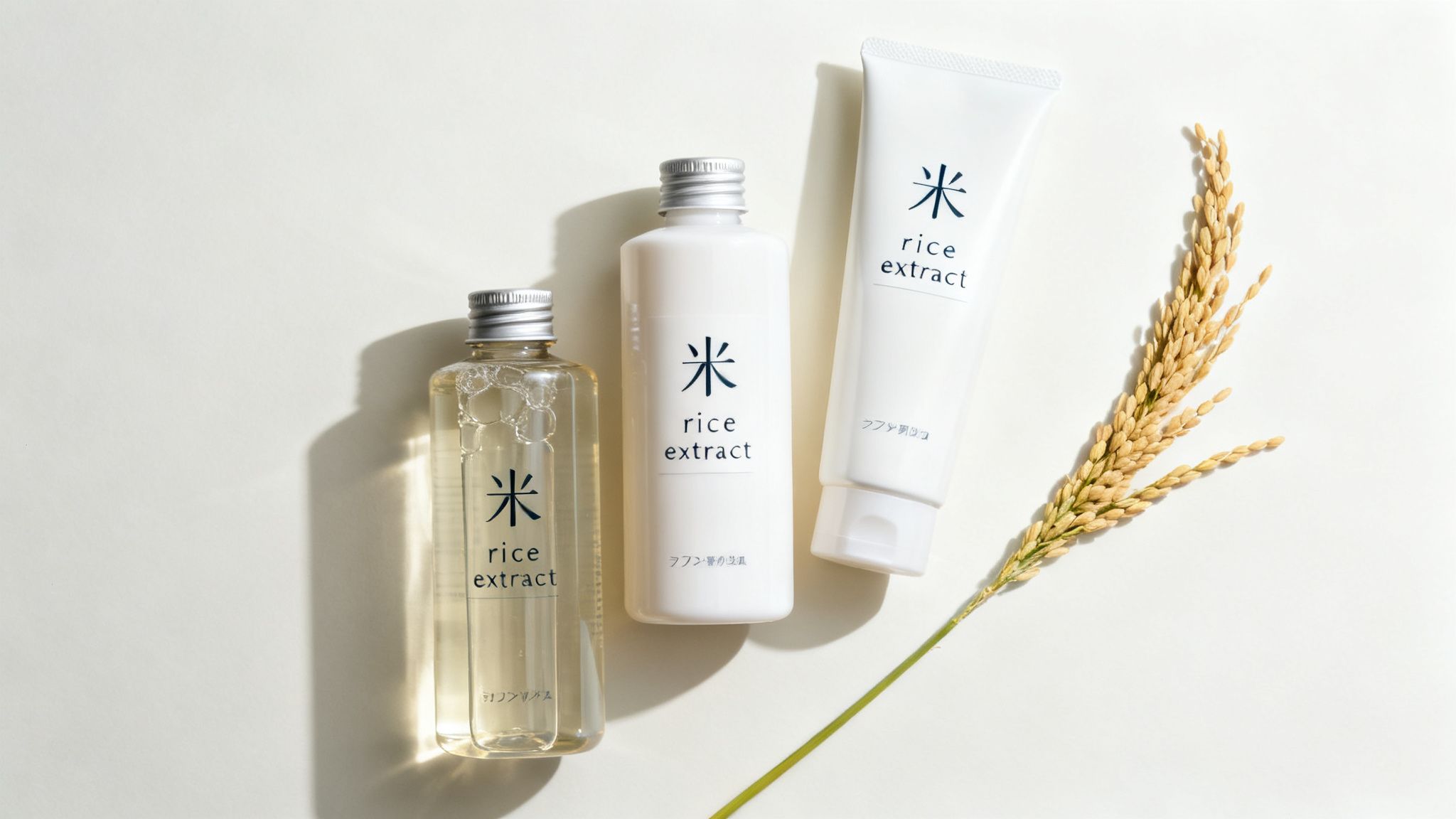
Recommended Japanese Rice-Based Hair Care Categories
Japanese hair care offers a variety of products that harness the power of rice in sophisticated ways. Integrating these into your routine is a modern, convenient way to enjoy the benefits of this traditional ingredient.
Rice Extract Shampoos
These shampoos are designed to gently cleanse while providing strengthening and smoothing benefits. The rice extract helps to fortify the hair from the root, making them suitable for those with normal to fine hair seeking improved shine and resilience.
Moisturizing Conditioners with Rice Ingredients
Conditioners containing rice bran oil or fermented rice extracts provide deep hydration without weighing hair down. They are excellent for detangling, reducing frizz, and leaving hair feeling exceptionally soft. These are ideal for anyone with dry, dull, or easily tangled hair.
Leave-in Treatments or Hair Masks
For a more intensive treatment, look for hair masks and leave-in conditioners with rice proteins or extracts. These products are formulated to repair damage, improve elasticity, and protect against breakage. They are particularly beneficial for hair that is colored, heat-styled, or naturally coarse.
Simple Weekly Rice Hair Care Routine
Creating a balanced routine is key. You don't need to use rice-based products every single day. Here’s a simple weekly plan:
- Wash Day Routine: Use a Japanese rice extract shampoo and conditioner one to three times per week, depending on your hair's needs.
- Optional Rice Water Use: If you choose to use a DIY rice water rinse, limit it to once a week on one of your wash days. Apply it after shampooing and before conditioning.
- Alternate with Regular Care: On other wash days, use your regular moisturizing or clarifying shampoo and conditioner to ensure your hair maintains a healthy balance of protein and moisture.
- Weekly Mask: Once a week, swap your regular conditioner for an intensive hair mask with rice ingredients to provide deep repair and nourishment.
FAQs
Can rice water damage hair?
Yes, if used improperly. Overuse can lead to protein overload, causing hair to become dry, stiff, and brittle. Improperly stored homemade rice water can also harbor bacteria, which may irritate the scalp.
How often should I use rice water?
For most hair types, once a week is the recommended maximum frequency for a DIY rinse. Professionally formulated shampoos and conditioners with rice extract are balanced for more regular use.
Is fermented rice water better?
While fermentation may alter the pH and nutrient profile, it significantly increases the risk of bacterial contamination in a DIY setting. For safety, fresh rice water is a much better choice for home use.
Are Japanese rice shampoos safer than DIY?
Yes, absolutely. Japanese hair products are formulated by experts in sterile environments, are pH-balanced, and contain safe preservatives to prevent spoilage. This makes them a far safer and more reliable option than homemade preparations.
Conclusion
Understanding how to use rice water for hair is about finding the right balance between tradition and modern safety. While a DIY rice water rinse can be a fun experiment, it comes with risks of protein overload and bacterial growth. For consistent, safe, and effective results, the expertise of Japanese beauty brands offers a superior solution.
Japanese hair care companies have perfected the use of rice extracts, blending them into stable, pH-balanced, and nourishing formulas. This approach delivers all the potential benefits without any of the guesswork.
We invite you to explore the world of authentic Japanese hair care at Buy Me Japan. Discover our curated collection of rice-based shampoos, conditioners, and treatments, shipped directly from Japan to your door. Embrace the time-honored wisdom of Japanese beauty with the safety and convenience of modern science.


Share:
How to Prevent Hair Breakage: A Japanese Hair Care Guide
Light Cleansing Oil: The Japanese Secret to Flawless Skin