

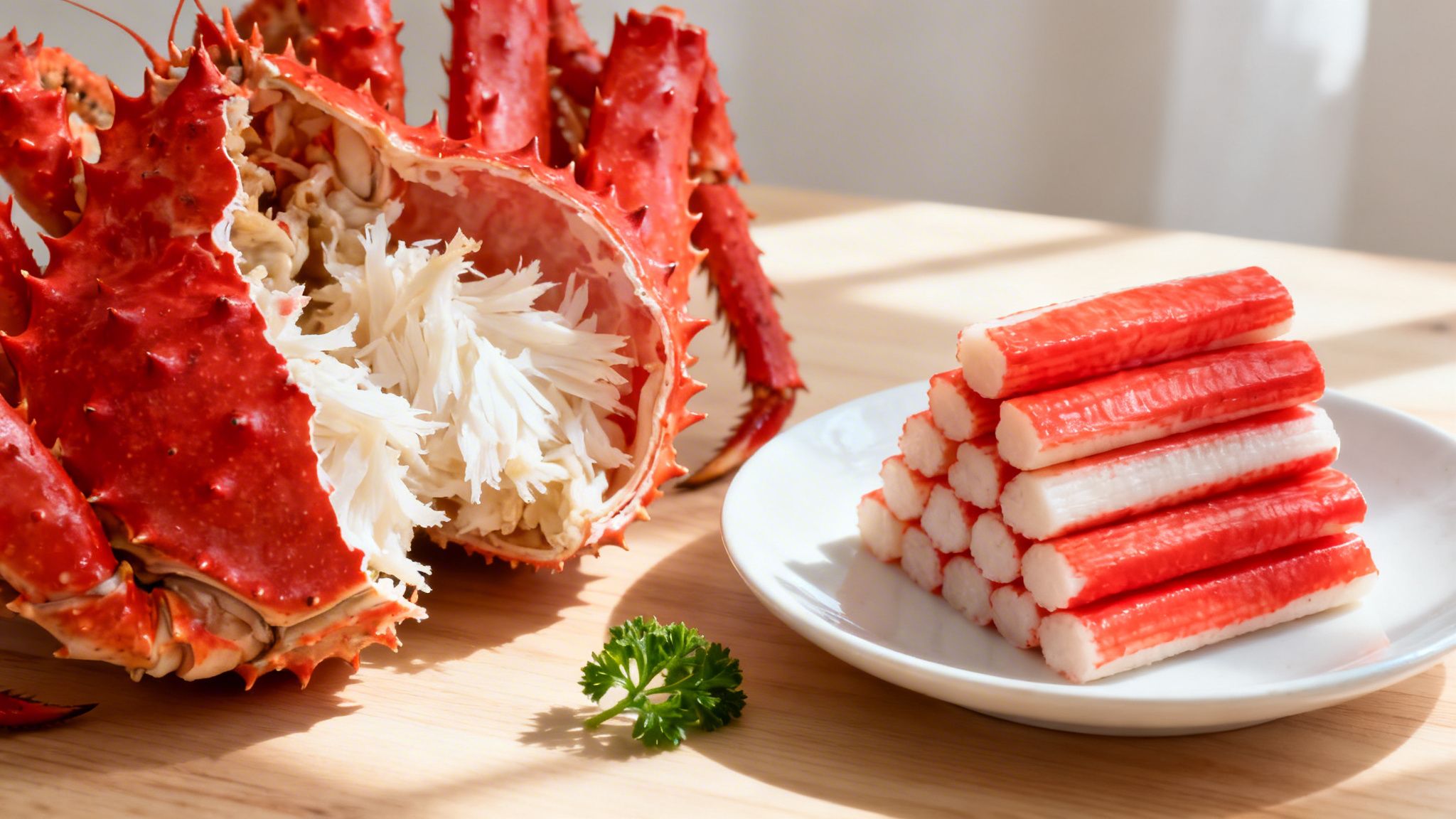
You’ve seen it a thousand times: the bright red-and-white stick peeking out from a California roll. That’s kani. But here's where things get interesting. While 'kani' (かに) is just the Japanese word for crab, what you're eating in your sushi is almost always kanikama—a clever imitation crab made from fish.
This guide will explain exactly what kani is, how it's made, and why this Japanese food innovation is so popular around the world. We'll show you the difference between real crab and its imitation counterpart and give you tips for using it in your own kitchen.
Kani 101: What's Really in Your Sushi?
If you love Japanese food, you've definitely come across kani. It's the star of the show in the famous California roll and a go-to topping for countless other maki and nigiri creations. But for many people, there's a bit of a mystery around what it actually is.
Let's clear it up. In Japan, ordering kani will get you real, delicious crab. But outside of Japan (and even in many casual spots within it), the term has become shorthand for kanikama (カニカマ), which literally means "crab-imitation." This isn't a cheap knock-off; it's a brilliant food innovation that came out of Japan in the 1970s. The goal was to capture the sweet flavor and satisfying texture of real crab meat, but in a form that was much more affordable and versatile.

So, What Is Kanikama Made Of?
The secret to kanikama is a base ingredient called surimi. Think of it as a highly refined fish paste. It's typically made from a mild-tasting white fish like Alaska pollock. The fish is deboned, minced, and washed multiple times to remove fat and any "fishy" flavor, leaving behind a pure, protein-rich paste.
This surimi is then mixed with things like starch, egg whites, and crab flavoring before being steamed and formed into the familiar leg-like shape. A strip of red food coloring is added to complete the look.
This smart blend of taste, convenience, and value is what turned kanikama into a global sensation. It perfectly captures the resourcefulness of Japanese cuisine—something you can see in our deep dive on what makes Japanese food so powerful.
Stick with us, and we'll walk you through everything you need to know about kani, including:
- The fascinating story of how kanikama was invented.
- A clear breakdown of real crab versus its imitation counterpart.
- Creative ways to use kani in Japanese dishes far beyond sushi.
- Tips for picking the best quality kani products for your own cooking.
By the time you're done, you'll see why this clever creation is so beloved and feel ready to bring its authentic flavor into your own kitchen.
Kanikama: The Genius of Japanese Food Innovation
 While we might see imitation crab as a simple convenience food today, its creation is a true story of Japanese ingenuity. Back in the 1970s, kanikama was born from a brilliant solution to a common challenge: how could the luxurious taste of crab be made affordable for everyone? The secret was found in a centuries-old food called surimi.
The process is a masterclass in food science. It starts with a mild white fish, usually high-quality pollock, which is minced into a paste. This paste is then washed repeatedly, a critical step that removes almost all the fat and any "fishy" flavor. What's left is a pure, neutral-tasting protein paste—the surimi.
Think of this surimi as a blank canvas. From here, food artisans add just the right ingredients: starch to bind it together, egg whites to create that bouncy, springy texture, and a delicate blend of flavorings to mimic the subtle sweetness of real crab meat. The mixture is then shaped and steamed, perfectly replicating the flaky, fibrous texture of a real crab leg. The finishing touch? A bit of red food coloring to give it that signature look we all recognize.
A Masterpiece of Food Technology
Kanikama is so much more than just a clever recipe. It was a massive leap forward in food manufacturing that turned a premium experience into an everyday ingredient, launching a global industry in the process. It perfectly captures a core value in Japanese food culture: achieving amazing flavor and quality through meticulous technique.
This commitment to quality transformed an affordable ingredient into a delicacy that has captured markets worldwide. Japan, the birthplace of kanikama, remains a key hub for its production.
The success of kani speaks for itself. In Japan alone, the processed crabstick market is projected to hit USD 289.20 million by 2026, which is about 16.25% of the total market across Asia. It's a testament to the lasting appeal of this clever innovation.
From Innovation to Your Kitchen
This deep-rooted dedication to craftsmanship isn't just for food. It’s a philosophy that runs through all of Japanese product creation, from advanced skincare like Shiseido Elixir to everyday essentials. It's exactly what guides our selections for you here at Buy Me Japan. We believe in bringing you items that are not just authentic, but also represent the very best of Japanese skill and thoughtfulness.
Learning about these techniques is a fantastic way to deepen your appreciation for Japanese cuisine. If you're inspired to learn more, our guide on the fundamentals of Japanese cooking is a great place to start. By sourcing our products directly from Japan, we make sure that legacy of excellence is delivered right to your door.
Real Crab vs. Imitation Kani: A Practical Guide

When you see the word kani on a menu, the first question that often comes to mind is: "Is it real crab?" This can lead to some confusion, but deciding between genuine crab (kani) and its imitation counterpart (kanikama) is simpler than you might think. It’s not about one being better than the other—it's about knowing which one is right for the dish you have in mind.
Think of it like choosing between different types of cooking oil. You wouldn't use your finest extra virgin olive oil for deep-frying, right? Similarly, real crab and kanikama each have their own time and place to shine. Let's break down the differences so you can cook with confidence.
Taste and Texture Showdown
The most immediate differences you'll notice are in the flavor and feel. Real crab meat is wonderfully delicate, with a flaky texture that practically melts in your mouth. It has a complex, sweet flavor with a subtle hint of the ocean that’s truly special. This is an ingredient you want to showcase, not hide.
On the other hand, high-quality kanikama brings a completely different experience. It’s firm, with a satisfyingly bouncy and slightly fibrous pull, similar to slow-cooked meat. Its flavor is a consistent, mild sweetness designed to mimic crab without overpowering everything else in the dish. That pleasant sweetness is a key part of the Japanese flavor profile, which you can read more about in our guide explaining what umami flavor is.
The best part? Its sturdiness means it holds its shape beautifully, making it perfect for sushi rolls, salads, or hot-pot dishes where delicate crab would just fall apart.
A simple rule of thumb: If you want the crab itself to be the star of the show, go with real kani. If you need a durable, textured ingredient that adds a touch of sweetness to a mixed dish, kanikama is your best bet.
Real Crab (Kani) vs. Imitation Crab (Kanikama)
To make choosing even easier, this table breaks down the fundamental differences between authentic crab meat and the popular imitation crab sticks (kanikama). Use it to decide which one fits your recipe, budget, and flavor goals.
| Feature | Real Crab (Kani) | Imitation Crab (Kanikama) |
|---|---|---|
| Main Ingredient | 100% genuine crab meat. | Surimi (white fish paste), usually pollock. |
| Taste Profile | Sweet, briny, and complex with a distinct "ocean" flavor. | Mildly sweet, savory, and consistent. |
| Texture | Delicate, soft, and flaky. | Firm, bouncy, and fibrous. |
| Price | Significantly more expensive; a premium ingredient. | Very affordable and budget-friendly. |
| Best For | Simple preparations: steamed legs, crab cakes, garnish. | Mixed dishes: sushi rolls, salads, hot pots, dips. |
Ultimately, both have earned their rightful place in the culinary world. One offers a premium, nuanced experience, while the other provides incredible versatility and value.
Nutrition and Culinary Roles
Looking at them from a nutritional angle, real crab is a fantastic source of high-quality protein, vitamins, and omega-3 fatty acids. Just be mindful that it can be higher in cholesterol and sodium, depending on how it's prepared and which type of crab you're eating.
Kanikama, especially high-quality versions, is a brilliant low-fat and low-cholesterol protein source. Made from lean white fish like pollock, it's a smart and healthy option for everyday meals. When you're shopping, check the label to ensure surimi is one of the first ingredients listed. This is a good sign you’re getting a product with more fish protein and fewer fillers, making it a versatile and budget-friendly way to add flavor and nutrition to your cooking.
How to Use Kani in Japanese Cooking
When most people think of kani, they picture it sitting on a block of sushi rice. But in Japan, especially in home kitchens, that's just the tip of the iceberg. The real magic of kani—particularly the imitation crab known as kanikama—is how incredibly versatile it is. It’s a staple ingredient that brings a splash of color and a hint of seafood flavor to countless everyday meals.
One of the most beloved and common ways you'll find it is in a creamy kani salad. It’s a simple, refreshing side dish you'll see everywhere from bento boxes to family dinners. The kanikama is shredded and tossed with crisp cucumber, Japanese mayo, and maybe some sweet corn. It doesn't turn to mush, giving you that satisfying bite against the rich dressing.
Beyond Salads and Sushi
But don't let its success in cold dishes fool you. Kanikama is just as brilliant when things heat up, and because it’s pre-cooked, it’s a fantastic shortcut for adding flavor fast.
-
In Hot Pots (Nabe): On a cold evening, nothing beats a simmering pot of nabe. Tossing in a few kani sticks near the end of cooking adds a pop of vibrant red and a subtle, sweet seafood note to the broth.
-
In Egg Custards (Chawanmushi): Chawanmushi is a delicate, savory steamed egg custard, and kanikama is a classic addition. The red and white pieces look beautiful suspended in the silky-smooth custard, adding flavor that perfectly complements the dashi base.
-
As a Tempura Ingredient: This is a fun one. Simply batter and deep-fry whole kani sticks for a seriously tasty appetizer. The outside gets unbelievably crispy, while the inside becomes soft and steamy.
Because it’s so affordable and convenient, kanikama is a true friend to any busy cook. You can toss it into fried rice or noodle stir-fries at the last minute or even just serve it with a dipping sauce as a quick snack. It’s an easy way to get a touch of the sea into your meal without the fuss or cost of fresh crab.
What really makes kanikama so great is that it fits in anywhere. Whether it's the star of a cold, tangy salad or a colorful addition to a hot, comforting soup, it brings a consistent texture and flavor that just works.
Getting to know these recipes is a fantastic way to bring the taste of everyday Japan into your own kitchen. Many of these dishes rely on a good, flavorful broth. If you want to make that foundational element from scratch, be sure to check out our guide on how to make dashi stock. When you start with high-quality kanikama straight from Japan, you’re using an ingredient that Japanese home cooks trust for their own families.
Kani's Journey from Japan to a Global Phenomenon
What started as a clever bit of Japanese food science didn't stay in Japan for long. In a surprisingly short time, kanikama—the imitation crab we know and love—went from a domestic solution to a global staple. It’s a classic story of how a brilliant Japanese idea can find a home on dinner plates all over the world.
This wasn't just a lucky break. The global rise of kanikama went hand-in-hand with the world's growing fascination with Japanese food. As sushi bars started popping up from New York to London, people discovered kani. Its mild, sweet flavor and affordable, pre-cooked convenience made it the perfect gateway. Suddenly, dishes like the California roll were accessible to everyone, helping turn an once-exotic cuisine into a weekly favorite for millions.
The Asia-Pacific Boom
While kani made waves in the West, its success story is most dramatic across the Asia-Pacific. As economies in the region grew, so did a new middle class. People had more money to spend but less time to cook, creating a huge demand for food that was convenient, high-quality, and delicious. Kanikama fit the bill perfectly.
Countries like China and Thailand embraced imitation crab with incredible enthusiasm, incorporating it into far more than just sushi. You'll find it everywhere, from sizzling street food stalls to comforting family hotpots. It's a fantastic example of how a Japanese product can seamlessly adapt to and even enrich other food cultures.
The sheer scale of this growth is mind-boggling. The Asia-Pacific region now leads the world in both making and eating kani. The market here is expected to climb from $1,864.19 million in 2026 to an incredible $2,801.77 million by 2034. To put that in perspective, China alone is projected to hit a market value of USD 752.54 million in 2026, making up over 42% of all processed crabstick sales in Asia. You can explore more on this incredible expansion in this report from Fortune Business Insights.
From a single Japanese invention to a multi-billion dollar industry, kani's journey is a powerful testament to its universal appeal. It's much more than a substitute; it's a major food innovation that has earned its spot in kitchens worldwide.
This story of global success really speaks to the quality behind authentic Japanese food science. By sourcing our products directly from Japan, we at Buy Me Japan make sure you get to experience the same ingenuity that made kani a phenomenon, delivered right to your door.
How to Choose and Store Quality Kani
 Bringing home high-quality kani is the secret to making truly delicious Japanese dishes. But with so many options out there, how do you spot the good stuff? It's easier than you might think. A little know-how can make you a savvy shopper, ensuring you get the best flavor and texture every time.
The most important clue is right on the ingredients list. Flip the package over and look for one thing: surimi (fish paste) should be the very first ingredient. This confirms the product is built on a foundation of real fish protein, not just cheap fillers.
Reading the Label Like a Pro
As you compare different brands, a few other details will tell you a lot about the quality. Look for kanikama with minimal added starches, like wheat or potato starch. While a tiny bit helps with the texture, too much starch results in a gummy, pasty product that completely misses that satisfying, flaky bite of real crab.
Also, take a look at the colorants used. You'll often find that premium Japanese brands use natural options like paprika extract for that signature red coloring on the outside. This small detail is a good sign that you're holding a quality product made with care.
By choosing products that put fish content first and keep fillers to a minimum, you're getting kanikama with a much better taste and a more pleasant, springy texture. This is what makes all the difference in a kani salad or your favorite sushi roll.
Proper Storage for Optimal Freshness
Once you get your kani home, storing it correctly is simple, but it’s absolutely essential for keeping it fresh.
-
Refrigeration is Key: Treat it like any other seafood product. Keep your packaged kani in the coldest part of the fridge until you're ready to use it.
-
Use Promptly After Opening: Once the seal is broken, try to use the kani within 2 to 3 days. To keep the sticks from drying out, seal the package back up as tightly as possible or, even better, move them to an airtight container.
With these tips, you can take the guesswork out of buying and storing this incredibly versatile ingredient. Knowing what to look for on the label makes it much easier to confidently explore the world of Japanese cooking. For an even broader selection, you can discover more high-quality Japanese food products online, shipped straight from Japan to guarantee you always get the real deal.
Common Questions About Kani
Even with all the delicious ways to enjoy kani, you might still have a few questions. Let's tackle some of the most common ones so you can choose and enjoy your crab with confidence.
Is Kanikama (Imitation Crab) Healthy?
A question I get asked all the time is whether kanikama is a healthy choice. The short answer is yes, a good quality one certainly can be.
Kanikama is essentially a low-fat, low-cholesterol protein crafted from real fish, usually pollock. The key is to read the ingredient list. You want to see surimi (the fish paste) listed first, with very few fillers, starches, or added sugars.
Can You Eat Imitation Crab Sticks Raw?
Absolutely! This is one of the best parts about kanikama's convenience. The imitation crab sticks are fully cooked during the surimi process, so they're completely safe to eat straight out of the package.
This ready-to-eat nature makes them perfect for quick meals. Think easy sushi rolls, quick salads, or even a simple crab sandwich without ever having to turn on the stove.
What Makes Imitation Crab Red?
That familiar reddish-orange stripe on the outside of kanikama is purely for looks, designed to mimic the appearance of a real cooked crab leg.
The color doesn't come from the fish. Instead, producers use safe, food-grade colorants. Many of the best Japanese brands use natural sources like paprika or annatto extract, which gives the crab stick that beautiful, appetizing look.

Share:
What Is Mirin Sauce? Your Guide to This Japanese Staple