


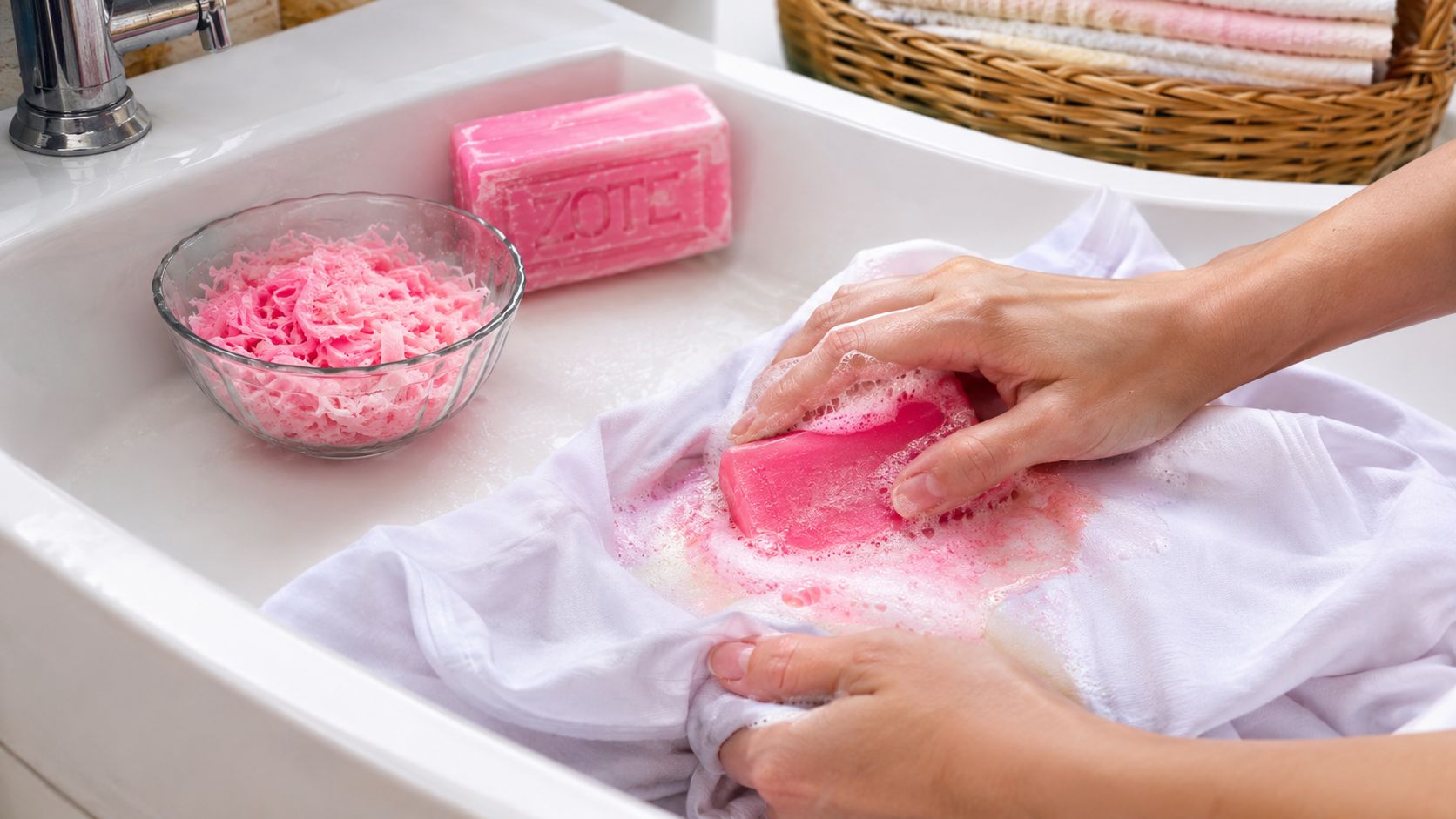
Tienes una mancha de grasa en la camisa escolar, una salpicadura de comida en el mantel o un cuello oscuro que el lavado normal no consiguió limpiar del todo. Ahí es donde saber cómo usar Zote marca la diferencia. Esta colorida barra mexicana para lavar la ropa suele tratarse como un jabón multiusos, pero funciona mejor cuando la usas de forma selectiva y le das suficiente contacto con el tejido.
Esta guía aborda la fórmula de Zote, enfocada en el lavado de ropa, el pretratamiento directo de manchas, el lavado a mano, la preparación para lavar a máquina, las precauciones según el tejido y la importante cuestión de si debe usarse sobre la piel. Si estás acostumbrado a los productos japoneses para el cuidado de la piel y del hogar, aquí se aplica el mismo principio: utiliza cada producto para la tarea para la que fue diseñado.
Qué convierte al jabón Zote en un básico para lavar la ropa
Una camisa blanca puede salir de la lavadora con un tenue cerco en el cuello, mientras la manga de un niño aún muestra restos del almuerzo y un paño de cocina conserva la grasa. Zote se ganó un lugar en los cuartos de lavado porque su barra grande puede frotarse directamente sobre estas manchas concentradas, sin convertir una mancha sencilla en una rutina complicada.
La Corona lanzó Zote en 1970. Las fuentes relacionan su creación con Esteban González Padilla y describen una barra económica y de gran tamaño, diseñada para lavar la ropa del hogar en México. Su origen sigue siendo importante hoy: Zote se desarrolló para lavar tejidos y eliminar manchas, no para ofrecer la sensación suave y fácil de enjuagar que se espera de un jabón cosmético. La historia de Zote de Mexico News Daily repasa el paso de la producción manual inicial a la fabricación industrial y señala que se mantuvo la fórmula original.

Por qué la barra elimina la suciedad grasosa
Los análisis de ingredientes describen Zote como un jabón elaborado principalmente a base de ácidos grasos. Un desglose estima aproximadamente un 72 % de base de ácidos grasos y un 18 % de agentes alcalinos, con un rango de pH de alrededor de 9,8 a 10,2 durante el uso como pretratamiento. Un resumen independiente, basado en datos de seguridad, identifica el seboato de sodio y el cocoato de sodio como componentes principales, que representan entre el 66 % y el 75 % de la barra, junto con un 2 % a 4 % de glicerina. Las cifras aparecen en este análisis de ingredientes del jabón Zote.
Esa estructura alcalina ayuda a desprender el aceite, la suciedad corporal y los residuos de comida. También explica el mejor rendimiento de la pastilla sobre una mancha en comparación con un jabón de baño suave. Enjuaga bien y mantén Zote en su función adecuada como producto para lavar la ropa.
Un producto doméstico con alcance internacional
Actualmente, Zote llega a compradores de mercados como EE. UU., Ghana, China y Corea. Su formato de pastilla grande es adecuado para cuellos, puños, lavado a mano y la limpieza general del hogar, lo que ayuda a explicar que siga siendo reconocido fuera de México.
Para quienes comparan las pastillas de lavandería tradicionales con las pastillas de jabón natural japonés, las fórmulas y los usos previstos ofrecen un contexto útil. Las pastillas japonesas para el cuidado personal están hechas para la piel, mientras que Zote sigue siendo ante todo un producto para tratar telas. Esa distinción es la comprobación práctica de seguridad: la popularidad y el aroma agradable de un producto no lo convierten en un sustituto de un limpiador facial o corporal.
Cómo pretratar manchas con jabón Zote
Para la mayoría de las manchas cotidianas, el pretratamiento directo es la forma más controlada de usar Zote. Aplicarás el jabón exactamente donde se concentra la suciedad, en lugar de esperar que una carga completa de lavado distribuya uniformemente una pastilla sólida.

Empieza revisando la etiqueta de cuidado y humedeciendo únicamente la zona manchada. Frota la pastilla directamente sobre la tela hasta que veas espuma. Trabaja el jabón entre las fibras en lugar de pasarlo superficialmente, y, cuando sea práctico, da la vuelta a la prenda para tratar ambos lados.
Una rutina confiable para tratar manchas
- Humedece ligeramente la mancha. Concentrar la humedad en la mancha evita que el jabón se extienda innecesariamente por toda la prenda.
- Frota hasta que se forme espuma. Aplica una presión constante, pero no frotes agresivamente las telas delicadas. Los cuellos, puños, camisas de algodón, ropa deportiva y textiles de cocina suelen tolerar más acción mecánica que los adornos frágiles o los tejidos finos.
- Deja actuar el jabón. Las guías prácticas coinciden en un tiempo de acción de 5 a 30 minutos, como se describe en esta guía de pretratamiento con Zote. Las manchas habituales de comida, bebidas, aceite y césped suelen necesitar unos 10 a 15 minutos, mientras que las manchas antiguas de grasa, césped o comida pueden requerir 30 minutos o más.
- Lava normalmente. Enjuaga la zona tratada o coloca la prenda directamente en la lavadora, según la prenda y la cantidad de jabón utilizada. No dejes una capa gruesa de jabón en barra en las fibras después del lavado.
El chocolate es un buen ejemplo porque combina residuos de alimentos con grasa. Para un método más específico, especialmente en manchas delicadas o antiguas, consulta esta guía sobre cómo tratar las manchas de chocolate.
Regla práctica: Trata la mancha como una pequeña zona de limpieza. Usar más jabón en toda la prenda no significa automáticamente obtener mejores resultados.
El método localizado funciona porque el jabón alcalino entra en contacto con la suciedad en una concentración más alta. Es especialmente útil antes de un ciclo normal con detergente, pero no sustituye por completo el lavado. Zote es menos eficaz con manchas de tinta y tintes, ya que frotar puede extender el color en lugar de eliminarlo.
Para conocer otra perspectiva sobre la limpieza del hogar que incluye un ingrediente de cocina conocido, consulta cómo usar vinagre de arroz.
Instrucciones para lavar a mano y a máquina
Lavar a mano te permite controlar directamente la temperatura del agua, la fricción y el enjuague. Lavar a máquina es más práctico, pero el jabón sólido necesita prepararse antes de entrar en el ciclo. Una barra frotada dentro del tambor no se distribuirá tan uniformemente como una solución disuelta, especialmente en un programa con agua fría.
Lavado a mano con virutas o una solución dosificada
Para lavar a mano, ralla aproximadamente una cucharada de virutas de Zote en un galón de agua, usando la proporción descrita en esta guía de lavado. El agua tibia ayuda a dispersar las virutas. Remueve hasta que la solución sea lo más uniforme posible, añade las prendas y déjalas en remojo durante al menos 30 minutos antes de lavarlas.
Usa movimientos manuales para aflojar la suciedad y luego enjuaga bien. La ventaja es el control. Puedes dejar de frotar en cuanto la tela esté limpia y comprobar si queda jabón en las costuras, los puños o las zonas más gruesas.
Lavado a máquina sin trozos sólidos
Las indicaciones para lavar a máquina están menos estandarizadas. Las recomendaciones habituales van de una a dos cucharadas de escamas por carga normal, mientras que algunas instrucciones aconsejan disolver el Zote rallado en agua caliente y añadir la solución directamente al tambor en lugar de al cajetín del detergente. El análisis de The Spruce sobre Zote destaca esta diferencia práctica en torno a la dosificación, la colocación en el tambor, los dispensadores, el agua fría y las máquinas de alta eficiencia.
Para una carga normal, disuelve las escamas antes de añadirlas al tambor. Esto reduce la posibilidad de que queden restos sólidos, de que el jabón se distribuya de manera desigual o de que se obstruya el dispensador. Quienes usan agua fría deben tener especial cuidado, ya que las escamas sin disolver pueden quedarse más fácilmente en la tela.
Una máquina de alta eficiencia y una carga de telas mixtas requieren un enfoque prudente. Usa Zote principalmente como tratamiento previo y después ejecuta el ciclo normal de detergente recomendado para la máquina y la ropa. Las manchas intensas de grasa y las basadas en proteínas suelen beneficiarse de esa combinación de jabón localizado, lavado mecánico y enjuague completo.
Atajo para lavar a máquina: Ralla el jabón con antelación, disuelve solo la cantidad que necesites para la carga actual y coloca la solución líquida en el tambor en lugar de usar un cajetín diseñado para detergentes líquidos o en polvo.
Las herramientas de lavandería también necesitan limpieza. El mismo hábito de disolver y enjuagar que ayuda a las prendas también es importante cuando estás aprendiendo a limpiar brochas de maquillaje. Para un producto independiente para el cuidado de la piel, la Crema medicada Yuskin I para la picazón de la piel, 110 g contiene crotamitón, difenhidramina y ácido glicirretínico, además de glicerina y aceite de oliva, y se describe como libre de esteroides.

Tipos de manchas, cuidado de las telas y uso seguro
Zote funciona de forma más predecible con manchas domésticas naturales, como las de comida, bebidas, aceite y hierba. Estas manchas contienen residuos que la estructura alcalina del jabón y el frotado directo pueden ayudar a aflojar. Un cuello grasiento y una camiseta deportiva manchada de hierba son usos razonables. Una fuga de tinta de bolígrafo no lo es.
Las etiquetas de cuidado de la prenda siguen teniendo prioridad. Prueba el jabón en una zona oculta antes de tratar un área visible, especialmente si la prenda es oscura, teñida, delicada o tiene acabados decorativos. Evita presionar la barra directamente contra encajes frágiles, adornos sueltos, detalles de cuero o superficies estampadas delicadas.
| Situación | Enfoque práctico |
|---|---|
| Derrame reciente de comida o bebida | Humedece la zona, enjabona ligeramente, déjala reposar brevemente y luego lávala |
| Grasa o suciedad corporal | Trabaja el producto en las fibras y revisa ambos lados antes de lavar |
| Hierba en ropa deportiva lavable | Aplica un pretratamiento localizado y luego usa un ciclo de lavado normal |
| Tinta o transferencia de tinte | Elige un método específico para la mancha en lugar de depender de Zote |
| Tejido delicado | Haz primero una prueba en una zona pequeña y frota lo mínimo |
Frotar demasiado es un error común. Puede maltratar las fibras, agrandar la mancha o dañar la prenda antes de que el jabón tenga tiempo de actuar. Dejar en remojo durante demasiado tiempo también puede dejar residuos, así que enjuaga bien después del pretratamiento y revisa la tela antes de secarla.
No uses temperaturas altas hasta que la mancha haya desaparecido. La secadora puede hacer que una marca restante sea más difícil de eliminar, convirtiendo un derrame manejable en la cocina en un problema más persistente. Para comparar otros jabones de uso doméstico, consulta esta guía sobre el jabón de bicarbonato de sodio.
La ropa deportiva, la ropa infantil y los paños de cocina suelen tolerar un pretratamiento práctico, pero la tolerancia varía según la fibra y el acabado. Zote resulta más útil cuando ajustas la presión, el tiempo de contacto y el enjuague a la prenda, en lugar de aplicar una rutina agresiva a cada carga.
Seguridad de la piel y mejores alternativas para el cuidado personal
La versatilidad de Zote puede crear una impresión engañosa. Como la gente lo usa para lavar ropa, limpiar la casa y tratar manchas, algunos consejos informales también lo recomiendan para el rostro o el cuerpo. Eso no lo convierte en un limpiador cosmético adecuado.
Zote está formulado como un jabón para lavar ropa, con un perfil fuertemente alcalino descrito en los análisis de ingredientes anteriores. La información centrada en la seguridad indica que no está clasificado como tóxico en condiciones normales de uso, pero aun así recomienda tener precaución si la piel es sensible y enjuagar de inmediato si el producto entra en los ojos. Una fuente indica una clasificación de riesgo para la salud de 1 de 4 según la NFPA y refuerza la diferencia entre la manipulación habitual y el uso para el cuidado personal en este análisis de seguridad sobre Zote.

Mantén el jabón para lavar ropa alejado de tu rutina de belleza
Para lavarte el rostro, limpiar el cuerpo o cuidar la piel sensible, elige un producto fabricado y etiquetado para ese fin. Los limpiadores cosméticos están diseñados teniendo en cuenta el contacto con la piel, la facilidad de enjuague, las consideraciones sobre las fragancias y las necesidades de distintos tipos de piel. Zote no ofrece el mismo enfoque específico.
Quienes exploran productos japoneses de belleza pueden comparar fórmulas específicas de marcas como Shiseido Fino, Biore y Hada Labo a través de un minorista japonés seleccionado. Estos productos forman parte de una rutina de belleza. Zote debe estar junto al lavadero.
Un límite más claro: Usa Zote para las manchas de la ropa, no como atajo para limpiar el rostro o el cuerpo.
Si te interesa el papel cultural de las pastillas limpiadoras y las diferencias entre los productos para lavar ropa y los productos de cuidado personal, esta descripción general de las pastillas de jabón japonesas ofrece un contexto útil. Deja de usar cualquier producto sobre la piel si causa molestias y busca asesoramiento profesional si la irritación persiste, en lugar de experimentar con jabón para lavar ropa.
Solución de problemas y preguntas frecuentes
¿Por qué volvió a aparecer la mancha después del lavado? Es posible que el jabón no haya llegado a ambos lados de las fibras, o que la marca contenga grasa que necesite más tiempo de actuación y un lavado completo. Vuelve a tratar la mancha previamente y evita secarla a altas temperaturas hasta que el área quede limpia.
¿Cómo elimino los residuos de Zote? Enjuaga bien la prenda y pon un ciclo de lavado normal. Para futuras cargas, disuelve las virutas antes del lavado a máquina y usa menos jabón si la tela queda con sensación de recubrimiento.
¿Puede Zote sustituir al detergente habitual? Puede servir para lavar a mano y tratar previamente las manchas, pero no siempre es la opción más fiable como única etapa de limpieza en cargas de lavadora, manchas de grasa intensa o manchas a base de proteínas. Úsalo como paso específico cuando eso permita un mejor control.
¿Cómo debo guardar la pastilla? Déjala secar entre usos y guárdala en una jabonera o recipiente ventilado. Una pastilla seca es más fácil de manipular, rallar y aplicar sin generar desperdicios innecesarios.
Buy Me Japan conecta a compradores internacionales con productos japoneses seleccionados de belleza, estilo de vida, alimentación y hogar, enviados directamente desde Japón. Visita Buy Me Japan para comparar opciones japonesas específicas para el cuidado de la piel y el cabello junto con artículos prácticos para el hogar, y elegir los productos que se adapten a la tarea que necesitas realizar.

Compartir:
Panificadora con recipiente de acero inoxidable: guía definitiva para compradores
Chaqueta vaquera corta extragrande: consejos de estilo para 2026