


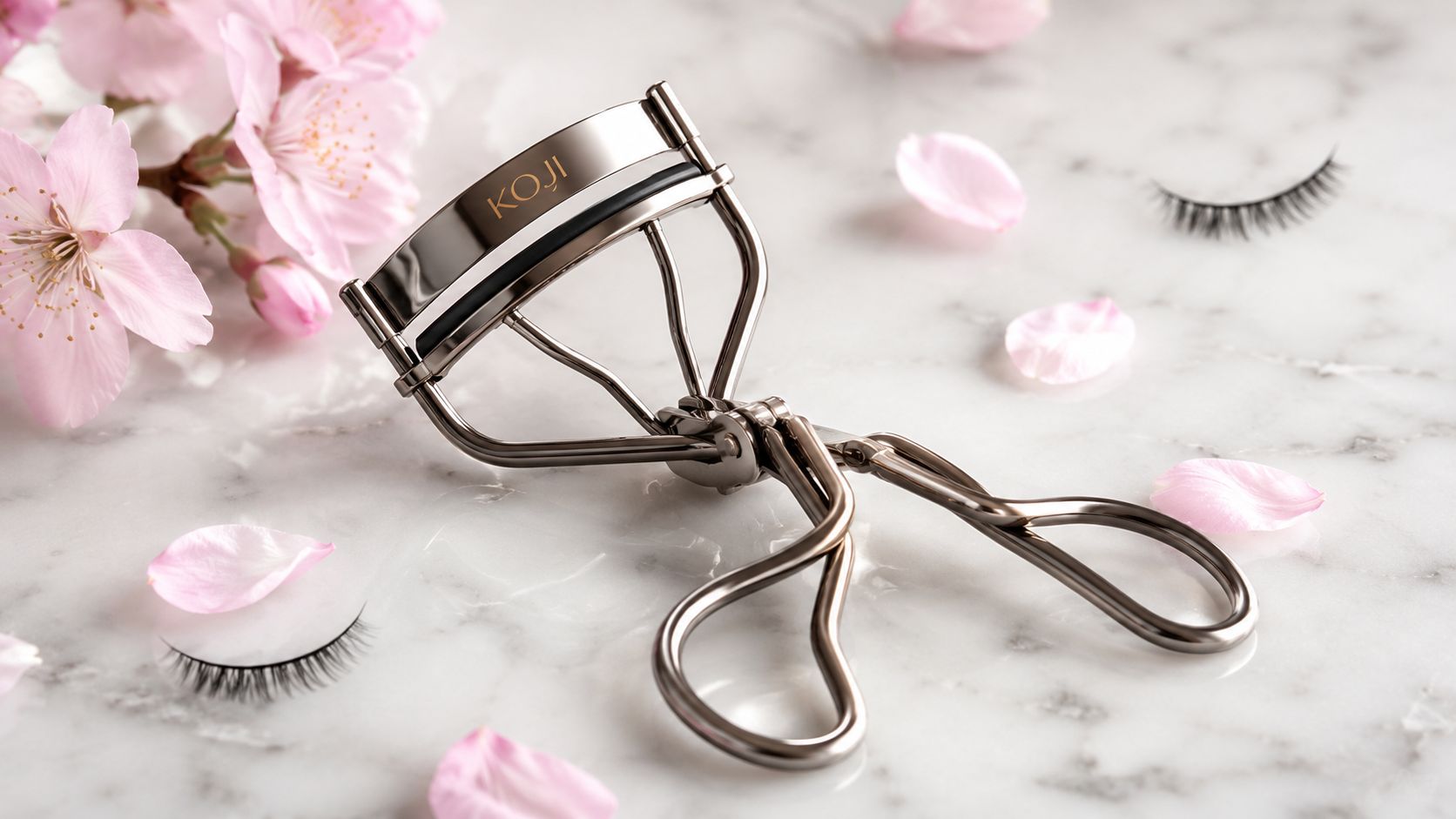
Vous avez probablement vécu la même expérience : un recourbe-cils semble correct en main, mais une fois appliqué sur vos yeux, le résultat est soit une courbure faible à la base, soit un pli tenace qui retombe une heure plus tard. Ce décalage ne dépend généralement pas seulement de votre mascara ou de votre technique. Il s'agit de la compatibilité, de la géométrie du cadre et de savoir si l'outil correspond réellement à la forme de vos yeux.
Un recourbe-cils Koji attire l'attention car les outils de beauté japonais considèrent souvent ces détails comme un point de départ, et non comme une réflexion après coup. Le résultat est une catégorie de recourbe-cils qui semble plus précise, plus délibérée et plus facile à adapter aux différentes formes d'yeux. Si vous avez essayé de comprendre pourquoi certains recourbe-cils fonctionnent parfaitement pour une personne et échouent pour une autre, la réponse réside généralement dans la conception.
Pourquoi les recourbe-cils japonais surpassent les alternatives occidentales
La première fois que beaucoup de personnes passent d'un recourbe-cils occidental familier à un japonais, la surprise ne vient pas d'un volume spectaculaire. C'est à quel point la courbure paraît plus nette avec moins de complications. Cela tient en grande partie à la façon dont les outils japonais sont conçus autour d'un contact précis, de sorte que la pince épouse la ligne des cils de manière plus uniforme au lieu d'appuyer une forme large sur chaque œil.

Ce qui fait la différence
Les outils de beauté japonais ont une longue histoire, passant d'articles spécialisés à des indispensables du quotidien. Le recourbe-cils moderne a été inventé en 1923, et la première version a été surnommée « piège à ours ». Ce modèle initial se vendait apparemment à 5 $, ce que la source équivaut à environ 75 $ aujourd'hui, et une version révisée a suivi en 1924 à 1 $, un changement qui montre à quelle vitesse l'outil est devenu plus accessible et largement utilisé. Voir le récit historique ici.
Cette histoire est importante car elle explique l'état d'esprit d'ingénierie derrière les recourbe-cils japonais d'aujourd'hui. Plutôt que de considérer le recourbe-cils comme une simple pince générique, l'approche de conception se concentre sur le confort, le contact avec la ligne des cils et la pression contrôlée. Pour les acheteurs hors du Japon, cela se traduit souvent par un outil qui semble moins agressif pour la zone des yeux tout en créant un effet de lift plus visible.
Règle pratique : si un recourbe-cils semble « attraper » les cils à un endroit gênant, le problème vient généralement de la géométrie, pas de votre habileté.
Pour les acheteurs qui parcourent les outils de beauté, il est utile de penser à un recourbe-cils comme à un accessoire bien ajusté. Les modèles japonais les plus utiles ne sont pas populaires uniquement parce qu'ils sont japonais. Ils le sont parce que leur forme est conçue pour s'adapter à une plus grande variété de contours d'yeux, ce qui explique pourquoi de nombreux passionnés y reviennent après avoir essayé des options grand public. Un aperçu utile des catégories plus larges de la beauté japonaise est disponible dans ce guide des marques cosmétiques japonaises, qui place des outils comme Koji dans le contexte plus large de l'artisanat du maquillage japonais.
Comprendre la conception et l'ingénierie du recourbe-cils Koji
L'attrait de Koji est mécanique avant d'être cosmétique. La marque ne mise pas sur un cadre universel en espérant qu'il convienne à tout le monde. Au contraire, sa gamme sépare les formes standard et profilées, ce qui est précisément là où beaucoup de recourbe-cils réussissent ou échouent.
Largeur du cadre et pression de contact
Un exemple utile est le recourbe-cils No.73 de KOJI, un outil grand format avec une largeur de serrage de 34 mm. Ce cadre plus large réduit la nécessité de rouvrir et repositionner le recourbe-cils sur des yeux plus grands, et peut aider à créer un résultat plus uniforme sur toute la ligne des cils. En termes pratiques, cela le rend meilleur pour les personnes qui souhaitent une seule courbure sur la bande centrale des cils plutôt que de diviser la ligne des cils en plusieurs sections. Détails du produit
La courbure est tout aussi importante. La gamme KOJI comprend les variantes No.71 et courbées en tant qu'outils de beauté distincts, ce qui reflète une stratégie de conception qui considère la géométrie du cadre comme une variable clé. Une courbure mal adaptée peut aplatir les cils du coin externe par rapport au reste, ou créer une pression inégale le long de la paupière. Cette distinction devient particulièrement importante pour les utilisateurs dont les yeux ne correspondent pas au moule moyen utilisé par de nombreuses marques grand public. Voir la gamme de référence
Pourquoi la logique d'ingénierie aide les vrais utilisateurs
Un recourbe-cils n'est efficace que s'il s'adapte bien à la forme de votre œil. Si la monture est trop étroite, vous finirez par faire plus de passages, et chaque passage supplémentaire augmente le risque d'un relevé inégal. Si la courbure est incorrecte, la ligne de cils peut sembler recourbée au centre mais insuffisamment aux coins.
Un bon recourbe-cils ne doit pas forcer vos cils à prendre forme. Il doit d'abord s'adapter à la forme de votre œil, puis relever les cils.
Si vous aimez comparer les outils de beauté comme vous comparez les montures ou les lunettes, la logique est similaire. Le bon contour résout les problèmes d'ajustement avant qu'ils ne deviennent des problèmes de technique. Une ressource liée sur des conseils d'experts pour choisir des lunettes est utile ici car elle renforce la même idée : l'adaptation de la forme vaut mieux que le hasard.
Comment choisir le bon modèle Koji pour la forme de vos yeux
L'erreur la plus courante est de choisir un recourbe-cils uniquement en fonction de la réputation de la marque. C'est risqué, car les yeux hooded, yeux enfoncés, yeux en amande et yeux ronds ne présentent pas tous la ligne de cils de la même manière. Si la monture ne repose pas à plat, vous risquez d'obtenir une courbure au centre et de manquer les coins.
Adaptez l'outil à l'œil, pas à la tendance
Pour les yeux hooded, la question utile est de savoir si la monture peut se rapprocher suffisamment de la ligne de cils visible sans appuyer sur la paupière. Pour les yeux enfoncés, une forme qui suit plus naturellement le contour de l'œil est généralement plus facile à positionner. Les yeux ronds bénéficient souvent d'un design qui aide à relever le bord extérieur sans exagérer le centre, tandis que les yeux en amande ont généralement plus de flexibilité, mais nécessitent toujours le bon équilibre entre largeur et courbure.
L'intérêt croissant des consommateurs pour les recourbe-cils accentués et les mini recourbe-cils répond à ce besoin de précision. Ces outils plus petits sont souvent choisis pour les sections intérieures et extérieures où une monture standard ne peut pas atteindre proprement. La tendance est claire : les acheteurs en ont assez des conseils génériques et veulent un recourbe-cils qui respecte les différences de forme des yeux.
Comparaison des modèles Koji
| Modèle | Largeur de la monture | Idéal pour | Caractéristique clé |
|---|---|---|---|
| N°73 | 34 mm | Ouvertures d'œil plus larges, utilisateurs souhaitant un recourbe-cils central en un seul passage | Surface de serrage grand format |
| N°71 | Non spécifié dans les données vérifiées | Utilisateurs souhaitant un recourbe-cils dédié standard | Géométrie de monture standard |
| Variante incurvée | Non spécifié dans les données vérifiées | Formes d'yeux nécessitant un ajustement contouré | Design de monture incurvée |
Une façon utile de penser à cela est la même que pour choisir des lunettes adaptées à votre visage. Toutes les montures ne sont pas mauvaises, mais une monture est généralement meilleure que les autres. Si vous savez déjà que vos yeux sont hooded ou enfoncés, un choix adapté à la forme est plus judicieux que de prendre le modèle le plus célèbre en espérant qu'il se comporte différemment sur votre visage. Pour plus de contexte produit, le guide sur le maquillage pour les yeux asiatiques aide à comprendre pourquoi les outils sensibles au contour surpassent souvent les options universelles.
Technique étape par étape pour une courbure durable
La meilleure technique commence avant même de serrer quoi que ce soit. Tenez d'abord le recourbe-cils devant votre œil et vérifiez si la barre supérieure suit la ligne de vos cils sans pincer la peau. Si l'alignement semble incorrect, ajustez l'angle au lieu de forcer la pince.

Une courbure plus nette commence au coin externe
Commencez par le coin externe et progressez vers l'intérieur en petites sections. Cela crée un effet éventail plus doux et aide à éviter l'aspect écrasé et trop compressé qui se produit lorsque la pince se place trop près de la racine. Les personnes aux cils plus courts ont généralement besoin de placements plus petits et plus précis, tandis que celles aux cils plus droits doivent souvent faire preuve d'un peu plus de patience sur le bord extérieur.
Si vos cils reprennent rapidement leur forme initiale, le problème ne vient souvent pas du mascara, mais du type de courbure. Un cil plié en un seul point se détendra plus vite qu'un cil façonné en plusieurs sections contrôlées. C'est pourquoi de nombreux utilisateurs expérimentés préfèrent travailler par étapes plutôt que de faire une seule pression forte.
La vidéo ci-dessous est utile si vous souhaitez observer la position des mains et le rythme de l'alignement avant d'essayer vous-même.
Superposition avec le mascara
Le mascara s'applique après que la courbure est fixée, pas avant. Si vous appliquez le produit trop tôt, les cils deviennent plus lourds et risquent de perdre leur forme. Une couche légère après le recourbage aide à maintenir la courbure en place, surtout sur des cils plus droits.
Certaines personnes utilisent la technique de la cuillère chauffée sur des cils récalcitrants, mais c'est plutôt une solution de secours qu'une routine. Un recourbe-cils bien ajusté devrait faire la majeure partie du travail seul. Pour les utilisateurs qui comparent les méthodes, la différence pratique est simple : un bon modèle réduit le besoin d'improviser.
Une référence utile sur l'utilisation du recourbe-cils Shiseido pour les yeux asiatiques est précieuse si vous comparez le design classique des outils japonais avec d'autres options bien connues pour relever les cils.
Pourquoi acheter des outils Koji authentiques du Japon est important
L’authenticité compte plus avec les outils pour cils que beaucoup d’acheteurs ne le réalisent. Un recourbe-cils est un petit appareil, mais il dépend de la forme exacte de la monture, de la sensation de la charnière et de l’état du coussinet. Si ces détails sont décalés, l’outil peut sembler lâche, mal aligné ou moins efficace que prévu.
Ce qui peut mal tourner avec du stock non authentique
Les outils de beauté contrefaits ou du marché gris peuvent sembler convaincants au premier regard. Le risque est qu’ils arrivent avec des coussinets usés, une tension de charnière incohérente ou des montures qui ne correspondent pas à la géométrie prévue. Avec les recourbe-cils, même une différence subtile change la façon dont la ligne des cils rencontre la pince.
C’est pourquoi l’approvisionnement direct du Japon a une vraie valeur. Les versions destinées au marché domestique japonais reflètent souvent l’ajustement et la finition voulus par le fabricant, tandis que la revente non autorisée peut créer une incertitude sur l’état et le stockage. Pour un outil qui se place près de l’œil, cette incertitude n’est pas à prendre à la légère.
Quand un outil de beauté est si proche de l’œil, la constance fait partie de la sécurité.
Les acheteurs sous-estiment aussi souvent l’importance du contrôle qualité dans un outil simple. Les meilleurs recourbe-cils japonais sont précis, pas lâches. Ils ne misent pas sur le battage médiatique, mais sur une ingénierie répétable et une forme stable qui reste utilisable dans le temps.
Pour les acheteurs qui aiment étudier les écosystèmes de produits, un guide plus large sur les produits au Japon peut aider à comprendre pourquoi les versions domestiques ont souvent la réputation d’une finition soignée et d’un design fiable.
Prendre soin de votre recourbe-cils Koji
Un recourbe-cils ne fonctionne bien que si le coussinet et la charnière restent en bon état. Après chaque utilisation, essuyez le coussinet en silicone pour éviter que les résidus de mascara ne s’accumulent et ne modifient la façon dont la pince saisit les cils. Cette petite habitude garde l’outil plus propre et aide à maintenir une pression plus uniforme.
À quoi faire attention
Si la pression commence à devenir inégale, le coussinet peut s’user. Si la charnière semble pliée ou si la monture ne se ferme plus correctement, l’outil est en fin de vie. À ce stade, remplacer le coussinet ou le recourbe-cils lui-même est plus judicieux que d’essayer de forcer un outil fatigué à fonctionner comme neuf.
Le rangement est également important. Gardez le recourbe-cils fermé dans une pochette ou un tiroir sec pour que la monture ne se déforme pas. Les déplacements sont souvent les moments où les outils souffrent le plus, donc une housse de protection vaut le coup si vous emportez souvent du maquillage.
Pour des routines de soin qui reflètent ce type de mentalité d'entretien, les conseils de nettoyage des pinceaux sont une lecture complémentaire utile car ils suivent le même principe : des outils propres fonctionnent mieux et durent plus longtemps.
Si vous achetez des coussinets de rechange auprès du même fabricant, vous avez plus de chances de préserver la sensation prévue de l'outil. Cela compte car le coussinet fait partie de la mécanique globale du recourbe-cils, pas seulement un accessoire jetable.
Questions fréquemment posées sur les recourbe-cils Koji
Un recourbe-cils Koji peut-il fonctionner avec des extensions de cils ? Dans la plupart des cas, personne ne devrait utiliser un recourbe-cils standard sur des extensions à moins que le spécialiste des extensions ne dise spécifiquement que c'est sûr. Les extensions sont fixées différemment des cils naturels, et la pince peut interférer avec la liaison.
Et si vos cils sont très courts ou clairsemés ? Un ajustement plus étroit et précis aide généralement plus que la force brute. Les cils courts sont souvent plus faciles à relever avec un outil qui s'aligne proprement près de la racine, tandis que les cils clairsemés bénéficient d'un placement soigneux plutôt que d'un pincement répété.
Comment vérifier l'authenticité lorsque votre commande arrive ? Commencez par la finition, le mouvement de la charnière et l'ajustement du coussinet. Les outils authentiques doivent être cohérents et assemblés proprement, pas lâches ou maladroits aux points de contact.
Si vous vous demandez également si les procédures d'amélioration des cils sont compatibles avec les recourbe-cils, la FAQ Latiesse de Georgia Plastic est une référence médicale utile pour comprendre les préoccupations plus larges concernant les cils avant de décider ce qui doit faire partie de votre routine.
L'expédition depuis le Japon peut prendre plus de temps que les commandes nationales dans votre pays, alors planifiez à l'avance si vous avez besoin du recourbe-cils pour un événement ou un voyage. L'avantage est que vous avez beaucoup plus de chances de recevoir exactement la version du produit que vous attendiez, ce qui est important lorsque l'essentiel est l'ajustement et la constance.
Si vous souhaitez un recourbe-cils Koji qui s'adapte à la forme de vos yeux au lieu de lutter contre elle, choisissez-le avec soin et sélectionnez la géométrie de la monture avec la même attention que pour une bonne paire de lunettes. Buy Me Japan sélectionne des outils de beauté japonais authentiques et les expédie directement du Japon, ce qui facilite la recherche du modèle adapté sans douter de la provenance. Visitez Buy Me Japan pour découvrir les essentiels de la beauté japonaise en toute confiance.


Comparter:
Qu'est-ce que la crème tout usage ? Un guide complet pour 2026
Bienfaits de l'acide azélaïque : un guide complet pour une peau plus nette